
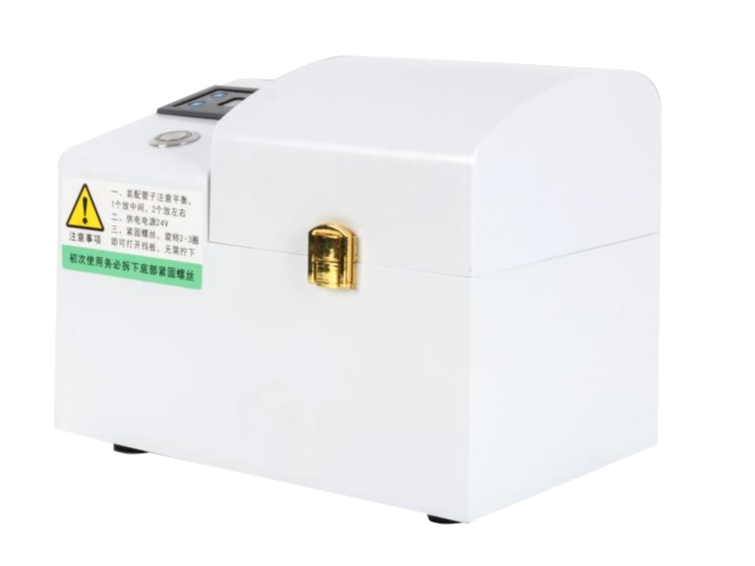
What is a Portable Tissue Grinder? A Portable Grinding Device for Rapid Preparation of Biological Samples in the Field and Laboratory

What is a Portable Tissue Grinder? A Portable Grinding Device for Rapid Preparation of Biological Samples in the Field and Laboratory
At its core, a portable tissue grinder is a compact, battery-operated grinding device used by researchers, agricultural scientists, and field technicians to quickly homogenize plant or animal tissues for nucleic acid extraction, protein analysis, or other downstream applications. Unlike traditional benchtop homogenizers that require fixed power and bench space, this device is designed for mobility, allowing sample preparation to be performed directly at the collection site, significantly reducing transport time and preserving sample integrity.
Core Function and Working Principle
The primary function of a portable tissue grinder is to transform solid biological tissues (e.g., leaves, roots, seeds, or small animal organs) into a fine homogenate or powder suitable for subsequent chemical or biological analysis. The device typically employs a high-speed vertical reciprocating motion, where a motor-driven pestle or bead-based mechanism rapidly impacts and shears the tissue inside a sealed tube or vial. This process disrupts cell walls and membranes, releasing intracellular contents such as DNA, RNA, and proteins.
Key operational parameters include grinding time (typically 1 minute for dry samples and 3 minutes for wet samples) and speed/frequency, which can be adjusted based on tissue toughness. The sealed tube design prevents cross-contamination and aerosol generation, making it safe for handling potentially infectious materials. Most portable models are powered by rechargeable batteries or can be connected to a portable power bank, enabling operation in remote locations without access to mains electricity.
Core Components and Key Technologies
Although the portable tissue grinder is a single product type, it incorporates several critical components that determine its performance:
- Drive Mechanism: A high-torque DC motor with adjustable speed control ensures consistent grinding force across different tissue types. Some models use a vertical oscillation mechanism for more efficient cell disruption compared to traditional horizontal shaking.
- Sample Holder: Versatile clamping systems that accommodate standard 0.5 mL to 50 mL centrifuge tubes, as well as deep-well plates. The ability to switch between tubes without changing tools simplifies workflow and reduces downtime.
- Battery System: Integrated rechargeable lithium-ion batteries or compatibility with external USB power banks allow continuous field operation. Typical battery life supports 2-3 hours of continuous grinding, sufficient for processing dozens of samples.
- Safety Features: Automatic lid-lock mechanisms that stop the motor when the lid is opened, protecting users from accidental exposure to moving parts or sample splashes.
Key Performance Indicators and Selection Criteria
When selecting a portable tissue grinder, users should evaluate the following parameters:
- Sample Throughput: Most portable models can process 3-6 samples per batch. Higher throughput is available in multi-channel versions, but the portable design prioritizes mobility over volume.
- Grinding Efficiency: The ability to achieve a particle size below 1 mm within 1-3 minutes is critical for efficient DNA/RNA extraction. Look for devices with adjustable speed and time settings to optimize for different tissue hardness.
- Portability: Weight (typically 2.3-2.8 kg) and dimensions (around 20×17×18 cm) determine ease of transport. Units with integrated handles or shoulder straps are preferred for field work.
- Power Options: Devices that support both AC power and battery operation offer maximum flexibility. Battery capacity should be sufficient for a full day's work in the field.
- Cleaning and Maintenance: Removable sample holders and autoclavable tubes simplify cleaning and prevent cross-contamination. Models with splash-proof membranes also reduce maintenance frequency.
Application Areas and Selection Recommendations
Portable tissue grinders are widely used in agricultural research (e.g., plant disease diagnostics, GMO testing), forensic science (DNA extraction from evidence), environmental monitoring (soil microbiota analysis), and clinical laboratories (tissue biopsy homogenization). For users who primarily work in the field, a lightweight model with long battery life and robust tube compatibility is recommended. For laboratory users who prioritize throughput, a multi-channel version may be more suitable, but the portable form factor remains advantageous for quick sample processing without occupying permanent bench space.
References
Related Products
Get In Touch
Our professional team will reply to you within one business day. Please feel free to contact us!