
What is a Semi-Circular Planetary Ball Mill? A High-Energy Ball Mill for Ultrafine Laboratory Grinding

What is a Semi-Circular Planetary Ball Mill?
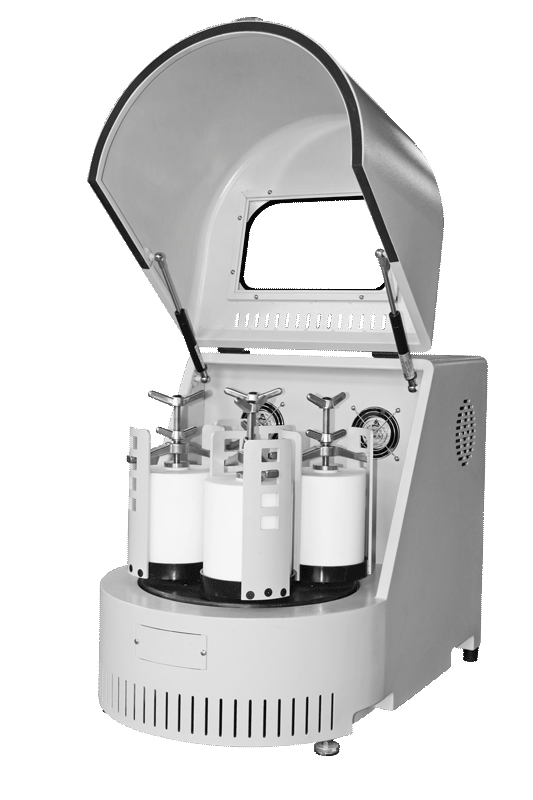
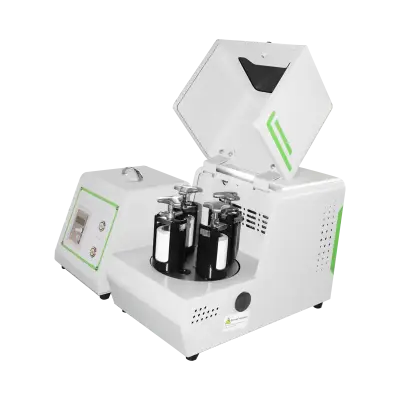
At its core, a semi-circular planetary ball mill is a specialized laboratory grinding device used by researchers and material scientists to reduce solid materials down to micron or even nanometer-sized powders. It combines the high-energy planetary motion principle with a compact, semi-circular housing design, offering efficient ultrafine grinding, mixing, and mechanical alloying in a bench-top footprint.
Core Function and Working Principle
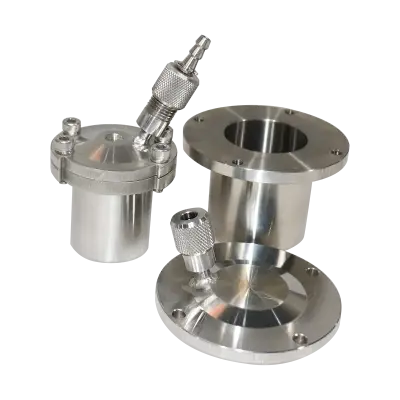
The semi-circular planetary ball mill operates on the same fundamental principle as standard planetary ball mills: a rotating sun wheel drives several grinding jars (planetary pots) to rotate around their own axes while simultaneously revolving around the central axis. This dual motion creates powerful centrifugal and Coriolis forces, causing the grinding balls inside the jars to collide, shear, and compress the sample material repeatedly. The semi-circular design of the mill body provides a more stable support structure and allows for easier access to the grinding jars. The process can be carried out in dry or wet mode, and the final particle size can be adjusted by controlling rotation speed, grinding time, ball-to-powder ratio, and jar material. With optional vacuum jars, the mill can also grind samples under inert gas or vacuum, making it suitable for air-sensitive materials.
Key Components and Core Technologies
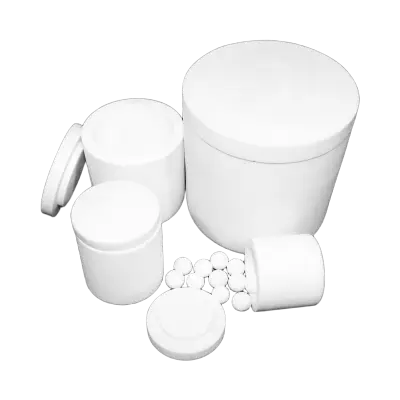
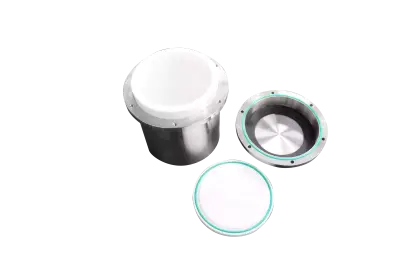
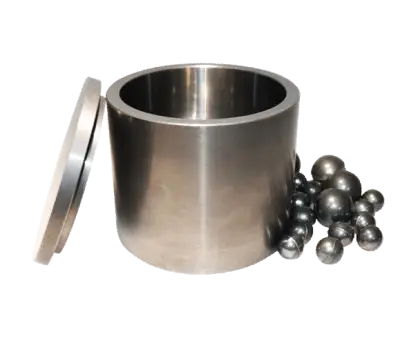
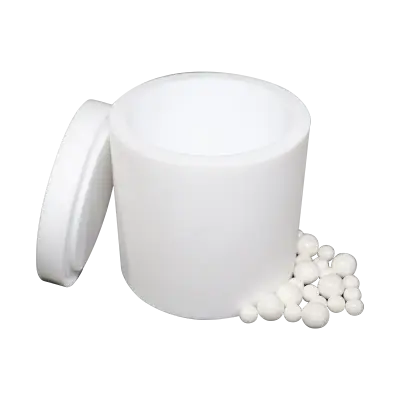
The semi-circular planetary ball mill consists of several key components: the main drive unit with a frequency converter for stepless speed regulation, the sun wheel (turntable), clamping devices for the grinding jars, and the protective housing. The semi-circular housing not only reduces noise but also improves safety. The grinding jars are available in various materials (stainless steel, zirconia, agate, tungsten carbide, nylon, etc.) to avoid cross-contamination with the sample. The mill is typically equipped with a programmable timer and automatic reverse rotation to ensure uniform grinding. Advanced models may feature a touch-screen interface for easy parameter setting and real-time monitoring.
Key Performance Indicators and Selection Points
Key performance indicators for a semi-circular planetary ball mill include: processing capacity (typically 0.2L to 4L total jar volume), rotational speed range (e.g., revolution 45–435 rpm, rotation 90–870 rpm), final particle size (down to 0.1 micron), noise level (around 58±5 dB), power consumption, and control interface. When selecting a model, users should consider the required throughput, the hardness and abrasiveness of the sample, the desired fineness, and whether the process needs to be carried out under inert gas or vacuum. For example, micro-computerized touch-screen versions offer more precise control, while heavier models are suitable for larger batches.
Application Fields and Selection Advice
Applications: material science (ceramics, metals, alloys, polymers, catalysts), chemistry (chemical synthesis, mechanochemistry), geology and mining (ore sample preparation), environmental science (soil, waste), and pharmaceutical research. For small-scale R&D labs, the semi-circular model is ideal due to its compact size and easy operation. For larger batch production, models with higher capacity jars or multiple stations may be considered, such as the vertical square planetary ball mill or the dual planetary ball mill. Always choose the appropriate jar material and grinding media to match your sample requirements.
References
Related Products
Get In Touch
Our professional team will reply to you within one business day. Please feel free to contact us!