

What is a Micro Planetary Ball Mill? A Compact Lab Grinder for Nano-Scale Sample Preparation
What is a Micro Planetary Ball Mill? A Compact Lab Grinder for Nano-Scale Sample Preparation
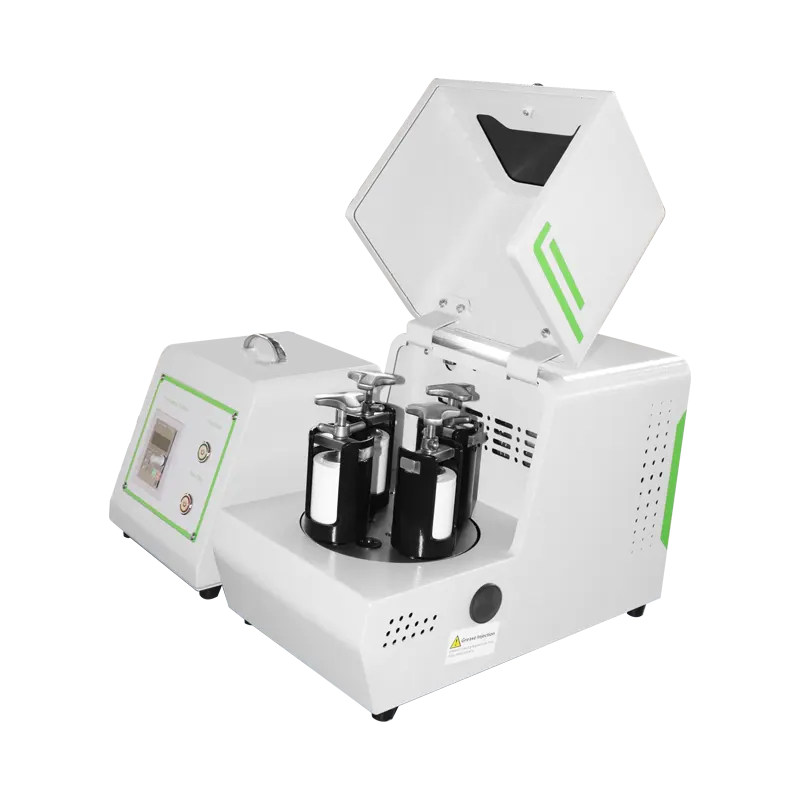
At its core, a Micro Planetary Ball Mill is a specialized laboratory grinding device used by researchers, quality control labs, and material scientists to reduce small quantities of solid materials into ultra-fine powders, often reaching submicron or even nanometer sizes. It achieves this through a unique planetary motion that generates high-energy impact and friction between grinding balls and the sample, all within a compact benchtop footprint. This instrument is essential for tasks such as mechanical alloying, nano-material synthesis, and homogenization of diverse materials.
Core Function and Working Principle
The Micro Planetary Ball Mill transforms coarse particles (typically 0.5–3 mm) into fine powders (down to 0.1 μm) by leveraging a dual-rotation mechanism: the grinding jar rotates around its own axis (self-rotation) while simultaneously revolving around a central sun wheel (revolution). This creates extremely high centrifugal forces—often exceeding 20 g—that drive the grinding balls to collide with the sample and the jar wall. The combined impact, shear, and friction forces break down the material progressively. Key parameters such as rotation speed (adjustable up to 600 rpm or more), grinding time, ball-to-powder ratio, and jar material directly influence the final particle size and uniformity. For instance, wet grinding in a liquid medium can produce particles as fine as <100 nm, while dry grinding is ideal for brittle or fibrous materials.
Core Components and Key Technologies
Planetary Drive System
The heart of the mill is its planetary gear transmission, which maintains a fixed speed ratio (typically 1:2) between the sun wheel and the grinding jars. This ensures consistent energy input for reproducible results.
Grinding Jars and Media
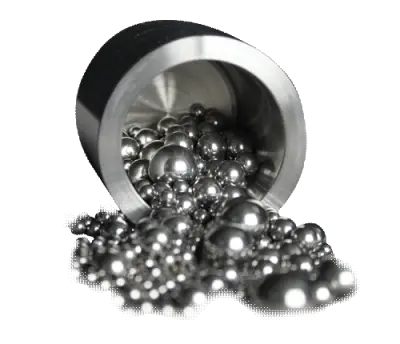
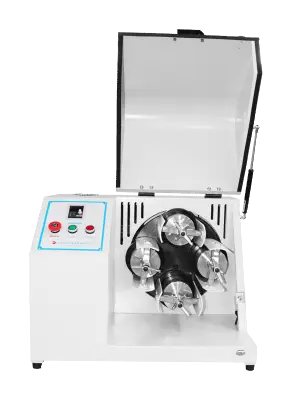
The Micro model usually includes one or two small-capacity jars (e.g., 0.2L to 0.4L total) made of materials like agate, zirconia, stainless steel, or PTFE. Users can choose matching grinding balls to avoid contamination. The jar lids can be sealed for vacuum or inert gas milling, making it suitable for oxidation-sensitive materials.
Programmable Control
Modern micro planetary ball mills feature a microprocessor-based controller that allows setting forward/reverse rotation, pause intervals, and total milling time (0–999 min). Some models include touch-screen interfaces and memory for multiple SOPs. Safety features like emergency stop, overload protection, and lockable jars are standard.
Key Performance Indicators and Selection Criteria
When choosing a Micro Planetary Ball Mill, consider these factors:
- Capacity and Throughput: Typical total capacity ranges from 0.2L to 1L. For glove box integration, the mill must be compact enough to fit through the antechamber.
- Grinding Fineness: Look for specified minimum particle size (e.g., <0.1 μm). Achievable fineness depends on material properties and process parameters.
- Speed Range and Control: A wider speed range (e.g., 100–600 rpm) offers more flexibility. Precise speed regulation ensures repeatability.
- Vacuum and Gas Compatibility: If you work with air-sensitive materials, ensure the mill can be used with vacuum or inert gas jars or directly placed inside a glove box.
- Noise Level: Compact lab mills should operate below 60 dB to suit shared laboratory environments.
- Ease of Cleaning: Removable jars and quick-release clamps simplify maintenance between different samples.
Applications and Selection Advice
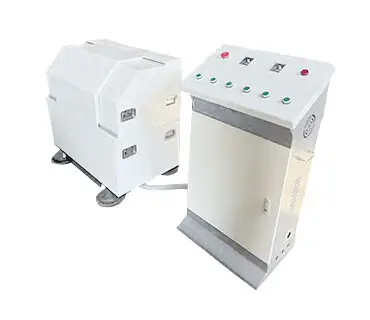
The micro planetary ball mill is widely used in geology, mining, metallurgy, electronics, ceramics, chemicals, pharmaceuticals, and environmental testing. Typical samples include soil, ores, ceramics, catalysts, plant fibers, and pharmaceutical ingredients. For researchers who need to handle extremely small sample volumes (e.g., <10 mL) or who require an inert atmosphere, the micro model specifically designed for glove box operation (like the XQM-0.2S) is ideal. If higher throughput is needed (e.g., four samples simultaneously), consider larger planetary mills. For most academic and R&D labs, a single-jar micro mill with programmable control offers the best balance of versatility and cost.
References
Related Products
Get In Touch
Our professional team will reply to you within one business day. Please feel free to contact us!