

What Is a Planetary Ball Mill (Semi-Circular Model)? A Lab Mill for Fine Powder
What Is a Planetary Ball Mill (Semi-Circular Model)?
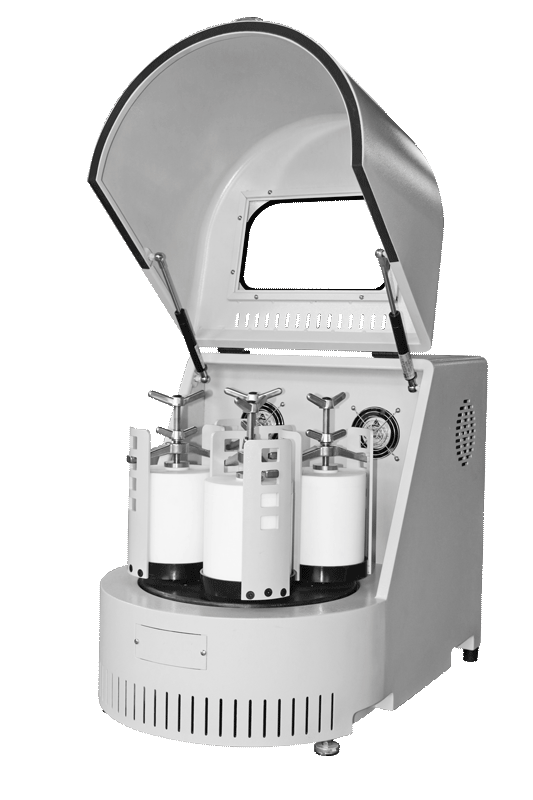
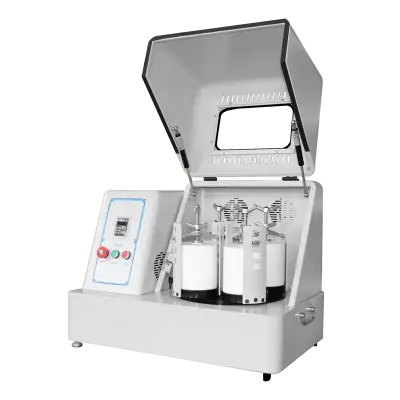
At its core, a planetary ball mill (semi-circular model) is a laboratory-scale grinding machine that universities, research institutes and industrial R&D departments use to crush, grind, mix and mechanochemically activate small batches of solid material down to fine or even sub-micron powder. The word “planetary” describes the motion inside the machine: a group of grinding jars is mounted on a rotating main disc, and each jar simultaneously spins around its own axis in the opposite direction — the same relationship as planets orbiting a sun while turning on their own axes. The “semi-circular” designation refers to the frame and housing, which are built around a semicircular arc rather than a fully enclosed rectangular cabinet, so the jars, clamps and sample-loading area stay open and easy to reach. Users turn to this configuration when they need reproducible, high-energy comminution of small samples with quick access between runs; you can review the full specification of the semi-circular planetary ball mill on the product page.
Core Function and Working Principle
The basic job of the machine is simple to state and subtle to control: it converts a coarse, often inhomogeneous feed material into a uniform fine powder, or it blends several powders into a homogeneous mixture, without introducing unwanted contamination. Everything the mill does follows from the interaction between three elements — the rotating jar, the loose grinding balls inside it, and the sample trapped between them.
The Grinding Mechanism: Impact, Friction and Shear
Inside a partly filled grinding jar, the media (steel, zirconia, agate, corundum or tungsten carbide balls) are thrown against the jar wall and against each other as the jar turns. Three mechanisms act on the sample at the same time. Impact dominates when heavy balls collide at speed with coarse particles, breaking them along natural flaws. Friction and abrasion act at the contact points between ball surfaces and the powder bed, slowly rounding and refining particles. Shear becomes important when the powder is milled wet, because the liquid carrier changes the rheology of the charge and the balls slide rather than strike. In a planetary mill all three mechanisms are amplified, because the jar is not simply rolling — it is being swung around a second centre of rotation at the same time.
Why Planetary Motion Produces High-Energy Milling
In a conventional drum mill the only driving force is gravity plus the slow rotation of a large cylinder, so the media tumble gently and grinding takes hours. In a planetary mill the jar itself rotates fast around its own axis while the main disc carries it around a larger circle. Because the two rotations run in opposite directions, the media are repeatedly swept up the inner wall of the jar and then hurled across the chamber, landing on the sample with far more kinetic energy than gravity alone could supply. The result is a much higher energy density per unit of powder, which is why a benchtop planetary unit can reach fineness levels that would take a production drum mill many times longer to achieve. The ratio between disc speed and jar speed, together with the fill level of the jar, determines how much of that energy is delivered as impact and how much as rubbing action.
From Coarse Feed to Fine Powder: The Milling Cycle
A typical working cycle starts with pre-treatment: the sample is dried if it is moist, and pre-crushed if the lumps are too large for the jar opening, because a planetary mill is a fine-grinding device and not a primary crusher. The operator then weighs the sample, selects the jar and ball material, loads the charge with the correct ball-to-powder ratio, clamps the jar into the holder and closes the safety cover. Milling proceeds for a programmed time and speed; afterwards the jar is removed, the powder is recovered and, if a narrow particle-size distribution is required, the product is passed through a sieve or analysed by laser diffraction or microscopy. The same cycle can be run dry, in a solvent, or under an inert atmosphere when the material is oxygen- or moisture-sensitive.
Process Parameters That Shape the Final Powder
Four or five variables decide whether a run succeeds, and they interact strongly with one another:
- Rotational speed and speed ratio. Higher disc speed raises impact energy and shortens grinding time, but beyond a certain point the media simply centrifuge against the jar wall and stop doing useful work.
- Ball-to-powder ratio. A high ratio means more collisions per particle and faster size reduction, at the cost of greater contamination from media wear and a smaller sample capacity.
- Ball size distribution. Large balls deliver the impact needed to break coarse particles; small balls create more contact points and refine the fine end of the distribution.
- Milling time. Fineness improves with time up to a plateau, after which prolonged milling may cause agglomeration, amorphisation or unwanted phase change.
- Jar fill level. Overfilling smothers the media movement; underfilling wastes capacity and increases wear.
- Atmosphere and medium. Dry, wet, vacuum or inert-gas milling each change the outcome, especially for reactive or air-sensitive powders.
Core Components and Key Design Features of the Semi-Circular Model
Because this machine is a single, well-defined model rather than a broad family, it is more useful to look at how it is built than to compare it with variants that do not exist. Four subassemblies matter most: the frame and housing, the sun wheel with its jar holders, the drive and control package, and the grinding consumables that sit inside the jars.
The Semi-Circular Frame and Housing
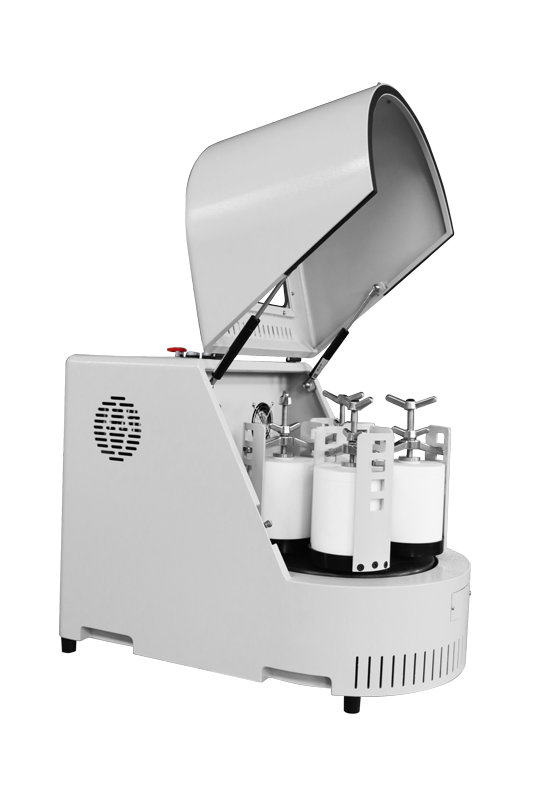
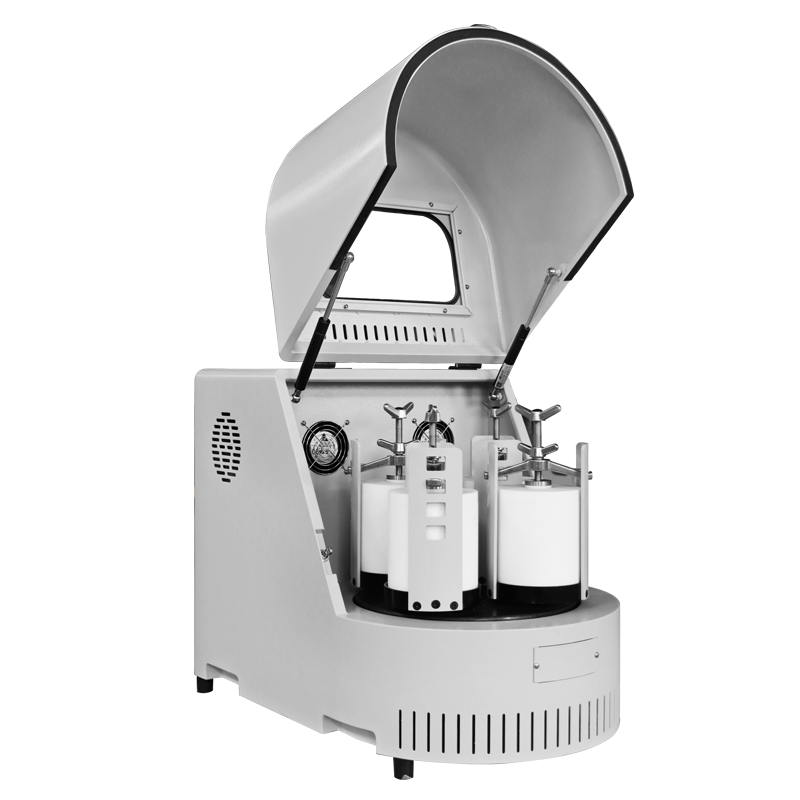
The defining visual feature is the semicircular body, which wraps around the rotating disc and supports the bearing housing at the rear. Compared with a fully boxed cabinet, this open arc-shaped layout gives the operator a clear line of sight to the jars, generous clearance for loading and unloading heavy jars, and easier access when a jar has to be swapped between runs. The structure must be stiff enough to absorb the vibration generated by unbalanced jar loads at high speed, which is why laboratory mills of this type use a rigid cast or welded base rather than a thin sheet-metal shell. A transparent or interlocked cover closes off the moving parts during operation.
The Sun Wheel, Jars and Clamping System
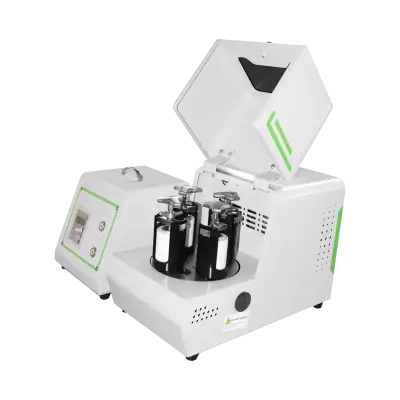
The sun wheel is the large disc that carries the jar holders. Each holder grips a grinding jar through a clamping mechanism — typically a screw or lever system with a self-locking action — that must hold the jar absolutely rigid at speed, because any play will cause vibration, noise and accelerated bearing wear. Jars are usually mounted in pairs or in a symmetric arrangement so that the load is balanced; running an asymmetric load is the most common cause of excessive vibration in laboratory practice. The jar holders also determine which jar sizes the mill can accept, so the size range should be checked against the sample volumes you actually plan to process.
Drive, Control and Safety Systems
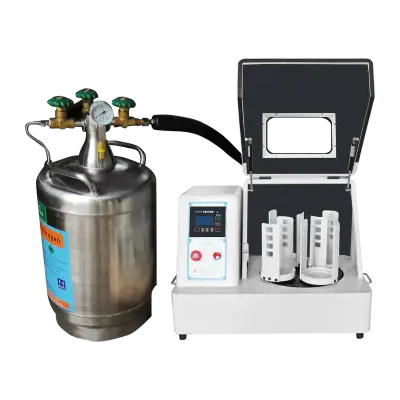
The drive train converts motor rotation into two coordinated rotations through a belt or gear transmission, and the control system lets the operator set speed, running time, and often alternating or intermittent cycles that help dissipate heat and reduce caking. Programmable operation matters more than it first appears: a saved recipe makes results reproducible across operators and across months of experiments, which is a real advantage in method development. Safety features to look for include a cover interlock that stops rotation when the lid is opened, an emergency stop, motor overload protection, and a housing that keeps the rotating assembly out of reach. For temperature-sensitive materials, effective ventilation or an external cooling option prevents the jars from overheating during long runs.
Grinding Jars and Media: The Consumable Side of the Process
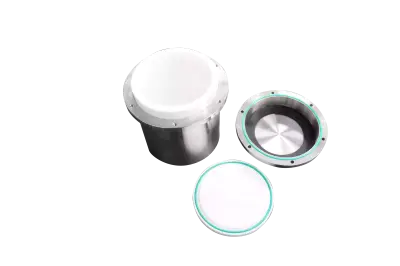
The jar and ball material is not an accessory decision — it directly determines whether the powder stays clean. Common options include:
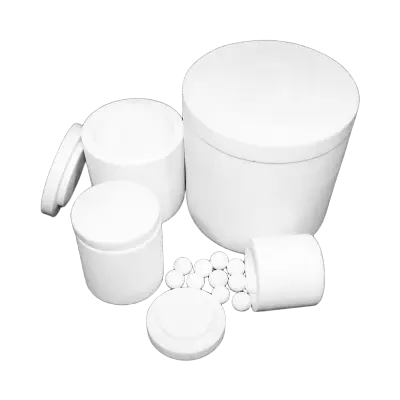
- Agate — very low contamination, ideal for geological and mineral samples, but relatively soft and slow.
- Zirconia — high density and hardness, a good general-purpose choice for ceramics, batteries and oxide powders.
- Corundum (alumina) — hard and wear-resistant, widely used for ceramic and abrasive materials.
- Stainless steel — tough and impact-resistant, suitable for metals and hard brittle materials where iron pick-up is acceptable.
- Tungsten carbide — the densest common option, chosen for very hard samples and short, high-energy runs.
- Nylon, PTFE and polyurethane — soft polymers used where metal contamination must be avoided entirely, for example in some pharmaceutical or polymer work.
The general rule is to pick a jar material that is harder than the sample and compatible with it chemically, then to match ball density and diameter to the target fineness. Milling a hard ceramic in a soft plastic jar achieves very little; milling an abrasive mineral in a steel jar will contaminate the product with iron.
Key Performance Indicators and Selection Points
When comparing laboratory planetary mills, buyers tend to focus on one headline number — usually jar volume or maximum speed. A more reliable evaluation looks at four things together: how much sample the machine can process per batch, how fine and how reproducibly it can grind, how much operator attention it needs, and how easy it is to maintain over years of use.
Capacity and Throughput
Capacity in a planetary mill is expressed as jar volume, and the usable sample mass is only a fraction of that volume, because the jar must also hold the grinding media and leave free space for the charge to move. As a working rule, the powder occupies a modest share of the jar and the balls occupy a much larger share; the exact proportion depends on the material and the target fineness. Throughput is therefore batch-based rather than continuous, and the real measure of productivity is the number of completed, reproducible runs per day. If your programme involves many small samples, a model that accepts several small jars at once is often more useful than one large jar, because parallel processing saves more time than raw volume.
Fineness, Repeatability and Contamination Control
Fineness is determined by energy input, milling time and media selection rather than by a single specification figure, so ask instead how the machine controls those variables: can speed be set precisely, can time be programmed, does the drive hold speed under load? Repeatability is the second question — the same recipe should give the same particle-size distribution when a different operator runs it, which depends on clear controls and on rigid, balanced jar clamping. Contamination is the third. Because wear scales with energy, every hour of high-energy milling adds trace elements to the powder from the jar and balls; choosing the right consumable is often more important than any specification on the machine itself.
Energy Use, Automation and Maintainability
Laboratory mills are not major energy consumers, but heat generation is a practical concern: energy that does not go into breaking particles becomes heat in the jar, and excessive temperature can alter a phase, degrade a polymer or evaporate a solvent. Good ventilation around the semi-circular housing, sensible duty cycles and the option of shorter, interrupted runs all help. On the automation side, programmable recipes, a clear display and simple parameter entry reduce operator error far more than sophisticated features that nobody uses. For maintainability, check the accessibility of the drive belt or gears, the availability of replacement jars, clamps and sealing gaskets, and whether the bearings can be serviced without dismantling the frame. A machine that is easy to clean between samples will be used correctly; one that is not will eventually be run with cross-contamination.
Applications and Selection Advice
Where This Mill Is Used
Planetary ball mills of this type appear wherever small quantities of material must reach a controlled fine particle size. In geology and mineralogy they prepare rock, ore and sediment samples for X-ray fluorescence or diffraction analysis. In materials science and ceramics they produce oxide, carbide and nitride powders and support mechanochemical synthesis and alloying. In battery research they blend active materials, conductive additives and binders, or reduce electrode powders to a consistent size. In chemistry and pharmacy they support fine grinding of active ingredients, mixing of formulations and small-scale mechanochemistry. Environmental and agricultural laboratories use them to homogenise soil, plant and waste samples before analysis, and metallurgy labs use them for slag, sinter and powder-metallurgy feedstocks.
How to Choose the Right Configuration
Start from the sample, not from the machine. Define the material's hardness and chemical sensitivity, the target particle size, the mass required per batch and the number of batches per week. Hard, brittle samples need dense media and a tough jar; sensitive or high-purity samples need agate, zirconia or polymer consumables even at the cost of longer milling. If you routinely handle air- or moisture-sensitive powders, plan for glove-box-compatible loading or gas-tight jars. If your work is method-driven — for example a quality-control laboratory that must follow a fixed procedure — prioritise programmable recipes and repeatable clamping over maximum speed. And if your sample volumes vary widely, confirm the jar size range before ordering, since a mill that only accepts one jar size will limit you later. For a single, well-characterised model such as the semi-circular planetary ball mill, the practical check is simply whether its jar capacity, speed range and consumable options cover your intended workflows; the official product description lists those details.
Where to Learn More
A planetary ball mill is a deceptively simple instrument: a motor, a disc, some jars and balls. What separates good results from disappointing ones is the discipline around it — the right jar and media for the material, a balanced load, a sensible speed ratio, a realistic milling time, and a recipe that is written down and repeated. The semi-circular model is designed to make that discipline easier by keeping the working area open and accessible while still delivering the high-energy planetary motion that fine grinding depends on. If you want to compare dimensions, jar options and control features for your own application, the semi-circular planetary ball mill page is the place to start, and matching the specification to your sample list before purchase will save far more time than any later adjustment.
Related Products
Get In Touch
Our professional team will reply to you within one business day. Please feel free to contact us!