
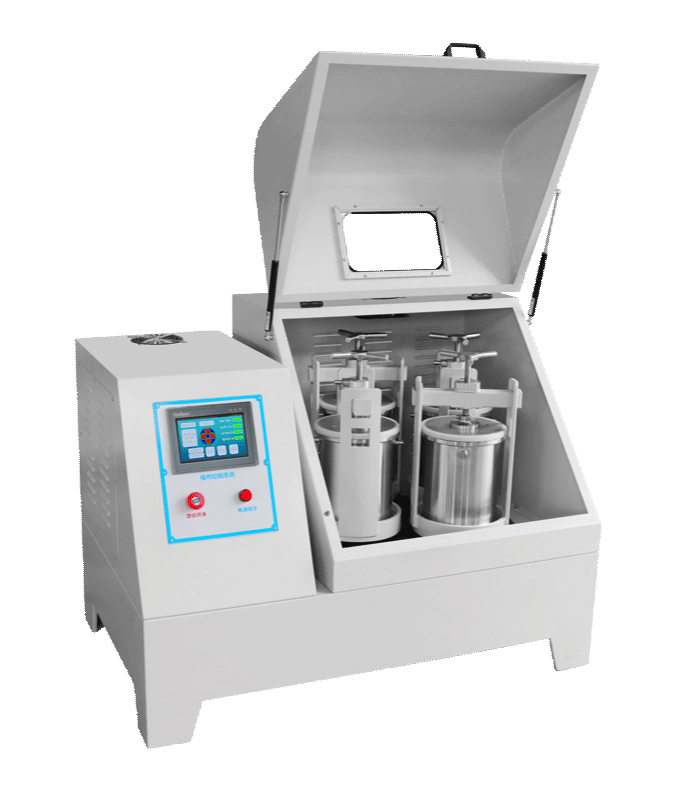
What is a Micro-computerized Touch Screen Planetary Ball Mill? A High-Precision Grinding Equipment for Laboratory Powder Processing

What is a Micro-computerized Touch Screen Planetary Ball Mill?
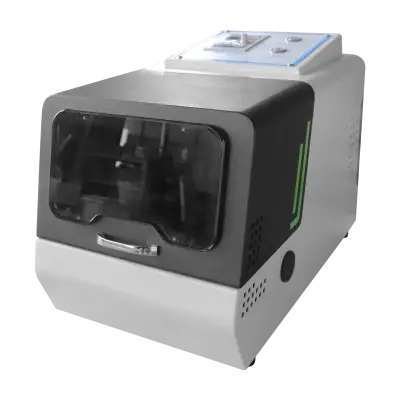
From the core, a micro-computerized touch screen planetary ball mill is a specialized grinding device that research laboratories and small-scale production facilities use to achieve ultra-fine comminution and homogeneous mixing of powders. It combines the classic planetary ball mill mechanism with an intuitive touch interface and programmable microcomputer control, allowing operators to set precise speed, direction, and timing parameters. This equipment transforms coarse particles (up to ~10 mm feed size) into fine or even nano-sized powders down to 0.1 μm, making it indispensable for advanced materials development, geological sample preparation, chemical synthesis, and pharmaceutical formulation.
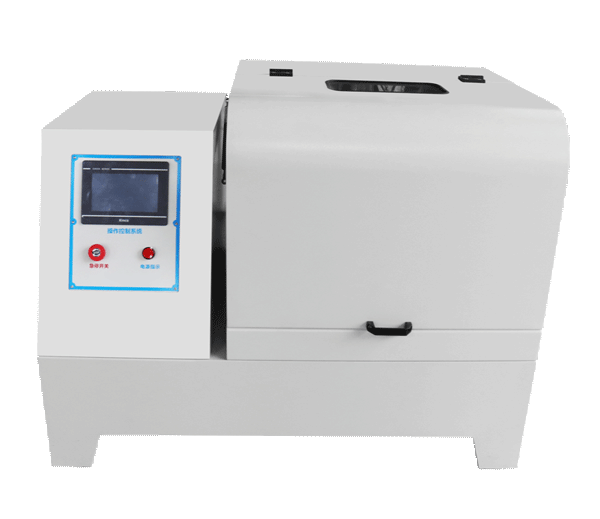
Core Function and Working Principle
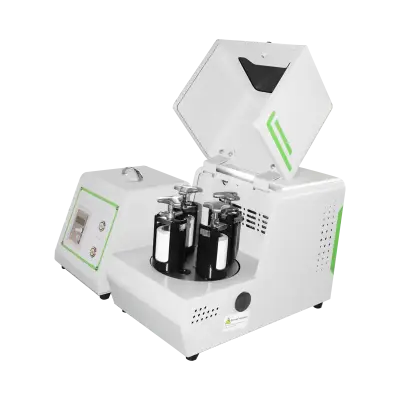
The fundamental function of the micro-computerized touch screen planetary ball mill is to reduce solid materials from a granular initial state to a fine powder final state using mechanical energy. The working principle is based on planar motion: the main disc (sun wheel) rotates around a central axis, while the grinding jars (planetary wheels) are mounted on the disc and rotate around their own axes in the opposite direction. This creates a planetary motion pattern with a fixed speed ratio of 1:2 (sun wheel vs. jar). As the jars spin, the grinding balls inside experience centrifugal forces that launch them against the jar walls. The combination of impact, shear, and friction forces crushes and grinds the sample efficiently. The process can be performed dry or wet, with the addition of liquid media to enhance dispersion and prevent agglomeration.
Key process parameters include the main disc speed (typically 50–450 rpm), jar speed (100–900 rpm), grinding time, pause intervals, and direction reversal cycles. The microcomputer controller stores up to 10 operational programs (SOPs) and allows continuous operation up to 99 hours. The 7.0-inch color touch screen provides real-time display of speed, duration, and remaining time, enabling operators to adjust parameters on the fly. This level of automation ensures consistent, reproducible results across multiple batches.
Core Components and Key Technologies
The micro-computerized touch screen planetary ball mill integrates several advanced features that distinguish it from conventional planetary mills:
- Touch Screen Interface: A 7.0-inch color LCD touch panel replaces traditional push buttons, offering simple navigation for setting forward/reverse rotation, interval operation, and timed stop. The interface shows machine status, speed, and program steps clearly.
- Microcomputer Control: A built-in microcontroller governs speed regulation (with closed-loop feedback), timing accuracy (±1 min), and motor protection. It can store up to 10 preset programs, resume interrupted runs after power failure, and run unattended overnight.
- High-Strength Drive System: A stable planetary gear system with a fixed gear ratio ensures consistent ball-to-jar impact energy. Self-locking jar clamping mechanisms provide safety and prevent jar dislodgement during high-speed operation.
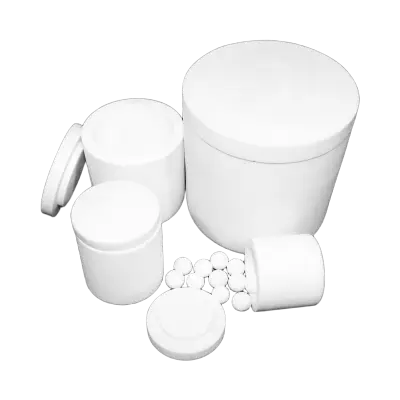
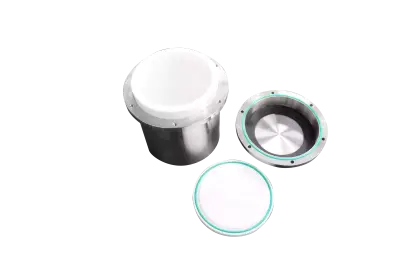
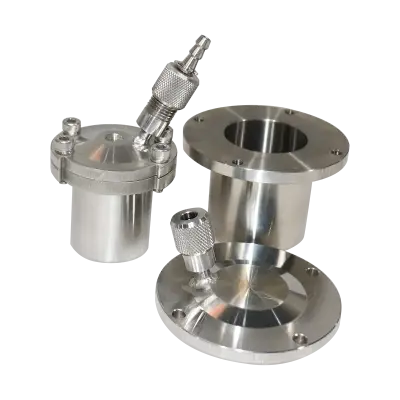
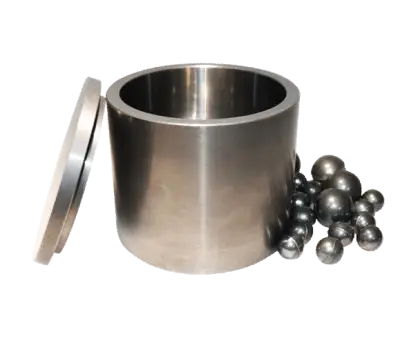
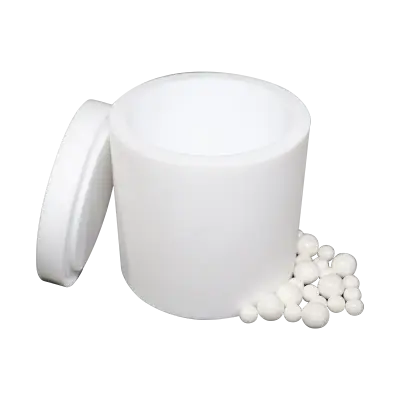
- Versatile Jar and Media Options: The mill accepts a wide range of grinding jar materials (stainless steel, zirconia, agate, tungsten carbide, nylon, PTFE, etc.) to avoid contamination, and it supports jar volumes from 50 mL up to 2000 mL depending on the model. The grinding media (balls) can be chosen from stainless steel, zirconia, agate, corundum, or tungsten carbide to match sample hardness.
- Vacuum and Inert Gas Compatibility: Optional vacuum jar lids enable grinding under controlled atmosphere (e.g., argon or nitrogen), essential for oxygen-sensitive or moisture-sensitive materials.
Key Performance Indicators and Selection Guide
When selecting a micro-computerized touch screen planetary ball mill, users should evaluate the following criteria:
- Processing Capacity: Models range from single-jar capacities of 50 mL to 500 mL per jar, with typically 2–4 jar stations. Choose based on sample volume: for routine research, 500 mL total capacity is often sufficient; for large-batch formulation, consider larger jars.
- Final Particle Size: The achievable fineness depends on material, milling time, speed, and jar/media selection. Most models achieve d90 < 0.1 μm for many brittle materials. The touch screen allows step-wise program to optimize for sub-micron targets.
- Speed Range and Control: Look for a wide speed range (e.g., 50–450 rpm for main disc) with digital setting. Higher speed yields higher energy but may generate excessive heat; consider models with built-in pause programs to cool intermediate stages.
- Automation Features: Ability to store and recall SOPs, automatic direction reversal, and interval operation are vital for complex protocols. The microcomputer should support unattended 24/7 operation if needed.
- Maintenance and Cleaning: Removable jars with smooth surfaces simplify cleaning. Machines with self-aligning bearings and easy-access mechanisms reduce downtime.
- Safety: Look for interlocks (e.g., lid must be closed), emergency stop button, and overload protection. Some models include noise reduction enclosures.
Applications and Selection Advice
This mill is widely used in materials science (ceramics, composites, catalysts), chemistry (organics, inorganics), geology (rock, soil, ore), pharmaceuticals (API blending, excipient micronization), and electronics (battery materials, pigments). For laboratories handling diverse sample types, the versatility of jar materials and programmable operation makes it a prime choice. Start-up labs might prefer a 2-jar model with a single jar size; established R&D centers often invest in 4-jar configurations with multiple jar sets to process different samples simultaneously. Always consider the maximum feed size (typically ≤10 mm) and hardness of your materials, and consult the manufacturer's compatibility chart to select the most economical jar/media combination.
References
Related Products
Get In Touch
Our professional team will reply to you within one business day. Please feel free to contact us!