

What Is a Micro-computerized Touch Screen Planetary Ball Mill? A Powder Grinder
What Is a Micro-computerized Touch Screen Planetary Ball Mill?
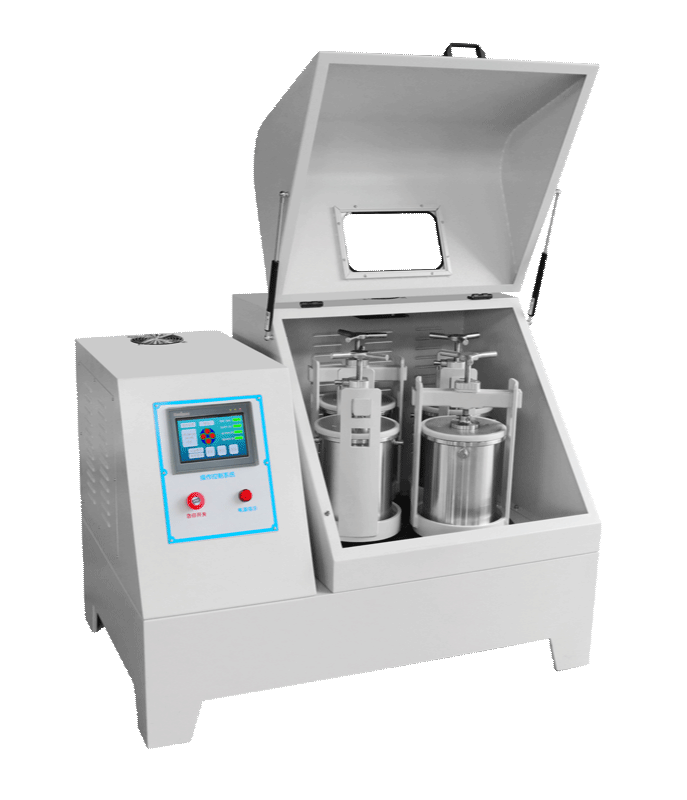
From the core, a micro-computerized touch screen planetary ball mill is a laboratory-scale fine-grinding instrument in which sealed grinding jars are carried on a rotating sun disc while each jar simultaneously spins around its own axis in the opposite direction. The two superimposed motions throw the grinding media inside the jars against the sample at high energy, so a coarse and inhomogeneous solid becomes a fine, uniform powder in a short and repeatable run. The "micro-computerized touch screen" part of the name refers to the control layer: rotational speed, running time, rotation direction, pause intervals and multi-step programs are entered and read on a digital touch panel instead of mechanical dials, counters and timers.
In practice the machine is the laboratory member of the ball mill family, with small jars, a high energy density per gram of sample, and a set of stored parameters that can be repeated and documented. Materials science, geology, metallurgy, chemistry, ceramics, battery and pharmaceutical laboratories use it whenever a small quantity of solid has to become a representative, analyzable powder.
Core Function: From Bulky Sample to Analyzable Powder
Two jobs are done at the same time. The first is comminution, meaning the reduction of particle size. The second is homogenization, meaning that any sub-sample taken from the jar afterwards represents the whole batch. Both matter, because a powder that is fine but not homogeneous produces analytical results that look precise yet are wrong.
The machine therefore sits in the middle of a sample-preparation chain. Rock, ore, cement clinker, ceramic raw material, catalyst, battery active material or plant tissue is first reduced to a granular feed by a crusher or a coarse mill, and the planetary ball mill then performs the final, high-energy step. Because the process takes place in sealed jars, it can do more than size reduction: with sufficient energy input, mechanical alloying, mechanochemical activation, amorphization, multi-component mixing and even cell disruption are all achievable with this type of equipment.
How It Works: Planetary Motion, Impact and Friction
The name comes from the geometry. The grinding jars are mounted on a disc, the "sun", which rotates in one direction. Each jar is also driven around its own axis, but in the opposite direction, exactly as a planet orbits while turning on its axis. Because the two rotations oppose each other, the balance of centrifugal and frictional forces acting on the contents of a jar changes rapidly and repeatedly during every revolution.
The grinding balls follow this changing force field. They are lifted along the inner wall of the jar, carried up to a certain height and then released or flung across the jar, striking the sample and the opposite wall. Part of the energy arrives as impact, part as shear and attrition between ball, wall and powder. The result is an energy density well above that of a simple horizontal drum mill, which is why grinding times in a planetary mill are measured in minutes rather than hours, and why such a compact bench-top unit can prepare a powder that would take far longer in a conventional rotating cylinder.
Size reduction itself happens in stages. First, existing cracks and flaws in the particles are opened; then particles fracture into fragments; then the fragments are ground further. Meanwhile the number of particles grows and the freshly created surfaces tend to stick together again, so grinding and re-agglomeration compete with each other. Once additional energy no longer creates fresh surface, the powder has reached its practical grinding limit for that material in that equipment. Running beyond that point mainly adds heat, wear contamination and, in ductile materials, cold welding.
Process Parameters That Decide the Final Powder
Several settings interact, and changing one usually changes the effect of the others:
- Rotational speed — higher speed means more impact energy and faster grinding, but also more heat and more wear.
- Grinding time — the most obvious lever and the one with the strongest diminishing returns; short cycles with intermediate checks are more efficient than one long run.
- Ball-to-powder ratio — the mass of media compared with the mass of sample; a higher ratio increases the energy transferred per particle.
- Ball size and size distribution — large balls break coarse feed, small balls refine the powder; the ball diameter should be clearly larger than the feed particles.
- Jar and ball density — dense media such as zirconia or tungsten carbide carry more momentum into each collision than light plastic media.
- Fill level — too little media wastes capacity, too much prevents the balls from moving freely; in practice a jar is left no more than about half full of media plus sample.
- Dry, wet or cryogenic mode — a liquid medium reduces dust, agglomeration and heating, while liquid nitrogen keeps heat-sensitive or ductile samples brittle.
What the Micro-computerized Touch Screen Control Adds
On a basic mill, the operator sets a speed and a time and hopes that the next run repeats the last one. On a micro-computerized model the whole sequence becomes a program: speed, total running time, forward or reverse rotation, alternating direction, pause intervals and repeated cycles can be entered step by step and stored in memory. That has three practical consequences.
First, reproducibility. Once a program has been validated for a given material, any operator can call it up and obtain the same result, an important property when the powder feeds quality control, method validation or inter-laboratory comparison. Second, readability. The panel shows the current speed, the elapsed and remaining time and the active step, so a run can be supervised without external timers. Third, traceability. Because the parameters are visible and stored, they can be recorded in a laboratory notebook or a test report exactly as they were used.
Safety functions are usually tied to the same controller: the machine will not start unless the jars are clamped and the lid is closed, and it will stop if an abnormal condition is detected. For a laboratory with mixed experience levels, that protection is often as valuable as the grinding performance itself. The product page of this model lists the exact parameters and interfaces of the version on offer.
Types and Configurations: Jars, Media and Platform
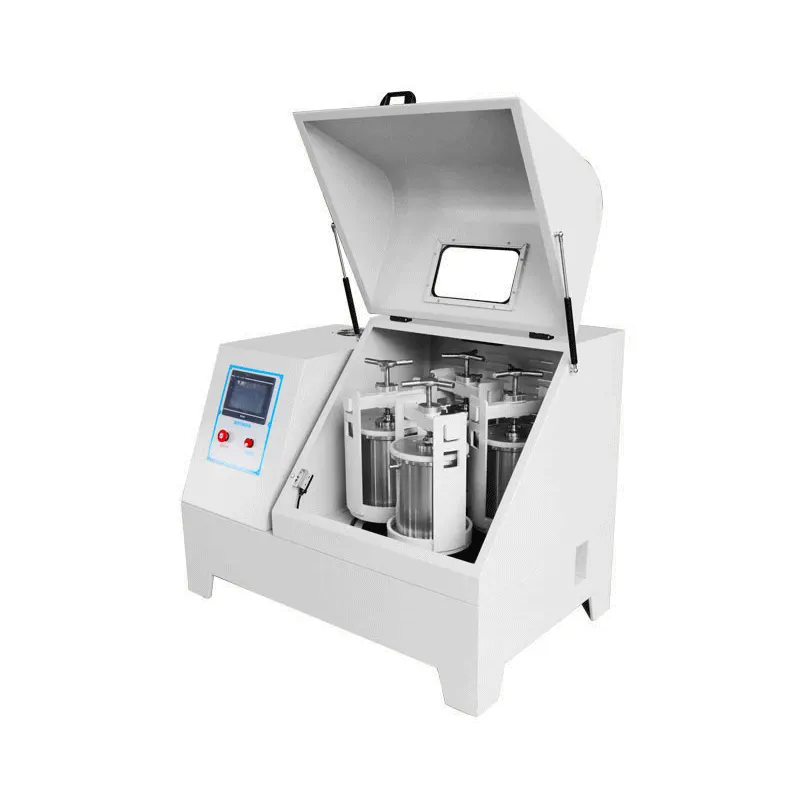
A planetary ball mill is not a single fixed tool. Within one machine, the grinding result is decided mainly by what is placed inside the jars, so users configure the unit according to material and purpose.
Grinding Jar Materials
The jar material must be harder and more wear-resistant than the sample, chemically compatible with it, and acceptable in terms of the contamination it may introduce.
- Agate — very hard and chemically inert; a common choice for geological, mineral and analytical samples where iron or heavy-metal contamination must be avoided.
- Zirconia — high density and good wear resistance; widely used for general grinding, ceramics and battery materials, and a good compromise between energy input and contamination.
- Corundum (alumina) — hard and comparatively economical; suitable for many oxides, minerals and ceramic materials.
- Stainless steel — tough and inexpensive and useful for coarse, hard feed, but it can release iron, chromium and nickel, which matters in trace-element analysis.
- Tungsten carbide — the densest and hardest common option, chosen for very hard or very tough samples; expensive and heavy.
- Nylon, PTFE, polyurethane and tempered nylon — soft, metal-free and easy to clean; used for softer materials, for samples sensitive to metal contamination and as a quieter option.
Grinding Media
Balls are normally made of the same material as the jar, so that wear contributes one known contaminant rather than a mixture of several. Size follows the feed: a few large balls for coarse material, many small balls for fine finishing. Density matters because momentum, and therefore impact energy, scales with mass, so dense zirconia or tungsten carbide media grind faster but also heat the sample faster.
Wet, Dry and Low-Temperature Operation
Dry grinding is simple, needs no downstream drying step and works well for brittle materials. Wet grinding with water or a solvent produces finer particles and less dust, keeps powder from caking on the jar wall and limits the temperature rise, but the liquid has to be removed afterwards. For heat-sensitive polymers, biological material or ductile metals, low-temperature grinding with liquid nitrogen or a cooled jar keeps the sample brittle and prevents smearing and cold welding.
Platform Formats and Scale
Benchtop planetary mills such as the micro-computerized touch screen model carry one to four jars and are intended for gram-scale batches. Larger and dual-planet versions apply the same principle to bigger jars and higher throughput. The choice depends on how much powder is needed per batch, how many samples must be processed in parallel, and how much bench space and power are available.
Key Performance Indicators and Selection Checklist
Batch Size and Throughput
Planetary ball mills are batch machines: throughput is jar volume divided by process time, not a continuous flow. The usable sample mass in a jar is limited because media and free space must remain for the balls to move, so the practical batch is a fraction of the nominal jar volume. Users who need grams per run choose small jars; users who need hundreds of grams per run need several jars, a larger platform, or both. Matching jar size to real sample demand avoids both idle capacity and repeated, error-prone runs.
Particle Size Control and Reproducibility
Final fineness depends on the energy delivered per particle, which is a function of speed, time, media mass and media size. The realistic target is material-dependent: brittle minerals and ceramics reach fine or sub-micron powders fairly readily, while soft polymers, ductile metals and fibrous biological samples have firm practical limits. Reproducibility is the second half of the specification, and it comes from programmable parameters, a stable jar clamping system and consistent filling practice.
Energy, Heat and Efficiency
High energy density is the strength of this design, and heat is its by-product. Mechanical energy that does not create new surface ends up as heat inside the jar, which can alter crystalline phases, decompose organics or soften polymers. Efficient operation therefore means the shortest run that reaches the required fineness, sensible pauses between cycles and, where necessary, low-temperature accessories. Comparing machines by grinding speed alone is meaningful only together with the amount of heat they generate.
Automation and Programmability
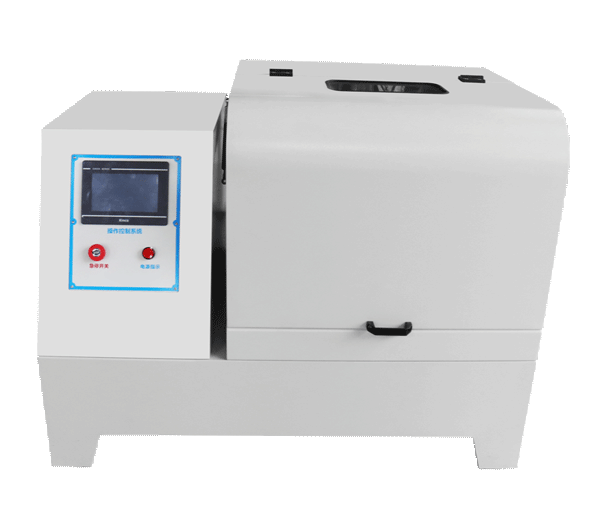
Look at how many parameters can be programmed, whether the direction can be reversed and cycled, whether programs are stored, whether the display is readable at a glance, and whether unattended operation is safe. A touch-screen controller with stored programs shortens training and reduces operator-to-operator variation.
Maintenance, Wear and Safety
The consumables are jars, balls, lid seals and clamps. Wear appears as contamination in the powder and as a loss of grinding efficiency, so jars and media should be inspected periodically and replaced as a matched set. Safety points include secure clamping of heavy jars, a lid interlock, dust control when a jar is opened, correct handling of solvents, and adequate ventilation or inert-gas handling for reactive powders.
Applications and Selection Advice
Where the Machine Fits
Typical applications include geological and mineralogical sample preparation for XRF, XRD and ICP analysis; ore and concentrate testing in metallurgy; cement, clinker, ceramic and glass raw materials; cathode, anode and solid-electrolyte powders in battery research; catalysts, pigments and fillers; coal and environmental samples; pharmaceutical and food materials; and plant or biological tissue where cell disruption is the goal. In most cases the mill is either the last step before analysis or the first step before sintering, pressing or a chemical reaction, which is why sample quality so often decides the quality of the result that follows.
Choosing a Configuration for Your Laboratory
An analytical laboratory that handles many different samples should prioritize reproducibility and low contamination: a programmable unit, agate or zirconia jars, and media in two or three sizes for coarse and fine work. A metallurgy or hard-materials laboratory should start from energy and wear: dense zirconia or tungsten carbide jars, accepting the corresponding cost and weight. A battery or air-sensitive materials group needs sealed or vacuum-capable jars and the ability to work under an inert atmosphere. Teaching laboratories generally value a straightforward touch interface with stored demonstration programs. In every case the sample chemistry sets the limit: if iron contamination is unacceptable, stainless steel is not an option, whatever its price.
Frequently Asked Questions
How fine can a planetary ball mill grind?
There is no single number, because the answer depends on the material, the energy input and the media. Brittle minerals and ceramics can typically be reduced to a few micrometers, and wet grinding with small dense media can reach the sub-micron range. Soft, fibrous or ductile samples stop much earlier. The practical way to find the limit is to grind a test portion in short intervals and check the particle size, rather than to run for hours and hope.
How long should one grinding run take?
Most laboratory runs last from a few minutes to about an hour in total, often split into several cycles with short pauses so that the jars can cool. Very soft or heat-sensitive materials are usually ground in shorter bursts. Longer than necessary is not better: past the grinding limit the powder only picks up heat and wear debris.
Can it grind ductile metals and polymers?
Ductile materials do not fracture easily; they flatten and weld together instead. Two countermeasures are common: short grinding cycles with pauses, which limit the temperature rise, and low-temperature grinding, which makes the material brittle enough to break. Very soft polymers are usually better handled with a cutting or impact mill before any fine grinding is attempted.
Why do two operators obtain different results from the same machine?
Almost always because of filling practice rather than the machine. The number of balls, the mass of sample, the free space in the jar, the clamping force and the ambient temperature all influence the energy actually delivered. Written procedures, stored programs and a fixed ball-to-powder ratio remove most of that variation.
Is dry or wet grinding the better choice?
Dry grinding is simpler, requires no drying step and is the default for brittle materials. Wet grinding gives finer particles, less dust and a smaller temperature rise and is often preferred for very fine targets or for materials that cake easily. The price is an additional separation and drying step, plus a solvent that must be compatible with the sample and safe to handle.
Where to Learn More
Because the result depends strongly on jar material, media size and programming, the most useful next step is to look at the actual specification of the model you are considering. The micro-computerized touch screen planetary ball mill page describes the available jars, jar sizes, programmable parameters and accessories for that unit, and a supplier's application team can usually recommend a starting configuration for a particular material. Beginning with one material, one jar type and one documented program is the fastest way to build a reliable sample-preparation method around this type of mill.
Related Products
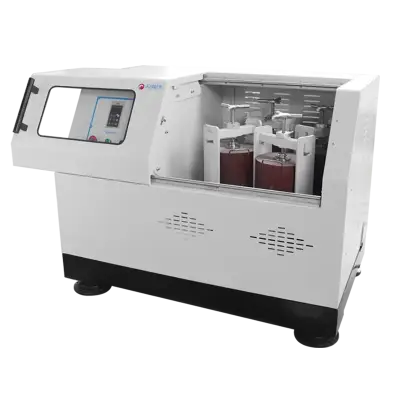
XQM-20 20L Vertical Production Planetary Ball Mill
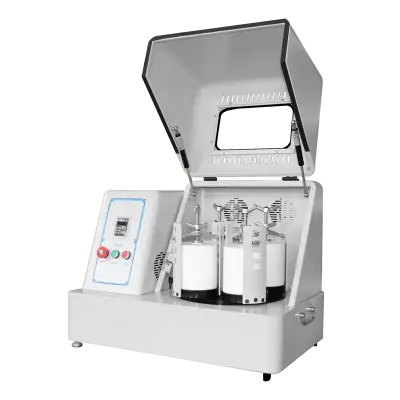
Laboratory planetary grinder
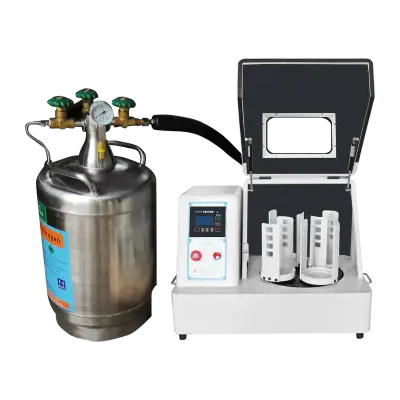
Liquid Nitrogen Planetary Ball Mill
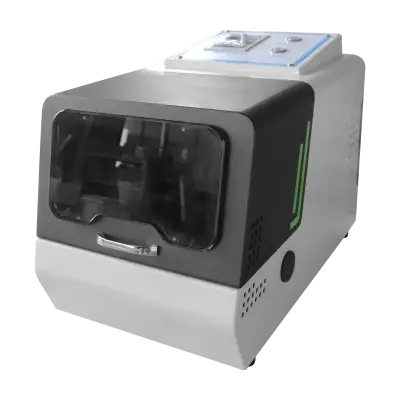
Micro Planetary Ball Mill
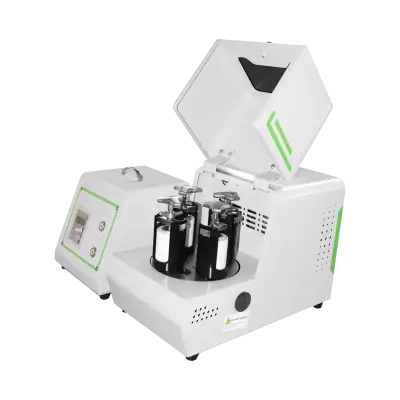
Micro Planetary Ball Mill
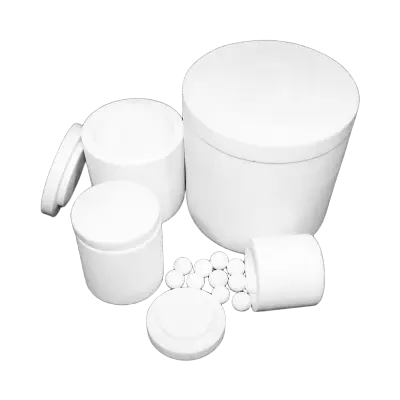
A grade Corundum planetary Mill Jar
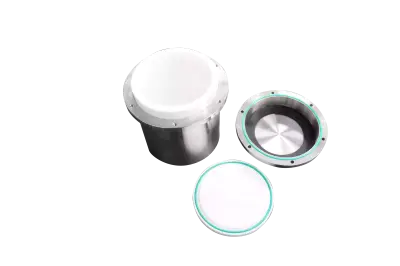
304 stainless steel lined with zirconia mill jar
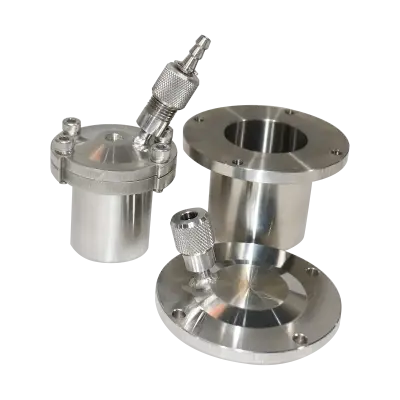
vacuum planetary mill jar
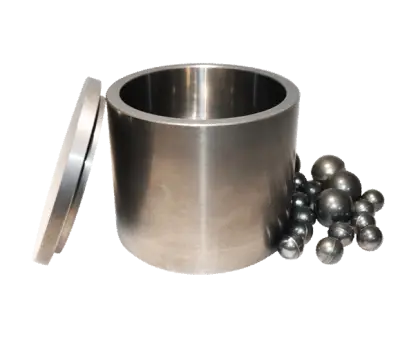
Tungsten carbide planetary mill jar
Get In Touch
Our professional team will reply to you within one business day. Please feel free to contact us!