

What Is a Micro-computerized Touch Screen Planetary Ball Mill? A Mill for Labs
From a practical standpoint, a Micro-computerized Touch Screen Planetary Ball Mill is a laboratory grinding system designed to reduce small samples of solid material to fine or very fine powders. It belongs to the planetary ball mill family, a category of equipment used when controlled, repeatable size reduction matters more than bulk throughput. The name points to two defining ideas: the machine uses planetary motion to drive one or more grinding jars, and it uses a micro-computerized touch-screen interface for operation. In laboratories, such a mill is used to prepare samples for analysis, homogenize powders, support materials research, and produce fine particles for further testing or processing. This FAQ-style guide explains the working principle, main components, selection factors, and typical applications for technical buyers, laboratory staff, and students who need a clear overview before reviewing model-specific data.
A Clear Definition
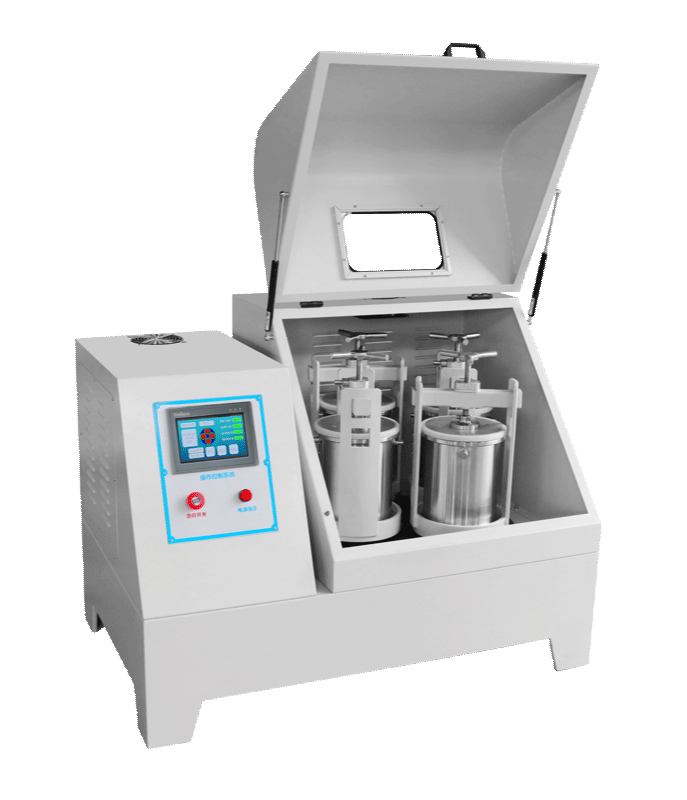
From the core, the micro-computerized touch screen planetary ball mill is a lab-scale comminution and powder-processing machine. It takes a small volume of brittle or semi-brittle solid, often in the form of chips, granules, crystals, or coarse powder, and converts it into a finer powder through repeated impact and friction inside a sealed grinding jar. The planetary part of the name refers to the motion: jars rotate around a central axis while also turning around their own axes, creating a complex centrifugal field. The micro-computerized touch screen part refers to the control interface, which is intended to make operating parameters easier to enter, monitor, and repeat. The product is not a substitute for a large production mill; its value lies in controlled laboratory processing, flexible jar configurations, and the ability to work with relatively small samples under documented conditions.
Core Functions and Working Principle
A planetary ball mill performs two broad jobs. First, it reduces particle size. Second, it mixes and homogenizes the material while grinding. These functions are related but not identical: a short run may blend components, while a longer or more energetic run may crush crystals, break agglomerates, and create fresh surfaces. The right operating strategy depends on whether the goal is a representative analytical sample, a reactive powder, a uniform mixture, or a fine suspension.
From solid feed to fine powder
The material starts as a solid feed inside a grinding jar. The jar contains grinding balls, and the combination of jar rotation, ball motion, and material filling creates a crowded, energetic environment. As the balls collide with the feed and with each other, they apply impact forces that fracture larger particles. As the balls roll and slide against the jar wall and against neighboring balls, they apply shear and friction that wear down edges, break agglomerates, and help blend the powder. The result is a powder with a distribution of particle sizes rather than one exact size. Over time, the distribution usually shifts finer, but it can also reach a practical limit when the remaining particles resist fracture, when the powder agglomerates, or when contamination and heat become limiting factors.
For many laboratory users, the most important point is that grinding is a process, not a single switch. The same mill can produce different results with different jars, ball sizes, ball charges, sample loads, and run times. A method developed for one material should not be transferred to another without checking the outcome. The product touch-screen control is useful in this context because repeatable settings are easier to reproduce when parameters can be entered and reviewed consistently. The exact control functions, however, should be confirmed from the manufacturer product page and manual rather than assumed from the product name alone.
Planetary motion and energy transfer
In a planetary ball mill, the grinding jars are mounted on a rotating carrier, often called a sun wheel. The carrier turns in one direction, while each jar turns around its own axis, commonly in the opposite direction. This combined motion gives the grinding balls a path that is more complex than simple tumbling. The balls are repeatedly lifted, thrown, and pressed against the jar wall. Energy is transferred to the powder through impacts, rolling contact, and friction. Because the jars move in a strong centrifugal field, the effective forces can be much higher than those in a simple rotating drum, which is why planetary mills are associated with intensive grinding and short processing times for suitable materials.
The energy transfer is not uniform everywhere in the jar. Near the wall, shear and friction may dominate; in the bulk, collisions and ball-to-ball contact may be more important. The fill level, ball size distribution, and powder-to-ball ratio all influence how the energy is distributed. Too little powder can cause excessive ball-to-ball contact and wear; too much powder can cushion the balls and reduce fracture efficiency. These are practical trade-offs that operators manage during method development. Awareness of them helps explain why two laboratories can obtain different results even when they use the same nominal mill type.
Process parameters that shape the result
Several parameters are central to planetary ball milling. Rotation speed controls the energy and frequency of ball motion. Grinding time controls the total dose of that energy. Ball size and number affect the balance between impact and friction. Jar volume and fill level determine how freely the balls can move. The material of the jar and balls affects wear, contamination, and sometimes the chemistry of the powder. Dry grinding is common for brittle materials, while wet grinding can improve dispersion, reduce dust, and help control temperature, but it adds a liquid-handling step and may change the final powder condition.
Heat is another important parameter. Most of the mechanical energy delivered to the jar eventually appears as heat, and temperature-sensitive materials may need interrupted runs, reduced energy input, or an external cooling strategy. The operator should also consider whether the target is a narrow particle size distribution, a high surface area, intimate mixing, or mechanical activation. These goals do not always respond in the same way to a single change. For example, increasing grinding time may make a powder finer, but it may also increase contamination, aggregation, or thermal load. A systematic approach, starting with a conservative run and examining the product after each change, is more reliable than assuming that maximum speed and maximum time are always best.
Main Configurations and Key Components
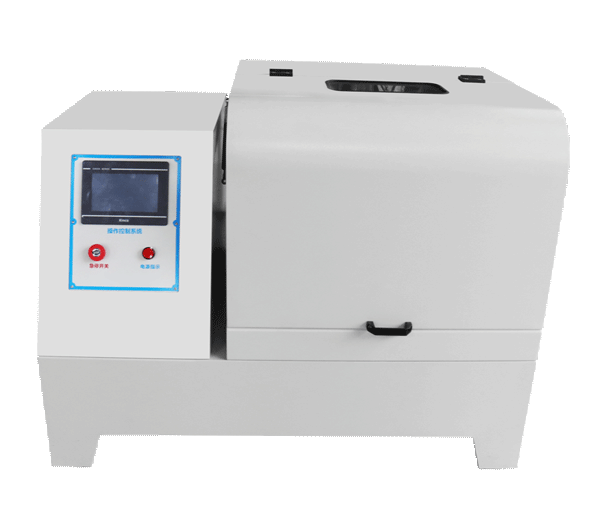
The referenced product is one model in a broader family, but its main functional blocks are typical of planetary ball mills. Understanding those blocks helps a buyer compare configurations without being distracted by labels alone.
Grinding jars and media
The grinding jar is the working chamber. It must hold the sample and balls, seal reliably, and resist wear from the material being processed. Jars are made in different materials and sizes because no single jar material is ideal for every sample. A jar that is very hard and wear-resistant may be preferred for abrasive powders, while a jar chosen for low contamination may be preferred for trace analysis. The grinding media must be matched to the jar and to the sample. Media density, size, and surface condition influence the energy available for fracture. The user should check compatibility with the manufacturer, especially when the sample is abrasive, corrosive, or sensitive to metallic contamination.
Loading and sealing deserve attention. A jar that is overfilled may not allow enough ball movement; a jar that is underfilled may experience excessive wear and poor energy use. The lid and seal must be clean and correctly seated to prevent leakage, especially in wet grinding. After a run, the jar should be opened and cleaned according to the material and the manufacturer instructions. Cross-contamination between samples is a common laboratory risk, so a practical cleaning procedure should be established before the mill is placed into routine use.
Drive, safety enclosure, and control system
A planetary ball mill requires a rigid drive, a secure mounting system for the jars, and a protective enclosure for the moving parts. The high-energy motion that makes the mill effective also makes guarding and correct jar installation essential. Users should follow the manufacturer instructions for locking jars, checking balance, and operating the safety lid. The control system coordinates the drive and allows the operator to set the run. In a micro-computerized touch-screen design, the interface is intended to present parameters and status information in a form that is easier to read and operate than simple mechanical controls. The actual range of functions, such as program storage, alarms, user access, and run monitoring, should be verified from the product documentation.
The role of the touch-screen interface
The touch-screen interface is not merely a cosmetic feature. In laboratory work, reproducibility depends on setting the same speed, time, and operating sequence for each batch. A clear digital interface can reduce setting errors and make it easier for different operators to follow the same method. It can also help a supervisor review what was entered. However, the interface is only as useful as the underlying control system and the laboratory standard operating procedures. Buyers should ask whether the interface supports the specific workflows they need, whether parameter changes are logged, and whether the manual explains calibration and troubleshooting. These questions are more important than the size or style of the screen.
For buyers, the practical question is not whether a screen is present, but whether the control system supports method discipline. A laboratory that runs the same procedure many times needs dependable entry and clear status feedback. A laboratory that develops new methods needs enough flexibility to test different settings without confusing the record. The product page should be used to confirm how the interface is organized, what information is displayed during a run, and what safety messages are provided.
Key Performance Indicators and Selection Points
Because planetary ball mills are configured for different jars, materials, and laboratory practices, a single headline specification rarely tells the whole story. The following indicators should be compared together, and model-specific values should be confirmed with the supplier.
Capacity and throughput
Capacity should be defined in terms of usable sample mass, not only jar volume. The amount of powder that can be processed efficiently depends on the jar size, number of grinding stations, sample density, ball charge, and target fineness. A jar may have a nominal volume that is much larger than the practical working volume once balls and free space are considered. For laboratory use, consistent recovery of a small sample may matter more than maximum batch size. A buyer should ask how much material is typically loaded for the intended application, how many jars can be run at once, and whether the mill can accommodate the jar sizes needed for current and future projects.
Particle size control and reproducibility
Final fineness is material-dependent. Hard, brittle crystals may respond quickly, while soft, ductile, or sticky materials may require different strategies. The appropriate target is usually a particle size distribution and a repeatable preparation method, not a single number printed on a data sheet. Reproducibility comes from controlled speed, time, ball charge, jar condition, and sample loading. It also comes from good housekeeping: identical jars, clean media, consistent fill levels, and documented procedures. The touch-screen control can support this discipline by making settings easier to reproduce, but the laboratory must still validate the method for each material.
Energy use, heat, and efficiency
Grinding efficiency should be judged by the useful powder produced per run and the quality of that powder, not by motor power alone. A more energetic run may shorten grinding time but can also generate heat, increase wear, and change the sample. Temperature-sensitive materials may need shorter runs or a cooling strategy. Users should consider the whole process, including setup, cleaning, and recovery, because a fast grind that is difficult to clean may not be efficient in practice. Noise and vibration are also part of the working environment and should be considered when selecting a location for the mill.
Automation and programmability
Automation can improve repeatability, but it should be matched to the laboratory needs. A teaching lab may value simple operation and clear safety instructions. A research group may need flexibility to test different jar and media combinations. A quality-control laboratory may need documented methods and consistent execution. Buyers should ask what can be programmed, how parameters are displayed, what happens after a power interruption, and what safety interlocks are provided. The product name identifies a micro-computerized touch-screen interface, but the exact programming capability is a specification item that should be checked directly.
Maintenance and usability
Maintenance begins with access. Jars must be installed, removed, opened, cleaned, and inspected. The mill should be positioned with enough space for safe handling and for the lid or guard to operate fully. Consumable parts such as seals and grinding media should be available, and the manual should explain inspection intervals. A practical buyer also considers the laboratory power supply, floor or bench strength, ventilation, and noise tolerance. These details do not appear in a product slogan, but they determine whether the mill is convenient and safe to use every day.
Applications and Selection Advice
Planetary ball mills are used where small samples must be reduced, mixed, or mechanically treated under controlled conditions. They are common in laboratories that work with powders and materials, but the specific application should always be matched to the jar, media, and method.
Typical application areas
In materials research, the mill can prepare ceramic, mineral, polymer, composite, and other powder samples for analysis or further processing. In geology and mining laboratories, it can reduce rock chips and mineral samples before testing. In chemistry and environmental work, it can homogenize samples and increase surface area for extraction or reaction studies. In battery and energy-material research, controlled grinding and mixing are often part of electrode or powder development. In teaching laboratories, the mill can demonstrate comminution principles, though proper supervision and safety instruction are essential. These examples describe the broad uses of the equipment category; the suitability of a specific model for a specific material should be confirmed by trials and the manufacturer guidance.
Matching the mill to the user
A laboratory that processes many different samples should prioritize easy cleaning, interchangeable jars, and clear operating procedures. A laboratory focused on one material should prioritize jar and media compatibility, wear resistance, and repeatable recovery. A teaching environment should prioritize safety features, simple controls, and a manual that explains correct loading and limits. A process-development group should consider how results might scale or transfer, while recognizing that a laboratory planetary mill is not a production-scale device. In all cases, the user should define the sample, target fineness, batch size, and contamination limits before comparing models.
Questions to ask before purchase
A useful selection conversation goes beyond the product name. The buyer should ask about supported jar sizes and materials, the maximum usable sample amount, the number of grinding stations, the achievable operating range, and the safety features. It is also reasonable to ask how the touch-screen control is organized, what parameters can be stored, how cleaning is performed, and what consumables are expected. If the application involves heat-sensitive, abrasive, corrosive, or reactive materials, those points should be discussed before delivery. Finally, the buyer should request the manual and confirm that the laboratory can meet the installation and operating requirements.
Practical operating notes
Start with a conservative method and inspect the powder after each change. Keep jars and media matched to the sample, and record the exact settings used for each run. Avoid overloading the jar, and never operate the mill without the guard and lid in the correct position. Clean thoroughly between samples to reduce cross-contamination. If the powder becomes sticky or the jar becomes hot, reconsider the run time, loading, and material combination rather than simply increasing speed. These habits turn a capable laboratory mill into a reliable preparation tool.
A final selection note is useful for first-time buyers. Do not choose a mill solely because it has a touch screen or a familiar model name. Choose it because the available jars, sample capacity, control functions, safety design, and support match the work that will actually be performed. A short trial with the intended material is often more informative than a long list of general specifications, especially when the target is a fine powder with a narrow distribution or a sample that is sensitive to heat and contamination.
Further Reading
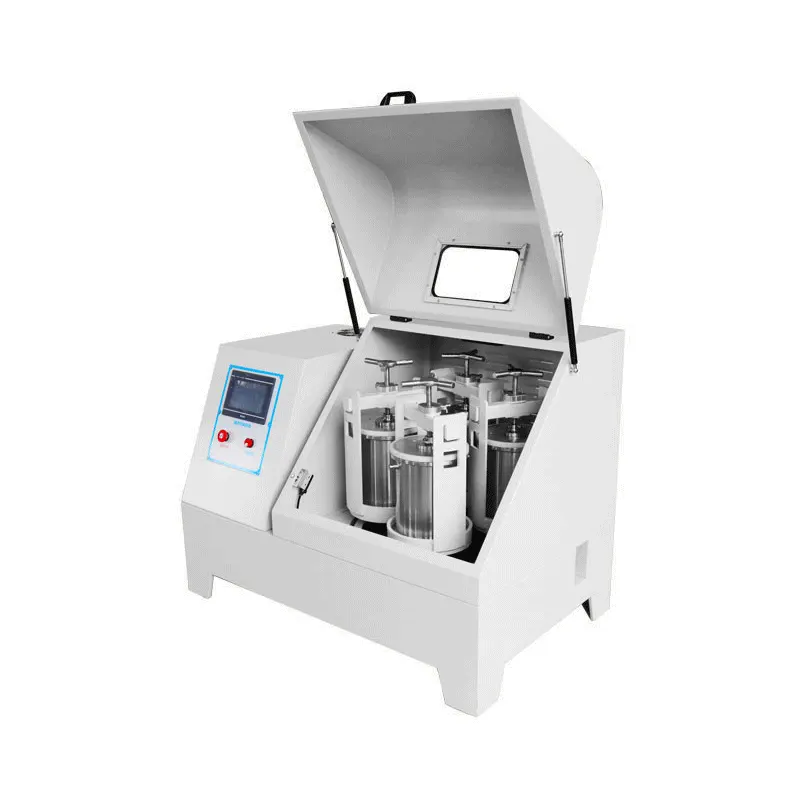
The product page provides the manufacturer description and the most current model information for the Micro-computerized Touch Screen Planetary Ball Mill. Use it to confirm jar options, control features, dimensions, and other specifications before making a purchase decision. Because the discussion above is a general technical overview, model-specific values should always come from the current product documentation.
Related Products
Get In Touch
Our professional team will reply to you within one business day. Please feel free to contact us!