

What is a Lab Stirred Ball Mill? A High-Efficiency Ultrafine Grinding Device for Laboratory and Pilot-Scale Material Processing
What is a Lab Stirred Ball Mill? A High-Efficiency Ultrafine Grinding Device for Laboratory and Pilot-Scale Material Processing
At its core, a lab stirred ball mill is a compact, high-performance grinding device designed for ultrafine pulverization, mixing, and dispersion of materials in research laboratories, pilot plants, and small-batch production environments. Unlike traditional ball mills that rely on the rotation of a heavy drum, the stirred ball mill uses a stationary chamber and a rotating internal agitator to drive grinding media, delivering intense impact, shear, and friction forces to reduce particles down to the submicron or even nanometer range. This mechanism makes it an indispensable tool for industries such as ceramics, advanced materials, battery chemicals, pigments, pharmaceuticals, and minerals, where precise control over particle size distribution and product purity is critical.
Core Function and Working Principle
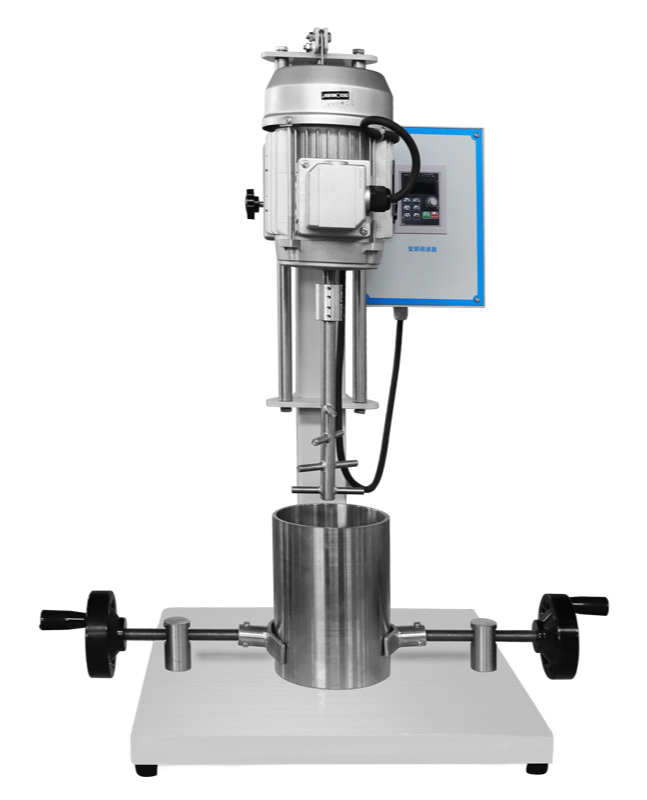
The lab stirred ball mill transforms coarse feed materials (typically from 0.5–3 mm) into fine or ultrafine powders (down to <1 µm) through a highly efficient energy transfer process. The key components include a fixed grinding chamber (typically made of wear-resistant ceramics, stainless steel, or polyurethane), a rotating agitator (with arms, discs, or a spiral impeller), and a charge of grinding media (e.g., zirconia, alumina, steel balls or beads).
During operation, the agitator rotates at a controlled speed, causing the grinding media and the feed slurry to circulate vigorously. The media particles collide with each other and with the chamber walls, generating high shear and impact forces that break down agglomerates and fracture individual particles. The grinding chamber is usually jacketed for temperature control, allowing sensitive materials to be processed without thermal degradation. The residence time and agitator speed are adjustable parameters that directly influence the final particle size: higher speeds and longer grinding times yield finer particles, while lower speeds are suitable for gentle mixing or deagglomeration.
Compared to conventional planetary ball mills or drum ball mills, the stirred ball mill achieves a much higher energy density, meaning that the grinding energy is concentrated in a small volume, leading to faster processing and narrower particle size distributions. It supports both wet and dry grinding, and can be adapted for vacuum or inert gas protection when handling air-sensitive materials.
Main Types of Lab Stirred Ball Mills
Lab stirred ball mills come in several configurations to suit different experimental needs and throughput scales. The most common types include:
1. Tabletop / Miniature Stirred Ball Mill
Designed for small-scale R&D, these units typically have chamber volumes from 0.1 L to 2 L. They are lightweight, occupy minimal bench space, and are ideal for feasibility studies, formulation development, and material screening. The mini stirred ball mill often features a simple control interface and easy disassembly for cleaning.
2. Electric Lifting Stirred Ball Mill
For larger laboratory batches (e.g., 3–20 L), the electric lifting model allows the grinding chamber to be raised and lowered mechanically, simplifying the discharge of viscous slurries and media separation. This type is suitable for pilot-scale testing and small production runs, and it often includes a programmable control system for speed, time, and cycle operations.
3. Lightweight Stirred Ball Mill
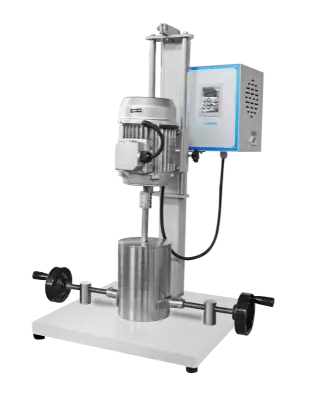
This variant is optimized for easy handling and portability, typically with a chamber volume of 1–5 L. It uses a lightweight base and a compact motor, making it convenient for multi-user labs or those requiring frequent relocation. It still delivers sufficient grinding energy for ultrafine applications.
4. Production-Type Stirred Ball Mill
When scaling up from lab to production, the production-type stirred ball mill (also called an attritor or tower mill) offers continuous or batch operation with chamber volumes up to 100 L or more. Although not strictly a lab tool, it is often used in pilot plants and small factories to bridge the gap between laboratory results and industrial manufacturing.
Selecting the right type depends on your sample volume, desired particle size, material properties, and budget. For most laboratory applications, a tabletop or lightweight model with a 0.5–2 L chamber is sufficient.
Key Performance Indicators and Selection Criteria
When choosing a lab stirred ball mill, consider the following parameters:
- Grinding Capacity: The chamber volume directly determines the batch size. For lab use, 0.2–5 L is common; for pilot scale, 5–50 L is typical.
- Particle Size Range: Most lab stirred ball mills can achieve d50 values below 1 µm, and some can reach 100 nm with appropriate media and process optimization.
- Agitator Speed: Variable speed control (e.g., 100–3000 rpm) allows fine-tuning of grinding intensity. Higher speeds are necessary for breaking hard materials, but may cause excessive wear or heat generation.
- Material of Construction: The grinding chamber and agitator should be compatible with the sample. Common materials include 304/316 stainless steel, zirconia, alumina, polyurethane, and PTFE. For trace metal contamination-sensitive applications, all-ceramic chambers are preferred.
- Temperature Control: A water-cooled jacket or advanced cooling system is essential for heat-sensitive materials, as the intense agitation can raise the slurry temperature significantly.
- Automation and Programmability: Modern lab stirred ball mills offer digital displays, programmable timers, and data logging, enabling reproducible results and unattended operation.
- Ease of Cleaning: Look for quick-release clamps, liftable chambers, and removable agitators to minimize downtime between different materials.
Other important factors include noise level, footprint, and the availability of accessories such as vacuum lids, gas purge ports, and various media sizes.
Application Areas and Selection Recommendations
Lab stirred ball mills are widely used in:
- Ceramics & Glass: Grinding of alumina, zirconia, silicon carbide, and other advanced ceramics to fine powders for sintering or coating.
- Battery Materials: Dispersion of cathode and anode active materials, conductive additives, and binders in the preparation of electrode slurries.
- Pigments & Dyes: Deagglomeration and particle size reduction of organic and inorganic pigments to achieve high color strength and transparency.
- Pharmaceuticals: Micronization of active pharmaceutical ingredients (APIs) to improve bioavailability and formulation stability.
- Cosmetics & Personal Care: Homogenization of creams, lotions, and sunscreen powders.
- Nanomaterials: Production of nano-sized particles, nanocomposites, and functional materials for research.
For labs focusing on routine quality control or small-batch production, a lightweight model with a 1 L chamber and standard stainless steel wetted parts is often sufficient. For advanced research on high-purity ceramics or nanomaterials, a tabletop unit with a zirconia or alumina chamber and a variable-speed drive ranging from 300 to 2500 rpm is recommended. If you plan to scale up your process, consider an electric lifting model with a capacity of 3–10 L, which can be used later for pilot runs.
Learn more about the complete range of stirred ball mills, including the lab stirred ball mill, electric lifting stirred ball mill, lightweight stirred ball mill, and production-type stirred ball mill at TENCAN's official website.
References
Related Products
Get In Touch
Our professional team will reply to you within one business day. Please feel free to contact us!