

What is a Lab Stirred Ball Mill? A High-Efficiency Grinding Equipment for Fine and Ultrafine Powder Preparation
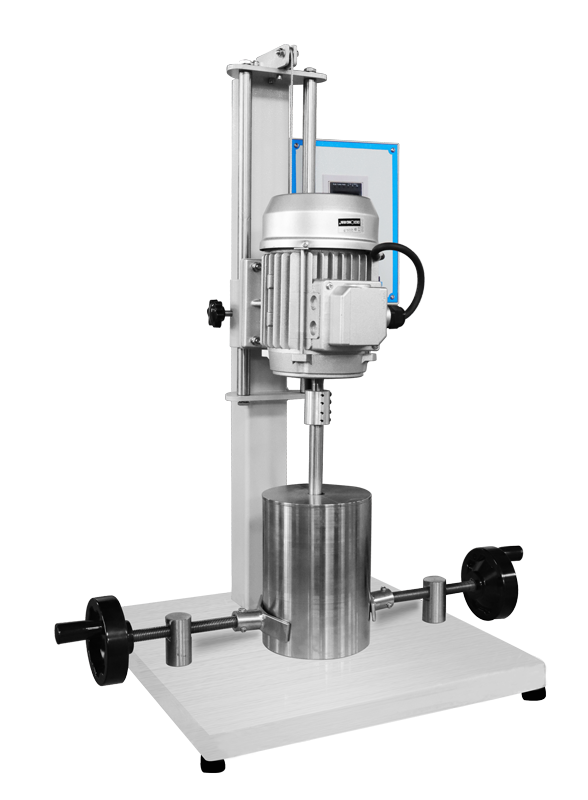
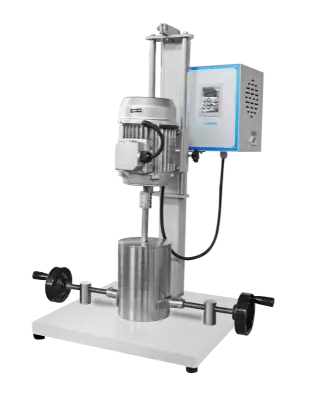
At its core, a lab stirred ball mill is a specialized grinding device used in laboratories and pilot plants to produce fine and ultrafine powders from a wide range of materials. Unlike traditional tumbling ball mills, this equipment employs a stationary grinding chamber and a rotating agitator (stirrer) to drive grinding media, creating intense shear, impact, and friction forces that rapidly reduce particle size. It is an essential tool for materials research, product development, and small-scale production in industries such as ceramics, chemicals, minerals, pharmaceuticals, and advanced materials.
Core Function and Working Principle
The primary function of a lab stirred ball mill is to transform coarse feed materials into fine or ultrafine powders with controlled particle size distribution. The process starts by loading the grinding chamber with a mixture of grinding media (e.g., zirconia, alumina, or steel balls) and the material to be ground, often in a liquid suspension for wet grinding. The agitator, typically a helical or disc-shaped stirrer, rotates at high speed, imparting kinetic energy to the media. This causes the media to collide, shear, and rub against each other and the chamber walls, effectively breaking down the particles.
The key working parameters include agitator speed (typically ranging from 100 to 1000 rpm), media size and filling ratio, and residence time. Higher speeds produce more intense grinding, while smaller media sizes are better suited for ultrafine grinding. The process can be operated in batch or continuous mode, with optional features like cooling jackets to control temperature, making it suitable for heat-sensitive materials. Compared to conventional ball mills, the stirred ball mill achieves higher energy efficiency and finer product fineness because the energy is directly applied to the grinding media rather than wasted in rotating the entire chamber.
Main Types and Classifications
Lab stirred ball mills are available in several configurations to suit different research and production needs. The most common types are:
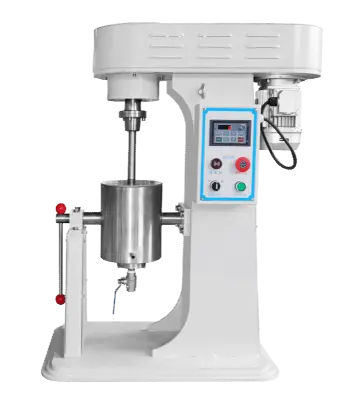
1. Standard Lab Stirred Ball Mill
This is the basic model, typically with a fixed grinding chamber and manual discharge. It is ideal for small batch experiments (e.g., 0.5 to 5 liters) and offers simple operation. It is often used for feasibility studies, formula optimization, and small-scale sample preparation.
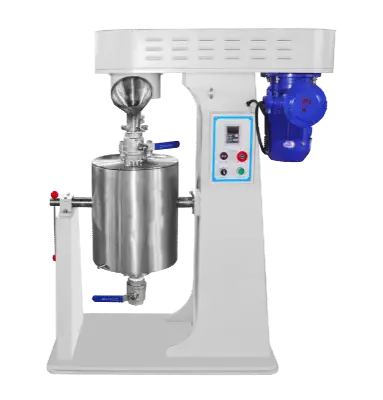
2. Electric Lifting Stirred Ball Mill
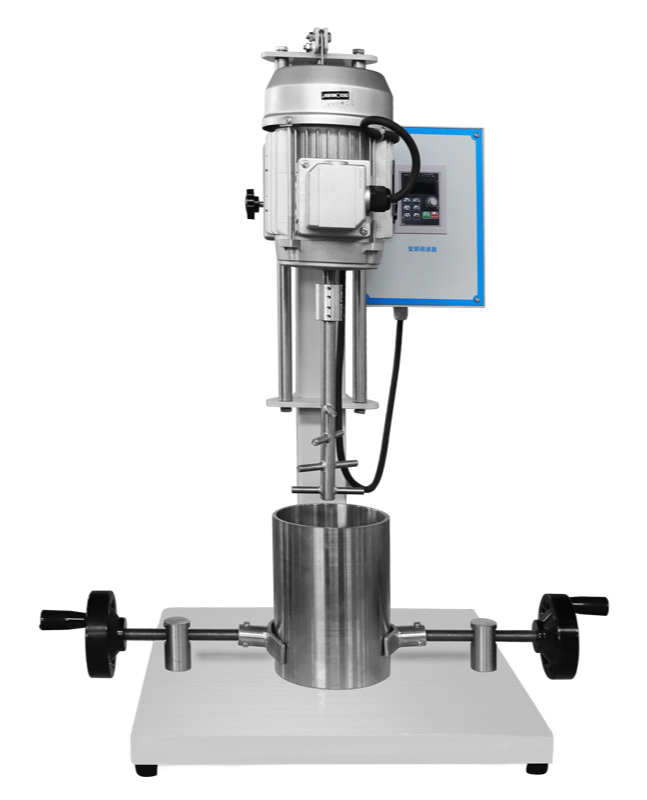
This type features an electric lifting mechanism that raises the agitator assembly for easy cleaning and media replacement. It is suitable for labs that require frequent changeovers between different materials. The electric lift reduces manual labor and improves safety. (See more: Electric Lifting Stirred Ball Mill)
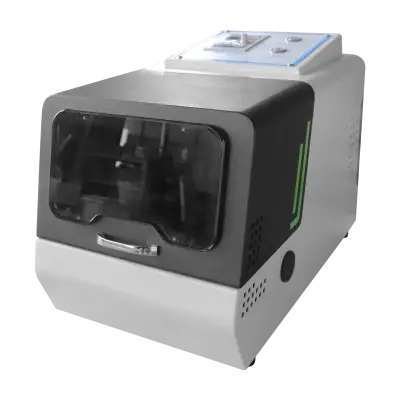
3. Lightweight Stirred Ball Mill
Designed for portability and space-saving, the lightweight model is compact and often used in teaching labs or field research. It may have a smaller capacity (0.1 to 1 liter) but still delivers high grinding efficiency. (See more: Lightweight Stirred Ball Mill)
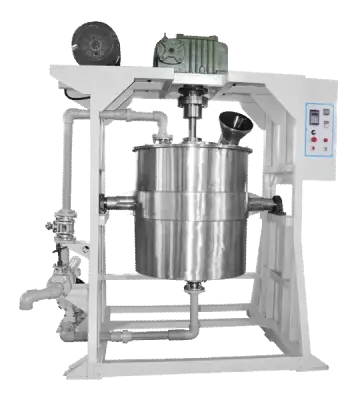
4. Production Type Stirred Ball Mill
For scale-up studies and small production runs, the production type offers larger capacities (e.g., 10 to 100 liters) and continuous operation options. It often includes advanced control systems for automated process monitoring. (See more: Production Type Stirred Ball Mill)
Key Performance Indicators and Selection Criteria
When choosing a lab stirred ball mill, users should consider the following factors:
- Processing Capacity: Typically ranges from 0.1 to 50 liters. Choose a model that matches your batch size requirements.
- Grinding Fineness: The machine can achieve particle sizes down to the submicron or even nanometer range. The fineness depends on media size, speed, and grinding time. For example, using 0.5 mm zirconia beads can produce D50 less than 1 micron.
- Energy Efficiency: Stirred ball mills are more energy-efficient than traditional ball mills, often reducing energy consumption by 30-50% for the same fineness.
- Automation: Advanced models offer programmable speed control, digital timers, and data logging. Some have touch-screen interfaces for easy operation.
- Maintenance: Look for easy-to-clean designs, such as quick-release agitators and lifting mechanisms. The availability of spare parts (e.g., seals, stirrer blades) is also important.
- Cooling System: For temperature-sensitive materials, a water-cooled jacket is essential to prevent overheating during prolonged grinding.
Application Areas and Selection Advice
Lab stirred ball mills are widely used in:
- Ceramics and Advanced Materials: For grinding ceramic powders, pigments, and electronic materials.
- Battery Materials: For preparing electrode slurries and cathode/anode materials.
- Pharmaceuticals: For micronizing active ingredients and excipients.
- Chemicals and Coatings: For dispersing pigments and producing fine chemical powders.
- Minerals and Mining: For ore grinding and mineral processing research.
For beginners or small-scale R&D, a standard lab stirred ball mill with a capacity of 1-2 liters is a good starting point. For labs that require frequent media changes, the electric lifting model saves time. For those aiming to scale up production, the production type provides a smooth transition from lab to pilot scale. Always consult with the manufacturer (e.g., TENCAN) to ensure the selected model matches your specific material properties and process requirements.
References
Related Products
Get In Touch
Our professional team will reply to you within one business day. Please feel free to contact us!