

What is a Lab Stirred Ball Mill? An Efficient Grinding Equipment for Ultrafine Powder Dispersion
What is a Lab Stirred Ball Mill?
At its core, a lab stirred ball mill is a specialized grinding device used in research and development to reduce solid particles to ultrafine powders (often submicron or nanometer scale) and to achieve high-quality dispersion of materials in liquids. Industry sectors such as ceramics, advanced batteries, pigments, pharmaceuticals, and nanomaterials rely on this equipment to produce consistent, high-purity slurries and dry powders with controlled particle size distribution.
Unlike conventional tumbling ball mills where the entire drum rotates, the lab stirred ball mill keeps the grinding chamber stationary. An internal agitator (stirrer) rotates at high speed, driving grinding media (e.g., zirconia or steel balls) against the material. This design delivers significantly higher energy density and grinding efficiency, making it ideal for fine and ultra-fine grinding tasks.
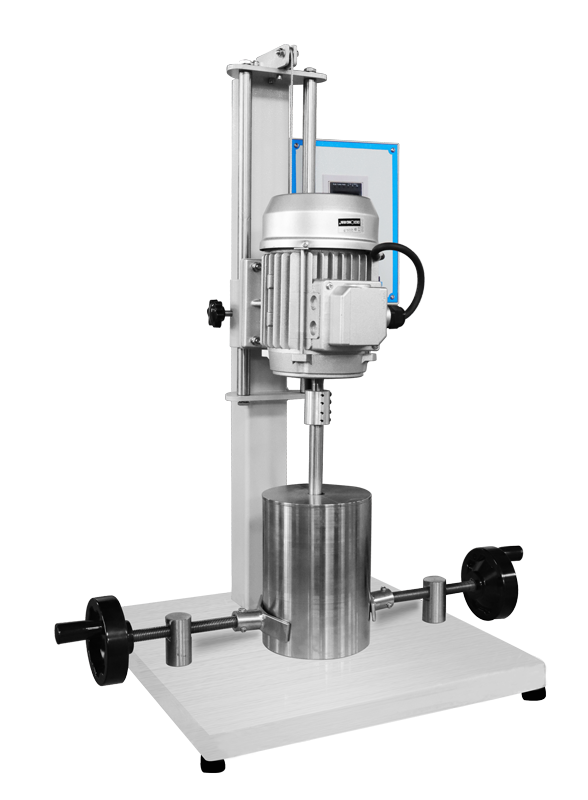
Core Function and Working Principle
The fundamental function of a lab stirred ball mill is to convert coarse particles (typically tens to hundreds of microns) into a fine or ultra-fine powder (down to 1 micron or less). The process relies on three main mechanical actions: impact, shear, and friction. When the stirrer rotates, it imparts motion to the grinding media, which collide with each other and with the chamber walls. The material is trapped between the media and subjected to repeated compression and shear, leading to particle fracture and size reduction.
Key operational parameters that influence final product quality include:
- Stirrer speed: Higher speeds increase energy input and reduce grinding time, but may cause excessive heat or wear.
- Grinding media size and material: Smaller media are better for finer grinding; media material (e.g., zirconia, agate, steel) must be chosen to avoid contamination.
- Media filling ratio: Typically 50–80% of the chamber volume; optimal filling ensures efficient energy transfer.
- Slurry viscosity and solids concentration: Affect flowability and grinding efficiency.
- Grinding time: Prolonged grinding can achieve finer particles but may increase contamination risk.
Many lab stirred ball mills feature a cooling jacket to control temperature, which is critical for heat-sensitive materials (e.g., pharmaceutical compounds or certain polymers). Some models also support atmosphere protection (e.g., argon or nitrogen) to prevent oxidation during grinding.
Main Types of Lab Stirred Ball Mills
Lab stirred ball mills are available in several configurations to suit different research scales and material requirements:
1. Basic Lab Stirred Ball Mill
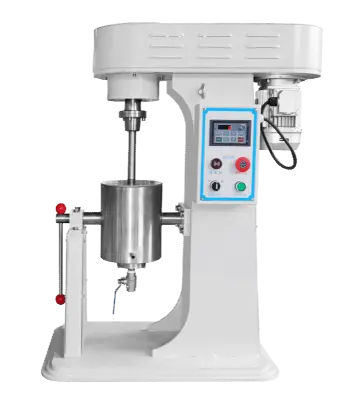
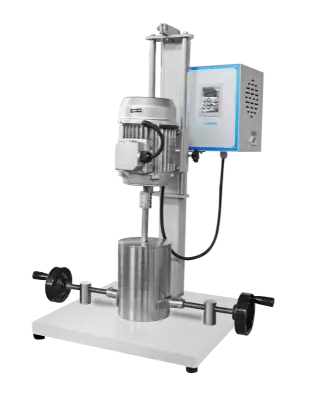
This is the standard model, often with a fixed chamber and manual lifting. It is suitable for routine ultrafine grinding and dispersion of small batches (typically 0.5L to 5L). Common in university labs and small-scale material development.
2. Electric Lifting Stirred Ball Mill
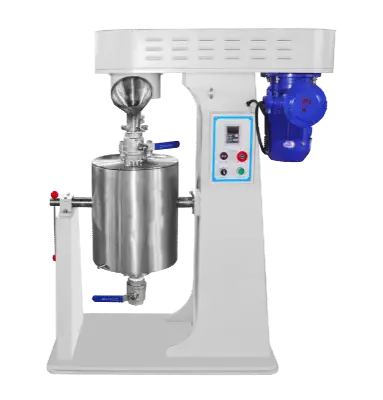
Equipped with an electric lifting mechanism for the grinding chamber, this type simplifies operation by allowing the chamber to be raised or lowered for cleaning, media replacement, or sample discharge. It is ideal for labs that require frequent media changes or multi-step processes.
3. Lightweight Stirred Ball Mill
Designed for portability and ease of use, these compact mills are often used for small-volume sample preparation (e.g., 1L or less). They are popular in analytical labs and quality control departments where quick, reproducible results are needed.
4. Production Type Stirred Ball Mill
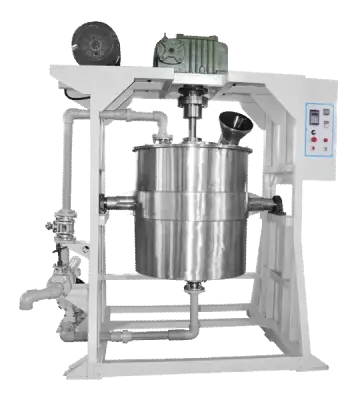
Although still a lab-scale unit, production-type models have larger chambers (e.g., 10L to 50L) and robust construction to simulate pilot-scale or small production runs. They are used for process development and scale-up studies.
For a complete overview of all stirred ball mill models, please visit the lab stirred ball mill product page.
Key Performance Indicators and Selection Criteria
When choosing a lab stirred ball mill, consider the following factors:
- Processing capacity / batch volume: Determine the typical sample size you need to grind. Most lab mills range from 0.5L to 50L.
- Particle size target: If you need particles below 1 micron, ensure the mill can achieve that with appropriate media and speed control.
- Energy efficiency: Stirred ball mills are generally more energy-efficient than traditional ball mills for fine grinding, but check motor power and speed range.
- Automation and programmability: Advanced models offer digital timers, RPM display, and even recipe storage for reproducible results.
- Material of construction: Chamber and agitator materials (e.g., 304 stainless steel, wear-resistant alloy, ceramic) must be compatible with your sample to avoid contamination.
- Ease of maintenance: Quick-release clamps, easy cleaning, and replaceable wear parts (liners, seals) reduce downtime.
Applications and Selection Advice
Lab stirred ball mills are widely used in:
- Ceramics and glass: Preparation of slips, glazes, and advanced ceramic powders.
- Battery materials: Grinding and dispersion of electrode materials (e.g., lithium cobalt oxide, graphite) for high-quality slurries.
- Pigments and coatings: Achieving fine dispersion of colorants and functional additives.
- Pharmaceuticals: Size reduction of active pharmaceutical ingredients (APIs) for bioavailability enhancement.
- Nanomaterials: Production of nano-scale powders (e.g., silica, titanium dioxide) via wet or dry grinding.
Selection advice: For routine lab work with small batches, a basic or lightweight model is sufficient. If you need to handle multiple samples daily or require precise temperature control, consider an electric lifting model with a cooling jacket. For scale-up studies, a production-type mill with similar geometry to industrial units is recommended.
For more detailed technical specifications and comparisons, refer to the lab stirred ball mill product page or explore other stirring ball mill models such as the electric lifting stirred ball mill and production type stirred ball mill.
Related Products
Get In Touch
Our professional team will reply to you within one business day. Please feel free to contact us!