

What is a Jaw Crusher? A Primary Crushing Equipment for Reducing Large Rocks and Ores
Introduction
At its core, a jaw crusher is a robust primary crushing machine widely used in mining, quarrying, construction, and recycling industries. It is designed to reduce large rocks, ores, and other hard materials into smaller, more manageable sizes for downstream processing. By simulating the crushing action of animal jaws, this equipment efficiently breaks down materials with compressive strength up to 320 MPa.
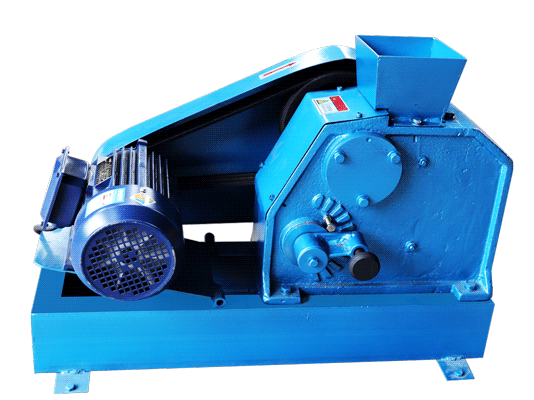
Core Function and Working Principle
The primary function of a jaw crusher is to transform large, bulky feed materials into a uniform, smaller product size. The machine consists of two vertical jaws—one fixed (stationary) and one movable (swinging)—that form a V-shaped crushing chamber. The movable jaw is driven by an eccentric shaft, which is powered by an electric motor via a V-belt and pulley.
During operation, the eccentric shaft rotates, causing the movable jaw to move periodically toward the fixed jaw. This motion compresses, splits, and wedges the material trapped between the jaws. The crushing force is applied through a combination of compression, shear, and impact. When the movable jaw moves away from the fixed jaw, the crushed material falls through the discharge opening at the bottom. The cycle repeats continuously, enabling a steady flow of crushed product.
Key parameters that influence the final product size include the discharge opening width (CSS), the eccentric shaft speed, the angle of the toggle plate, and the material properties. Adjusting the discharge opening allows operators to control the particle size distribution, making the jaw crusher highly versatile for different applications.
Main Types of Jaw Crushers
Jaw crushers have evolved over decades, and today two primary types dominate the market:
1. Simple Pendulum Jaw Crusher (Double-toggle)
This classic design features a swing jaw that is suspended on a hinge pin and moves only in a simple arc motion. The movable jaw is driven by two toggle plates, providing a more powerful crushing stroke but with lower throughput. Simple pendulum crushers are well-suited for crushing very hard and abrasive materials, though they are larger and heavier. They are mostly used in heavy-duty primary crushing applications where high reduction ratios are needed.
2. Compound Pendulum Jaw Crusher (Single-toggle)
Modern single-toggle jaw crushers are the industry standard. The movable jaw is directly attached to the eccentric shaft and moves in a complex elliptical path. This motion combines both compression and slight rubbing, increasing the crushing efficiency and throughput. Compared to simple pendulum types, single-toggle crushers are lighter, more compact, and offer 30% higher capacity. They are ideal for medium to large-scale crushing operations in mines, quarries, and aggregate plants.
In addition, specialized variants such as the fine jaw crusher (PEX series) and hydraulic jaw crusher (PEW series) are available for specific applications, such as secondary crushing or processing high-strength materials.
Key Performance Indicators and Selection Criteria
When selecting a jaw crusher, several critical factors should be evaluated:
- Feed Opening Size: Determines the maximum particle size that can be fed. Common sizes range from 150×250 mm for lab units to 600×900 mm or larger for industrial models.
- Processing Capacity: Measured in tons per hour (tph). For example, a PE400×600 model can handle 15–80 tph, while larger units can exceed 300 tph.
- Discharge Opening Range: Adjustable from 20 mm to 150 mm, allowing precise control over product fineness.
- Motor Power: Typically 5.5 kW to 75 kW or more, depending on the model. Higher power enables processing of harder materials.
- Wear Parts Life: Jaw plates made of high-manganese steel are standard; reversible designs extend service life.
- Maintenance Convenience: Features like wedge-type adjustment, side plate bolt fixing, and centralized lubrication simplify routine maintenance.
- Energy Efficiency: Modern single-toggle crushers can achieve 15–30% energy savings compared to older models, with lower noise and dust emissions.
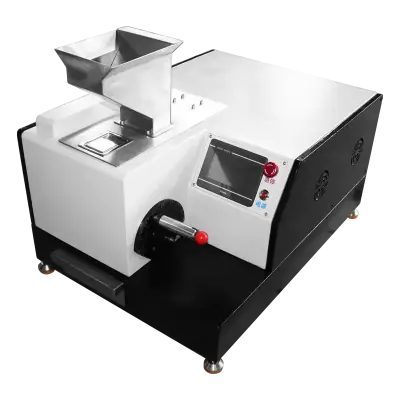
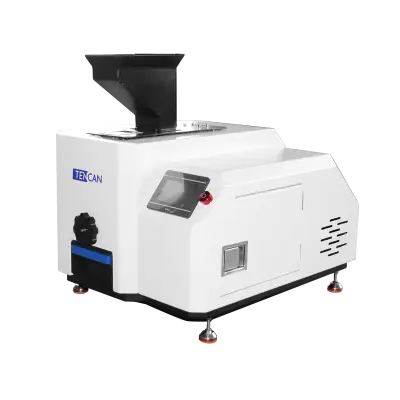
For laboratory-scale applications, compact jaw crushers with small feed openings (e.g., 100×60 mm) are available, offering easy cleaning and lab-grade precision.
Application Areas and Selection Advice
Jaw crushers are indispensable in a wide range of industries:
- Mining and Metallurgy: Primary crushing of iron ore, copper ore, gold ore, and other metallic minerals.
- Construction and Aggregate: Crushing limestone, granite, basalt, and river stone for concrete and road base.
- Recycling: Processing demolition waste, concrete, and asphalt.
- Chemical and Ceramic Industries: Reducing raw materials like quartz, feldspar, and clinker.
For users needing a reliable primary crusher for high-volume production, a compound pendulum jaw crusher (e.g., PE series) is recommended. For smaller operations or laboratories, a lab jaw crusher with easy adjustment and compact footprint is ideal. Always match the crusher’s capacity and feed size to your material properties (e.g., compressive strength, abrasiveness) to ensure optimal performance and longevity.
References
Product page: Jaw Crusher
Related Products
Get In Touch
Our professional team will reply to you within one business day. Please feel free to contact us!