
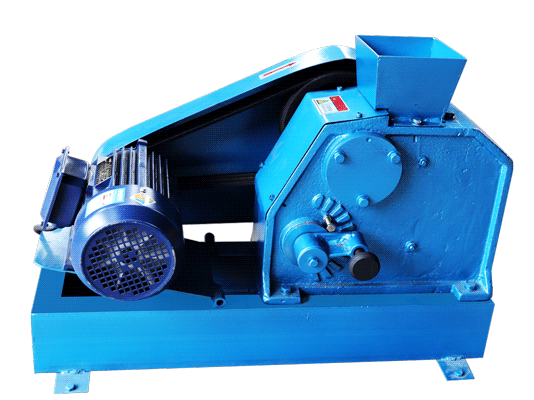
What is a Jaw Crusher? A Primary Crushing Equipment for Hard Rock and Ore Processing

Introduction
At its core, a jaw crusher is a specialized primary crushing machine used in mining, metallurgy, construction, and chemical industries to reduce large blocks of hard rock, ore, or demolition debris into smaller, more manageable particles. Often called the "workhorse" of the crushing circuit, it employs a simple yet effective compression mechanism to achieve a reduction ratio of 4 to 6, producing a uniform product suitable for downstream processing.
Core Function and Working Principle
The jaw crusher transforms feed material from large boulders (up to 1800 mm in size) into a coarse or medium-sized product (typically 50–300 mm) through a cyclic squeezing action. The machine consists of a fixed jaw plate (stationary) and a movable jaw plate (swinging) that form a V-shaped crushing chamber. An eccentric shaft driven by an electric motor rotates and causes the movable jaw to move in a periodic reciprocating motion toward the fixed jaw.
When the movable jaw closes, the material inside the chamber is crushed by compression, bending, and shearing forces. When the jaw opens, the crushed material falls downward under gravity and is discharged through the adjustable gap at the bottom. Key process parameters—such as eccentric shaft speed, stroke length, and the angle of the crushing chamber (nip angle)—directly influence the throughput, product size distribution, and wear rate of the jaw plates. Modern jaw crushers also feature a deep crushing cavity with no dead zones, ensuring efficient use of the crushing chamber and maximizing capacity.
Main Types and Classifications
PE Series (Primary Crushing)
The PE series is designed for coarse crushing of hard and medium-hard materials. It features a large feed opening (up to 1500×1200 mm) and a robust frame that can withstand heavy impact. PE crushers are ideal for the first stage of size reduction in mines, quarries, and gravel plants, handling materials with compressive strength up to 320 MPa.
PEX Series (Secondary Crushing)
The PEX series is a fine crushing version with a smaller discharge opening and a longer crushing chamber. It is used for secondary or tertiary crushing after the primary stage, producing a finer product (down to 10–30 mm) for subsequent grinding or beneficiation. PEX crushers are commonly employed in small to medium-sized operations and in laboratory settings.
Within these series, two mechanical designs exist: simple swing (single-toggle) and compound swing (double-toggle). The simple swing type has a simpler structure and lower maintenance, while the compound swing type offers higher throughput (up to 30% more) and a lighter weight for the same capacity. The choice between them depends on the required production capacity, material hardness, and budget.
Key Performance Indicators and Selection Criteria
When selecting a jaw crusher, several critical factors must be evaluated:
- Throughput Capacity: Ranges from 1 t/h to 675 t/h, depending on the model and feed size. Match the capacity to your plant’s requirements.
- Feed Opening and Maximum Feed Size: Determines the largest rock that can be processed. For example, a 250×400 mm opening can accept rocks up to 200 mm.
- Discharge Adjustment Range: Most models offer wedge or shim-type discharge gap adjustment, allowing quick and precise control of product size.
- Energy Efficiency: Modern jaw crushers can save 15–30% in energy consumption compared to older designs, thanks to optimized kinematics and improved bearing systems.
- Automation and Programmability: Advanced models may include PLC control, hydraulic adjustment, and monitoring systems for remote operation and preventive maintenance.
- Maintenance and Wear Parts: Look for easy access to jaw plates, toggle plates, and bearings. Replaceable liners and wear-resistant materials (e.g., high-manganese steel) extend service life.
Other important parameters include the crushing ratio (typically 4–6), the angle of nip (should be less than 20° to prevent slippage), and the physical strength of the frame (cast steel vs. welded construction; welded frames are lighter but require careful design).
Application Fields and Selection Advice
Jaw crushers are ubiquitous in the following industries:
- Mining and Ore Processing: Crushing iron ore, gold ore, copper ore, and other minerals before grinding.
- Construction and Demolition Recycling: Processing concrete, asphalt, and building rubble into reusable aggregate.
- Quarrying and Aggregates: Producing road base, gravel, and manufactured sand.
- Chemical and Metallurgy: Crushing limestone, coal, coke, and slag.
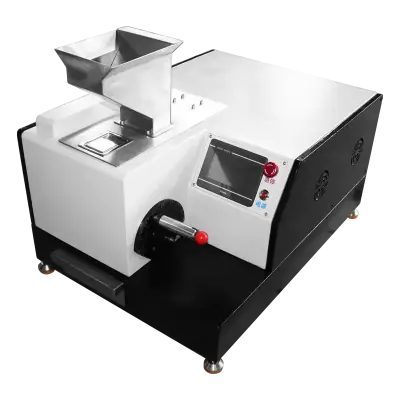
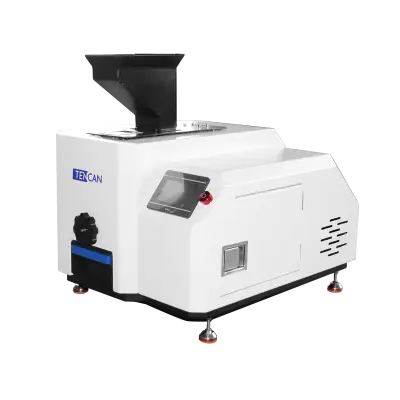
For small-scale laboratories or pilot plants, a lab jaw crusher is recommended due to its compact size and precise adjustment. For large-scale continuous operations, a heavy-duty PE series with a welded frame and hydraulic toggle is a reliable choice. Always consider the material’s abrasiveness, moisture content, and required final particle size to match the correct model and wear parts.
References
Jaw Crusher: https://www.planetaryballmills.com/products/broken-series/jaw-crusher.html
Related Products
Get In Touch
Our professional team will reply to you within one business day. Please feel free to contact us!