

What is a Jaw Crusher? A Compression Crushing Equipment for Hard Material Processing
Opening Definition
From a core perspective, a Jaw Crusher is a professional primary crushing machine widely utilized across the mining, metallurgy, construction, and chemical industries. It is specifically engineered to reduce large, dense rocks and ores into smaller, uniformly sized fragments through compressive force. By mechanically simulating the chewing motion of animal jaws, this robust equipment efficiently handles raw materials with compressive strengths up to 320 MPa, serving as the indispensable first stage in any bulk material processing or aggregate production line.
Core Functions & Working Principles
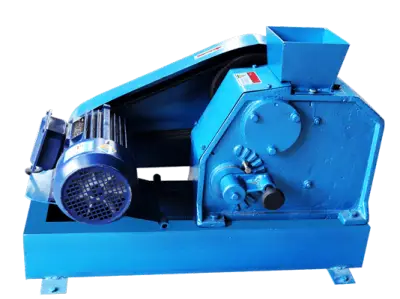
The fundamental function of a jaw crusher is to transform coarse, irregular feed stock into manageable crushed products suitable for downstream grinding or direct application. The device operates within a fixed crushing chamber formed by two heavy-duty plates: a stationary jaw plate (fixed jaw) mounted vertically on the machine frame, and a movable jaw plate that angles slightly inward. When an electric motor drives an eccentric shaft, the movable jaw executes a periodic reciprocating motion against the fixed jaw. This cyclical approach-and-retract action subjects the trapped material to intense squeezing, bending, and splitting forces until internal fractures propagate and the rock breaks apart.
The crushing process relies heavily on the geometric profile of the crushing chamber and the kinematic trajectory of the moving jaw. As the gap narrows during the closing stroke, particles are progressively fractured along their natural cleavage planes. Once the fragments become small enough to pass through the discharge opening at the bottom, gravity combined with continuous mechanical vibration allows them to exit the chamber freely. The final particle size distribution is directly influenced by the closed-side setting (CSS), the rotational speed of the eccentric shaft, and the wear condition of the liner plates. Optimizing these variables ensures minimal over-crushing while maximizing energy efficiency.
Key operational parameters such as the eccentric throw, feed rate, and discharge gap dictate both throughput capacity and product gradation. Modern engineering designs frequently incorporate deep, wedge-free chamber geometries to prevent material bridging and ensure consistent feeding. This eliminates dead zones where material could accumulate without being crushed, significantly enhancing overall processing stability and reducing power fluctuations during peak load conditions.
Main Types & Structural Classifications
Jaw crushers are typically classified based on the motion characteristics of the movable jaw and their linkage mechanisms. The two most prevalent industrial variants are the simple swing (single-toggle) and complex swing (double-toggle) types. Simple swing models feature a single toggle plate that allows the movable jaw to pivot along a circular arc around a fixed suspension point. They are generally lighter, more compact, and offer higher crushing rates per unit of weight, making them highly suitable for medium to fine secondary crushing applications or high-throughput primary operations.
In contrast, complex swing crushers utilize two toggle plates connected via a pitman mechanism, creating a more intricate linkage system. While slightly heavier and initially more expensive, they generate greater crushing force concentrated at the bottom of the chamber and produce less oversize material. This makes them particularly advantageous for primary crushing of extremely hard, abrasive, or friable rocks. Additionally, hydraulic adjustment systems have become standard across modern series, allowing operators to quickly and safely modify the discharge gap without manual shimming, thereby improving maintenance turnaround times and operational safety.
Key Performance Indicators & Selection Points
When selecting a jaw crusher, buyers must evaluate several critical performance metrics aligned with their specific production goals. First and foremost is the rated capacity, which typically ranges from 1 to over 2,000 tons per hour depending on the model scale, feed material hardness, and desired output size. Higher throughput requirements demand larger feed openings, reinforced drive trains, and optimized flywheel inertia to maintain consistent momentum during the crushing cycle.
Energy consumption and component wear resistance are equally vital considerations. Advanced jaw crushers integrate high-efficiency motors, improved bearing configurations, and optimized kinematics to reduce power draw by 15% to 30% compared to older generation machines. The choice of liner material, such as high-manganese steel alloys or specialized composite steels, directly impacts service life under highly abrasive conditions. Furthermore, automation features like centralized automatic lubrication, overload protection via hydraulic relief valves, and real-time vibration monitoring sensors significantly lower unplanned downtime and extend overall equipment reliability.
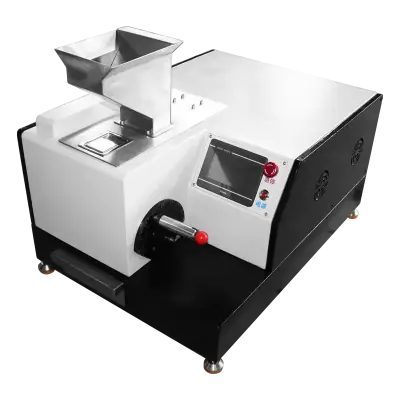
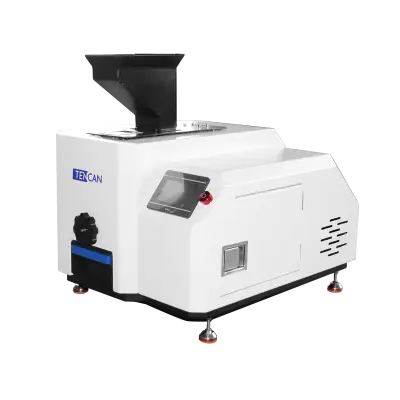
Ease of access for liner replacement and routine inspections should also factor into the procurement decision. Modular frame designs, quick-release side guards, and standardized bolt patterns streamline maintenance procedures. For laboratories or small-scale pilot operations requiring precise control and contamination-free processing, compact lab jaw crusher units with stainless steel linings and adjustable gap settings provide excellent reproducibility and rapid sample preparation capabilities.
Application Areas & Selection Advice
Jaw crushers are indispensable across diverse sectors, including aggregate production for infrastructure projects, ore beneficiation in mining operations, recycling of concrete and demolition waste, and initial size reduction in chemical, fertilizer, and ceramic manufacturing. For users prioritizing high-volume primary crushing of hard rock, heavy-duty double-toggle or hydraulically adjusted models are strongly recommended due to their superior force delivery and durability. Conversely, facilities focused on secondary crushing or space-constrained sites may benefit from compact single-toggle designs or integrated mobile crushing stations.
Matching the crusher type to your specific feed characteristics, target output specifications, and budget will ensure optimal long-term performance. If your workflow requires complementary size reduction stages, exploring related equipment such as Double Roll Crushers or Teeth Roll Crushers can help build a complete, efficient processing circuit tailored to your material properties.
References
Related Products
Get In Touch
Our professional team will reply to you within one business day. Please feel free to contact us!