

What Is a Horizontal Light-Duty Ball Mill? A Lab Grinding Device for Fine Powder
What Is a Horizontal Light-Duty Ball Mill?
From its core, a horizontal light-duty ball mill is a compact grinding machine that laboratories and small-scale production units use to reduce solid materials into fine powders or uniform slurries. It is called horizontal because the grinding jar rests on driven rollers and rotates around a horizontal axis. It is called light-duty because its frame, drive, and jar capacity are sized for bench-top or pilot-scale work rather than continuous industrial tonnage. In powder engineering, it belongs to the broad family of ball mills, but its design priorities are flexibility, repeatability, and gentle mechanical loading.
The basic purpose is straightforward: load a coarse feed into a rotating jar with grinding media, then let motion, impact, and friction break the particles down. The outcome can be a dry fine powder, a wet slurry, or a well-mixed paste. Because the machine is light-duty, it is often chosen when sample quantity is limited, contamination control matters, or several formulations must be tested quickly. For a specific example, see the horizontal light-duty ball mill product page.
Core Functions and Working Principle
From Coarse Feed to Fine Powder
A horizontal light-duty ball mill transforms material in stages. First, the operator loads the jar with the sample and a chosen grinding medium, such as ceramic, zirconia, agate, stainless steel, or tungsten carbide balls. The jar is sealed and placed on the roller bed. As the rollers turn, friction causes the jar to rotate. Inside, the media tumble, slide, and sometimes fall, depending on speed. Each collision or shear event applies mechanical stress to the particles. Over time, cracks form and propagate until particles break into smaller pieces. The final state is a powder with a narrower particle-size distribution or a slurry with well-dispersed solids.
This is not a single instantaneous event but a cumulative result of thousands of interactions. Hard and brittle materials tend to fracture through impact, while softer or fibrous materials may need more shear and longer residence time. Jar and media materials must also be compatible with the sample to avoid contamination. A ceramic jar with ceramic media is often chosen for metal-free processing, while a stainless steel jar may be used when mechanical toughness matters more than strict contamination control.
How the Rotating Drum Works
The key mechanical principle is rolling motion. The jar sits on two or more rollers. At least one roller is driven by a motor; the others may be idlers or also driven. When the driven roller turns, the jar rotates because of friction. Rotation speed is usually adjustable. At low speed, the media charge slides and rolls, producing mainly attrition and shear. At higher speed, media may be lifted further up the jar wall and then cascade or fall, creating stronger impact. If speed becomes too high, the media can centrifuge against the wall and stop doing useful work, so an optimal range exists for each jar size and material combination.
The horizontal orientation is practical. It is stable, easy to load, and often allows quick jar removal for cleaning or sample recovery. Different jar sizes can often be used on the same roller frame if the jar diameter and weight are within limits. Safety guards keep the rotating jar contained, while the controller sets speed, time, and sometimes direction. Periodic reversal can improve mixing and reduce caking.
Wet and Dry Grinding Modes
Horizontal light-duty ball mills can usually operate in dry or wet mode. Dry grinding is common when the final product must be a free-flowing powder and downstream processes cannot tolerate liquid. It suits brittle minerals, ceramics, glasses, and some chemical powders. However, dry grinding can create dust, and fine particles may adhere to jar walls or agglomerate. Wet grinding uses a liquid carrier such as water, ethanol, or another suitable solvent. The liquid helps disperse particles, reduces dust, and can improve efficiency by preventing re-agglomeration. Wet mode is often used for slurries, pigments, battery materials, and biological samples, but it requires a later drying step if a dry powder is needed.
The choice depends on the material, target particle size, and downstream application. A wet slurry may be easier to pump or coat, while a dry powder may be easier to press, sieve, or package. Sealing is especially important in wet grinding to prevent leakage, and the jar material must resist the solvent.
Key Process Parameters
Several parameters control the outcome. Rotation speed affects media energy. Running time determines how many collisions the powder experiences. Media size and density influence impact energy and the number of contact points. Media filling ratio affects how freely the charge moves. Sample load and jar volume set the batch size. The feed material's hardness, toughness, and initial particle size also matter. Hard feed usually needs more energy or longer time, while soft, brittle feed may grind quickly.
Because these variables interact, the best settings are usually found by testing. A practical approach is to start with moderate speed, a standard media charge, and a short run, then inspect the powder and adjust one variable at a time. Overloading the jar can reduce motion and slow grinding; underloading can waste energy and cause excessive wear. The goal is steady, repeated media motion without centrifuging the charge or overheating the sample.
Main Types and Configurations
Single-Jar and Multi-Jar Horizontal Mills
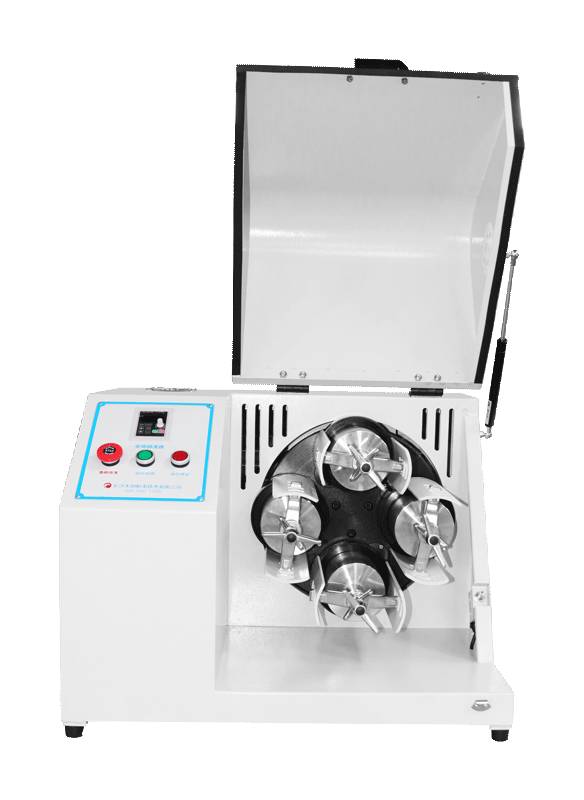
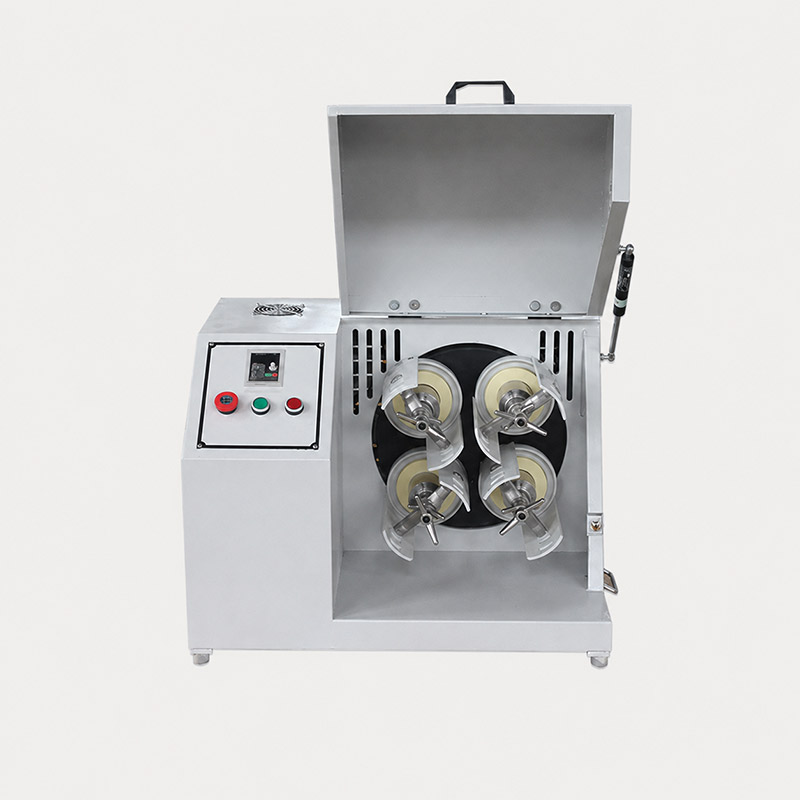
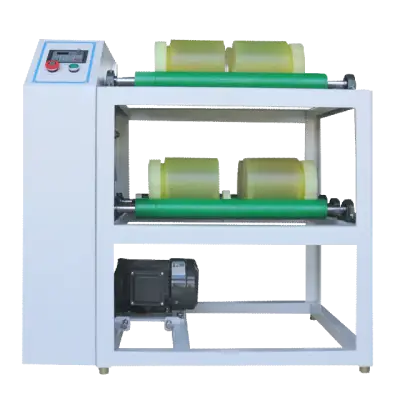
Light-duty horizontal mills are often classified by how many jars they can drive. A single-jar unit is compact and simple, making it a good choice for small laboratories with occasional grinding needs. A multi-jar unit, such as a two-station or four-station roller mill, allows several samples to be processed at the same time under similar conditions. This is useful for comparative studies, quality control, and method development because it reduces the time needed to run replicates. Multi-jar designs also improve throughput without requiring a large production machine.
When choosing between these layouts, consider sample volume, experiments per day, and bench space. A multi-jar mill may cost more, but it can be more efficient when many small samples are routine. It also helps maintain consistency because all jars experience the same drive settings, although differences in jar loading or media condition can still affect results.
Roller-Driven and Direct-Driven Designs
Most horizontal light-duty mills use roller drive, where the jar is turned by friction from rotating rollers. This design is flexible because the jar is not permanently attached to the motor. It can be lifted off for cleaning, and different jar materials or sizes can be used if they fit the roller spacing. Some machines use a direct-drive or belt-drive arrangement with a cradle or clamp. Direct drive can provide more positive torque, but it may be less flexible for quick jar changes. Roller-driven units are common in laboratories because they balance simplicity, cost, and adaptability.
The drive system also influences noise and maintenance. Roller-driven mills may have replaceable roller sleeves that wear over time. Belt-driven systems may require belt tension checks. Direct-drive systems may have fewer wear parts but need a robust coupling. In all cases, the drive should handle the maximum jar weight and rotation speed without slipping or overheating.
Jar and Media Material Options
Material selection is a major part of mill configuration. Common jar materials include stainless steel, ceramic, corundum, zirconia, agate, nylon, polyurethane, and PTFE. Each has different hardness, wear resistance, chemical compatibility, and contamination risk. Stainless steel is strong but can introduce metal contamination. Ceramic and zirconia are hard and wear-resistant, making them suitable for many abrasive powders. Agate is relatively inert and is often used for geological or analytical samples. Polymer jars are lightweight and useful for soft materials or metal-free processing, but they may wear faster with hard media.
Grinding media must also match the application. Media density affects impact energy: denser media such as zirconia or tungsten carbide can grind hard materials faster, while lighter media such as agate or ceramic may be gentler and less contaminating. Media size affects the balance between impact and attrition. Larger balls create stronger impacts, while smaller balls provide more contact points and finer grinding. The best combination depends on the feed material and target particle size.
Light-Duty vs. Heavy-Duty Horizontal Mills
The term light-duty describes mechanical capacity, not the quality of results. A light-duty mill is intended for smaller jars, lower batch weights, and intermittent operation. It may use a simpler frame, a smaller motor, and manual or semi-automatic controls. A heavy-duty horizontal mill is built for larger drums, continuous operation, and higher torque. The two types can use similar grinding principles, but they serve different scales. Light-duty units are ideal for laboratories, pilot plants, and small-batch production. Heavy-duty units are used when throughput and durability under constant load are the main priorities.
Users should not exceed the rated jar size or weight of a light-duty mill. Overloading can cause roller slip, motor overheating, excessive vibration, or premature bearing wear. If larger batches are needed, it is better to choose a heavier model than to push a light-duty unit beyond its design limits.
Key Components and Design Features
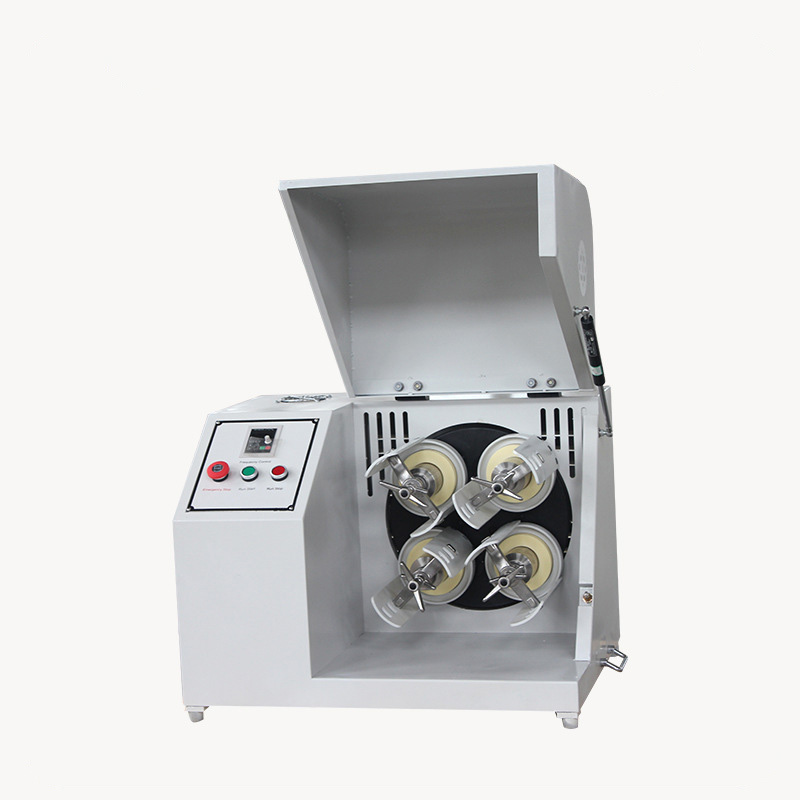
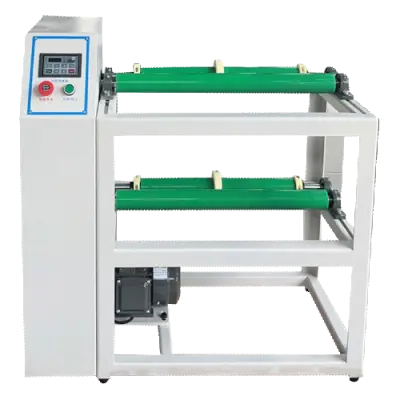
A typical horizontal light-duty ball mill includes a base frame, rollers, a drive motor, a speed controller, a timer, safety guards, and a jar positioning system. The base frame provides stability and dampens vibration. Rollers support the jar and transfer motion. The motor and transmission provide controlled rotation. The controller allows the operator to set speed, time, and sometimes direction. Safety guards keep hands and clothing away from rotating parts and contain the jar if it becomes loose. Jar positioning stops prevent the jar from drifting along the rollers.
Additional features may include digital displays, programmable recipes, automatic reversal, emergency stop buttons, and casters for mobility. Some models offer adjustable roller spacing to accommodate different jar diameters. Others include a transparent cover so the operator can observe the grinding process. The best design depends on how often the mill is used, how many jar types are needed, and what level of process documentation is required.
Maintenance is generally straightforward. Rollers, bearings, belts, and electrical connections should be checked regularly. Worn roller surfaces should be replaced to maintain traction. Jars and media should be inspected for cracks, chips, or excessive wear. Cleaning between samples prevents cross-contamination. For wet grinding, seals and gaskets should be checked for leaks. A simple maintenance log helps track wear and avoid unexpected downtime.
Key Performance Indicators and Selection Criteria
Capacity and Batch Size
The first selection question is batch size. A light-duty horizontal mill is usually rated by the maximum jar volume and weight it can turn. Small jars may hold tens or hundreds of milliliters, while larger light-duty jars may hold a few liters. The actual working volume is lower than the jar's total volume because space is needed for media and material motion. As a rule, the jar should not be filled too high; leaving free space allows the media to tumble effectively. Users should estimate the sample mass needed and then choose a jar size that provides comfortable headroom.
Throughput is not only about jar volume. It also depends on grinding time and the number of jars the machine can handle. A single-jar mill that runs for several hours may process less sample per day than a multi-jar mill running shorter cycles. For method development, flexibility may matter more than raw throughput. For routine quality control, multi-jar operation can be a significant advantage.
Particle Size and Grinding Fineness
Particle size control is a central performance indicator. Horizontal ball mills can produce fine powders, but achievable fineness depends on feed material, media size, grinding time, and energy input. Hard, brittle materials generally grind more predictably than soft, ductile, or fibrous materials. Very fine grinding may require small media, longer times, and possibly wet processing to prevent agglomeration. If the target is a narrow particle-size distribution, the operator may need to optimize the media mixture and avoid over-grinding, which can cause re-agglomeration or contamination.
It is important to define the target particle size before selecting a mill. If the requirement is coarse crushing, a different type of equipment may be more efficient. If the requirement is micron or sub-micron powder, a high-energy planetary mill or stirred media mill may be more suitable. A horizontal light-duty ball mill occupies a useful middle ground: it is gentler and more scalable than some high-energy laboratory mills, and it is more flexible than a dedicated production mill.
Speed, Energy, and Efficiency
Rotation speed is adjustable on most light-duty mills, which allows the operator to tune energy input. Higher speed increases impact energy but also increases wear, heat, and noise. Lower speed favors attrition and can be gentler on heat-sensitive materials. Energy efficiency depends on how much motor power actually goes into breaking particles rather than friction, noise, and heat. A well-matched jar, media charge, and speed will grind efficiently without excessive temperature rise.
Overheating can be a concern during long runs or when processing heat-sensitive materials. In those cases, users may choose lower speeds, shorter cycles with pauses, or a mill that can be cooled. Some materials may also require an inert atmosphere or a sealed jar to prevent oxidation. While a light-duty horizontal mill is not usually a high-energy machine, thermal management is still part of good practice.
Automation, Control, and Maintenance
Modern light-duty mills often include digital controllers that set speed, time, and direction. Programmable operation improves repeatability, especially when the same material is processed many times. Automatic reversal can reduce caking and improve mixing. A timer allows unattended operation, but the mill should still be placed in a safe area and monitored according to laboratory rules. Data logging or recipe storage can be useful in regulated environments where process documentation is required.
For basic teaching or occasional use, simple manual control may be sufficient. For research and quality control, digital programmability is usually worth the extra cost. Ease of maintenance also affects long-term cost. A design that allows quick roller replacement and easy cleaning is preferable. Jars should be easy to load and remove, and safety guards should be robust. Before purchase, check whether replacement parts, jars, and media are readily available. A mill that uses standard jar sizes and common media diameters is easier to support.
Applications and Selection Advice
Horizontal light-duty ball mills are used in many fields. In geology and mining, they prepare rock, mineral, and soil samples for analysis. In ceramics and glass, they grind raw materials and frits for formulation studies. In chemistry and materials science, they mix and reduce powders for catalysts, pigments, and composites. In battery research, they process electrode materials and precursors. In pharmaceuticals and biology, they may be used for dry or wet grinding of small samples, although contamination and cleaning requirements are especially strict. In environmental testing, they homogenize solids before extraction or spectroscopy.
Selection advice depends on priorities. A teaching laboratory may need a simple, durable single-jar mill with easy controls. A research group may prefer a multi-jar programmable mill for parallel experiments. A small production unit may need a larger light-duty mill with longer duty cycles and better thermal management. In every case, define the sample type, batch size, target particle size, acceptable contamination level, and daily workload before comparing models. It is also helpful to test the mill with the actual material, because published specifications cannot capture every material's grinding behavior. For product-level information, the horizontal light-duty ball mill page provides a starting point for evaluating jar capacity, roller drive, and laboratory fit.
Frequently Asked Questions
Is a horizontal light-duty ball mill the same as a planetary ball mill?
No. A planetary ball mill uses jars that rotate around a central axis while also spinning on their own axis, creating high centrifugal forces and very energetic grinding. A horizontal light-duty ball mill uses a jar that simply rotates on rollers. The horizontal design is generally gentler, simpler, and easier to scale for small batches. Planetary mills can reach finer sizes faster, but they may generate more heat and require more complex jar mounting. The best choice depends on target fineness, sample sensitivity, and batch size.
Can it grind both hard and soft materials?
It can process many materials, but performance varies. Hard and brittle materials usually grind well with dense media and sufficient time. Soft, elastic, or fibrous materials may deform instead of fracturing, so they may need shear-intensive conditions, wet grinding, or a different mill type. Pre-treatment such as cutting or crushing may also help. Users should test a small sample before committing to a full batch.
How do I choose the right jar and media?
Start with contamination requirements and material hardness. If metal contamination is unacceptable, choose ceramic, agate, zirconia, or polymer jars. If high impact energy is needed, choose dense media such as zirconia or tungsten carbide. Match media size to the feed and target size: larger media for coarse feeds, smaller media for fine grinding. Fill the jar with media and sample so that enough free space remains for motion. The exact ratio is best determined by trial runs.
How long does grinding take?
There is no single answer. Grinding time depends on material, initial particle size, target size, media, speed, and batch size. Some soft materials may reach the desired fineness in a short run, while hard materials may require hours. It is better to run a few shorter cycles and check the result than to run one very long cycle that may overheat or over-grind the sample. Recording the parameters for each successful run helps build a reliable method.
What maintenance does the mill need?
Regular inspection of rollers, bearings, belts, and electrical components is important. Clean the jar, media, and roller surfaces between samples to prevent cross-contamination. Check seals for wear if wet grinding is used. Replace worn rollers or belts before they affect performance. Keep the machine dry and free from dust buildup. Following the manufacturer's manual is always the best guide for specific maintenance intervals.
Summary
A horizontal light-duty ball mill is a practical grinding machine for laboratories and small-scale powder processing. It uses a rotating jar on rollers to break down solid materials through impact, attrition, and shear. Its main advantages are flexibility, simple operation, and suitability for small batches. By understanding the working principle, types, components, and selection criteria, users can choose a configuration that matches their material, target particle size, and workload. Whether the goal is sample preparation, formulation development, or small-batch production, the horizontal light-duty ball mill offers a useful balance of control, repeatability, and cost.
Related Products
Get In Touch
Our professional team will reply to you within one business day. Please feel free to contact us!