

What Is a Horizontal Light-Duty Ball Mill? A Lab Grinder for Powder Preparation
What Is a Horizontal Light-Duty Ball Mill?
From its core, a horizontal light-duty ball mill is a professional laboratory grinding device that uses a horizontally positioned rotating cylinder to reduce small batches of solid material into fine powder or a homogeneous slurry. Mining, ceramics, glass, chemical, pharmaceutical, battery, and materials research laboratories use it for sample preparation, formulation development, quality control, and small-scale production trials.
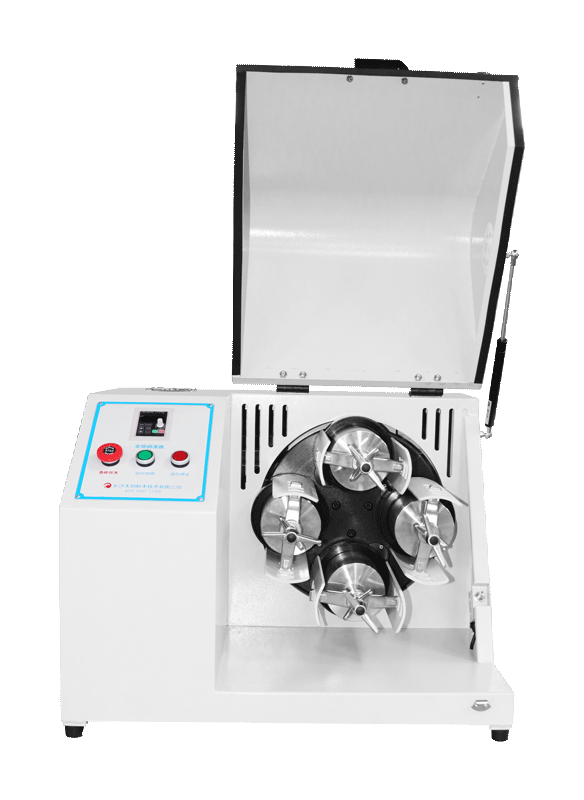
The term “horizontal” describes the orientation of the grinding jar or drum: instead of standing vertically, the cylinder lies on its side and rotates around a horizontal axis. The term “light-duty” distinguishes it from heavy production mills; it is built for bench-top or pilot-scale work where flexibility, gentle handling, and reproducibility matter more than high tonnage. TENCAN’s Horizontal light-duty ball mill is part of the grinding series and is designed for users who need controlled particle size reduction without the footprint or power demand of a full production line.
Core Functions and Working Principle
From Coarse Feed to Fine Powder
A horizontal light-duty ball mill transforms material from a relatively coarse feed into a finer powder or suspension. The feed can be crushed ore, ceramic raw material, chemical crystals, glass frit, soil, plant material, or another brittle solid. Inside the horizontal cylinder, grinding media—typically spheres made of steel, zirconia, agate, corundum, tungsten carbide, or another hard material—are placed with the sample. When the cylinder rotates, friction and gravity lift the media up the inner wall. At a certain angle, the media tumble, cascade, and fall back onto the material bed. This repeated impact and rubbing breaks particles into smaller pieces.
The process is not a single instantaneous event. It is a gradual combination of fracture, attrition, and mixing. Large particles are first chipped and fractured by high-energy collisions. As the particle size decreases, attrition and shear become more important. The final result is a powder with a narrower particle size distribution than the starting material, provided the operating parameters are chosen correctly.
The Mechanics of Impact, Attrition, and Shear
Three main mechanisms work together. Impact occurs when falling media strike the material and each other. Attrition happens when particles rub against the media and the cylinder wall, wearing away edges and corners. Shear is generated when the media roll over the powder bed and create sliding forces. In a horizontal design, the cylinder axis is level, so the media create a cascading, rolling motion that is efficient for fine grinding and gentle mixing. This motion can be less aggressive than some high-energy vertical mills, which makes horizontal light-duty mills well suited to heat-sensitive or easily damaged samples.
The shape and size of the grinding media influence the balance between impact and attrition. Larger, denser media deliver stronger impacts and are useful for breaking coarse feed. Smaller media create more contact points and greater surface area for fine grinding. A mixture of media sizes can sometimes improve efficiency. The fill level of both media and material also matters: too little media reduces collisions, while too much media can restrict movement and increase energy consumption without improving fineness.
Key Process Parameters That Shape the Final Powder
Several process parameters determine how quickly and how finely the mill grinds a sample. Rotation speed is one of the most important. At low speed, the media may simply slide or roll without enough energy to fracture particles. At higher speed, the media are lifted further and then cascade more vigorously. If the speed becomes too high, the media may centrifuge against the cylinder wall and stop doing useful grinding work. A variable-frequency drive allows the operator to tune the speed for the material and jar size.
Grinding time is another critical variable. Longer grinding usually produces finer powder, but the relationship is not linear. After a certain point, the rate of size reduction slows, and additional time mainly increases temperature, wear, and contamination risk. Overgrinding can also broaden the particle size distribution or cause unwanted agglomeration, especially in dry grinding. The operator should run trials to find the shortest time that reaches the target fineness.
Media density and hardness affect the energy transferred to the sample. Dense media such as tungsten carbide or zirconia can grind hard materials faster, but they may introduce contamination if the media wear. Media size should be matched to the feed size: large feed requires larger media, while fine grinding benefits from smaller media. The ratio of media volume to powder volume, often called the ball-to-powder ratio, controls how many collisions occur per unit of sample. A higher ratio can increase grinding rate but reduces the amount of sample that can be processed in one batch.
Material properties also matter. Hard, brittle materials fracture readily, while soft, ductile, or fibrous materials may deform or resist grinding. Moisture content can cause sticking and caking. For such samples, wet grinding or a different mill type may be more appropriate. Finally, the jar material must be chemically compatible with the sample so that the powder does not react with or dissolve the container.
Dry Grinding Versus Wet Grinding
Horizontal light-duty ball mills can usually operate in either dry or wet mode. In dry grinding, the powder is processed without a liquid medium. This is convenient when the final product must remain dry or when a liquid would alter the material. However, dry grinding can generate dust, cause particles to coat the media and jar walls, and lead to agglomeration as fine particles stick together.
In wet grinding, a liquid such as water, ethanol, or another suitable solvent is added to the jar. The liquid disperses the particles, reduces dust, and helps prevent agglomeration. It can also improve grinding efficiency because the liquid carries particles into the media contact zones and removes heat. Wet grinding is common in ceramics, mineral processing, pigments, and battery materials research. The main disadvantages are the need to separate the liquid from the powder afterward and the possibility of chemical reactions between the liquid and the sample. The choice should be based on the material, the required final form, and the available drying or filtration equipment.
Main Types and Configurations of Horizontal Light-Duty Ball Mills
Although the basic principle is the same, horizontal light-duty ball mills come in several configurations. The right choice depends on batch size, number of samples, required reproducibility, and the nature of the material.
Roller-Mounted Horizontal Ball Mills
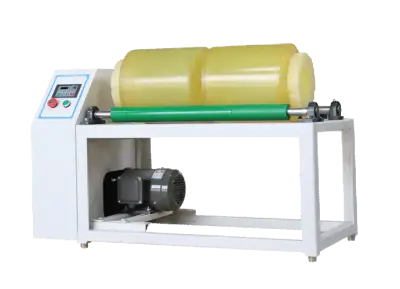
In a roller-mounted design, one or more cylindrical jars rest on two parallel rotating rollers. The rollers turn and cause the jar to rotate by friction. This arrangement is simple, quiet, and easy to load. Because the jar is not fixed to a shaft, it can be removed quickly for cleaning or for changing to a different jar material. Roller-mounted mills are popular in laboratories that process multiple samples and need to avoid cross-contamination. They are also well suited to wet grinding because the jar can be sealed tightly and rotated without leaking. The main limitation is that the jar size and shape must match the roller spacing, and very heavy jars may be difficult to handle manually.
Shaft-Driven Horizontal Ball Mills
In a shaft-driven design, the grinding jar or drum is mounted on a central horizontal shaft and rotated directly by a motor. This provides positive drive and allows higher torque, which can be useful for larger light-duty jars or for materials that require consistent high-speed rotation. Shaft-driven mills often include a more robust frame and may offer variable speed control, timers, and safety enclosures. They are generally less modular than roller-mounted units because the jar must fit the shaft coupling. However, they can offer better repeatability when the same jar and speed are used repeatedly.
Single-Jar, Dual-Jar, and Multi-Jar Designs
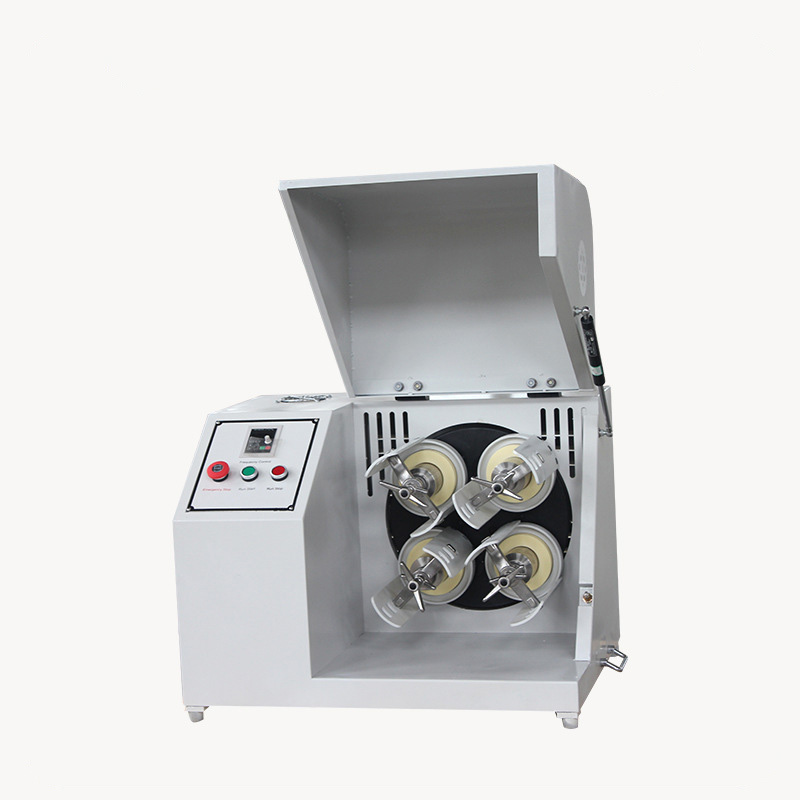
Horizontal light-duty ball mills may accommodate one jar, two jars, or several jars at once. Single-jar units are compact and economical, making them a good starting point for teaching labs or occasional sample preparation. Dual-jar and multi-jar designs allow parallel grinding of different samples under the same conditions, which improves throughput and comparability. They are useful when a laboratory needs to run replicate tests, compare formulations, or process several materials in one session. However, multi-jar mills require more bench space and may have a higher initial cost. They also need careful balancing so that the rollers or shaft run smoothly.
Jar and Grinding Media Options
The jar and media are the parts that actually contact the sample, so their material choice is critical. Common jar materials include stainless steel, nylon, polyurethane, PTFE, corundum, zirconia, agate, and tungsten carbide. Each has different hardness, wear resistance, chemical resistance, and contamination risk. Stainless steel jars are durable and suitable for many hard materials, but they can introduce iron contamination. Nylon and PTFE jars are lighter and chemically resistant, making them useful for softer or reactive samples. Corundum, zirconia, agate, and tungsten carbide jars offer high hardness and wear resistance for abrasive materials, though they are more expensive.
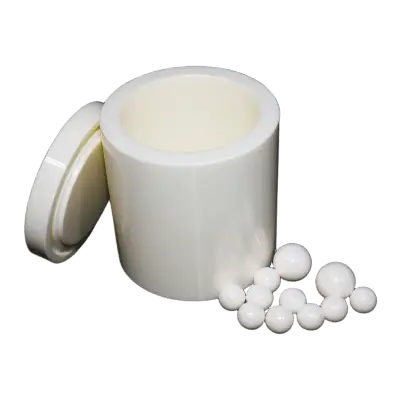
Grinding media are available in similar materials. Stainless steel balls are economical and dense, but they may contaminate sensitive samples. Zirconia balls are hard, dense, and relatively inert, making them a popular choice for ceramics, minerals, and battery materials. Agate balls are very hard and chemically inert, which helps avoid metallic contamination. Corundum balls are also hard and wear-resistant. Tungsten carbide balls are extremely dense and hard, suitable for tough materials, but they are costly and must be handled carefully. The best combination depends on the sample hardness, the acceptable level of contamination, and the target particle size. In general, the jar and media should be harder than the sample to avoid excessive wear, and they should be chemically compatible with the sample and any grinding liquid.
Key Performance Indicators and Selection Points
Batch Capacity and Throughput
When selecting a horizontal light-duty ball mill, the first consideration is batch capacity. Light-duty mills are intended for small batches, so the jar volume and the number of jars determine how much material can be processed per run. A single small jar may be enough for exploratory research, while a multi-jar unit can increase throughput without requiring a larger mill. Users should consider not only the nominal jar volume but also the usable volume: media and sample together should leave enough free space for the media to tumble. Overfilling reduces grinding efficiency and can damage the mill. If the required batch size grows beyond the light-duty range, a larger horizontal ball mill or a different grinding technology may be more appropriate.
Particle Size Control and Reproducibility
Particle size control is central to any grinding application. A horizontal light-duty ball mill can produce fine powders, but the achievable fineness depends on the feed size, material hardness, media size and density, rotation speed, grinding time, and ball-to-powder ratio. For reproducible results, the operator should keep these parameters constant and record them for every batch. A variable-speed drive and a digital timer are valuable because they allow precise adjustment and repeatable runs. Some mills also offer programmable cycles that alternate forward and reverse rotation, which can improve mixing and reduce caking. If the target is a very narrow particle size distribution, additional classification or sieving may be needed after grinding.
Energy Consumption and Efficiency
Light-duty ball mills are generally more energy-efficient than production-scale mills for small batches because they only process the amount of material needed. However, energy efficiency still depends on correct operation. Running the mill longer than necessary, using excessive media, or operating at an unsuitable speed wastes energy and increases wear. A horizontal design can be efficient for fine grinding because the media cascade and roll rather than being lifted to a great height. Users should look for a mill with a motor matched to the jar size and a speed control that allows the optimum point to be found. Soft-start or overload protection features can also reduce stress on the motor and drive system.
Automation and Programmability
Modern laboratory mills often include automation features that improve convenience and consistency. Digital controls allow the user to set rotation speed, grinding time, and sometimes direction of rotation. Programmable models can store multiple recipes and run alternating cycles, which is useful for difficult materials or for overnight grinding. Safety interlocks, covers, and emergency stops are important when the mill operates unattended. Automation does not replace good experimental design, but it helps ensure that each batch is treated the same way. For laboratories with high sample throughput, an automated mill can save labor and reduce operator-to-operator variation.
Maintenance, Cleaning, and Cross-Contamination
Because light-duty mills are often used for many different samples, maintenance and cleaning are important. The jar, lid, gasket, and media must be cleaned thoroughly between samples to prevent cross-contamination. Some jars and media can be washed with water or solvents, while others require gentle cleaning to avoid damage. Rollers, shafts, and bearings should be checked periodically for wear and lubricated according to the manufacturer’s instructions. Worn rollers can cause uneven rotation, noise, and poor grinding. The mill should be placed on a stable, level surface and operated with the recommended jar and media load. Following these practices extends the life of the mill and protects the accuracy of results.
Applications and Selection Advice
Horizontal light-duty ball mills are used in a wide range of industries and research fields. In mining and mineral processing, they prepare ore samples for assay and beneficiation studies. In ceramics and glass, they grind raw materials and frits for glaze and body formulation. In the chemical industry, they reduce pigments, catalysts, and specialty chemicals. In battery research, they mix and grind electrode materials such as cathode and anode powders. Pharmaceutical and food laboratories use them for sample homogenization and particle size reduction, provided the jar and media meet hygiene requirements. Environmental laboratories grind soil, sediment, and waste samples for analysis. University and government research labs use them for materials science, geology, and archaeology.
When choosing a horizontal light-duty ball mill, start with the sample. If the material is hard and brittle, a dense, hard media such as zirconia or tungsten carbide may be needed. If contamination is a concern, choose agate, zirconia, or PTFE components. If many small samples must be processed, a multi-jar roller mill may be the best fit. If larger batches are needed, a shaft-driven model with a bigger jar may be more suitable. Consider the available bench space, the power supply, and the noise level. Also think about the future: a mill with variable speed and programmable controls is more flexible than a fixed-speed unit. TENCAN’s Horizontal light-duty ball mill is designed to meet these laboratory needs, offering a practical balance between grinding performance, sample handling, and bench-top footprint.
Frequently Asked Questions
Can a Horizontal Light-Duty Ball Mill Grind Hard Materials?
Yes, but the jar and media must be harder than the sample. Hard materials such as ceramics, minerals, and some metals require dense media like zirconia or tungsten carbide and a sturdy jar. Grinding time and speed may also need to be increased. If the material is extremely hard or abrasive, wear on the jar and media will be higher, and contamination should be monitored.
How Do I Choose the Right Jar and Media?
First, identify the sample hardness and chemical compatibility. Then decide whether contamination is acceptable. For general lab work, stainless steel or zirconia are common choices. For sensitive analysis, agate or PTFE may be better. The media size should match the feed size: larger media for coarse feed, smaller media for fine grinding. A mixture of sizes can improve efficiency. Always follow the mill manufacturer’s recommendations for maximum load and speed.
Is a Horizontal Light-Duty Ball Mill Suitable for Continuous Production?
No. Light-duty mills are designed for batch processing in laboratories and pilot plants. They are ideal for research, formulation, and quality control, but they are not intended for continuous, high-tonnage production. If continuous operation is required, a larger horizontal ball mill or a different production-scale grinding system should be considered.
How Can I Improve Grinding Efficiency?
Use the correct media size and density, avoid overfilling the jar, maintain the optimum rotation speed, and do not grind longer than necessary. Pre-crushing the feed to a smaller size can also help. For dry grinding, adding a small amount of grinding aid or using a sealed jar may reduce caking. For wet grinding, choose a liquid that disperses the powder without reacting with it.
What Maintenance Does a Horizontal Light-Duty Ball Mill Need?
Regular cleaning of jars and media is essential to prevent cross-contamination. Check rollers, belts, and bearings for wear, and lubricate moving parts as instructed. Keep the mill on a level surface and avoid overloading. If the mill becomes unusually noisy or hot, stop it and inspect the drive system. Proper maintenance ensures consistent grinding and a long service life.
Conclusion
A horizontal light-duty ball mill is a versatile laboratory tool for turning small batches of solid material into fine powder or slurry. Its horizontal cylinder, gentle cascading media motion, and flexible jar options make it suitable for research, quality control, and small-scale processing across many industries. By understanding the working principle, selecting the right jar and media, and controlling key parameters such as speed, time, and load, users can achieve reliable and reproducible grinding results. For laboratories that need a compact, adaptable grinding solution, the horizontal light-duty ball mill is a practical and effective choice.
Related Products
Get In Touch
Our professional team will reply to you within one business day. Please feel free to contact us!