

What Is a Dual Planetary Ball Mill? A Laboratory Grinder for Ultrafine Powders
What Is a Dual Planetary Ball Mill?
From its core, a Dual Planetary Ball Mill is a laboratory grinding device built to reduce small batches of solid material to fine or ultrafine powders. Materials science, chemistry, ceramics, geology, metallurgy, and related laboratories use it when they need controlled particle-size reduction, intimate mixing, or mechanical activation before analysis or further processing. Unlike a simple jar mill, the dual planetary arrangement combines jar rotation with a rotating support disc, so the grinding charge follows overlapping motions rather than a single tumbling path. That more energetic and repeatable grinding environment is why the equipment is often selected for research and small-scale development work rather than for bulk production.
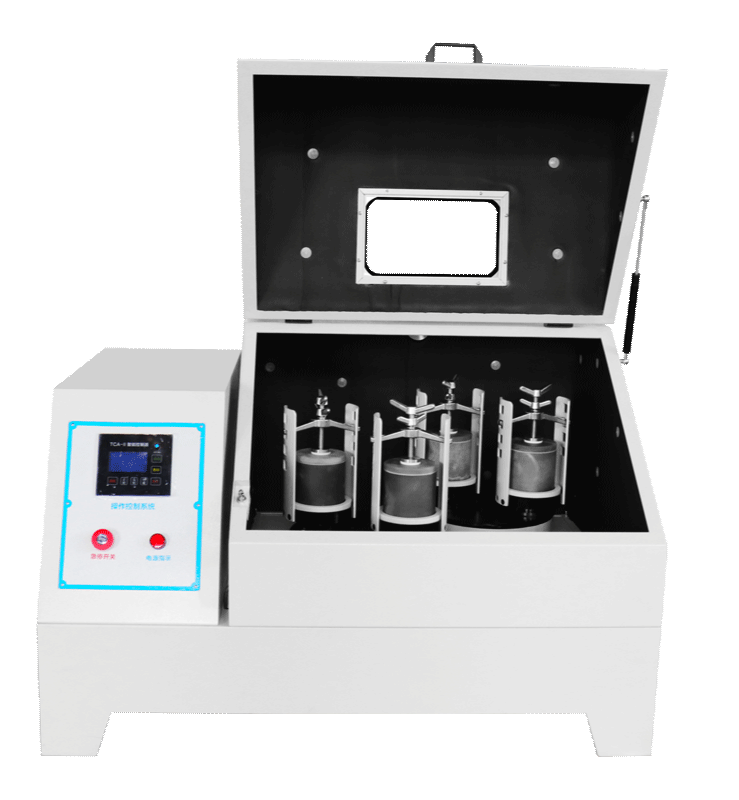
The term “dual planetary” refers to the two levels of motion that define the machine. Each grinding jar turns around its own axis while the jar holder also turns around a central axis. The result is a complex travel path for the grinding balls inside the jar. Instead of merely rolling along the bottom, the media are repeatedly lifted, thrown, and pressed against the sample. The combination of impact and friction breaks down particles and blends components at a scale that is difficult to achieve with ordinary low-energy mixing. For a laboratory, this means a compact bench-top footprint can still deliver useful grinding energy and good reproducibility when the process is controlled properly.
A dual planetary ball mill should be treated as a process tool, not simply as a motorized jar. The final powder depends on the interaction between jar material, ball material, ball size, sample load, liquid or atmosphere, rotation speed, and grinding time. Two operators can use the same machine and obtain different results if those variables are not defined. A practical FAQ therefore needs to explain both what the machine does and how to think about the variables that influence the outcome. The Dual Planetary Ball Mill product page is the appropriate place to confirm the exact configuration available for a particular laboratory.
Core Function and Working Principle
A dual planetary ball mill performs two jobs at once: it reduces particle size and it distributes components through the sample. Those jobs are related but not identical. Breaking a brittle solid into smaller pieces is mainly a matter of applying enough local stress to propagate cracks. Blending several powders, by contrast, depends on repeated rearrangement and shearing so that each component is represented throughout the batch. The planetary motion provides both impact and shear, which is why the same equipment can be used for pulverizing, homogenizing, alloying studies, and mechanical activation.
From Coarse Feed to Ultrafine Powder
The material enters the grinding jar as a coarse powder, small granules, or another prepared feed. Inside the jar, loose grinding balls collide with the particles and with one another. A particle caught between two moving balls receives a compressive load; a particle pressed between a ball and the jar wall receives a combination of compression and shear. Repeated events create cracks, and the cracks grow until fragments separate. As the particles become smaller, the number of defects per particle falls and further breakage becomes harder. This is why grinding does not continue indefinitely at the same rate. Early stages reduce size quickly, while later stages mainly refine the finest fraction and can also cause agglomeration, contamination, or undesirable phase changes if the energy input is excessive.
The Dual Planetary Motion
The distinctive feature of the dual planetary mill is the superposition of two rotations. The jar spins about its own centerline, and the jar holder spins about the central axis of the machine. Because both motions occur at once, the grinding media do not settle into a stable cascade. Their paths change continuously, producing a mixture of high-energy impacts and rubbing action. The relative speed between the media and the jar wall is higher than in a simple tumbler, and the direction of the forces changes as the jar travels around the main axis. For the operator, the practical consequence is that a small sample can be ground efficiently in a short time, but the process is sensitive to speed, fill level, and ball size. If the charge is too small, media may slide instead of impact; if it is too large, there is little free volume for movement and grinding efficiency drops.
Process Parameters That Shape the Result
No single setting defines a good grinding recipe. The operator has to balance several linked variables, and changing one usually requires adjusting another. The most important parameters are:
- Rotation speed: Higher speed generally increases impact energy, but beyond a practical limit it can raise heat, wear, and noise without improving fineness.
- Grinding time: Longer runs reduce particle size up to a point, after which re-agglomeration and contamination may dominate.
- Ball size and number: Larger balls favor impact and coarse breakage; smaller balls favor finer grinding and more surface contact.
- Sample load: Overfilling reduces media movement, while underfilling wastes capacity and may lower collision frequency.
- Jar and ball material: The choice affects contamination risk, wear life, and compatibility with the sample.
- Atmosphere and liquid: Dry, wet, inert, or low-temperature conditions can change flow, oxidation, and particle stability.
These parameters should be recorded as a recipe, not treated as casual settings. A laboratory that wants comparable results across operators needs a written procedure covering pre-treatment, fill ratio, sequence, and cleaning. It also needs a realistic definition of the target: a mean particle size alone is not enough if the specification also limits the coarse tail, contamination, or thermal exposure.
Core Components and Key Technologies
Although the principle is easy to describe, a reliable dual planetary ball mill depends on several engineered systems working together. The jar and media do the grinding, the drive provides the motion, the control system makes the motion repeatable, and the sealing arrangement protects the sample and the operator. When evaluating a machine, it is useful to look at these systems separately rather than judging only the maximum speed on the label.
Grinding Jars and Grinding Media
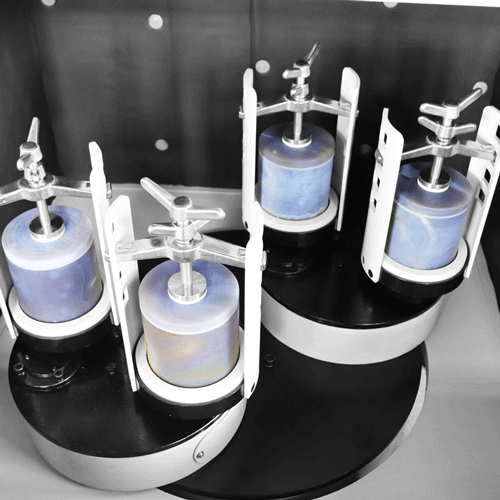
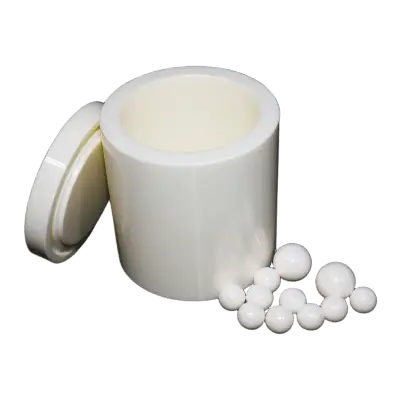
The grinding jar is the working chamber. Its material must be hard enough to resist wear, chemically compatible with the sample, and mechanically strong enough to withstand repeated impacts. Common laboratory choices include ceramic, agate, zirconia, tungsten carbide, stainless steel, nylon, and PTFE, each with a different balance of hardness, wear resistance, and contamination risk. A hard and dense jar is not automatically the best choice: if the sample is abrasive, the jar may shed material into the powder; if the sample is sensitive to metal, a ceramic or polymer jar may be preferable. Grinding balls should be selected as a system with the jar. Using media that are much harder than the jar can accelerate jar wear, while using media that are too light may not deliver enough impact energy.
Drive, Control, and Safety
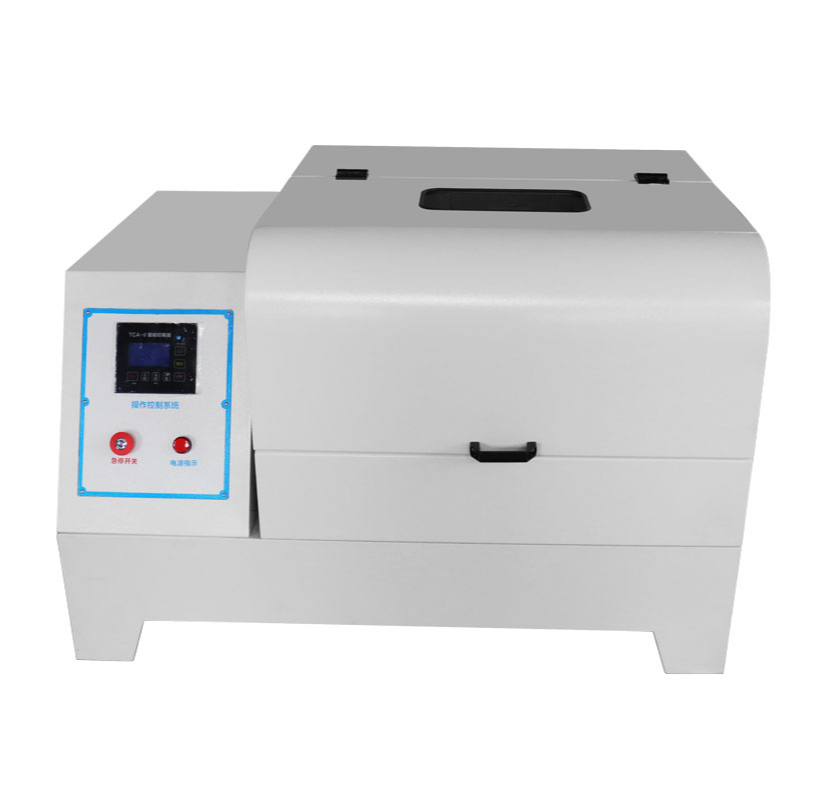
The drive system converts electrical power into controlled rotation. For reproducible work, the important qualities are stable speed under load, smooth acceleration, and the ability to run for a defined time without drift. The control system should make it easy to set speed and duration, and it should provide a clear indication of operating status. Safety features matter because a planetary mill stores kinetic energy in moving jars and media. A well-designed unit should prevent the jar holder from being accessed while it is moving, manage vibration, and protect the motor from overload. In a busy laboratory, simple interlocks and unambiguous controls are more valuable than a long list of unused functions.
Sealing and Sample Protection
Sealing is a small detail with large consequences. A loose jar lid can release fine powder, lose solvent, or allow air and moisture to enter the sample. The sealing system should suit the intended process: dry powders, wet slurries, and oxygen-sensitive materials place different demands on the lid, gasket, and jar finish. Operators should also consider how the jar will be opened, cleaned, and returned to service. A jar that is difficult to clean can carry residue from one batch to the next, which is a particular problem in trace analysis, pharmaceutical studies, and any work involving contrasting color or composition. Good sample protection is therefore part of the mill’s function, not an accessory.
Key Performance Indicators and Selection Points
Selecting a dual planetary ball mill is mainly a matter of matching the machine to the sample, the target fineness, and the laboratory workflow. A buyer should not begin with the largest jar or the highest speed. It is more useful to define the smallest and largest batch that must be handled, the hardest material that will be ground, the acceptable level of contamination, and the number of runs per week. Those answers narrow the choice quickly and prevent the purchase of a machine that is either underpowered for the work or larger than the laboratory needs.
Capacity and Working Volume
Capacity in a planetary mill is not a single number. It includes the nominal jar volume, the useful working volume after media and free space are considered, and the mass of sample that can be processed without stalling the motion. A jar filled almost completely with powder and balls may appear to offer high throughput, but it can leave too little room for media travel. In practice, the working volume should be chosen so that the grinding charge can move freely. The buyer should also think about the number of jars and the batch rhythm. A smaller machine that runs frequently may be more useful than a larger unit that is only partly filled and difficult to clean.
Particle Size Control and Repeatability
Particle size control depends on energy input and on the separation of fine particles from the grinding zone. A mill that can reach a fine size in one long run is not necessarily better than one that reaches the same size in a shorter, cooler, and more reproducible run. Repeatability is the key laboratory requirement. The machine should hold its speed, the jar should seat consistently, and the same recipe should produce a comparable result on different days. Users should ask how the target size will be verified, because sieve analysis, laser diffraction, microscopy, and surface-area methods answer different questions. A clear measurement plan is part of the selection process.
Energy, Automation, and Maintenance
Energy use in a laboratory mill is rarely the dominant operating cost, but heat generation and efficiency still matter. High-energy grinding can warm the sample, change its surface chemistry, or soften a polymer. If temperature is critical, the process may need shorter runs, lower speed, or a temperature-controlled environment. Automation is useful when it improves consistency: timed runs, stored recipes, and controlled acceleration reduce operator-to-operator variation. Maintenance should be simple enough to perform on a routine schedule. Bearings, seals, belts, and jar holders should be accessible, and the manufacturer should provide clear guidance on wear limits. A machine that is difficult to maintain will eventually be run in a degraded state, which undermines the repeatability the laboratory purchased it for.
Applications and Selection Advice
Dual planetary ball mills are used in laboratories that work with small but valuable samples. Typical settings include materials research, ceramic powder preparation, mineral and geological sample reduction, chemical synthesis, battery and catalyst studies, and mechanical alloying experiments. In these settings the mill may prepare a powder for X-ray diffraction, spectroscopy, particle-size analysis, or sintering trials. It may also be used to blend a formulation before pressing or coating. The common requirement is not simply fine grinding; it is a controlled, documented change in the sample that can be repeated and compared with other batches.
Selection advice should follow the application rather than the other way around. A laboratory that mainly breaks brittle minerals can prioritize impact energy, jar hardness, and dust protection. A laboratory working with sensitive polymers or biological materials should pay more attention to heat, contamination, and sealing. A teaching laboratory may value simple controls and easy cleaning, while a research group developing new materials may need a flexible machine that can accommodate different jar materials and small batch sizes. For exact configuration, dimensions, and available accessories, the Dual Planetary Ball Mill product page should be consulted directly. This avoids relying on assumptions that may not match the current product offering.
Frequently Asked Questions
Is a dual planetary ball mill the same as a common ball mill?
No. A common ball mill usually relies on a rotating drum that lifts and drops a media charge. A dual planetary mill adds a second rotation, so the jar travels around a central axis while also spinning on its own axis. This produces a more complex and energetic media motion in a smaller package. The two machines can both grind powders, but they are selected for different scales and levels of process control.
What determines the final particle size?
The final size is the result of energy input, grinding time, media size, sample hardness, and the tendency of fine particles to re-agglomerate. No single setting guarantees a specific size for every material. A sensible approach is to start with a conservative run, measure the result, and adjust one variable at a time. Recording the full recipe is essential if the result is to be repeated.
Can the mill handle both dry and wet grinding?
Many laboratory planetary mills can be operated with dry powders or with a liquid medium, but the jar, lid, and media must be compatible with the chosen route. Wet grinding can improve particle dispersion and reduce dust, while dry grinding simplifies recovery and cleaning. The decision should be based on the sample chemistry, the required fineness, and the downstream analysis.
Why is jar material important?
The jar is both a container and a grinding surface. A soft jar can wear quickly and contaminate the sample; a very hard jar may be unnecessary or too brittle for a particular duty. Chemical compatibility, thermal stability, and cleaning behavior also matter. The best jar is the one that protects sample purity while surviving the required energy input.
How should a new user begin?
A new user should begin with a small, representative sample and a conservative grinding time. The jar should be loaded according to the manufacturer’s guidance, sealed correctly, and balanced as required. After the first run, the powder should be examined for fineness, uniformity, and contamination. Only then should speed, time, or media size be increased. This stepwise approach is safer and more informative than starting with the most aggressive setting.
When should a laboratory choose a larger mill?
A larger mill makes sense when the required batch size consistently exceeds the practical working volume of a smaller unit, or when the laboratory needs to process many samples in parallel. It is not automatically better for fine grinding, because a large jar may require more media and more energy to achieve the same result. The decision should be based on realistic batch records, not on occasional maximum demand.
Related Products
Get In Touch
Our professional team will reply to you within one business day. Please feel free to contact us!