

What Is a 304 Stainless Steel Lined with Zirconia Mill Jar? A Lab Grinding Jar
What Is a 304 Stainless Steel Lined with Zirconia Mill Jar?
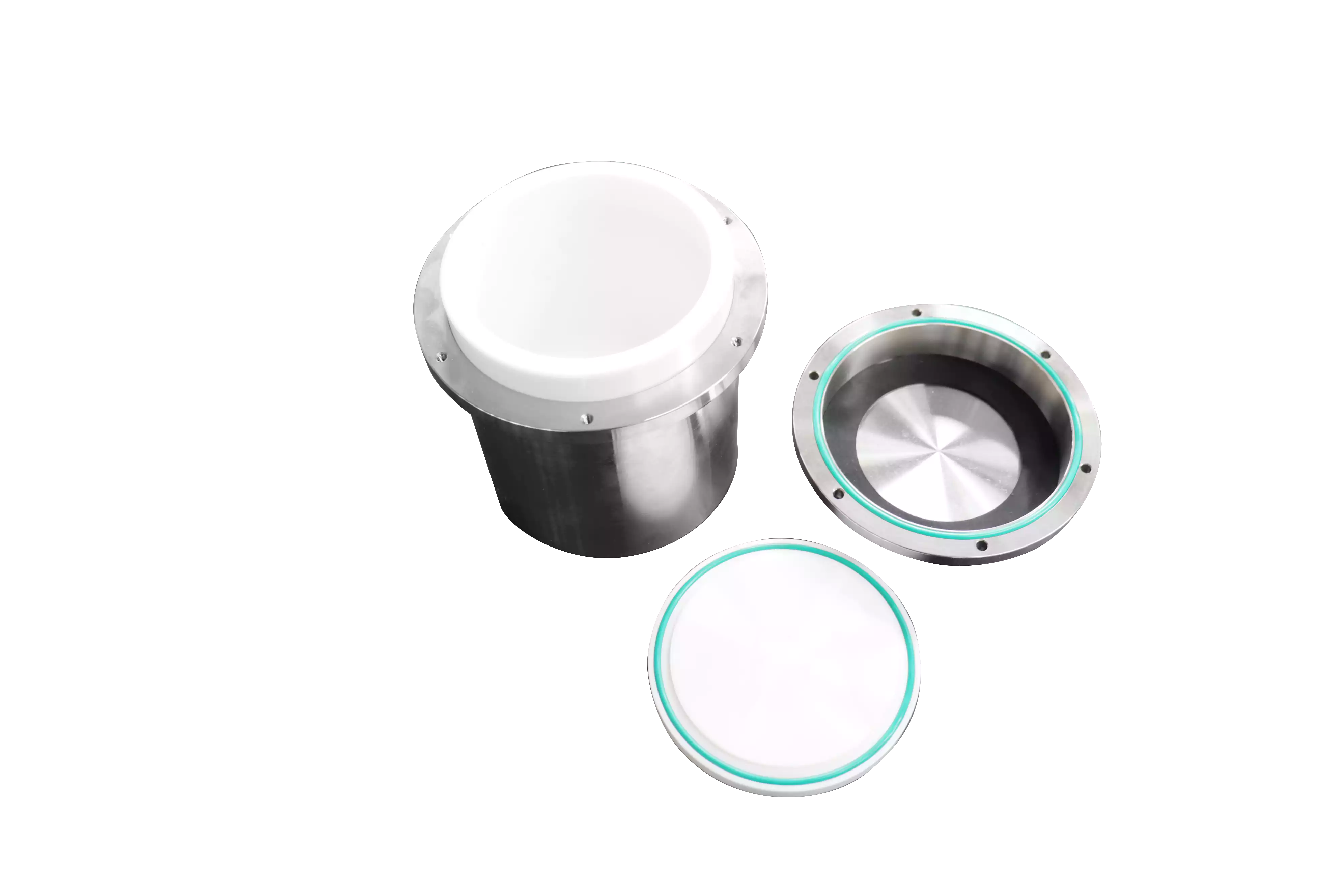
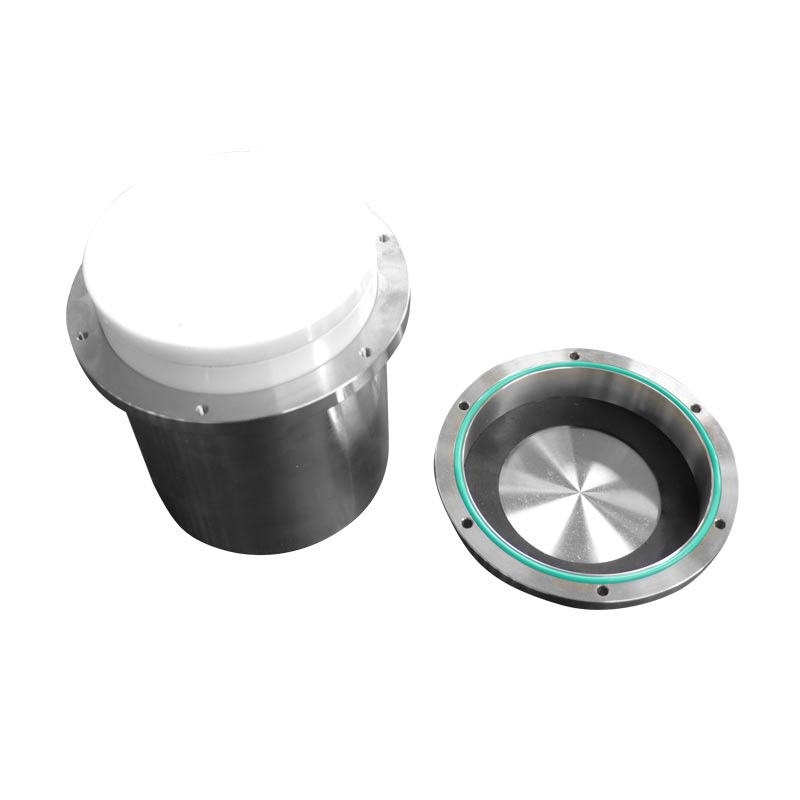
From a practical standpoint, a 304 stainless steel lined with zirconia mill jar is a grinding jar for planetary ball mills and similar laboratory milling systems. It holds the sample and grinding media during comminution and provides the internal surface against which the media impact, rub, and roll. The name describes the construction rather than a single material: a 304 stainless steel body gives the jar its mechanical form, while a zirconia ceramic lining forms the intended sample-contact surface. The jar is not a passive container; its geometry, lining condition, lid seal, and fit with the mill all affect how efficiently energy reaches the powder and how clean the final product remains.
The product is best understood as a composite laboratory component. The stainless steel shell supplies strength and handling durability, and the zirconia lining supplies wear resistance at the surface where abrasion occurs. A user chooses this type of jar when a purely metal jar may introduce too much contamination risk, but a fully ceramic jar may not offer the same practical robustness. The 304 stainless steel lined with zirconia mill jar is a specific product in that category, and its suitability depends on the sample, the mill, and the operating conditions.
It is also important to separate the jar from the machine. The jar does not generate motion by itself; it is one working vessel within a mill that provides rotation, clamping, and control. The mill determines the motion pattern and energy input, while the jar determines the immediate environment around the sample. A jar can be well made and still be a poor match for a particular mill or application.
Core Function and Working Principle
From Bulk Solid to Fine Powder
The core function of the jar is to contain material while it is reduced from a coarser state to a finer powder. In a typical milling run, the operator loads the sample and grinding balls into the jar, closes the lid, and mounts the jar in the mill. As the mill runs, the grinding media are lifted, dropped, rolled, and pressed against the sample and the jar wall. Impacts fracture brittle particles, while friction and shear gradually reduce particle size and distribute the powder. The jar must allow this action to repeat without losing its shape, seal, or surface condition.
The transformation is not instantaneous. Coarse particles are first broken at weak points and edges; as the powder becomes finer, the remaining particles may be harder to break, and the balance between impact and friction becomes more important. The jar's internal surface participates because it is the boundary against which the charge is compressed and rubbed. A smooth, wear-resistant lining helps maintain a stable contact surface, while a damaged surface can change how the charge moves. The operator's goal is a repeatable powder result, and the jar is part of that repeatability.
The Jar in Planetary Ball Milling
Planetary ball mills are named for the motion of their jars. The jars are mounted on a rotating carrier and also rotate about their own axes. This combination creates centrifugal effects that repeatedly lift and drive the grinding media into the sample. Depending on the mill design and settings, the media may produce strong impact, rolling friction, or a mixture of both. The jar's shape and internal volume affect how the media charge behaves, and the lid and seal must keep the sample inside while this motion continues.
In this environment, the jar is exposed to cyclic loading. The media strike the wall, press against the lining, and slide along the interior. The outer shell must hold the assembly together and fit securely in the mill's jar seat. The lining must resist abrasion at the sample-contact surface. If either part is compromised, the run may suffer from leakage, contamination, unusual noise, or poor grinding efficiency. A lined jar should therefore be inspected as a system rather than treated as a disposable cup.
Process Parameters That Matter
The jar alone does not determine the final particle size. The result depends on interacting parameters: jar volume, sample amount, ball size and number, ball-to-powder ratio, rotation speed, milling time, atmosphere, and whether the process is dry or wet. Changing one parameter can change the effect of the others. A larger ball may deliver more impact energy, but too few balls may reduce the number of contacts. A longer run may refine the powder, but it may also increase wear and heat. The jar must be operated within the limits set by its supplier and the mill manufacturer.
- Fill level: the jar should not be packed so tightly that media cannot move, nor so empty that contacts are inefficient.
- Media size: smaller media may improve fine grinding, while larger media may help break coarser particles.
- Media material: choose media with the same contamination and wear considerations as the jar lining.
- Rotation speed: higher speed can increase energy, but it can also increase heat, wear, and poor media motion.
- Milling time: longer time can refine the powder, but it can also broaden the particle size distribution or increase contamination.
- Dry or wet: a liquid can change powder flow, temperature, and sealing requirements, so the lid and gasket must be suitable.
Main Components and Construction
304 Stainless Steel Shell
The outer shell is the structural body of the jar. In this product, it is made of 304 stainless steel, a common grade chosen for laboratory hardware because it is strong, formable, and resistant to many ordinary environments. The shell gives the jar its cylindrical form, provides the mounting surfaces that fit the mill, and supports the lid and sealing arrangement. It also carries the mechanical load from the clamped jar and from the moving charge inside. In a lined jar, the shell is not intended to be the primary sample-contact surface, but it is essential to durability and safe handling.
Shell quality matters in ways that are easy to overlook. The closure features should be clean and undamaged. The rim should be flat enough to seal. The outer dimensions should match the mill's jar seat. A shell that is difficult to clamp, or that sits unevenly, can cause vibration or poor rotation. The shell should also be inspected for dents or deformation, because a deformed body can stress the lining and the lid. Stainless steel is robust, but it is not indestructible; dropping a heavy jar or over-tightening a closure can still cause problems.
Zirconia Lining
The zirconia lining is the functional surface of the product. Zirconia is a ceramic material based on zirconium oxide, and it is used in milling hardware for its hardness, wear resistance, and chemical stability. In this jar, the lining is intended to cover the interior so that the sample and media meet a ceramic surface rather than bare steel. That arrangement can reduce the release of metal from the jar wall and can provide a more wear-resistant contact layer for abrasive powders. The lining also gives the jar its two-material construction: a tough outer body and a hard inner surface.
Ceramic linings require appropriate handling. They can chip if struck with a hard tool, and they can crack under abrupt temperature changes or excessive mechanical stress. They should not be used as a surface for aggressive scraping or impact. The lining should be inspected for cracks, chips, exposed steel, and uneven wear. The bond between the lining and the steel shell also matters; a lining that is loose or separated can fail even if the ceramic itself looks intact. When evaluating a lined jar, look for uniform coverage, a clean transition at the rim, and a lid design that does not concentrate stress on the ceramic edge.
Lid and Sealing
The lid and gasket close the milling environment. For dry milling, the lid mainly prevents dust loss and keeps the charge contained. For wet milling, the seal must also resist liquid, solvent, and internal pressure changes. The gasket material should be compatible with the sample and the cleaning agents. A gasket that swells, hardens, or softens can leak, and a lid that is difficult to close can create a false sense of security. The closure should be checked before every run, and the gasket should be replaced when it shows wear.
Sealing is not only about keeping material inside. It also affects repeatability. If a small amount of powder escapes, the ball-to-powder ratio changes, and the result may shift. If solvent evaporates, the slurry concentration changes. If air enters a sensitive atmosphere, the sample may oxidize. The lid and gasket should therefore be selected as part of the process, not as an afterthought. The user should confirm with the supplier whether the jar and lid are intended for the planned dry or wet conditions.
Media and Internal Finish
The grinding media are the moving tools inside the jar. Their material, size, and quantity strongly affect the milling result. When a zirconia-lined jar is used, zirconia grinding balls are often considered because they keep the sample-contact materials consistent and avoid introducing a different ceramic or metal. However, the best media depend on sample hardness, target particle size, and acceptable contamination. A harder or denser media may grind faster but may also increase wear on the jar. A softer media may reduce wear but may not provide enough energy for hard particles.
The internal finish of the jar also plays a role. A smooth lining reduces places where powder can lodge, which helps cleaning and cross-contamination control. Sharp transitions, rough patches, or damaged areas can trap material and change the local flow of the charge. After cleaning, the interior should be inspected visually under good light. If powder remains in a corner or a crack, the next sample may be contaminated. The jar should be stored dry and protected from impacts that could damage the lining or the rim.
Key Performance Indicators and Selection Points
Volume and Working Capacity
The nominal volume of a jar is not the same as the useful working capacity. Some internal volume must be left free for grinding media and powder movement. If the jar is filled too much, the media cannot move freely, and grinding becomes inefficient. If it is filled too little, the number of contacts may be low, and the run may take longer. The right working capacity depends on the sample, the media, and the mill. Users should ask the supplier for the recommended fill range rather than assuming that the full nominal volume can be used.
Capacity should also be matched to the mill. A jar that is too large for the mill's station may not fit or may exceed the recommended load. A jar that is too small may not process a representative sample. For laboratories that handle many small samples, a smaller jar may be more practical even if a larger one is available. For scale-up work, the jar size should be chosen with the intended batch size and the number of runs in mind. The goal is a reliable process, not the largest possible container.
Compatibility and Contamination Control
Compatibility is the first technical filter in jar selection. The sample may be acidic, basic, abrasive, reactive, or sensitive to metal. The solvent may attack the gasket. The powder may be intended for trace analysis where even small amounts of contamination matter. Zirconia is a useful ceramic for many of these situations because it is hard and chemically stable, but it is not universally inert. The user should confirm compatibility with the supplier and, where necessary, run a small trial to check for color change, reaction, or unexpected wear.
Contamination control is not only a material question; it is also a handling question. A clean jar, clean media, and clean tools are part of the method. The jar should be dedicated to a sample type when cross-contamination is critical. The lining should be inspected for exposed steel. The gasket should be checked for residue. If the application requires very low contamination, the user should ask for appropriate documentation or testing rather than relying on the generic description of the material. A lined jar reduces one contamination pathway, but it does not remove the need for a controlled procedure.
Wear Life and Inspection
Wear life is difficult to predict from the product name alone because it depends on the sample, media, speed, run time, and cleaning method. Abrasive powders and high-energy runs will wear a lining faster than soft powders and gentle runs. The user should establish an inspection routine: check the lining for cracks, chips, discoloration, and exposed steel; check the rim for damage; check the lid and gasket for wear; and check the outer shell for dents or deformation. A jar that shows a change should be evaluated before it is used again.
Record keeping helps. If a jar is used for many runs, a simple log of sample type, run time, and observed condition can reveal when wear is accelerating. This is especially useful in a shared laboratory where multiple users handle the same jar. A jar with a damaged lining should not be kept in service simply because it still holds powder. The lining is the functional barrier, and once that barrier is compromised, the product no longer performs its intended role.
Mill Fit and Operating Limits
A jar must fit the mill physically and be suitable for the mill's motion. The outer diameter, height, lid clearance, and mounting features should match the jar seat. The weight of the jar plus media plus sample should be within the mill's recommended load. A jar that is too heavy may strain the mill, and a jar that is too tall may contact the housing. These are practical checks that should be made before purchase, not after the jar arrives.
Operating limits are equally important. A jar that fits a mill may still have a lower recommended speed or a different intended use. The mill manufacturer's instructions and the jar supplier's instructions should both be followed. If the jar is used above its intended speed, the lining, lid, or shell may be stressed beyond design limits. The safest approach is to confirm compatibility with both suppliers and to use the lower of the applicable limits.
Cleaning and Handling
Throughput is not only about jar volume. It is also about how quickly the jar can be loaded, cleaned, and returned to service. A jar that is difficult to open, heavy to lift, or hard to clean can slow a laboratory more than a slightly smaller jar with better handling. The weight of a lined jar should be considered, especially when it must be lifted into a mill repeatedly. The lid design should allow a secure grip and a clear view of the sealing surface.
Cleaning should use soft brushes and agents compatible with zirconia, stainless steel, and the gasket. Avoid metal scrapers, harsh abrasives, and sudden temperature changes that could chip or crack the lining. Remove powder from corners and threads, rinse if the supplier permits, and dry the jar fully before storage. Inspect the lining and seal after cleaning. The supplier's cleaning guidance should take priority because the specific lining and gasket may have their own limits.
Applications and Selection Advice
Lined mill jars are used in laboratories and small-scale processing where planetary ball milling is part of sample preparation or materials development. Typical settings include materials research, ceramic and inorganic powder processing, geological sample preparation, environmental sample work, and other applications where a small batch must be ground under controlled conditions. The common thread is not a single industry but a need for a contained, repeatable milling environment with a sample-contact surface that is more wear-resistant than bare steel.
The jar is also used when a laboratory wants the handling strength of a metal body but wants to reduce direct metal contact with the sample. That combination can be useful for abrasive powders that would wear an unlined metal surface. It can also be useful when the jar must be clamped securely and handled repeatedly. The exact suitability still depends on sample chemistry, required cleanliness, and the mill's operating limits. A lined jar is a practical compromise, not a universal solution.
This jar is a reasonable candidate when the user needs a planetary ball mill jar with a robust outer body, a ceramic sample-contact lining, and a construction that can be inspected and cleaned. It is a good fit for abrasive powders that would otherwise wear a metal surface, for laboratories that want to reduce direct steel contact, and for workflows where the jar is handled frequently and must retain its shape. Before choosing it, confirm the working volume, lid and gasket suitability, media to be used, and compatibility of the sample and cleaning agents.
- Mill fit: confirm outer dimensions, mounting features, and weight against the mill's jar seat and load limits.
- Working volume: ask for the recommended sample and media fill range, not just nominal jar volume.
- Sample compatibility: check sample chemistry, abrasiveness, and sensitivity to zirconia or steel.
- Seal compatibility: confirm the lid and gasket against the planned dry or wet process and cleaning agents.
- Media choice: select grinding balls compatible with the sample and jar lining.
- Contamination target: decide whether a lined jar is sufficient or whether a different material and documentation are needed.
- Operating limits: follow the lower of the mill and jar supplier limits for speed, load, and run time.
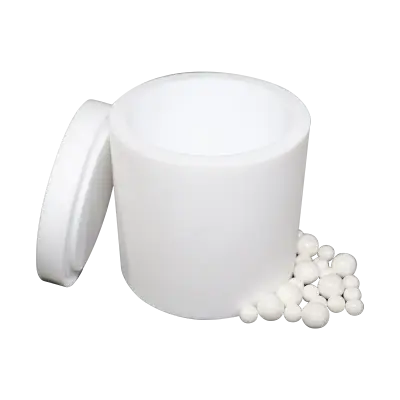
Another jar material may be better when the sample reacts with zirconia, when the lining is likely to be chipped by the proposed media or handling, or when the application requires a different contamination profile. A fully ceramic jar may be preferred when the user wants a ceramic contact surface throughout. A polymer or PTFE jar may be preferred for certain chemical compatibility needs or for softer samples. An unlined stainless steel jar may be acceptable when metal contact is not a concern. The choice should be based on the sample, not on a general preference for one material.
Frequently Asked Questions
Is the whole jar made of zirconia?
No. The product name describes a 304 stainless steel jar with a zirconia lining. The stainless steel provides the outer body and structural support, while the zirconia layer is intended to provide the sample-contact surface. Users should confirm the extent of the lining, the lid design, and the sealing arrangement with the supplier. The important practical question is whether the lining covers all intended sample-contact areas and remains intact during use.
Can it be used for both dry and wet grinding?
Many planetary ball mill jars are used for dry and wet milling, but the suitability of a specific jar depends on the lid, gasket, solvent compatibility, and supplier instructions. A jar that works well for dry powder may not be intended for a particular solvent or for pressure changes during wet milling. Confirm the intended use before running liquids. If wet milling is planned, the seal and cleaning procedure deserve particular attention.
How should the jar be cleaned?
Use soft brushes and cleaning agents compatible with zirconia, stainless steel, and the gasket. Avoid metal scrapers, harsh abrasives, and sudden temperature changes that could chip or crack the lining. Remove powder from corners and threads, rinse if the supplier permits, and dry the jar fully before storage. Inspect the lining and seal after cleaning. The supplier's cleaning guidance should take priority because the specific lining and gasket may have their own limits.
Does the stainless steel shell contact the sample?
In normal use, the zirconia lining is intended to be the sample-contact surface, so the steel shell should not directly contact the sample. However, a cracked, chipped, or worn lining can expose the steel. Inspect the jar regularly. If exposed steel or a loose lining is visible, remove the jar from service until its condition is confirmed. This is especially important for work where metal contamination would affect the result.
Reference
Product reference: 304 stainless steel lined with zirconia mill jar.
Related Products
Get In Touch
Our professional team will reply to you within one business day. Please feel free to contact us!