

What Is a Micro Airflow Pulverizer? A Dry Mill for Ultrafine Powder Production
What Is a Micro Airflow Pulverizer?
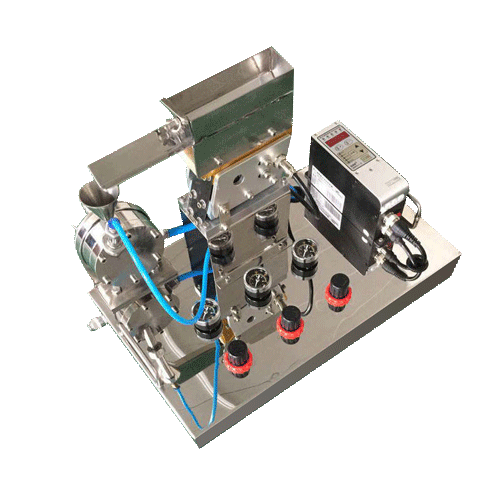
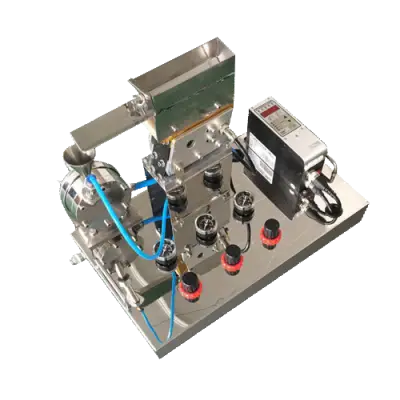
From its core, a micro airflow pulverizer is a dry milling machine that reduces friable solid materials into fine or ultrafine powders by using high-speed air jets rather than mechanical grinding media. Industries such as pharmaceuticals, chemicals, battery materials, ceramics, food processing, and advanced materials research use it to produce powders with a controlled particle size and a relatively narrow particle size distribution. Instead of relying on steel balls, ceramic beads, or a rotating hammer, the machine accelerates particles in a stream of compressed air or an inert gas. The particles collide with one another and with the internal surfaces of the milling chamber, breaking down into smaller fragments. A built-in classifier then separates the fine powder from coarse particles, allowing only the desired fraction to leave the mill. The TENCAN Micro airflow pulverizer is one example of this equipment family, designed for laboratory and small-scale powder processing where contamination control, repeatability, and fine grinding performance matter. In simple terms, it answers two basic questions: what is it, and what is it used for? It is a precision powder-making tool used to turn coarse feed into fine powder without introducing grinding media into the product.
Because the milling energy comes from air rather than from contact with grinding bodies, the process is often described as autogenous or media-free. That distinction is important. In a ball mill or bead mill, wear from grinding media can contaminate the powder, and the milling action can generate significant heat through friction. In an airflow pulverizer, the material is accelerated and fractured primarily by inter-particle impact. The result is a cleaner powder, less metallic or ceramic contamination, and a process that can be adapted to heat-sensitive or high-purity materials. The trade-off is that airflow pulverizers require a stable supply of compressed gas, careful control of feed rate, and a well-designed classification system to achieve the target particle size. When these factors are managed properly, the equipment can deliver fine powders with good batch-to-batch consistency.
Core Functions and Working Principle
The core function of a micro airflow pulverizer is to convert a coarse or granular solid feed into a fine, flowable powder. The machine combines three operations in a single system: acceleration, collision, and classification. First, the feed material is introduced into a high-velocity gas stream. Second, the particles gain kinetic energy and collide with each other, causing fracture along weak points in the material. Third, a classifier separates particles that are already fine enough from those that need more milling. The coarse fraction is recirculated internally, while the fine fraction exits with the gas stream and is collected in a filter or cyclone. This continuous loop makes the process efficient, because only the oversize particles remain in the milling zone for further reduction.
From Coarse Feed to Fine Powder
The transformation begins at the feed inlet. Material can be fed by a vibratory feeder, screw feeder, or gravity chute, depending on the equipment design and the flow properties of the powder. A consistent feed rate is essential. If the mill is overfed, the particle concentration in the chamber becomes too high, collisions become less effective, and the classifier may be overloaded. If the mill is underfed, energy is wasted and throughput drops. Inside the milling chamber, nozzles inject compressed air or inert gas at high velocity. The gas jets create a turbulent, high-energy zone where particles are repeatedly accelerated and impacted. The smaller particles follow the gas flow toward the classifier, while larger particles are thrown outward or downward and returned to the milling zone. This internal recirculation continues until the particles are small enough to pass the classifier.
The Role of Compressed Air and Jet Energy
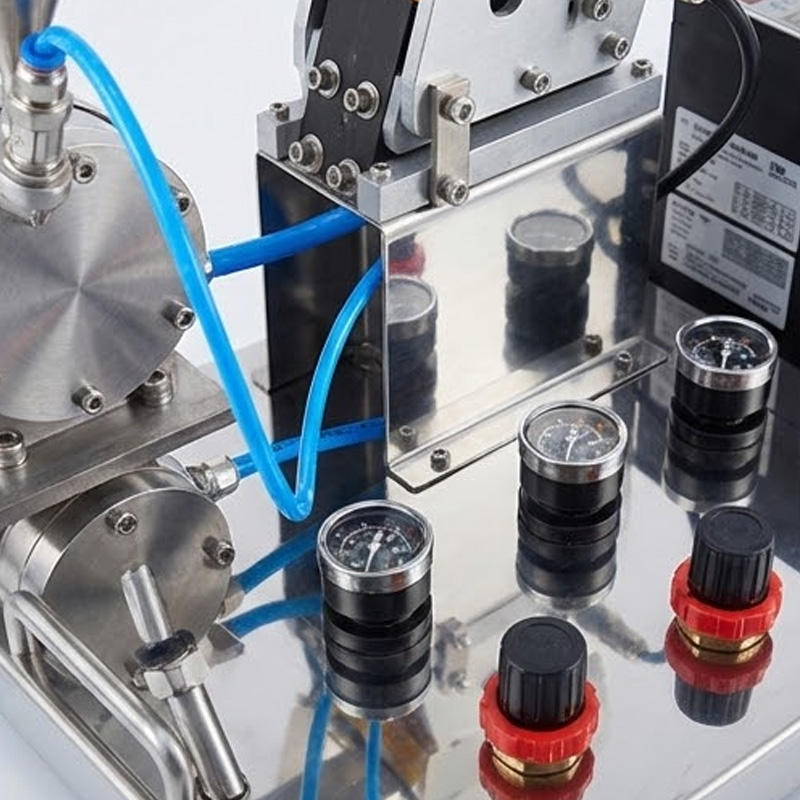
Compressed air is both the energy carrier and the processing medium in an airflow pulverizer. The pressure and flow rate of the gas determine the velocity of the jets and therefore the energy available for fracture. Higher jet energy generally improves the ability to break down harder or larger particles, but it also increases energy consumption and can raise the temperature of the gas. For heat-sensitive materials, the gas may be cooled, or an inert gas such as nitrogen may be used to prevent oxidation and reduce the risk of combustion. Nozzle design is another critical factor. The number, angle, and diameter of the nozzles influence the collision pattern inside the chamber. A well-designed nozzle arrangement creates a stable grinding zone, minimizes dead spots, and allows particles to collide efficiently rather than simply hitting the chamber walls. In practice, the operator balances gas pressure, feed rate, and classifier speed to achieve the desired fineness without wasting energy.
Classification and Particle Size Control
Classification is the key to controlling particle size in a micro airflow pulverizer. After particles are reduced in the milling zone, they enter a classifier, which may be a rotating wheel, a static deflector, or a combination of both. The classifier creates a cut point: particles finer than the cut point pass through, while coarser particles are rejected and returned to the milling zone. By adjusting the classifier speed or the gas flow, the operator can shift the cut point and change the final particle size. A higher classifier speed usually produces a finer powder, while a lower speed allows larger particles to exit. The feed rate also affects the result. A lower feed rate gives each particle more chances to collide and be classified, which typically produces a finer and more uniform powder. A higher feed rate increases throughput but may widen the particle size distribution. For many applications, the goal is not only a small median particle size (D50) but also a controlled top cut (D97 or D99) and a narrow distribution. The classifier is what makes this level of control possible.
Main Types and Configurations
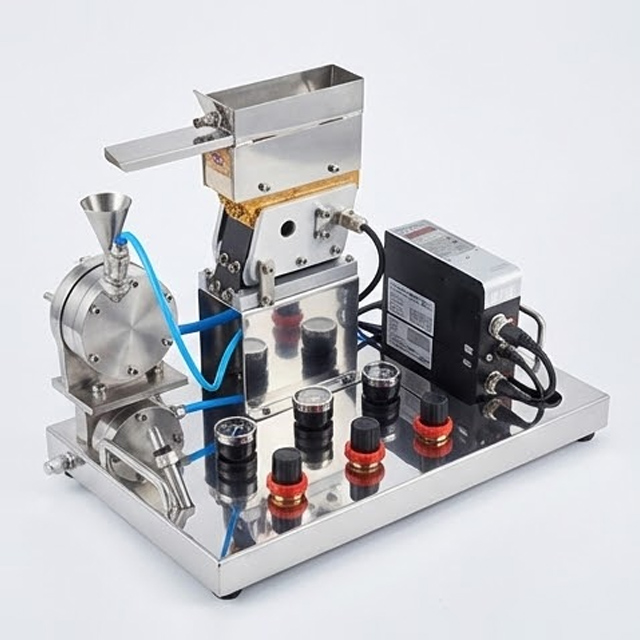
Airflow pulverizers are available in several configurations, and the term “micro airflow pulverizer” usually refers to a compact laboratory or small-production unit designed for fine grinding of small to medium batches. The TENCAN Micro airflow pulverizer belongs to the broader family of jet mills and airflow grinding systems. Although the basic principle is the same, different designs emphasize different priorities: some are optimized for ultra-fine grinding, some for high throughput, some for easy cleaning and rapid material changeover, and some for processing heat-sensitive or easily oxidized materials. Understanding these configurations helps users choose the right machine for their powder.
Laboratory and Small-Batch Configurations
Laboratory-scale airflow pulverizers are designed for research and development, formulation studies, and small-batch production. They typically have a compact footprint, simple controls, and a modular milling chamber that can be opened or removed for cleaning. This is important when different materials must be processed without cross-contamination. A lab micro airflow pulverizer may process batch sizes ranging from a few grams to several kilograms, depending on the material density and the target fineness. It is often used to test whether a material can be jet milled, to determine the optimum grinding parameters, and to produce small quantities of powder for analysis or prototype products. Because the scale is small, the equipment can be installed in a fume hood, a glove box, or a cleanroom, provided that the gas supply and dust collection are properly arranged.
Production-Oriented Airflow Mills
Production-oriented airflow mills are built for continuous operation and higher capacity. They may use larger milling chambers, multiple nozzles, more powerful classifiers, and automated feed systems. The powder collection system is usually more elaborate, with cyclone separators, cartridge filters, or bag filters to recover fine particles and return clean gas to the environment. These systems are often integrated with upstream feeding and downstream packaging or conveying. Although they share the same working principle as laboratory units, production mills are designed for stability, uptime, and energy efficiency. In many plants, the airflow pulverizer is part of a larger powder processing line that includes drying, deagglomeration, classification, and blending. The choice between a lab unit and a production unit depends on the required output, the number of products to be processed, and the level of automation needed.
There are also variations in gas handling. Some systems use ambient air, while others use nitrogen, argon, or another inert gas. Inert gas milling is common for materials that are prone to oxidation, combustion, or explosion. Closed-loop gas systems recover and recirculate the gas, which reduces operating cost and prevents the release of fine powder into the workplace. For pharmaceutical or food applications, the equipment may be designed with sanitary surfaces, crevice-free welds, and clean-in-place features. These differences do not change the fundamental mechanism, but they strongly influence the suitability of a given machine for a specific product.
Key Performance Indicators and Selection Points
When selecting a micro airflow pulverizer, users should look beyond the basic dimensions and motor power. The most important indicators are processing capacity, particle size control, energy efficiency, automation, and maintenance requirements. Because airflow pulverizers rely on compressed gas, the cost of gas generation can be a significant part of the operating cost. Therefore, a machine that delivers the required fineness with the lowest specific energy consumption is often the most economical in the long run. At the same time, the selection must account for the physical and chemical properties of the feed material, including hardness, brittleness, moisture content, and thermal sensitivity.
Processing Capacity and Throughput
Processing capacity is usually expressed as kilograms per hour for production units or grams per batch for laboratory units. It depends on many factors: the target particle size, the hardness of the material, the initial feed size, the gas pressure and flow, the classifier speed, and the feed rate. A mill that produces a very fine powder will generally have lower throughput than the same mill producing a coarser powder, because fine grinding requires more collisions and more energy per unit mass. For laboratory work, batch capacity is often more important than continuous throughput. For production, the ability to run continuously at a stable rate is critical. Users should ask for capacity data based on a material similar to their own, because testing with the actual material is the only reliable way to predict performance.
Particle Size and Distribution Control
Particle size control is the main reason to choose an airflow pulverizer. The machine can produce powders with a median particle size in the micron or sub-micron range, depending on the material and the configuration. The classifier allows the operator to adjust the cut point without changing the milling chamber or the nozzles. However, particle size distribution is just as important as the median size. A narrow distribution means that most particles fall within a tight range, which can improve flowability, packing density, dissolution rate, and sintering behavior. A wide distribution may contain both very fine and very coarse particles, which can lead to inconsistent product performance. When evaluating a pulverizer, request particle size analysis data, including D10, D50, D90, and the top cut. If the material is sensitive to heat or oxidation, also consider whether the gas can be cooled or replaced with an inert gas.
Energy Consumption and Efficiency
Energy consumption in an airflow pulverizer is dominated by the compressed gas supply. The compressor, not the mill itself, usually accounts for most of the electricity used. Therefore, optimizing the gas pressure and flow is essential. Higher pressure does not always mean better grinding; beyond a certain point, additional energy may be converted into heat and noise rather than into particle fracture. The nozzle design, chamber geometry, and classifier efficiency all influence how effectively the gas energy is used. A well-matched system can achieve the target fineness with less gas, which reduces operating cost and environmental impact. In addition, the collection system should be designed to minimize pressure drop. A clogged filter or a poorly designed cyclone can increase back pressure and reduce the efficiency of the entire circuit. Regular maintenance of the gas line, filters, and nozzles helps keep energy consumption under control.
Automation, Safety, and Maintenance
Modern airflow pulverizers often include programmable controls, touch-screen interfaces, and sensors for pressure, flow, temperature, and feed rate. Automation improves repeatability, especially when the same product is processed day after day. It also allows the operator to set alarms and interlocks for safe operation. Safety features may include pressure relief, temperature monitoring, oxygen monitoring when inert gas is used, and grounding to prevent static discharge. Maintenance is another important consideration. The main wear parts are the nozzles, the classifier, and the internal liners. Wear-resistant materials such as ceramics or tungsten carbide may be used in areas exposed to high-speed particles. Easy access to the milling chamber and classifier is essential for cleaning and inspection. In pharmaceutical or food applications, the equipment must be easy to disassemble and clean to avoid cross-contamination between batches.
Applications and Selection Advice
Micro airflow pulverizers are used in many industries where fine, uniform powders are required. In pharmaceuticals, they can be used to micronize active pharmaceutical ingredients and excipients, improving dissolution rate and content uniformity. In chemicals, they help produce fine pigments, fillers, catalysts, and specialty additives. In battery materials, they can reduce the particle size of cathode and anode precursors or active materials, which can affect electrochemical performance. In ceramics and glass, they produce fine powders for sintering, glazing, and advanced ceramic components. In food processing, they can mill spices, cocoa, sugar, and other brittle ingredients, although hygiene and cleaning requirements are especially strict. In cosmetics, they can create fine powders for pressed powders and other formulations. In minerals and mining, they can prepare samples for analysis or produce fine mineral fillers. The common thread is the need for controlled particle size, low contamination, and consistent quality.
Choosing the right micro airflow pulverizer depends on the user’s scale and objectives. A research laboratory may prioritize small batch capacity, easy cleaning, and the ability to test many different materials. A pilot plant may need a unit that can bridge the gap between laboratory results and production, with enough capacity to produce trial quantities. A full-scale production facility may require a continuous system with automated feeding, inert gas capability, and a high-efficiency collection system. In all cases, the material properties should be tested before purchase. Hardness, brittleness, moisture, and thermal sensitivity can all affect performance. It is also wise to consider the entire powder processing chain, because feeding, classification, collection, and packaging can influence the final particle size and powder quality. The micro airflow pulverizer offers a compact platform for laboratories and small-scale production, and its design reflects the general principles discussed above.
Operation, Maintenance, and Safety Notes
Operating an airflow pulverizer safely and efficiently requires attention to several details. First, the feed material should be dry and free-flowing. Moisture can cause bridging in the feeder and agglomeration in the milling chamber, which reduces grinding efficiency and may clog the classifier. If the material is moist, pre-drying may be necessary. Second, the gas supply must be clean and dry. Oil, water, and particulate contaminants in the compressed air can affect product purity and damage the nozzles. Filters, dryers, and separators should be installed and maintained. Third, the operating parameters should be recorded and repeated. Pressure, flow, feed rate, and classifier speed all interact, and the optimal settings for one material may not work for another. Keeping a log of settings and results helps build a reliable process.
Maintenance should include regular inspection of nozzles for wear or blockage, checking the classifier for damage or buildup, and replacing filters as needed. The milling chamber should be cleaned between products to prevent cross-contamination. In applications involving combustible dusts, explosion venting, inert gas blanketing, and proper grounding are essential. Operators should wear appropriate personal protective equipment and follow local safety regulations. Noise levels can be significant, so hearing protection may be required. With proper care, an airflow pulverizer can provide years of reliable service and consistent powder quality.
FAQ About Micro Airflow Pulverizers
- What materials can be processed? Most brittle, dry, and friable materials can be jet milled. Examples include chemicals, minerals, ceramics, pigments, pharmaceuticals, and food ingredients. Sticky, fibrous, or very moist materials may require pre-treatment or a different milling method.
- Is it suitable for heat-sensitive materials? Yes, especially when the gas is cooled or an inert gas is used. Because the milling action is fast and the gas carries heat away, the material’s residence time in the grinding zone is short. However, testing is recommended for very sensitive products.
- How fine can the powder be? The achievable fineness depends on the material and the machine configuration. Many airflow pulverizers can produce powders in the micron range, and some can reach sub-micron sizes. The classifier allows adjustment of the cut point.
- What is the difference between an airflow pulverizer and a ball mill? A ball mill uses grinding media to crush and grind particles, while an airflow pulverizer uses high-speed gas jets and particle collisions. Airflow pulverizers generally produce finer and more uniform powders with less contamination, but they require compressed gas and a classification system.
- What maintenance is required? Regular cleaning, nozzle inspection, classifier checks, and filter replacement are the main tasks. Wear parts may need replacement over time, depending on the abrasiveness of the material.
Conclusion
A micro airflow pulverizer is a versatile dry milling system that uses high-speed gas jets to produce fine, uniform powders with controlled particle size. Its media-free operation reduces contamination, while the integrated classifier provides flexible control over fineness and distribution. The equipment is widely used in laboratories, pilot plants, and production facilities across the pharmaceutical, chemical, battery, ceramic, food, and mineral industries. When selecting a machine, users should consider capacity, particle size control, energy efficiency, automation, and maintenance, and they should test their actual material whenever possible. By understanding the working principle and the key selection factors, purchasers and technicians can choose a system that delivers reliable performance and consistent powder quality.
Related Products
Get In Touch
Our professional team will reply to you within one business day. Please feel free to contact us!