

What is 304 Stainless Steel Grinding Ball? A Durable Grinding Media for Planetary and Ball Mills
What is 304 Stainless Steel Grinding Ball?
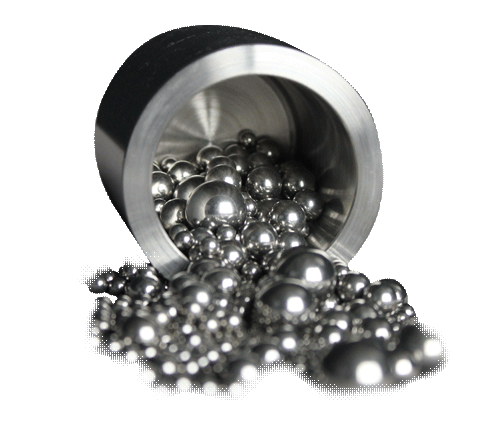
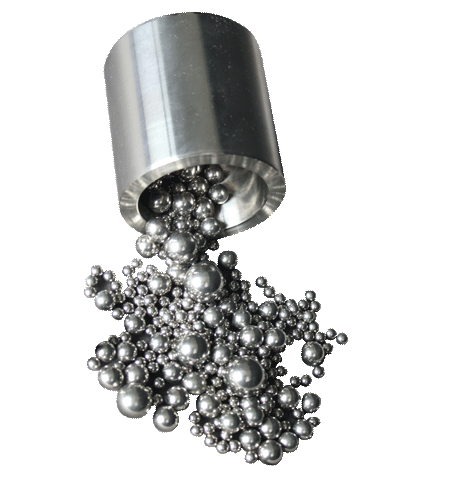
From the core, a 304 stainless steel grinding ball is a specialized grinding media used in planetary ball mills, drum ball mills, and other milling equipment to efficiently grind, mix, and homogenize materials. It is designed to deliver high impact and friction forces in a controlled environment, transforming coarse particles into fine powders down to the nanometer scale. The 304 grade stainless steel offers excellent corrosion resistance, good hardness, and a clean surface finish, making it suitable for a wide range of industries including food processing, pharmaceuticals, electronics, and ceramics.
Core Function and Working Principle
The primary function of the 304 stainless steel grinding ball is to act as the milling medium inside a ball mill. During operation, the mill jar rotates, causing the balls to tumble, cascade, and impact against the material and each other. The kinetic energy transferred from the ball movement breaks down the material particles through repeated impact, compression, and shear. In a planetary ball mill, the balls experience both centrifugal and Coriolis forces generated by the sun wheel's rotation and the jar's counter-rotation, creating a highly energetic three-dimensional motion that enhances grinding efficiency.
Key parameters that influence the grinding result include ball size, ball-to-material ratio, rotation speed, and grinding time. For example, using smaller balls increases the contact area and is beneficial for fine grinding, while larger balls provide higher impact energy for breaking down tough materials. The 304 stainless steel balls are available in sizes from 0.5 mm to 250 mm, covering a broad spectrum of applications from laboratory-scale research to industrial production.
Key Specifications and Grades
304 stainless steel grinding balls are manufactured in various grades (G10 to G1000) according to international standards. The grade indicates the precision of the ball's diameter, sphericity, and surface finish. G10 balls have extremely tight tolerances (less than 0.0001 inch deviation) and are used in high-precision bearings or when minimal contamination is critical. G1000 balls have a wider tolerance but are still suitable for general grinding purposes. The material itself is equivalent to AISI 304 (Chinese 0Cr18Ni9, Japanese SUS304, German 1.4301), with a hardness range of HRC 25–39. The surface is polished to a high finish, reducing the risk of contamination and ensuring easy cleaning.
Key Performance Indicators and Selection Criteria
When selecting a 304 stainless steel grinding ball, consider the following performance indicators:
- Corrosion Resistance: 304 stainless steel offers excellent resistance to many chemicals, water, and most organic compounds, making it ideal for wet grinding and cleaning with solvents.
- Hardness: With a hardness of HRC 25–39, it provides a good balance between wear resistance and impact toughness. For harder materials, higher-grade stainless steel (e.g., 440C) or ceramic balls may be needed.
- Size and Density: The density of 304 stainless steel is about 7.93 g/cm³, providing sufficient mass for effective energy transfer. Choose a ball size that matches the mill jar diameter and the desired final particle size.
- Surface Finish: High polished finish reduces contamination and wear of the milling jar. G10–G1000 grades offer different levels of sphericity and surface roughness.
- Cost-Effectiveness: 304 stainless steel balls are more affordable than 316L or ceramic alternatives, making them a popular choice for routine grinding and milling processes where high chemical resistance is not required.
Applications and Selection Advice
304 stainless steel grinding balls are widely used in planetary ball mills, roller ball mills, and vibrating ball mills for grinding, mixing, and mechanical alloying. Typical applications include:
- Food and pharmaceutical powder processing (e.g., spice grinding, herb pulverization)
- Ceramic and glass material preparation (e.g., frit, glaze, and pigment milling)
- Electronic materials (e.g., ferrite, battery powder, and capacitor materials)
- Geological and mining sample preparation (e.g., ore, rock, and mineral grinding)
For general laboratory use, 304 stainless steel balls in sizes 5–20 mm are commonly recommended. For industrial-scale production, larger balls (20–50 mm) are often used in drum ball mills. If your application involves strong acids, halides, or requires extremely low corrosion, consider 316L stainless steel or zirconia grinding balls. For detailed specifications and to order, visit the 304 stainless steel grinding ball product page.
Related Products
Get In Touch
Our professional team will reply to you within one business day. Please feel free to contact us!