
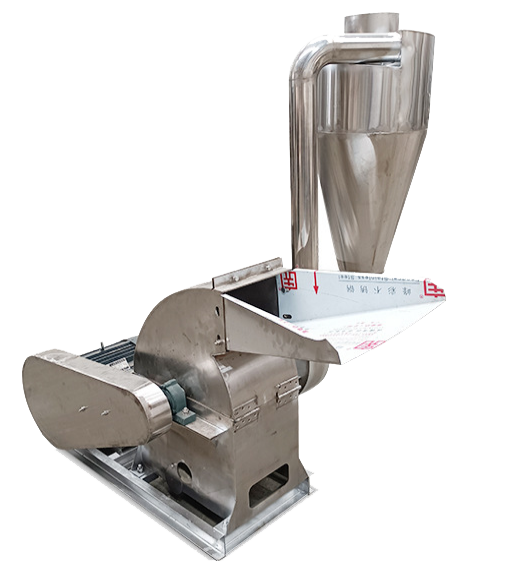
What is a Paddle Mill? Complete Guide to the Versatile Hammer Mill Crusher

Introduction to the Paddle Mill
If you've ever had to grind down bulky materials like corn stalks, wood chips, or chemical lumps into a fine, consistent powder, you know the frustration of using a tool that just doesn't cut it. That's where the paddle mill comes in. Also known as a hammer mill crusher (or simply hammer mill), the paddle mill is one of the most widely used crushing machines in feed production, biomass processing, chemical engineering, and pharmaceutical industries. It's a workhorse that turns big pieces into small, flowable particles with minimal fuss.
At 长沙天创粉末技术有限公司 (TENCAN) , we've built a reputation for designing robust powder processing equipment, and our paddle mill is no exception. In this guide, we'll walk you through everything you need to know about this machine—how it works, what it's best at, what parameters to look for, and how it compares to other crushers in our Paddle Mill series.
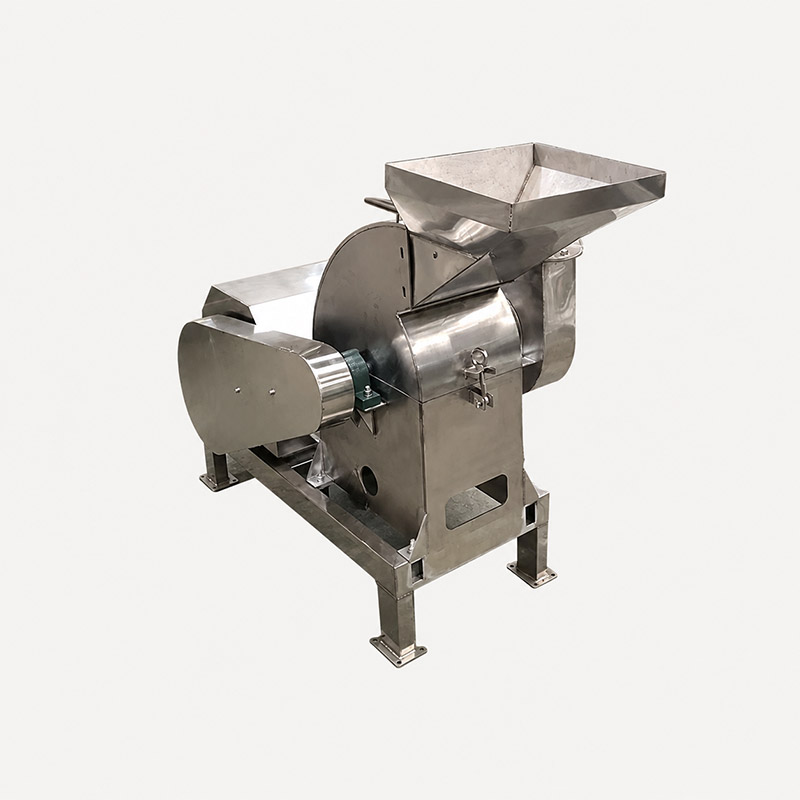
How Does a Paddle Mill Work?
The working principle is surprisingly simple. A paddle mill has a central shaft with a set of swinging hammers (also called paddles or beaters) attached to it. The shaft rotates at high speed inside a heavy-duty chamber. When you feed material into the top of the mill, it gets struck by the high-velocity hammers, shattered against the walls, and thrown against a breaker plate or screen at the bottom.
Key Actions Inside the Mill
- Impact: The hammers slam into the material with tremendous force, breaking it apart.
- Shear & Tear: As the hammers sweep past, they also tear the material edges, especially useful for fibrous or stringy materials like straw or wood.
- Attrition: Material particles rub against each other and against the chamber walls, further reducing size.
The final particle size is controlled by the screen at the bottom: only particles small enough to pass through the openings exit the mill. Coarser particles keep circulating inside until they are reduced sufficiently. This makes the paddle mill crusher a highly controllable grinding solution.
Paddle Mill vs. Other Crushers in the TENCAN Family
You might be wondering: why choose a paddle mill over a double roll crusher or a jaw crusher? Good question. Here's a quick comparison:
| Feature | Paddle Mill (Hammer Mill) | Double Roll Crusher | Jaw Crusher |
|---|---|---|---|
| Best For | Medium-hard, brittle, fibrous materials; high reduction ratio | Hard ores, sticky materials; low fines generation | Hard, abrasive rocks; primary crushing |
| Reduction Ratio | 10:1 to 40:1 | 3:1 to 4:1 | 6:1 to 8:1 |
| Output Size | Adjustable from coarse (10mm) to very fine (0.1mm) with screen changes | Typically 1-20 mm, less flexibility | 20-100 mm, mostly for coarse crushing |
| Moisture Tolerance | Can handle up to ~15% moisture with proper design | Better for sticky, high-moisture materials | Low moisture tolerance |
| Maintenance | High – hammers and screens wear out and need periodic replacement | Low – rollers are durable | Moderate – jaw plates wear |
For applications requiring high throughput and fine particle size in one pass—like grinding grains, herbs, wood chips, or chemical powders—the paddle mill is often the most efficient choice.
Key Applications of Paddle Mills
You'll find paddle mills in almost every industry that processes dry bulk solids. Here are some of the most common uses:
- Animal Feed Production: Grinding corn, soybean meal, wheat bran, and other ingredients for pelletizing.
- Biomass & Wood Processing: Reducing wood chips, sawdust, bark, and straw for fuel pellets or composite materials.
- Chemical Industry: Crushing fertilizers, resins, dyes, and other medium-hard chemicals.
- Pharmaceutical & Food: Grinding herbs, spices, sugar, and dried fruits (with stainless steel versions).
- Waste Recycling: Shredding paper, cardboard, plastics (with specially hardened hammers).
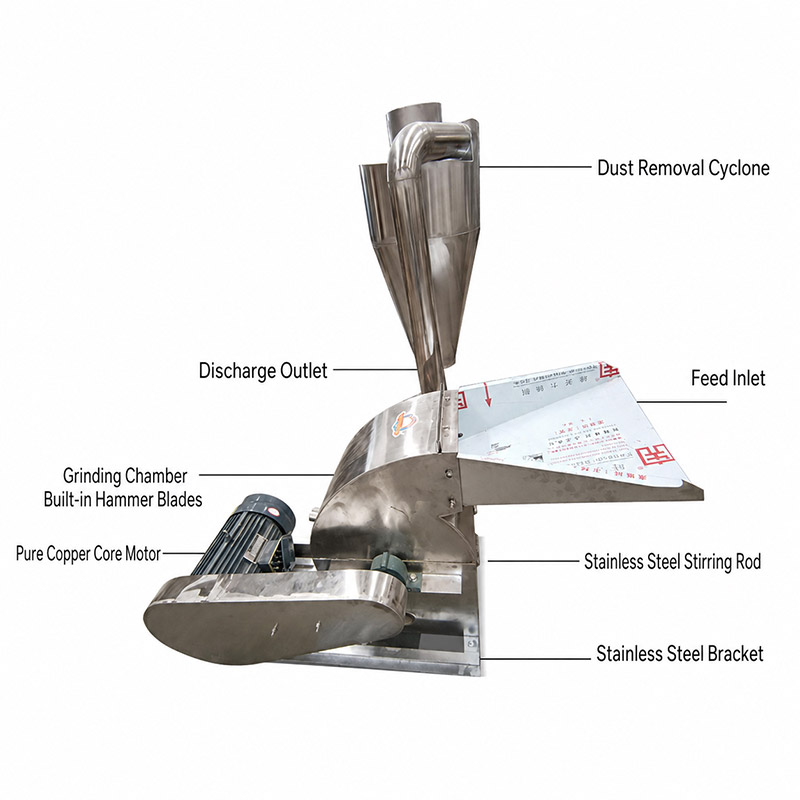
Typical Technical Parameters of TENCAN Paddle Mills
While exact specs vary by model, here are representative values for a medium-sized industrial paddle mill you can expect from TENCAN:
| Parameter | Typical Range |
|---|---|
| Rotor Speed | 1500 – 3000 rpm (fixed or variable) |
| Motor Power | 5.5 – 75 kW (depending on capacity) |
| Throughput Capacity | 100 kg/h – 5 t/h (for feed & biomass) |
| Feed Size | ≤ 30 mm (for most materials; larger for special designs) |
| Final Particle Size | 0.5 – 10 mm (adjustable via screen mesh) |
| Screen Hole Diameter | 0.8 mm – 12 mm (interchangeable) |
| Construction Material | Carbon steel or stainless steel (304/316) |
| Dimensions (L×W×H) | Vary by model, typically 1.5m×1m×1.2m for mid-size |
Note: These are for reference only. Please contact TENCAN for the exact datasheet of the model you need.
Why Choose TENCAN as Your Paddle Mill Supplier?
We at TENCAN aren't just machine vendors; we're powder process enthusiasts. Our paddle mills are designed with several advantages that make them stand out:
- Robust Welded Construction: Heavy-duty frame ensures vibration-free operation even at high speeds.
- Easy Screen Change: Quick-release clamps let you change screens in minutes, without tools.
- Reversible Hammers: When one side wears down, simply flip the hammers to double their life.
- Safety Interlocks: The mill won't start if the access door is open, protecting operators.
- Flexible Options: We offer explosion-proof motors, dust-free connections, and custom hopper sizes.
Plus, every machine is tested before shipment. You get a paddle mill that's ready to run out of the box.
Frequently Asked Questions
Q: Can a paddle mill handle wet materials?
It depends. Traditional paddle mills work best with dry or slightly moist materials (moisture content under 15%). For sticky or wet materials, you might need a different design like a teeth roll crusher or a hammer mill with special anti-clogging features.
Q: Can I use a paddle mill for fine grinding to 100 microns?
Yes, but it requires the right screen mesh and possibly a smaller one. Some paddle mills are designed specifically for fine grinding (e.g., with more hammers and higher speeds). For nano-level milling, you'd typically use a planetary ball mill instead.
Q: How often do hammers need replacing?
It depends on the abrasiveness of the material. For soft grains, hammers may last for hundreds of tons. For abrasive minerals like sand, you might need to replace hammers every few weeks. TENCAN hammers are made of hardened alloy steel to maximize lifespan.
Ready to Crush Your Next Project?
Whether you need a compact lab-scale unit for R&D or a full-size production line for your feed mill, TENCAN has you covered. We offer a full range of paddle mills (hammer mills) with capacities from a few kilograms to several tons per hour. All our machines come with one-year warranty and lifetime technical support.
Visit our Paddle Mill product page to see the available models, or get in touch with our sales team for a tailored recommendation. Your feeding, grinding, and biomass processing challenges deserve a solution that works—and works hard.
Related Products
Kontakt aufnehmen
Unser professionelles Team antwortet Ihnen innerhalb eines Werktages. Kontaktieren Sie uns jederzeit gern!