

What is a Tungsten Carbide Planetary Mill Jar? A High-Performance Grinding Container for Hard and Brittle Materials
Introduction
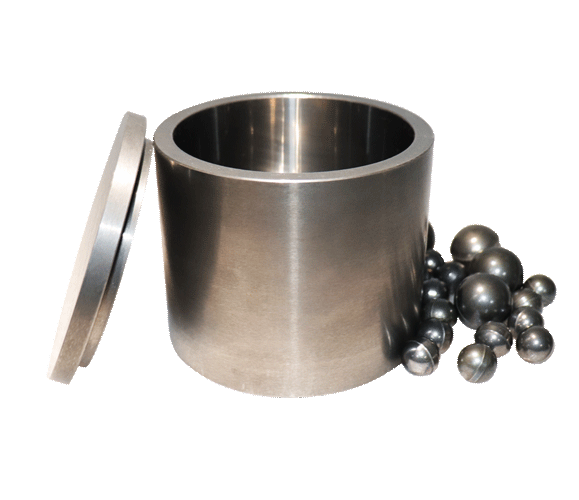
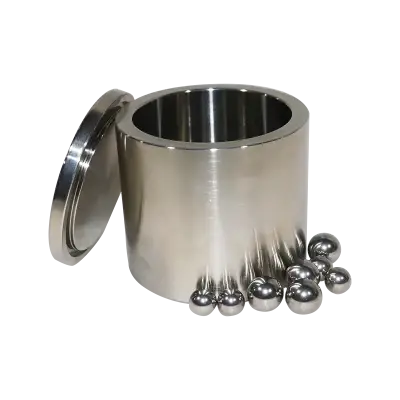
At its core, a tungsten carbide planetary mill jar is a specialized grinding container designed for use with planetary ball mills. It is the preferred choice for high-energy milling of extremely hard, brittle, and abrasive materials such as tungsten carbide, cemented carbides, alumina, and other refractory ceramics. The jar's exceptional hardness and wear resistance allow it to grind these demanding materials without introducing significant contamination from the container itself, making it indispensable in powder metallurgy, materials research, and nanotechnology.
Core Function and Working Principle
The fundamental function of a tungsten carbide planetary mill jar is to provide a robust, high-energy environment for the comminution of coarse particles into fine or nanometric powders. In a planetary ball mill, the jar is mounted on a rotating sun wheel and simultaneously rotates around its own axis in the opposite direction. This dual rotation creates strong centrifugal forces that drive the grinding balls inside the jar to collide with the jar wall and each other, generating intense impact, friction, and shear forces. The material trapped between the balls and the jar surface is repeatedly crushed and ground, reducing particle size down to the nanometer scale.
Key process parameters include milling speed (typically 250–600 rpm), milling time (ranging from a few hours to over 30 hours), and ball-to-powder weight ratio (commonly 5:1 to 15:1). Research has shown that increasing both milling speed and time significantly reduces particle size, while the ball-to-powder ratio exhibits a threshold effect—beyond 10:1, the reduction in particle size becomes less pronounced. The tungsten carbide jar's high density and hardness ensure efficient energy transfer, making it particularly effective for the synthesis of nanocrystalline powders, such as tungsten carbide-cobalt composites, as demonstrated in numerous studies.
Key Components and Material Properties
Unlike multi-type product categories, the tungsten carbide planetary mill jar is a single type of grinding container, but its performance depends critically on its material composition and design features:
- Material: Made from cemented tungsten carbide (WC-Co), typically with a cobalt binder content of 6–10%. This material offers a hardness of 90–93 HRA and a density of 14.5–15.0 g/cm³, providing extreme wear resistance and impact toughness.
- Inner Surface: The inner wall is polished to a smooth finish to minimize material sticking and facilitate cleaning.
- Sealing: High-quality jars feature a secure sealing mechanism (e.g., O-ring or gasket) to prevent leakage of fine powders and to allow milling under inert gas or vacuum conditions when equipped with a vacuum valve.
- Capacity: Standard capacities range from 50 mL to 500 mL, suitable for laboratory-scale research and small-scale production.
Key Performance Indicators and Selection Criteria
When selecting a tungsten carbide planetary mill jar, consider the following factors:
- Wear Resistance and Contamination: The jar must have minimal wear during milling to avoid contaminating the powder with cobalt or other elements. High-quality jars with uniform microstructure and proper binder content (e.g., 6% Co) offer the best balance of toughness and wear resistance.
- Processing Capacity: Choose a jar volume that matches your sample quantity. For example, a 250 mL jar is suitable for 20–50 g of powder, while a 500 mL jar can handle up to 100 g.
- Compatibility with Mill: Ensure the jar's dimensions and locking mechanism are compatible with your planetary ball mill model (e.g., TENCAN, Retsch, Fritsch). Most jars use a standard cam-lock or screw-cap design.
- Automation and Programmability: While the jar itself is passive, it must work with the mill's programmable features such as speed control, timer, and direction reversal to optimize milling efficiency.
- Ease of Maintenance: Look for jars with removable lids, easy-to-clean surfaces, and replaceable seals to extend service life.
Applications and Selection Advice
Tungsten carbide planetary mill jars are widely used in:
- Powder Metallurgy: Production of nanometric tungsten carbide-cobalt composite powders for cutting tools and wear-resistant parts.
- Ceramics and Refractories: Grinding of alumina, zirconia, silicon carbide, and other hard ceramics.
- Materials Science Research: Mechanical alloying, solid-state reactions, and synthesis of nanostructured materials.
- Geology and Mining: Preparation of hard rock samples for analysis.
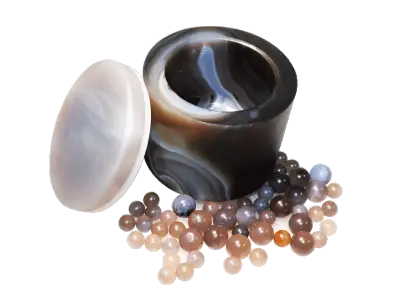
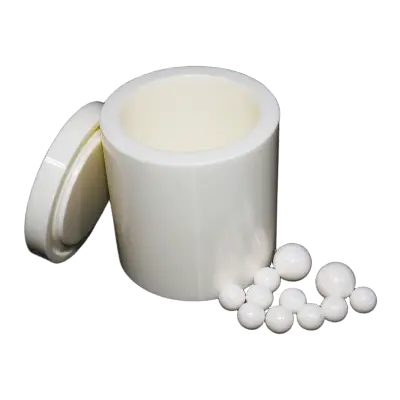
For researchers working with extremely hard materials that require minimal contamination, the tungsten carbide jar is the optimal choice. If your material is less abrasive or if contamination from cobalt is a concern, consider alternatives like zirconia planetary mill jars or agate planetary mill jars. For general-purpose milling, 304 stainless steel jars offer a cost-effective solution.
References
- Tungsten carbide planetary mill jar product page: https://www.planetaryballmills.com/products/grinding-series/planetary-ball-mill-jar/tungsten-carbide-planetary-mill-jar.html
- Other jar types: Zirconia jar, Agate jar, 304 SS jar
Related Products
Get In Touch
Our professional team will reply to you within one business day. Please feel free to contact us!