

What Is a T-Crystal Dental Furnace? A Precision Dental Ceramic Sintering Device
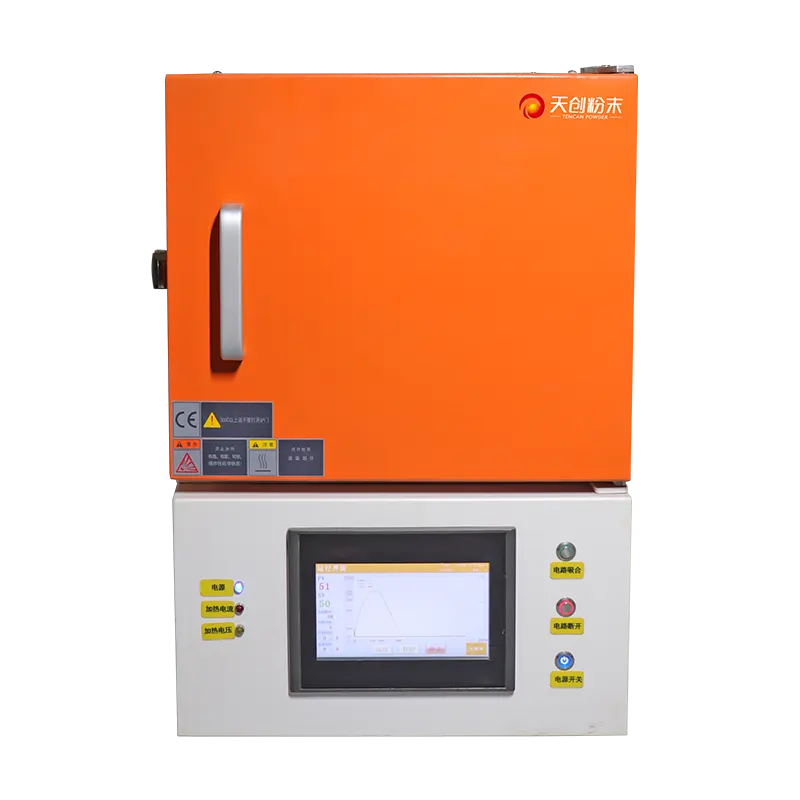
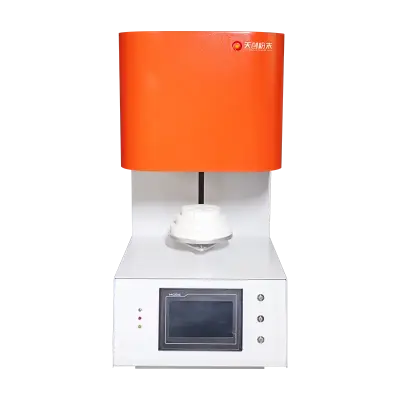
From a practical standpoint, the T-Crystal Dental Furnace is a dedicated dental sintering furnace in TENCAN's sintering-series product family. Dental laboratories and clinics use equipment of this class to heat shaped ceramic restorations through a controlled thermal cycle so that a prepared workpiece becomes a dense, stable, clinically usable ceramic component. It is not a milling machine, a press, or a glazing unit. It is the thermal-processing step that transforms a shaped dental ceramic into its final material state.
What Is the T-Crystal Dental Furnace?
The T-Crystal Dental Furnace is best understood as a precision thermal-processing device for dental ceramics. Its purpose is to provide a controlled high-temperature environment in which the ceramic restoration can densify, react, or mature according to a validated program. The furnace therefore sits between the design and shaping stages and the final finishing, staining, and delivery stages of a dental laboratory workflow.
Because the product is listed within a sintering series, its core identity is tied to sintering rather than to melting, casting, or simple drying. For a dental laboratory, that distinction matters. Sintering is a diffusion-controlled process: particles bond, pores shrink, and the ceramic body gains strength and translucency. The furnace is the tool that makes those changes repeatable.
What Does a Dental Sintering Furnace Do?
From a shaped restoration to a stable ceramic
In a typical dental workflow, a restoration is first designed and shaped from a ceramic material. At that stage, the part may be weak, porous, or only partially consolidated. It has the intended geometry, but not the final density or clinical properties. The sintering furnace supplies the thermal energy needed for the material to change at the microscopic level. As temperature rises, atoms move more readily, particles form necks and then bonds, and porosity is reduced. The result is a stronger, denser ceramic that can be finished and seated.
This is why sintering is not a cosmetic step. A well-controlled cycle affects density, strength, fit, color, and translucency. A poorly controlled cycle can produce incomplete densification, distortion, contamination, or unacceptable surface quality. The furnace is therefore a process-critical asset, not a peripheral accessory.
Why sintering is more than simple heating
A dental sintering furnace must do more than reach a high temperature. It must follow a defined heating rate, hold the workpiece at the required peak temperature for a defined time, and cool in a controlled manner. Each part of the cycle has a purpose. Heating too quickly can create thermal gradients and stress. Holding too long or at the wrong temperature can affect grain structure and optical properties. Cooling too quickly can introduce thermal shock or residual stress.
The operator's job is not to invent a cycle at the furnace panel. The operator's job is to load the correct program, verify the workpiece and batch, and confirm that the furnace is behaving as expected. The ceramic supplier's instructions and the laboratory's validated procedures remain the authority for the actual temperature profile.
How the Sintering Process Works Inside the Furnace
Heating, shrinkage, and densification
During heating, the ceramic body absorbs energy and its internal structure becomes more mobile. For many dental ceramics, this stage is accompanied by shrinkage as pores close and particles consolidate. Shrinkage is not a defect in itself; it is a predictable consequence of densification. The laboratory accounts for it in the design and nesting stage. What matters is that the furnace delivers a uniform thermal environment so that shrinkage is consistent across the restoration and from one batch to the next.
Uniformity is especially important for multi-unit bridges, long-span frameworks, and restorations with varying thickness. If one side of the workload experiences a different thermal history from another, the result can be distortion, color variation, or inconsistent fit. Good furnace design and good loading practice both contribute to uniformity.
Peak temperature and hold time
The peak temperature and hold time are the heart of the sintering program. The peak temperature drives densification and the development of the desired ceramic phase. The hold time allows the workpiece to reach a stable state throughout its thickness. A short hold may leave the core under-sintered; an excessive hold may over-process the material or degrade fine optical effects. The correct values come from the ceramic manufacturer's validated instructions, not from a generic rule of thumb.
The furnace must therefore reproduce the programmed setpoint reliably. Operators should pay attention to thermocouple condition, calibration status, chamber cleanliness, and any drift between the displayed temperature and the actual chamber condition. Repeatability is the real product of a good furnace: the same program should produce the same result when the same material and loading pattern are used.
Controlled cooling and thermal stress
Cooling is often treated as a passive waiting period, but it is an active part of the cycle. A controlled cooling rate helps the ceramic release heat evenly and reduces the risk of thermal gradients. For thick or complex restorations, uncontrolled cooling can contribute to stress and dimensional change. The furnace's ability to follow a defined cooling profile, rather than simply switching off the heaters, is therefore a meaningful selection point.
In practice, the laboratory should record the cooling behavior during validation and compare it with the ceramic supplier's recommendations. If the furnace cools faster or slower than expected, the program or the loading practice may need adjustment.
Atmosphere, cleanliness, and contamination control
Dental ceramics are sensitive to contamination. Dust, residue, oils, and stray particles can affect surface appearance and material behavior. A clean chamber, clean trays, and careful handling are essential. Depending on the furnace configuration, atmosphere control may also play a role in the process. Some workflows require air, while others may use vacuum or a controlled atmosphere to support the material system and the desired result.
The user should not assume that every dental furnace is configured in the same way. The material supplier's instructions, the furnace documentation, and the laboratory's validated protocol should define the correct atmosphere and loading conditions. When in doubt, the safest approach is to validate with test specimens before processing patient work.
Core Components and Design Features to Understand
Heating chamber and thermal insulation
The heating chamber is the functional center of the furnace. It contains the heating elements, the thermal insulation, and the working volume where the restoration is placed. Good insulation helps the chamber reach and hold temperature efficiently, while a well-designed heating arrangement promotes even heat distribution. The chamber should also be easy to keep clean, because residue and debris can affect both process quality and maintenance frequency.
Temperature sensing and closed-loop control
A dental sintering furnace relies on temperature sensing and closed-loop control to follow the programmed cycle. The controller compares the measured temperature with the setpoint and adjusts the heating output accordingly. The quality of the sensor, its placement, and its calibration all influence how faithfully the program is executed. For the user, the practical questions are simple: Is calibration traceable? Is the sensor accessible for service? Does the controller respond smoothly, or does it overshoot and oscillate?
Program storage and operator interface
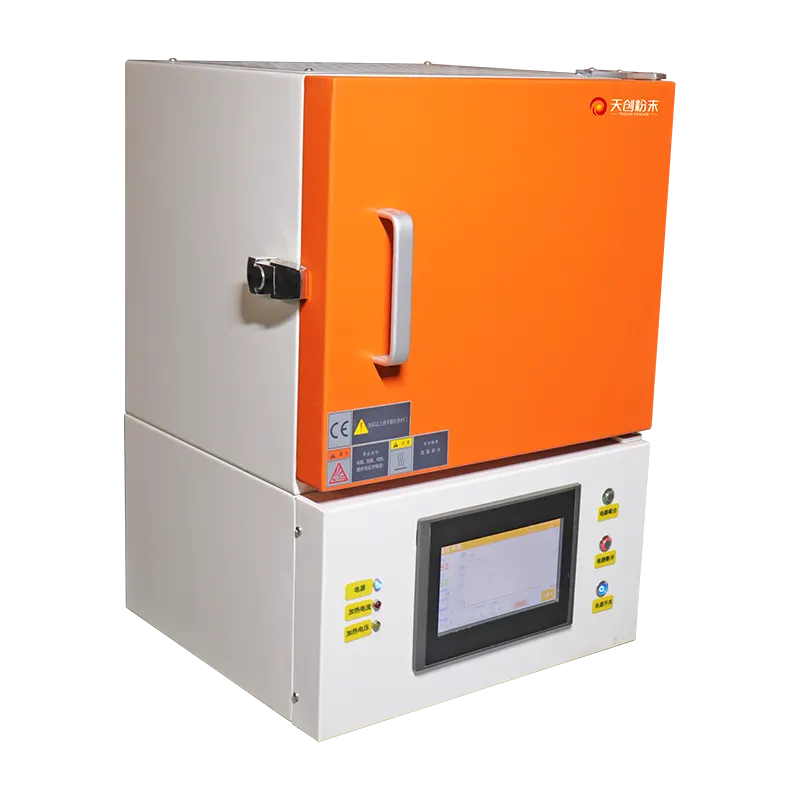
A clear operator interface reduces mistakes. The best interface is not necessarily the most complex one; it is the one that lets the operator select the correct program, verify the key parameters, and see whether the cycle is progressing normally. Program storage is useful when a laboratory runs several ceramic systems. Named programs, access control, and cycle records can help prevent accidental changes and support traceability.
Loading, access, and maintenance
The working volume and the loading arrangement affect both productivity and result quality. Trays, supports, and positioning should allow hot air or atmosphere to circulate as intended. The chamber opening should be practical for the size of the restorations being processed. Maintenance access matters too: inspections, cleaning, sensor checks, and replacement of consumable parts should be possible without excessive downtime.
Main Types and Configurations
Compact chairside and small-batch furnaces
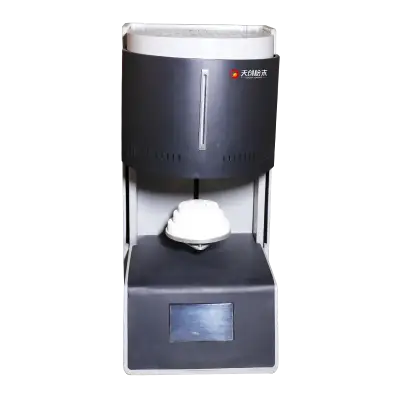
Compact dental furnaces are intended for smaller workloads, limited space, and workflows in which a clinic or small laboratory needs to sinter restorations close to the point of care. Their advantages are convenience, a short path from shaping to finishing, and simplified scheduling. Their limitations usually relate to chamber capacity and throughput. A compact unit can be an excellent choice when the workload is predictable and the material range is focused.
Laboratory and production-oriented furnaces
Larger laboratory furnaces are designed for higher throughput, batch processing, and more demanding quality control. They may offer larger working volumes, more robust insulation, additional program capacity, and better documentation features. For a busy laboratory, the limiting factor is often not the maximum temperature but the ability to run repeated cycles with consistent results and minimal operator intervention.
How to tell which configuration fits
The choice between compact and laboratory-oriented configurations should follow the workload, not the brochure. A laboratory that processes a few units per day has different needs from one that runs multi-unit batches continuously. Important questions include: How many cycles per day are realistic? What is the largest restoration or bridge that must fit? Which ceramic systems are used? What records must be kept? How much space is available? The answers usually point to a clear configuration.
Key Performance Indicators and Selection Points
Temperature uniformity and repeatability
The most important performance indicator is not a single temperature number. It is the ability to reproduce the same thermal history across the working volume and from cycle to cycle. Ask how uniformity is maintained, how the chamber is loaded, and how calibration is managed. A furnace that reaches a high temperature but produces inconsistent results is not a precision tool.
Program flexibility and cycle control
Dental laboratories rarely process only one material. Program flexibility allows the user to store and run different heating rates, hold steps, cooling profiles, and atmosphere settings where applicable. The key is controlled flexibility: the operator should be able to select a validated program without accidentally altering critical parameters. Look for clear program naming, parameter review, and protection against unauthorized changes.
Throughput, capacity, and loading pattern
Throughput depends on chamber volume, cycle length, loading density, and the time needed for setup and cooling. A large chamber is useful only if the workload can be arranged without compromising uniformity. The laboratory should evaluate realistic batches, not ideal single-unit tests. It is also worth considering how the furnace fits into the daily schedule: a long cycle that finishes after working hours may be less convenient than a shorter validated cycle.
Traceability, documentation, and training
Quality management benefits from records. Cycle logs, program identification, calibration records, and maintenance history help the laboratory investigate deviations and demonstrate control. Training is equally important. Operators should understand what the program does, how to load the chamber correctly, what to check before starting, and when to stop and ask for help. A capable furnace cannot compensate for an unclear procedure.
Serviceability and long-term operating cost
Selection should consider the full life cycle, not only the purchase price. Heating elements, thermocouples, insulation, seals, and other service parts may need replacement over time. The availability of technical support, documentation, and spare parts affects uptime. A furnace that is easy to inspect and maintain is often more valuable than a lower-cost unit that is difficult to service.
Applications and Selection Advice
Dental laboratories
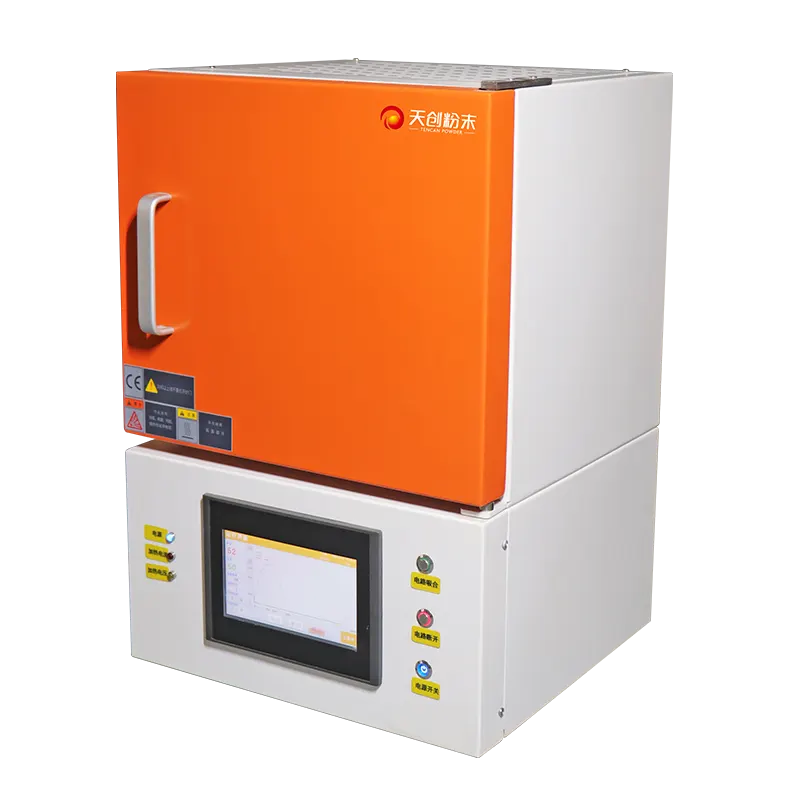
Dental laboratories are the primary users of equipment such as the T-Crystal Dental Furnace. In this setting, the furnace supports the final thermal processing of ceramic restorations, including crowns, bridges, and other units that require controlled densification. The laboratory benefits from repeatable programs, clear records, and a furnace that fits the daily production rhythm.
Clinics and chairside workflows
Clinics with chairside or small-batch production may prefer a compact furnace that allows restorations to be completed on site. The main selection criteria are space, cycle time, ease of use, and the ability to follow the ceramic supplier's validated program. A clinic does not need a complicated furnace; it needs a reliable one with a simple, mistake-resistant workflow.
Education, research, and process development
Teaching laboratories and research groups may use dental sintering furnaces to study ceramic behavior, compare processing routes, or train students. In these environments, program flexibility and documentation can be more important than raw throughput. Users should still respect the material supplier's limits and validate any experimental cycle before applying it to clinical work.
Practical selection advice
Start with the material and the restoration size, then work backward to the furnace. Confirm that the proposed configuration can accommodate the largest expected workload and that the required program can be executed reliably. Ask for a demonstration or validation protocol, check the maintenance plan, and review the operator interface with the people who will actually use it. For product-specific information, refer to the T-Crystal Dental Furnace product page and confirm the current configuration with the supplier.
Common Questions About the T-Crystal Dental Furnace
Is a dental furnace only for zirconia?
No. Dental sintering furnaces are used across several ceramic workflows, but the exact program, peak temperature, and atmosphere must match the material system. Zirconia is a well-known application, but it is not the only one. The safe rule is to use the ceramic manufacturer's validated instructions and the furnace's documented capabilities together.
How should a new sintering program be validated?
Validation should begin with test specimens or non-clinical samples. Run the proposed program, inspect the result, check dimensional behavior, and compare it with the material supplier's acceptance criteria. Repeat the cycle to confirm consistency. Only after the process is stable should the laboratory apply it to patient work. Records of the validation should be kept with the furnace and the material system.
What maintenance matters most?
Chamber cleanliness, sensor condition, calibration status, door or seal integrity, and heating-element condition are the usual priorities. The specific schedule should follow the manufacturer's documentation and the laboratory's quality system. Maintenance is not only about preventing breakdowns; it is also about preserving the thermal repeatability that the process depends on.
Why can two laboratories get different results from the same ceramic?
Results depend on the complete process, not only the ceramic. Differences in furnace calibration, loading pattern, heating and cooling rates, tray material, chamber cleanliness, and operator procedure can all change the outcome. This is why validated programs and consistent records matter. The furnace is a central part of the process, but it is not the only variable.
Final Takeaway
The T-Crystal Dental Furnace is a dental ceramic sintering device built around a straightforward but demanding job: deliver a controlled thermal cycle that turns a shaped restoration into a stable final ceramic. Its value lies in repeatability, uniform heating, thoughtful program control, and practical laboratory usability. Buyers should evaluate the furnace against their real workload, material range, validation needs, and maintenance resources rather than against a single headline specification. Used with validated procedures and good records, a dental sintering furnace becomes a dependable part of the laboratory's quality system.
Get In Touch
Our professional team will reply to you within one business day. Please feel free to contact us!