

What is T-Bright Dental Furnace? A Compact Dental Zirconia Sintering Furnace
What Is the T-Bright Dental Furnace?
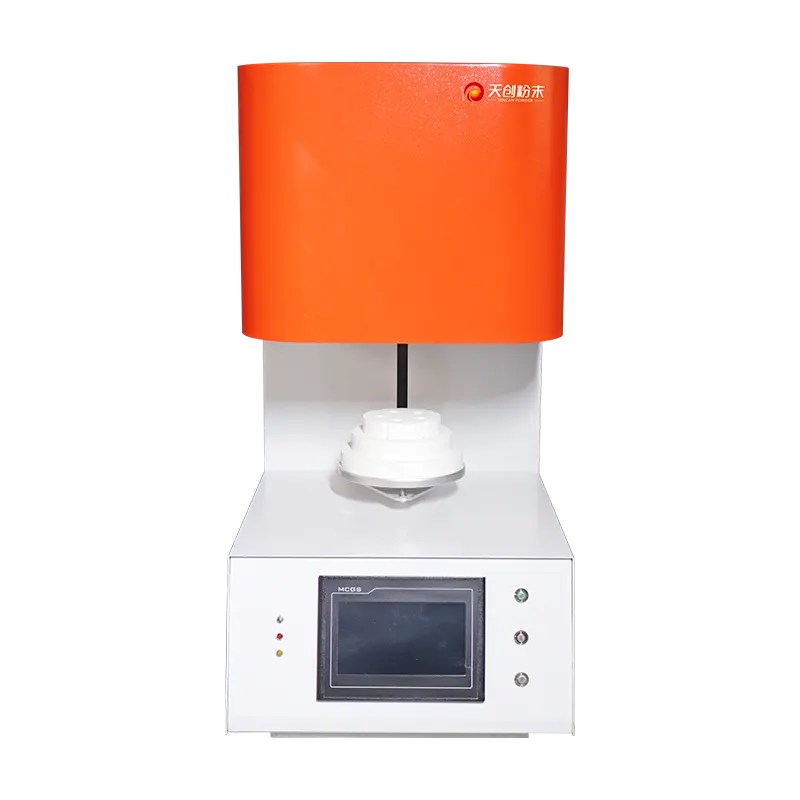
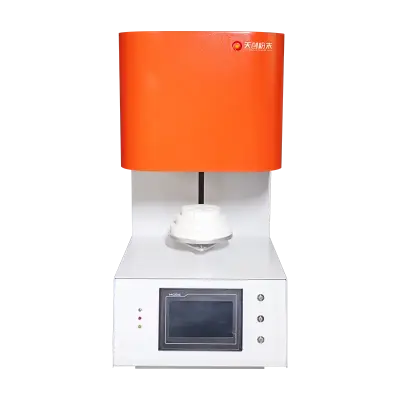
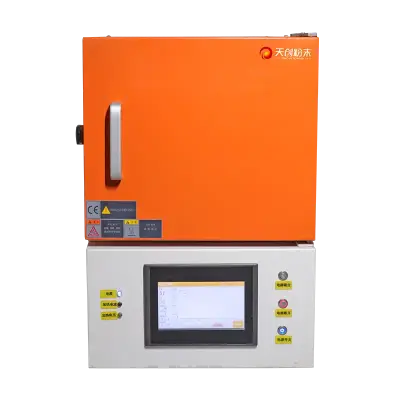
At its core, the T-Bright Dental Furnace is a compact dental sintering furnace designed for dental laboratories and clinics that produce zirconia crowns, bridges, inlays, and other ceramic restorations. It uses controlled high-temperature heating to transform a milled, chalk-like zirconia blank into a hard, dense, and biocompatible restoration that can be finished, stained, and seated in the patient’s mouth.
If you have seen a dental CAD/CAM workflow, you already know the first half of the story: a digital scan is turned into a restoration design, and a milling machine cuts the shape from a porous zirconia disc. At that stage the restoration is mechanically weak. The T-Bright Dental Furnace completes the second half of the story by applying a carefully programmed sintering cycle. Without this step, the restoration would not have the strength, translucency, or fit needed for clinical use.
Core Function and Working Principle
From Green Zirconia to Dense Restoration
The main function of the T-Bright Dental Furnace is to convert a green or pre-sintered zirconia restoration into a fully sintered, dense ceramic body. In the green state, the zirconia particles are pressed together with organic binders. The material is easy to mill but porous. During sintering, the furnace raises the temperature in stages. The binder is burned out first, then the zirconia particles begin to bond through solid-state diffusion. As the particles merge, pores shrink and the restoration densifies. The final restoration is smaller than the green blank, and this shrinkage is predictable and is compensated in the CAD design.
The process is not simply heating to a high temperature. It is a thermal journey with carefully controlled ramps, holds, and cooling stages. Each part of the cycle influences the final grain size, density, color, and translucency. A furnace that follows the programmed curve accurately helps the laboratory achieve repeatable results from one crown to the next.
Heating Mechanisms and Atmosphere Control
Most dental sintering furnaces use resistive heating elements that surround a ceramic or metal chamber. The chamber is insulated so that heat is distributed evenly around the restoration. Temperature is measured by a thermocouple or another high-temperature sensor, and a controller adjusts the power sent to the heating elements. In modern furnaces, the controller stores multiple firing programs, so the user can select a program for zirconia, a program for glaze firing, or a program for other dental ceramics.
Atmosphere control matters for certain materials. Some dental furnaces operate in air, while others offer vacuum or gas options to reduce oxidation or to support specific sintering reactions. For zirconia, the goal is to avoid contamination that could affect shade or strength. Clean trays, clean crucibles, and proper ventilation help maintain a stable atmosphere inside the chamber.
Key Process Parameters That Affect Results
Four parameters dominate the sintering result: maximum temperature, heating rate, holding time, and cooling rate. The maximum temperature controls how much densification occurs. Too low, and the restoration remains porous; too high, and grain growth can reduce translucency or cause distortion. The heating rate affects binder removal and uniformity. A slow ramp gives the binder time to escape without creating cracks. The holding time allows the material to reach a stable density. Cooling should also be controlled, because rapid cooling can introduce thermal stress.
Other factors include the type of zirconia, the size and thickness of the restoration, the number of restorations in the chamber, and the position of the pieces on the sintering tray. A large bridge may need a different profile from a single thin veneer. The T-Bright Dental Furnace is intended to give the operator control over these variables so that each restoration receives a suitable cycle.
Why Sintering Is Different from Glazing or Soldering
Sintering is a diffusion-controlled densification process, not melting. The restoration does not turn into a liquid. Instead, the particles bond at the atomic level while the overall shape is preserved. This is why the restoration can shrink uniformly without losing its detailed anatomy. Glazing, by contrast, forms a thin glass layer on the surface to improve smoothness and color. Soldering joins metal components. A dental furnace may be asked to perform several of these tasks, but each requires a different temperature profile and sometimes a different atmosphere.
For zirconia, the furnace must reach a high temperature while maintaining a clean environment. For porcelain veneering, lower temperatures are used so that the underlying zirconia framework is not altered. The ability to store and recall multiple programs is therefore a practical requirement for any busy dental laboratory.
Understanding the Sintering Cycle Step by Step
Step 1: Pre-Drying and Binder Burnout
Before the furnace reaches sintering temperature, the restoration may contain moisture and organic binders left from milling or pressing. The first part of the cycle removes these components slowly. If the heating rate is too fast, the binder can decompose violently, creating bubbles, cracks, or surface defects. A controlled low-temperature hold allows the organics to escape gradually. This stage is sometimes called burnout or debinding. Clean ventilation is important because the released gases should not remain in the chamber.
The exact burnout profile depends on the zirconia blank and the binder system. Some blanks are designed for fast firing, while others require a slower cycle. The furnace should be able to reproduce the material supplier’s recommended profile. In the T-Bright Dental Furnace, programmability allows the technician to enter the required ramp and hold values rather than relying on a fixed factory curve.
Step 2: Ramp to Sintering Temperature
After the binder is removed, the furnace ramps to the final sintering temperature. During this stage, the particles begin to form necks and the porosity starts to decrease. The heating rate must balance productivity with uniformity. A slow ramp gives the entire restoration time to reach the same temperature, which is especially important for thick sections such as bridge connectors. A fast ramp may save time but can create a temperature gradient between the surface and the core.
For multi-unit restorations, the position on the tray matters. Pieces near the heating elements may heat faster than pieces in the center. A well-designed chamber distributes heat evenly, and the operator should avoid overcrowding. If the furnace has multiple thermocouples or a rotating tray, uniformity can be improved further. The goal is to make every restoration follow the same thermal history.
Step 3: Densification Hold
At the sintering temperature, the furnace holds for a set time. This hold is where most densification occurs. The particles continue to bond, pores shrink, and the restoration reaches its final density. The hold time must be long enough to complete densification but not so long that grains grow excessively. Grain size affects translucency and mechanical properties. A balanced hold produces a dense, fine-grained ceramic with good optical properties.
The hold temperature is equally important. If the temperature is too low, the restoration may remain under-sintered and weak. If it is too high, the restoration may become too translucent, lose shape, or develop a surface reaction. Material suppliers provide recommended temperature ranges, and the furnace should maintain that temperature within a tight tolerance. The T-Bright Dental Furnace is designed to hold a stable setpoint throughout the dwell period.
Step 4: Controlled Cooling
Cooling is not just waiting for the furnace to become safe to open. The cooling rate influences the final microstructure and residual stress. If the restoration cools too quickly, the surface may contract faster than the interior, creating stresses that can lead to cracks or chipping. A controlled cooling ramp allows the restoration to equalize in temperature and relieves stresses gradually.
Some furnaces use natural cooling inside the insulated chamber, while others use a fan or a programmable cooling profile. The best approach depends on the material and the restoration geometry. Thin veneers may cool quickly, while thick cores may need a slower rate. The furnace should provide enough control to match the material supplier’s recommendation. A completion signal or safe-to-open indicator helps prevent premature unloading.
Core Components and Key Technologies
Heating Chamber and Insulation
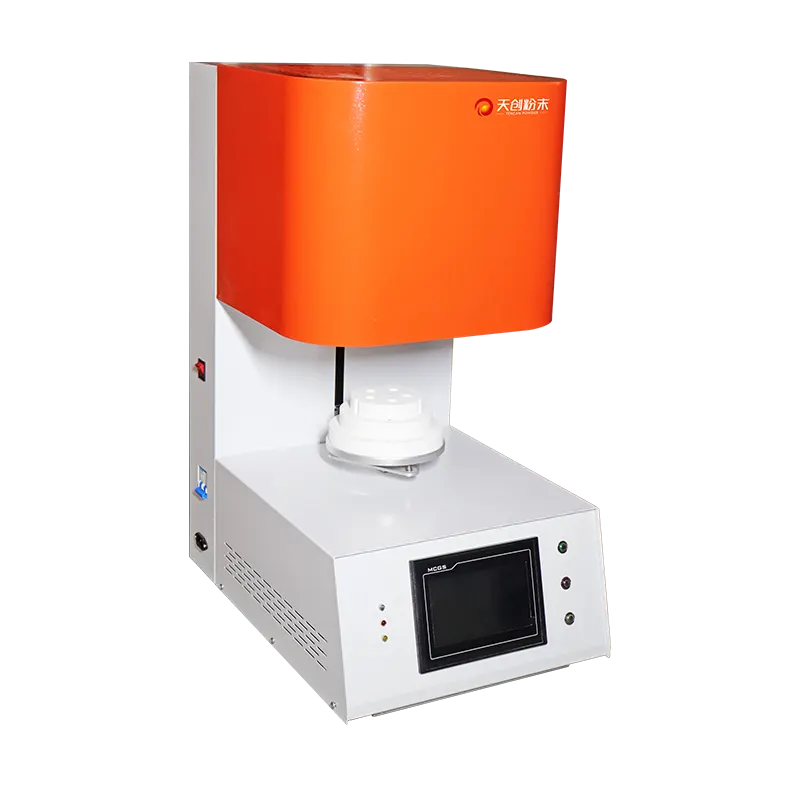
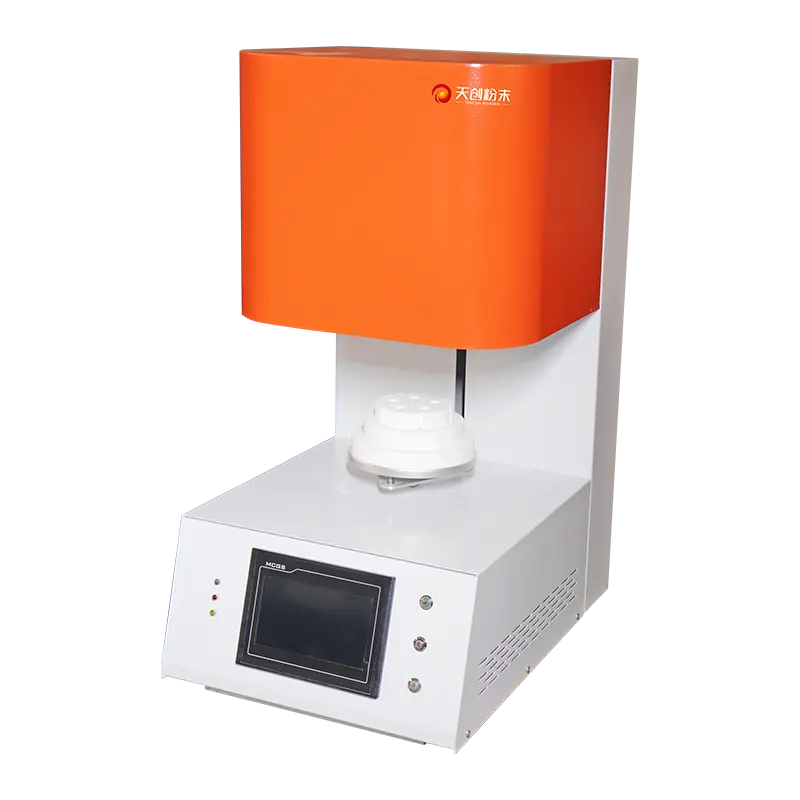
The heating chamber is the heart of the T-Bright Dental Furnace. It is designed to hold one or more restorations on a sintering tray while distributing heat evenly. The insulation protects the outer housing, reduces energy loss, and helps maintain a stable temperature. The chamber size determines how many units can be sintered in one cycle. A small chamber is suitable for single crowns and small bridges; a larger chamber supports higher throughput for laboratories that process multiple cases per day.
Chamber geometry also affects temperature uniformity. Hot spots can cause uneven shrinkage, warping, or color variation. Manufacturers use baffles, reflective liners, and careful element placement to minimize these effects. The user should load the chamber according to the manufacturer’s instructions, leaving enough space for air circulation and avoiding contact between restorations.
Temperature Sensing and Control
A thermocouple or high-temperature sensor provides feedback to the controller. The controller compares the measured temperature with the programmed setpoint and adjusts the power to the heating elements. PID control and multi-stage programming are common in modern dental furnaces. The accuracy of this loop determines whether the actual firing curve matches the intended curve. A furnace with poor control may overshoot the target temperature, which can lead to excessive grain growth or surface defects.
Calibration is important. Over time, sensors can drift, and heating elements can age. Regular calibration and maintenance help ensure that the displayed temperature is the true temperature inside the chamber. For laboratories working with different zirconia brands, following the material manufacturer’s recommended firing profile is essential, and the furnace should be capable of reproducing that profile reliably.
Programmable Firing Profiles
Programmability is what separates a dental sintering furnace from a simple laboratory oven. A firing profile includes the initial heating rate, intermediate holds for binder burnout, the final sintering temperature, the hold at that temperature, and the cooling rate. Some profiles also include a pre-dry stage or a vacuum stage. The operator can save these profiles and name them according to the material or restoration type.
When selecting a furnace, look at how easy it is to create, edit, and lock programs. A touchscreen interface with clear graphs helps reduce operator error. Password protection or user levels can prevent accidental changes in a busy laboratory. Data logging is also useful for quality control, because it allows the laboratory to document that a specific case was sintered according to the correct profile.
Cooling and Loading Accessories
Cooling is part of the sintering cycle, not an afterthought. After the final hold, the furnace must cool at a controlled rate. Some furnaces use natural cooling; others use forced air or a programmed cooling ramp. Rapid cooling can crack a restoration or leave residual stresses. The T-Bright Dental Furnace is designed with a cooling strategy that protects the restoration while keeping the overall cycle time practical.
Loading accessories also matter. Sintering trays, crucibles, and beads must be compatible with the furnace atmosphere and the restoration material. Zirconia should not be placed directly on a contaminated surface. Using clean, dedicated trays helps prevent discoloration. The furnace should be easy to open and load, with a door or lift mechanism that does not disturb the chamber temperature unnecessarily.
Key Performance Indicators and Selection Points
Chamber Capacity and Throughput
The first selection question is capacity. How many units does the laboratory sinter per day? A single-doctor clinic may need to sinter one or two crowns at a time. A centralized laboratory may need to sinter dozens of units per shift. Chamber size, tray configuration, and the number of heating zones all influence throughput. A larger chamber can hold more restorations, but it may also take longer to heat and cool. The right balance depends on the case mix and the acceptable turnaround time.
Throughput is not only about chamber volume. It is also about cycle time. A furnace that heats quickly may still have a long cooling stage. Some laboratories run overnight cycles and retrieve the restorations the next morning. Others need rapid cycles for same-day dentistry. The T-Bright Dental Furnace can be evaluated on both capacity and cycle time to match the workflow.
Temperature Uniformity and Accuracy
Uniformity means that every restoration in the chamber experiences the same temperature. Accuracy means that the actual temperature matches the programmed temperature. Both are critical for consistent shrinkage, color, and strength. A furnace with a single central thermocouple may not detect temperature differences near the door or at the edges of the chamber. Multi-point sensing or a well-designed chamber can improve uniformity.
When comparing furnaces, ask for the temperature uniformity specification and the control accuracy. Also consider the calibration procedure. If the furnace is easy to calibrate in-house, the laboratory can maintain accuracy without shipping the unit to a service center. For zirconia, small temperature differences can lead to noticeable shade variation, so this indicator deserves careful attention.
Heating and Cooling Rates
The maximum heating rate determines how quickly the furnace can reach the sintering temperature. A faster rate shortens the cycle but may increase the risk of thermal shock or incomplete binder removal. The cooling rate affects the final microstructure. A controlled cooling profile can improve translucency and reduce internal stress. The furnace should allow the user to set both heating and cooling ramps, not just a single setpoint.
Some materials require a slow ramp during binder burnout. Others can tolerate a faster ramp after the organic components are gone. The ability to create multi-step profiles gives the laboratory flexibility. The T-Bright Dental Furnace is designed to support such profiles so that different zirconia brands and restoration types can be processed correctly.
Energy Efficiency and Automation
Energy efficiency is increasingly important for dental laboratories. Insulation quality, chamber size, and heating element design all affect power consumption. A well-insulated furnace loses less heat and can maintain temperature with less energy. Automation features such as automatic door opening, automatic program sequencing, and remote monitoring can also improve efficiency by reducing idle time and operator intervention.
Automation should not make the furnace harder to use. The best systems combine simple navigation with advanced capabilities. For example, a touchscreen may show a real-time temperature graph, allow drag-and-drop program editing, and send an alert when the cycle is complete. These features help technicians focus on other tasks while the furnace runs.
Maintenance and Ease of Use
Dental furnaces operate at high temperatures, so consumable parts such as heating elements, thermocouples, and insulation will eventually need replacement. A good design makes these parts accessible. The user manual should include a maintenance schedule and troubleshooting guide. Easy maintenance reduces downtime and extends the service life of the equipment.
Daily use also matters. The door should open smoothly, the tray should slide in without tilting, and the display should be readable. Cleaning should be straightforward. If the furnace is used with different materials, dedicated trays and crucibles help prevent cross-contamination. The T-Bright Dental Furnace should be assessed not only on its peak temperature but also on how well it fits the daily routine of the laboratory.
Material Compatibility and Quality Control
Dental sintering furnaces are often used with multiple zirconia brands and generations. Each brand may have a specific recommended firing profile. Some materials are designed for high translucency and require a slightly different peak temperature or hold time. Others are optimized for strength and may tolerate a broader window. The furnace must be flexible enough to store these profiles and accurate enough to repeat them.
Quality control is easier when the furnace records data. A firing log shows the actual temperature curve, including any deviations or power interruptions. If a restoration has an unexpected shade or fit, the log helps determine whether the furnace cycle was the cause. Laboratories that pursue ISO or other quality standards may require such records. When evaluating a furnace, ask whether it can export cycle data and whether programs can be locked to prevent accidental changes.
Contamination control is another quality issue. Dust, debris, or residue from previous firings can affect the surface of the restoration. Regular cleaning of the chamber, trays, and crucibles is essential. Dedicated sintering trays for zirconia help avoid cross-contamination with other ceramics or metals. The furnace should be easy to clean without damaging the insulation or heating elements.
Applications and Selection Advice
The T-Bright Dental Furnace is used wherever zirconia restorations are produced. That includes dental laboratories, milling centers, dental clinics with in-house CAD/CAM, and educational institutions. Typical applications include sintering zirconia crowns, bridges, copings, inlays, onlays, and implant abutments. It may also be used for glaze firing or for firing other dental ceramics, depending on the material and the program.
For a small clinic, the priority is often a compact footprint, simple operation, and reliable single-unit sintering. For a mid-sized laboratory, the priority shifts to batch capacity, program management, and traceability. For a large production center, throughput, automation, and service support become more important. In all cases, the furnace should be matched to the material system used. The zirconia manufacturer’s recommended firing profile should be followed, and the furnace should be capable of reproducing that profile within a narrow tolerance.
How to Choose the Right Configuration
Start by listing the restorations you produce most often. Single crowns and small bridges need a modest chamber. Full-arch cases and multiple-unit bridges may need a larger chamber or a different tray layout. Next, consider the number of cases per day and the desired turnaround. If same-day delivery is required, look for faster cycles and efficient cooling. If overnight sintering is acceptable, a slower, gentler profile may be preferable.
Then evaluate the control system. Can you store enough programs? Can you protect them with passwords? Can you export a firing log for quality records? Does the furnace alert you when the cycle is complete? Finally, consider service and support. A dental furnace is a long-term investment, and access to spare parts and technical assistance matters. The product page for the T-Bright Dental Furnace is a good starting point for confirming the available configuration and options.
Installation, Safety, and Daily Operation
A dental sintering furnace requires a suitable workspace with adequate ventilation, a stable power supply, and a heat-resistant surface. The installation manual should be followed carefully. High-temperature furnaces can reach surfaces hot enough to cause burns, so clear labeling and safe door operation are important. The T-Bright Dental Furnace should be placed where operators can load and unload it comfortably without reaching over hot surfaces.
Daily operation should follow a standard procedure: verify the program, inspect the restoration and tray, load the chamber correctly, start the cycle, and confirm completion. After unloading, allow the restoration to cool to room temperature before handling or finishing. Record the cycle if required. These simple steps reduce variability and protect both the equipment and the restorations.
Training is essential. Even an advanced furnace can produce poor results if the operator selects the wrong program or overloads the chamber. Manufacturers often provide training materials, and the material supplier’s instructions should be treated as the primary reference for firing profiles. A well-trained technician can adapt to different zirconia products and troubleshoot common issues such as discoloration, cracking, or incomplete sintering.
Frequently Asked Questions
Is the T-Bright Dental Furnace only for zirconia?
Zirconia sintering is a primary use, but many dental furnaces in this class can also run glaze firing and other ceramic programs. The exact materials supported depend on the furnace’s temperature range and atmosphere control. Always check the material manufacturer’s instructions and the furnace manual before firing a new material.
Why does zirconia shrink during sintering?
Shrinkage occurs because the pores between particles are eliminated as the material densifies. The shrinkage is predictable and is compensated in the CAD design. A consistent furnace cycle helps ensure that the shrinkage is uniform across the restoration.
Can I open the furnace during the cycle?
Opening the furnace during heating or cooling can cause thermal shock, temperature non-uniformity, and defects. Follow the manufacturer’s instructions for safe loading and unloading. Most programs include a safe-to-open temperature or a completion signal.
How often should the furnace be calibrated?
Calibration frequency depends on use and the manufacturer’s recommendations. Many laboratories calibrate on a regular schedule and after replacing a thermocouple or heating element. Regular verification helps maintain accurate temperature control.
What maintenance is required?
Typical maintenance includes cleaning the chamber, checking the door seal, inspecting heating elements and thermocouples, and verifying temperature accuracy. Keeping the chamber clean and using dedicated trays helps prevent contamination and extends the life of consumable parts.
Conclusion: Matching the Furnace to the Workflow
The T-Bright Dental Furnace is more than a hot box. It is a precision thermal instrument that completes the dental CAD/CAM workflow. By controlling heating rates, holding times, atmosphere, and cooling, it transforms a fragile milled zirconia shape into a durable, esthetic restoration. Understanding the principles of sintering helps technicians and buyers ask better questions: How uniform is the chamber? How accurate is the control? How many units can it process? How easy is it to maintain?
For clinics and laboratories evaluating a dental sintering furnace, the best choice is the one that matches the material system, production volume, and quality requirements. The T-Bright Dental Furnace offers a focused solution for dental zirconia sintering, and its product page provides the detailed specifications needed for a final comparison. With the right furnace and the right firing profile, dental laboratories can achieve consistent shrinkage, reliable strength, and predictable esthetics case after case.
Get In Touch
Our professional team will reply to you within one business day. Please feel free to contact us!