

What is a stainless steel roll mill jar? A specialized grinding container for contamination-free laboratory ball milling
What is a Stainless Steel Roll Mill Jar? A Specialized Grinding Container for Contamination-Free Laboratory Ball Milling
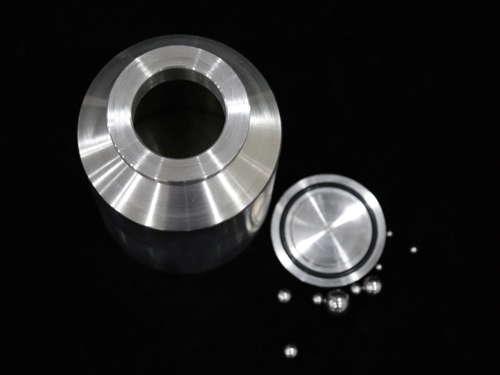
At its core, a stainless steel roll mill jar is a high-purity grinding container specifically designed for use with roll ball mills (also known as jar rolling mills). Laboratories and small-batch production facilities use it to perform ultrafine grinding and mixing of powders, while ensuring that the container material does not introduce unwanted contaminants into the sample. Made from SUS 304 or 316L stainless steel, these jars combine mechanical strength, corrosion resistance, and optional vacuum sealing to meet the demanding requirements of pharmaceutical, chemical, and materials research.
Core Function and Working Principle
The primary function of a stainless steel roll mill jar is to convert coarse or granular materials into fine or ultrafine powders through a combination of impact and attrition. The jar is placed horizontally on a set of rotating rollers in a roll ball mill. As the rollers turn, the jar rotates, causing the internal grinding media (typically stainless steel balls, zirconia balls, or other hardened materials) to cascade and tumble.
The grinding process relies on two key mechanisms: impact from the falling media and attrition from the rolling and shearing action between the media, the jar wall, and the material. The rotation speed can be adjusted to control the energy input; higher speeds increase impact forces, while lower speeds favor attrition. The grinding time, media size, and material-to-media ratio are also critical parameters that determine the final particle size distribution. For example, achieving sub-micron particles often requires longer grinding times and smaller media.
Stainless steel roll mill jars are designed to withstand the mechanical stresses of continuous operation. Many models feature a leak-proof lid with a threaded port that can be used for vacuum or inert gas purging, enabling contamination-free grinding under controlled atmospheres. This is particularly important for air-sensitive or moisture-sensitive materials.
Key Features and Technical Specifications
Material and Corrosion Resistance
Stainless steel roll mill jars are typically manufactured from high-purity SUS 304 or 316L stainless steel. SUS 304 offers excellent general corrosion resistance and is suitable for most organic and inorganic materials. SUS 316L provides enhanced resistance to chlorides and acidic environments, making it ideal for pharmaceutical and food processing applications. The smooth inner surface reduces material adhesion and simplifies cleaning between batches.
Vacuum Sealing Capability
One of the standout features of premium stainless steel roll mill jars is the integrated vacuum seal. The lid is equipped with a silicone O-ring and a threaded port that can be connected to a vacuum pump. This allows the jar to be evacuated before grinding, removing oxygen and moisture to prevent oxidation or hydrolysis of sensitive materials. Inert gases such as argon or nitrogen can also be introduced to maintain a protective atmosphere.
Capacity and Compatibility
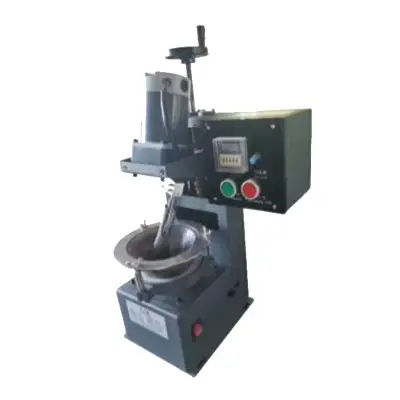
Stainless steel roll mill jars are available in a wide range of capacities, from 0.05 L for small-scale experiments up to 20 L for pilot production. They are designed to be compatible with standard roll ball mill machines, such as those produced by TENCAN and other leading manufacturers. The outer diameter and geometry are standardized to ensure proper fitment on the rollers.
Key Performance Indicators and Selection Guide
When selecting a stainless steel roll mill jar, consider the following metrics:
- Capacity: Choose a jar size that matches your batch volume. For R&D, 0.5 L to 2 L jars are common; for production, 5 L to 20 L jars are preferred.
- Material grade: SUS 304 is cost-effective for general use; SUS 316L is recommended for corrosive or high-purity applications.
- Vacuum rating: If you need to grind under vacuum or inert gas, ensure the jar is rated for full vacuum (typically 0.1 MPa).
- Surface finish: A polished interior (Ra ≤ 0.8 μm) reduces contamination and makes cleaning easier.
- Compatibility with mills: Verify the jar's outer diameter and weight capacity match your roll ball mill's specifications.
- Accessories: Some jars come with additional sealing gaskets, threaded adapters, or lifting handles for convenience.
Application Areas and Selection Advice
Stainless steel roll mill jars are widely used in industries such as:
- Pharmaceuticals: Grinding active pharmaceutical ingredients (APIs) and excipients without metal contamination.
- Ceramics and glass: Preparing fine powders for advanced ceramics, glazes, and glass frits.
- Electronics: Milling electrode materials for batteries, capacitors, and conductive pastes.
- Magnetic materials: Processing ferrites and rare-earth powders under controlled atmospheres.
- Food and cosmetics: Grinding pigments, spices, and additives where purity is critical.
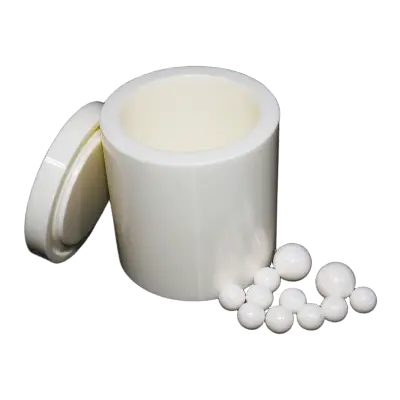
For users who require ultra-high purity or need to avoid metal contact altogether, alternative materials such as nylon roll mill jars, ceramic roll mill jars, or PTFE roll mill jars are available. For most standard grinding tasks, stainless steel offers an excellent balance of durability, cost, and performance.
References
Product page: Stainless steel roll mill jar
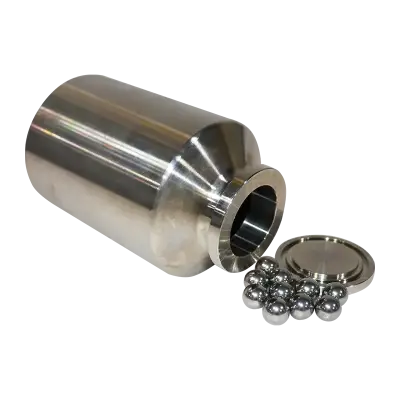
Related products: Nylon roll mill jar, Ceramic roll mill jar, PTFE roll mill jar, PU roll mill jar, Corundum roll mill jar
Related Products
Get In Touch
Our professional team will reply to you within one business day. Please feel free to contact us!