

What Is a Small Ball Mill with a Ceramic Jar? A Lab Grinder for Fine Powders
What Is a Small Ball Mill with a Ceramic Jar?
From the core, a small ball mill with a ceramic jar is a laboratory-scale grinding device that uses a rotating ceramic jar and loose grinding media to reduce solid materials to fine powders or suspensions. Laboratories and small production units use it when they need flexible, batch-based size reduction without the footprint of a full-scale mill. The ceramic jar is both the grinding chamber and the sample container, so the material stays inside a non-metallic environment during processing. This format is relevant when small quantities, clean handling, and repeatable preparation matter more than high-volume output.
This article explains the working principle, main components, configuration choices, performance indicators, and application fit of this product. It is written as a practical FAQ for buyers, technicians, and students who want to understand what the equipment does before choosing a jar mill for a laboratory workflow.
How the Grinding Process Works
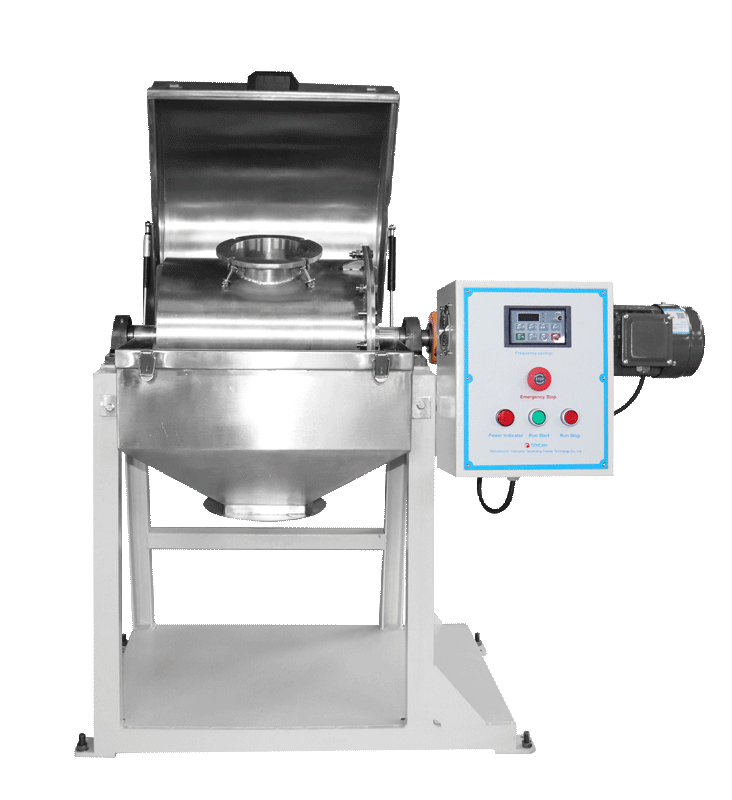
A ball mill reduces material by mechanical action rather than by cutting or crushing with sharp edges. The jar is partly filled with grinding media, typically balls made from a ceramic, mineral, or other compatible material, and with the sample to be processed. When the jar rotates, friction between the jar wall and the media charge lifts the balls up the side of the jar. At a certain point, gravity pulls them back down. The resulting tumbling, cascading, and impact motion breaks up the feed material and gradually creates finer particles.
The process combines impact, attrition, and friction. Impact occurs when media strike the sample or each other; attrition occurs as particles rub between moving media; friction occurs as the charge slides against the jar wall. The balance among these mechanisms depends on jar speed, media size and density, fill level, and slurry viscosity. A fast, cascading charge produces more impact, while a slower or more viscous charge produces more rubbing and attrition. That matters because soft, brittle, or heat-sensitive samples may respond better to gentle attrition, while hard, brittle materials may need more impact energy.
Because the action is mechanical, the final result is not simply a function of running time. A longer run can make particles finer, but it can also broaden the particle-size distribution, generate heat, or increase wear. A shorter run may leave coarse particles. The practical goal is to find a combination of time, media, loading, and speed that reaches the target fineness without overworking the sample.
From Feed Material to Fine Powder
In a typical batch, the operator loads a measured amount of feed material into the ceramic jar, adds the selected grinding media, closes the jar, and places it on the mill. The mill then rotates the jar for a set period. At the start, the feed may be coarse granules, chips, or a pre-milled powder. As the jar turns, the media repeatedly contact the material and fracture it along weak points. With continued action, the average particle size falls and the surface area increases.
The final state may be a dry powder, a paste, or a suspension, depending on the formulation and the intended downstream step. Dry grinding is common for brittle solids, while wet grinding can help with dispersion, dust control, and heat management. The choice affects jar loading, media selection, and the ease of emptying and cleaning the jar.
Why the Ceramic Jar Matters
Ceramic is chosen for jar construction because it can provide a hard, wear-resistant grinding surface and can be cleaned between batches. In a small mill, the jar is not merely a container; it is part of the grinding system. Its inner surface, wall thickness, and closing arrangement influence how the media charge moves and how easily the product can be recovered. A ceramic jar also avoids the obvious risk of rust or metallic abrasion that can occur with some metal jars, although the actual ceramic composition and grade should always be confirmed with the supplier for a given application.
The jar also sets practical limits. It defines the working volume, the maximum media load, and the contact materials seen by the sample. For sensitive chemistries, the jar surface should be evaluated for wear and contamination before a new material is processed. For routine work, ease of filling, sealing, and cleaning may matter as much as wear resistance. These are application decisions, not universal rankings.
Core Components and Their Functions
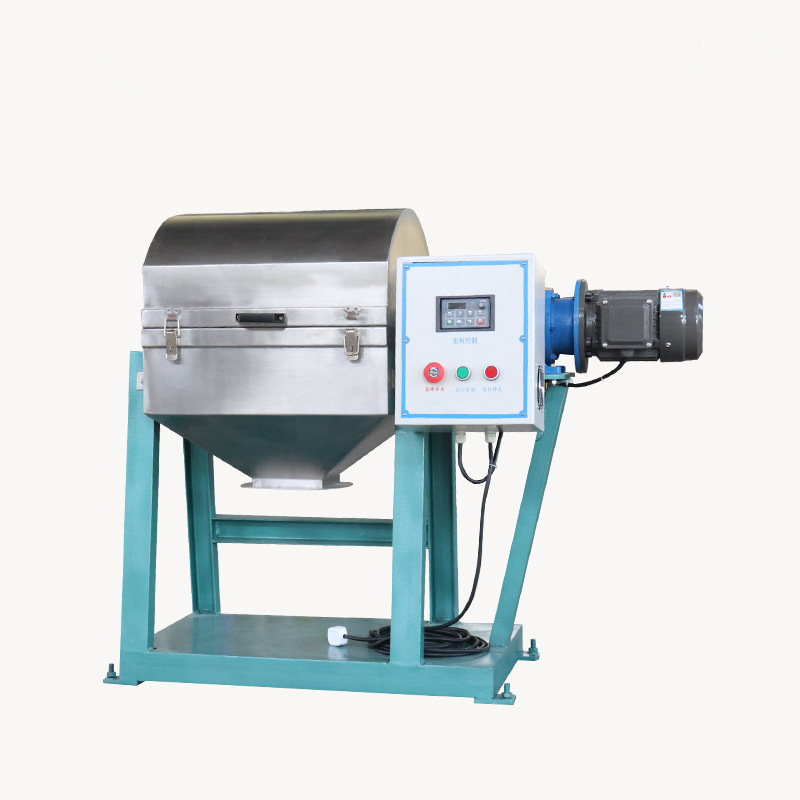
Even a compact jar mill is a system of interacting parts. The main components are the ceramic jar, the grinding media, the mill base and drive, and the accessories used for loading, sealing, and sample recovery.
The Ceramic Grinding Jar
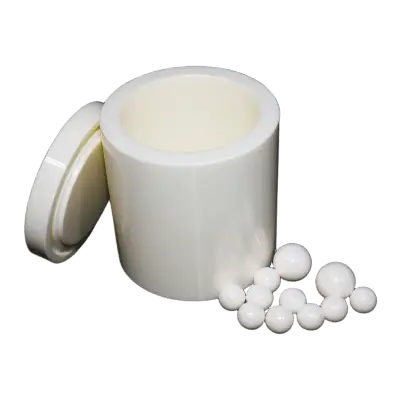
The ceramic jar is the working chamber. It holds the sample and media, contains the dust or slurry, and transfers motion to the charge through its rotating wall. A good jar for small-scale work should close securely, open easily for cleaning, and present a smooth interior that does not trap material. The jar should also be handled as a wear part: repeated charging, discharge, and washing can affect the sealing surface and the inner wall over time.
Grinding Media
The media are the working tools that transfer energy to the sample. Their size, density, shape, and material affect grinding speed, achievable fineness, and contamination risk. Smaller media create more contact points and can support fine grinding, but they may lack the mass to break coarse feed. Larger or denser media deliver more impact energy, but they can also increase wear and heat. Media loading should leave enough free space for the charge to move; an overloaded jar behaves differently from a lightly loaded one.
Mill Base, Rollers, and Drive
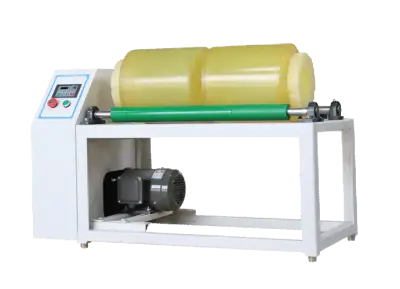
The base supports the jar and keeps it aligned during rotation. Rollers or equivalent drive elements transmit motion to the jar, and the frame must remain stable as the charge shifts inside. Stability matters because vibration can affect reproducibility, noise, and wear. The drive system should be matched to the intended jar size and load, but the relevant numbers should come from the product specification rather than from general assumptions.
Operating Accessories and Sample Handling
Accessories support repeatable work: tools for opening and closing the jar, containers for sample recovery, and cleaning supplies that do not damage the ceramic surface. Good sample handling begins before milling, with a representative feed and a recorded batch mass, and continues after milling, with a consistent discharge and cleaning routine. These simple practices make it easier to compare runs and to identify whether a change in results comes from the material or the process.
Types and Configuration Choices
Because the name describes a format rather than one fixed specification, buyers should read the product configuration carefully. The defining element is the ceramic jar; around it, several choices affect usability.
Jar Material and Interior Finish
Ceramic jars are available in different compositions and finishes, and those differences can matter for wear resistance, chemical compatibility, and contamination. A jar that is suitable for one powder may not be the best choice for an abrasive mineral or an aggressive chemical. Buyers should ask for the jar material, recommended cleaning method, and any limits on solvent or temperature exposure. The interior finish should also be considered: a very rough surface can trap powder, while an excessively polished surface may affect how the media charge slips.
Media Material and Size
Media selection follows the sample. Hard, dense media are generally used for tough materials, while softer or less dense media may be preferred when contamination or damage to the product is a concern. Media size should be matched to the feed size and the target fineness: coarse feed usually needs larger media to start breakage, and fine grinding usually benefits from a smaller media charge. Mixing media sizes is possible, but it makes the process harder to reproduce unless the blend is fixed.
Batch Size and Jar Volume
The jar volume sets an upper boundary, but the practical batch size is smaller because the charge needs room to move. Overfilling reduces media motion and can produce inconsistent results; underfilling wastes capacity and may increase wear. A useful starting point is to confirm the recommended working volume with the supplier, then adjust sample mass and media load together. For small ball mills, reproducibility often depends more on consistent loading than on maximizing each batch.
Process Variables That Shape the Result
Jar speed, media size, media density, fill ratio, sample mass, and run time form a connected set. Changing one variable usually changes the effect of the others. For example, increasing the media load can raise grinding energy, but it can also reduce the free path of the charge and slow cascading. Increasing speed can improve breakage, but it can also raise heat and wear. Recording each batch with the same variables is the simplest way to build a reliable process window.
Building a Repeatable Grinding Recipe
A repeatable recipe starts with a fixed feed preparation, a fixed jar, and a fixed media charge. Record the mass of sample, the mass and size of media, the number of media, the jar volume, the run time, and any pre-treatment. Run a small trial, measure the result, and change one variable at a time. If the target is fineness, measure the particle-size distribution rather than judging by appearance. If the target is dispersion, check for lumps and settling. Keeping a log turns a series of trials into a usable method.
Key Performance Indicators and Selection Points
When comparing a small ball mill with a ceramic jar, focus on the indicators that directly affect the work: achievable fineness, effective batch capacity, energy and time, contamination control, and maintenance.
Fineness and Particle Size Control
Fineness is not a single number. It includes the target median particle size, the width of the distribution, and the absence of oversized particles. A mill that reaches a fine median but leaves coarse tailings may not be suitable for a demanding application. Ask how fineness is verified, whether the method is dry or wet, and how quickly the jar can be sampled. The ceramic jar, media size, and run time all interact, so a trial with the actual material is more useful than a generic claim.
Throughput and Effective Batch Capacity
Throughput for a batch mill is usually expressed as mass per batch and batches per day, not as a continuous flow rate. The effective batch capacity is limited by jar volume, media load, and the acceptable fill level. Buyers should distinguish between the jar's nominal volume and the mass of sample that can be processed reproducibly. If the workflow requires many small batches, handling and cleaning time may dominate the total throughput.
Energy Use and Process Efficiency
Energy use in a small mill is influenced by run time, media mass, jar load, and the number of batches. A more powerful drive does not automatically produce better grinding; it may simply move a poorly loaded charge. Efficiency should be judged by the energy and time needed to reach a defined fineness, not by motor size alone. For laboratory work, the cost of a failed batch or an inconsistent result can outweigh the direct energy cost.
Contamination Control and Cleaning
Contamination can come from the jar, the media, the sample handling tools, or the environment. Ceramic components reduce some metallic contamination risks, but they are not automatically contamination-free. Buyers should ask for material compatibility information and establish a cleaning procedure that removes residual powder without damaging the jar. For trace analysis or sensitive formulations, a dedicated jar and media set may be preferable to sharing components across materials.
Maintenance and Ease of Use
Maintenance for a jar mill is usually straightforward: keep the drive and rollers clean, check the jar for chips or wear, inspect seals, and replace worn media. The practical questions are whether the jar can be opened and cleaned comfortably, whether spare jars and media are available, and whether the mill can be operated safely with the intended load. Ease of use matters in a laboratory because small delays and awkward handling reduce the number of reproducible runs.
Applications and Selection Advice
Small ball mills with ceramic jars are used where batch flexibility, modest sample size, and controlled contamination are important. They are common in materials research, ceramic and glass preparation, mineral sample preparation, chemical and pigment dispersion, and educational laboratories. The equipment is not limited to one industry, but the jar and media must be matched to the material.
Typical Laboratory and Small-Batch Uses
Typical uses include preparing powders for analysis, reducing particle size before sintering or pressing, dispersing solids in liquids, and testing new formulations on a small scale. In a research setting, the mill may process many different samples, so cleaning and changeover matter. In a small production setting, the same mill may support pilot batches or specialty products where full-scale equipment would be inefficient. In both cases, the value of the ceramic jar is that it provides a defined, cleanable grinding environment for a batch.
How to Match the Mill to Your Material
Start with the feed: its initial particle size, hardness, brittleness, moisture, and sensitivity to heat or contamination. Then define the target: median size, distribution, batch mass, and whether the product will be used dry or as a slurry. Use those inputs to select jar material, media size and material, and a realistic run time. If the material is abrasive, plan for jar and media wear. If it is heat-sensitive, use shorter runs or a gentler charge. If it is valuable, choose a jar size that allows clean recovery without excessive handling losses.
What This Mill Is Not
A small batch mill is not a continuous production machine, and it is not a substitute for a full-scale mill when large tonnages are required. It is also not a universal mixer: although it can disperse some materials, its primary action is size reduction and mechanical treatment. Buyers should not expect one jar and one media set to handle every material equally well. The format is strongest when the job is batch preparation, sample testing, or small-volume specialty work.
Safety and Good Laboratory Practice
Safe operation begins with correct loading and secure closing of the jar. Overloading, damaged jars, or mismatched media can cause vibration, leakage, or breakage. Operators should follow the supplier's instructions for maximum load, speed, and operating time, and should use appropriate personal protective equipment when handling fine powders. Good practice also includes labeling jars, recording batch conditions, and cleaning thoroughly between materials to avoid cross-contamination.
Selection Checklist for Buyers
Before choosing the product, confirm the required batch mass, the target particle size, and the material's hardness and chemical sensitivity. Ask for the ceramic jar composition, the recommended media, the working volume, and the cleaning method. Check whether spare jars and media are available and whether the mill's footprint and power supply fit the laboratory. Finally, plan a trial with the actual sample. A mill that looks suitable on paper can still fail if the jar volume, media charge, or recovery method does not match the workflow.
Common Questions About Jar Milling
Can one jar grind different materials?
Technically, one jar can be used for different materials if it is cleaned thoroughly and the jar material is compatible with each sample. In practice, cross-contamination is the main concern. Keeping a dedicated jar for sensitive or valuable materials is often simpler than proving that a shared jar is clean enough. Buyers should also check whether the same media are suitable for both materials.
How do I know when grinding is complete?
Grinding is complete when the measured result meets the target, not when a fixed time has passed. Use a defined check: visual inspection for coarse particles, a sieve check, or a particle-size measurement. Then record the conditions that produced the acceptable result. If the result is inconsistent, review the loading, media condition, and run time before changing the mill.
Product Information and Next Steps
The product discussed in this guide is the small ball mill with a ceramic jar. Its product page is the appropriate place to confirm the jar configuration, available accessories, and technical details for a specific purchase. Before ordering, match the working volume and jar material to the sample, confirm the media choice, and plan a cleaning and storage routine. A trial batch with the actual material is the most reliable way to verify that the mill meets the required fineness and batch size.
Related Products
Get In Touch
Our professional team will reply to you within one business day. Please feel free to contact us!