
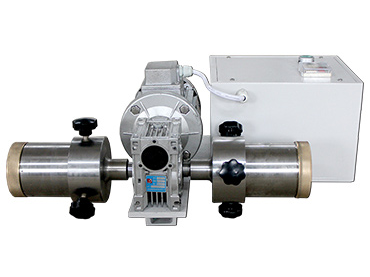
What is a Resin Ball Mill? A Specialized Grinding Equipment for Contamination-Free Fine Milling of Heat-Sensitive Materials

What is a Resin Ball Mill?
At its core, a resin ball mill is a specialized type of ball mill that uses a mill jar made entirely of resin (such as nylon, polyurethane, or PTFE) instead of traditional metal or ceramic materials. It is used primarily for fine grinding, mixing, and homogenizing of materials that are sensitive to metal contamination, corrosive, or require a high-purity environment. The resin construction eliminates the risk of metallic wear debris entering the sample, making it ideal for pharmaceutical ingredients, electronic ceramics, battery materials, and other high-value powders.
Core Function and Working Principle
The resin ball mill operates on the same fundamental principle as conventional ball mills: a rotating cylindrical jar filled with grinding media (balls) and the material to be ground. As the jar rotates, the balls are lifted by friction and centrifugal force along the inner wall, then fall or cascade, creating impact and attrition forces that break down the particles.
However, the key innovation lies in the jar's internal geometry. Traditional cylindrical jars often suffer from slippage between the balls and the wall, especially at lower rotational speeds. To overcome this, many resin ball mills feature a non-cylindrical cross-section—such as a polygonal (e.g., hexagonal or octagonal), multiple circular arc, or multiple trapezoidal shape. These irregular shapes increase the frictional grip between the jar wall and the grinding media, allowing the balls to be lifted higher and released from the uppermost point where gravity overcomes centrifugal force. This results in more efficient impact and grinding, particularly for fine and ultra-fine particle size reduction.
Furthermore, the resin jar itself is an active component. The elastic nature of the resin dampens vibration and noise, while the smooth, non-porous inner surface is easy to clean and resistant to chemical attack. The low rotational speed maintained (typically 65–75% of critical speed) reduces power consumption and extends the life of both the jar and the machine.
Key Components and Design Variations
Resin ball mills are available in several configurations to suit different laboratory and production needs:
1. Jar Material
The resin jar can be made from various polymers: Nylon offers good wear resistance and mechanical strength. Polyurethane (PU) provides excellent elasticity and abrasion resistance. PTFE (Teflon) is highly inert and suitable for highly corrosive materials. Polypropylene (PP) is a cost-effective option for general-purpose grinding.
2. Rotational Mechanism
Most resin ball mills are roll-type mills where the jar is placed on two rotating rollers. The friction between the rollers and the jar drives the rotation. Some models incorporate a variable speed drive to precisely control the grinding intensity.
3. Sealing and Safety
Resin jars are typically equipped with airtight lids to prevent leakage and contamination. Some models feature a vacuum or inert gas port for grinding moisture-sensitive or air-sensitive materials.
Key Performance Indicators and Selection Criteria
When selecting a resin ball mill, consider the following parameters:
- Jar capacity: Ranges from 0.5 L to 20 L or more. Choose based on your batch size.
- Grinding fineness: Typically achievable down to 10–100 μm, depending on material and grinding time.
- Speed range: Usually 30–300 rpm. A wider range offers more flexibility.
- Material compatibility: Ensure the resin type is chemically resistant to your sample (e.g., PTFE for strong acids, nylon for mild environments).
- Automation: Some models include programmable timers, speed ramping, and safety interlocks for unattended operation.
- Maintenance: Resin jars are lightweight and easy to clean. Check for availability of spare jars and grinding media.
Applications and Selection Advice
Resin ball mills are widely used in:
- Pharmaceuticals: Grinding active pharmaceutical ingredients (APIs), excipients, and herbal extracts without metal contamination.
- Advanced ceramics: Preparing slurries for electronic ceramics, ferrites, and piezoelectric materials.
- Battery materials: Mixing electrode powders and binders for lithium-ion and solid-state batteries.
- Chemical industry: Grinding corrosive catalysts, pigments, and dyes.
- Food and cosmetics: Fine grinding of spices, herbal powders, and cosmetic pigments.
For users who require maximum purity and are processing heat-sensitive or corrosive materials, a resin ball mill is the preferred choice over traditional metal or ceramic mills. For high-throughput production, consider a resin ball mill with larger capacity or a fast ball mill for rapid grinding.
References
- Product page: Resin ball mill
- Related: Three roll mill
Related Products
Get In Touch
Our professional team will reply to you within one business day. Please feel free to contact us!