

What is a Precision Air Blower Dryer? A Laboratory Device for Sample Drying
Quick Definition: A Controlled Drying Device for Laboratory Work
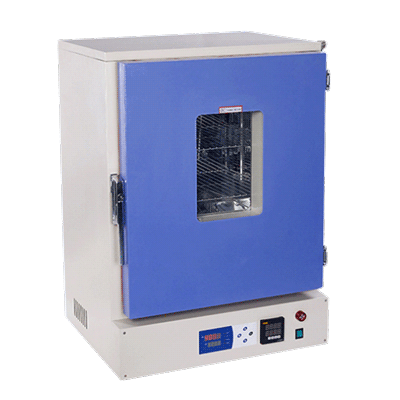
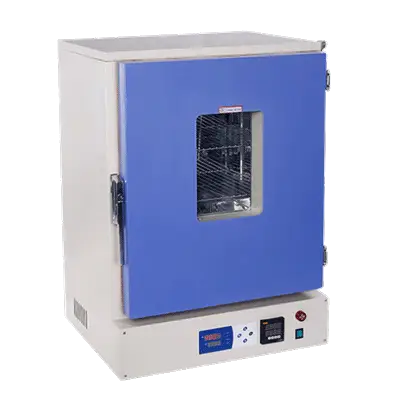
From the core, a Precision air blower dryer is a laboratory drying device that uses controlled heated airflow to remove moisture from samples, components, glassware, and other heat-tolerant materials. Its purpose is not simply to warm an object. It is to create a repeatable drying environment in which temperature, air movement, and time work together so that water or another volatile component leaves the material at a controlled rate. The reference product is TENCAN's Precision air blower dryer, listed in the sintering-series product group on the supplier site.
In everyday laboratory language, the equipment is often described as a forced-air drying oven or a blower dryer. The word precision refers to the quality of control: the user should be able to set, hold, and repeat a drying condition rather than rely on an uncontrolled heat source. The word blower refers to mechanical air circulation. Instead of letting heat sit in a chamber and stratify, a fan or blower moves air across the load, helping to transfer heat to the material and carry moisture away.
This distinction matters because drying is a process, not a single event. A sample that is dry on the surface may still hold moisture inside a particle, a pressed body, a bundle of fibers, or a narrow gap between parts. Conversely, a sample can be over-dried, oxidized, cracked, or contaminated if the air is too hot, too dirty, or too uneven. A precision air blower dryer is therefore selected for controllability as much as for heating capacity.
Core Function and Working Principle
From a Moist State to a Stable, Dry State
At the process level, the dryer changes a wet or moisture-containing load into a drier, more stable load. The moisture may be free water on a surface, water held in a powder, residual solvent from a cleaning step, or humidity absorbed by a hygroscopic material. The machine does not remove water by magic; it supplies heat so that liquid water becomes vapor and then uses airflow to move that vapor away from the load. The target endpoint is application-specific. Glassware may only need visible dryness, whereas a ceramic powder or pressed part may need a defined residual moisture level.
The operating principle is convective drying. Air is heated, passed over the load, and then returned to the chamber or exhausted, depending on the design. The air performs two jobs at once. It is the heat-transfer medium that supplies latent heat for evaporation, and it is the mass-transfer medium that dilutes and removes the resulting vapor. If either function is weak, drying becomes slow, uneven, or difficult to reproduce.
Heat Transfer, Mass Transfer, and Airflow
Three transport steps happen at once. First, heat moves from the heated air to the load. Second, moisture moves from the interior of the material to its surface. Third, vapor moves from the surface into the air and out of the drying zone. The slowest step controls the overall rate. A thin film of water may dry quickly because moisture does not have far to travel. A thick filter cake, a pressed pellet, or a porous ceramic body may dry slowly because internal moisture must diffuse to the surface before it can evaporate.
The blower is central to this balance. Good air movement reduces the stagnant layer of humid air next to the load and helps maintain a more uniform temperature around the chamber. It also helps the load heat up more evenly after the door is closed. However, airflow is not a substitute for correct temperature control. If the air is too hot for the material, faster circulation may simply make the damage happen sooner. If the airflow path is obstructed, the chamber may show a good set-point reading while the load experiences cooler and more humid pockets.
Why Forced Air Improves Repeatability
In a static oven, heat reaches the load mainly by natural convection and radiation. The result can be a temperature gradient from top to bottom or from front to back, and moisture can linger in corners. Forced-air circulation reduces these gradients by continuously mixing the chamber atmosphere. For laboratory work, this matters when several samples are dried in the same batch or when a procedure must be repeated from day to day.
A typical drying curve has three stages. During the initial heating stage, the load and the chamber move toward the set condition. During the constant-rate stage, free moisture evaporates from the surface and the drying rate is relatively stable. During the falling-rate stage, internal moisture must migrate to the surface, so the rate decreases. The operator should not assume that a fixed time is always sufficient. Load size, sample thickness, starting moisture, tray spacing, and door openings all influence the endpoint.
What Precision Means in Practice
Precision in a blower dryer is demonstrated by stable temperature control, sensible airflow distribution, repeatable recovery after loading, and a controller that can hold a defined routine. It also depends on how the user defines the drying endpoint. A quality procedure states the sample preparation, load arrangement, set temperature, allowed tolerance, drying time or endpoint check, and cooling conditions. Without these details, two operators can use the same machine and obtain different results.
The equipment should therefore be treated as part of a method, not as a standalone box. The method should reflect the material's sensitivity to heat, oxidation, dust generation, and contamination. For some materials, gentle airflow at a moderate temperature is safer than a short, hot cycle. For others, good air exchange is essential because the vapor must be removed quickly enough to prevent condensation on cool surfaces.
Core Components and Key Technical Features
Drying Chamber and Insulation
The chamber defines the working volume and the quality of the thermal environment. A well-designed chamber distributes air around the load rather than directing it at one spot, and insulation limits heat loss through the walls. Door seals, hinges, and latches affect repeatability because a poor seal allows room air to enter and creates cold spots. Shelves or trays should allow air to pass above and below the load; stacking samples tightly can defeat the purpose of a forced-air design.
Heater and Temperature Control Loop
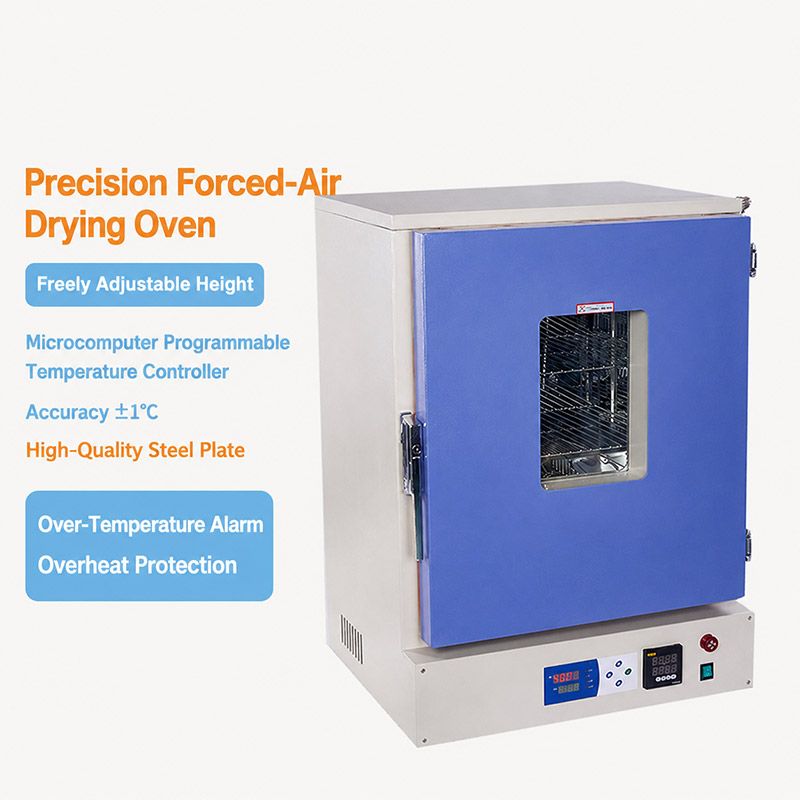
The heater supplies the energy for evaporation. The control loop compares the measured chamber temperature with the set point and adjusts the heater output. A responsive sensor and a well-tuned controller reduce overshoot when the door is opened or a cold load is inserted. In selection, the user should ask how temperature is measured, where the sensor is located, and whether the controller offers a useful alarm or timer function. A high maximum temperature is not proof of good control at the lower temperatures often used for delicate samples.
Blower, Ducts, and Air Distribution
The blower creates the forced-air path. Ducts, baffles, and perforated plates may be used to spread the air across the chamber. The important performance question is not only how much air moves, but where it moves. Uniform airflow helps avoid wet pockets and local overheating. In a busy laboratory, the air path can be disturbed by oversized trays, loose papers, or samples placed against the return opening. Good operating instructions should identify the working zone and the clearance needed around the load.
Shelves, Trays, and Load Handling
Load handling is part of the drying system. A wire shelf allows air to move around a sample, while a solid tray can shield its underside. A shallow powder layer dries more evenly than a deep bed. Glassware should be positioned so that water does not collect in blind cavities. If the material generates dust, the user should confirm that the airflow will not carry particles into the blower or contaminate later batches. Accessories should be selected for the real load, not only for the chamber volume.
Sensors, Controller, and Safety System
Modern laboratory dryers may include digital temperature control, timers, overtemperature protection, door interlocks, and alarms. These features support safe and repeatable operation, but they do not replace an operator's judgment. The user should understand what the alarm means, how to recover after a power interruption, and which materials must never be placed in the chamber. Ventilation and electrical requirements should be confirmed before installation, especially when the dryer will handle solvents or dusty powders.
Key Performance Indicators and Selection Criteria
Temperature Range and Control Quality
The usable temperature range should be matched to the material, not chosen simply because a wider range looks more capable. Users should compare control stability, overshoot behavior, and uniformity at the temperatures they will actually use. A dryer that performs well near its maximum temperature may be less precise at a low set point. For sensitive samples, the difference between average temperature and local temperature can matter more than the displayed set point.
Airflow and Temperature Uniformity
Airflow should be strong enough to mix the chamber but not so forceful that it disturbs light powders or blows lightweight parts around. Uniformity should be assessed under realistic loading, not only in an empty chamber. A simple validation can place several temperature sensors at different positions with a representative load. If the application is critical, this mapping should be repeated periodically and after major maintenance.
Chamber Size, Loading, and Recovery
Chamber volume is only a starting point. The practical capacity depends on tray area, shelf spacing, load density, and how much moisture must be removed. A large chamber filled with a dense load may recover slowly after the door is closed. A small chamber may recover quickly but offer too little useful shelf space. Buyers should estimate the real batch size, including space for airflow, and avoid a chamber that must be packed to be economical.
Materials, Contamination, and Maintenance
The interior materials should be compatible with the samples and cleaning agents. Corrosive vapors, fine dust, and sticky residues can shorten the life of seals, sensors, and blower components. Easy cleaning is therefore a performance feature, not a cosmetic one. The user should be able to remove spills, inspect the air path, and replace consumable parts without dismantling the entire machine. Cross-contamination is a special concern when the dryer handles both clean glassware and mineral or chemical samples.
Controls, Documentation, and Traceability
For quality-controlled laboratories, the controller should support clear set points, timers, alarms, and, where needed, records of the drying run. Documentation should explain calibration, routine checks, and safe operating limits. Traceability does not require a complicated system, but it does require that the method be written down and followed. The user should know which temperature was used, how long the load was held, and how dryness was judged.
Applications and Selection Advice
Typical Laboratory and Production-Support Uses
Precision air blower dryers are used where controlled removal of moisture is needed without the complexity of a vacuum system. Typical laboratory tasks include drying glassware and tools after cleaning, preparing mineral and ceramic samples, drying powders and granules before testing, conditioning components after washing, and supporting quality-control workflows. In powder and sintering-related work, controlled drying before firing can help reduce variability caused by residual moisture, although the exact drying profile must be developed for each material.
The equipment is also useful in educational and research laboratories where methods change frequently. A forced-air dryer can handle many general-purpose drying tasks, but it is not universal. Materials that oxidize in air, melt at low temperature, release hazardous vapors, or contain solvents with special flammability risks require a different design or additional precautions. The material safety data sheet and the manufacturer's instructions should be reviewed before any new load is introduced.
How Different Users Should Choose
An academic or teaching laboratory may prioritize ease of use, clear controls, and a chamber size that fits common glassware and sample trays. A quality-control laboratory may place more emphasis on temperature uniformity, repeatable recovery, alarms, and documented procedures. A pilot or production-support group may need a larger working volume, robust construction, and a maintenance plan that minimizes downtime. In every case, the selection should begin with the material and the required endpoint, not with a list of optional features.
Before specifying a model, review the product page for the Precision air blower dryer and confirm the available chamber configuration, control package, and site requirements with the supplier. A short drying trial using the real material is often more informative than a comparison of catalog headings. The trial should record starting mass, load arrangement, temperature, time, and final condition so that the result can be repeated.
Installation, Operation, and Maintenance Notes
Install the dryer on a stable, level surface with the clearance and ventilation specified by the manufacturer. Keep the air intake and exhaust unobstructed, and do not place the unit where room drafts or nearby heat sources will disturb its control. Use the correct electrical supply and grounding. Train operators to load trays so that air can circulate, to close the door properly, and to wait for the chamber to recover before starting a timed run. A written start-up and shutdown routine reduces avoidable variation.
Routine maintenance should include cleaning the chamber, checking door seals, inspecting the blower and air path, and verifying temperature performance at a suitable interval. Sensors may drift over time, and dusty environments can affect both the heater and the blower. Any repair that changes the air path or control loop should be followed by a performance check. Records of cleaning, calibration, and maintenance help identify when a change in drying behavior is caused by the equipment rather than the sample.
Frequently Asked Questions
Is a precision air blower dryer the same as a vacuum dryer?
No. A vacuum dryer removes moisture under reduced pressure, which can lower the boiling point and reduce oxidation. A precision air blower dryer uses heated air circulation at near-atmospheric conditions. The vacuum type can be preferable for heat-sensitive or oxygen-sensitive materials, while the forced-air type is often simpler and more convenient for general laboratory drying. The choice depends on the material and the required endpoint.
Can it dry heat-sensitive materials?
It can be used only within the material's safe temperature limit. Airflow may improve drying at a lower temperature, but it does not remove the risk of thermal damage. For polymers, biological samples, some hydrated salts, and reactive powders, the user should confirm the maximum safe temperature and test a small sample first. If the material cannot tolerate air or the available temperature, a different drying method may be required.
Does a higher temperature always mean faster drying?
Not necessarily. A higher temperature increases the evaporation driving force, but it can also cause surface hardening, oxidation, cracking, or uneven internal moisture. In some loads, a moderate temperature with good airflow is faster and safer than a hot cycle that seals the surface. The best condition is the one that removes moisture at an acceptable rate without damaging the material.
How should a drying procedure be developed?
Start with the material's temperature limit and the required final condition. Run a small trial with a representative load, record the mass change over time, and inspect the sample for cracking, discoloration, or residual moisture. Use the same tray spacing and load arrangement in later runs. If the application is critical, validate the procedure with several repeats and define what counts as dry. The result should be a documented method, not an operator's guess.
What maintenance matters most?
Cleanliness, airflow, and temperature verification matter most. Keep the chamber free of spills and dust, check that the blower is unobstructed, inspect door seals for wear, and verify the temperature indication periodically. Follow the manufacturer's maintenance schedule for sensors and electrical components. A dryer that is clean and properly adjusted is more likely to give repeatable results than one that is simply run until a fault appears.
Related Products
Get In Touch
Our professional team will reply to you within one business day. Please feel free to contact us!