
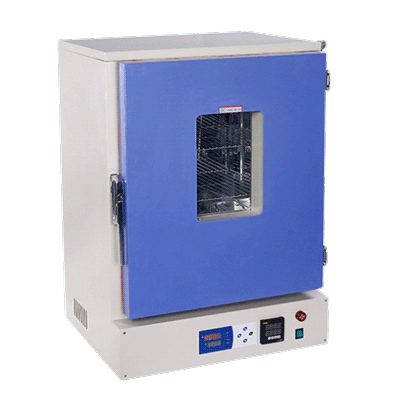
What is a Precision Air Blower Dryer? A High-Precision Drying Oven for Laboratory Sample Drying

What is a Precision Air Blower Dryer?
At its core, a precision air blower dryer is a specialized forced convection drying oven used in laboratories, research institutions, and industrial quality control to remove moisture from samples with high accuracy and repeatability. It works by generating a controlled stream of heated air that circulates uniformly throughout the chamber, accelerating the evaporation of water or solvents from materials such as powders, granules, ceramics, pharmaceuticals, and electronic components. Unlike simple static ovens, this device ensures consistent temperature distribution and airflow velocity, making it indispensable for applications where drying uniformity is critical.
Core Function and Working Principle
How It Transforms Wet Samples
The precision air blower dryer converts a wet or moist sample into a dry, stable material by exposing it to a precisely controlled hot air stream. The process involves three key stages: heating, air circulation, and exhaust. An electric heating element (often PTC ceramic or resistance wire) heats the air to a set temperature, while a high-efficiency blower motor forces the hot air through the chamber. The air flows over the sample, absorbing moisture, and then exits through a vent or is recirculated after passing through a condenser (in closed-loop systems). This forced convection mechanism ensures that every part of the sample experiences the same drying conditions, eliminating hot spots and cold zones.
Key Parameters
Critical parameters that affect drying performance include temperature (typically 50°C to 300°C), airflow volume (measured in CFM or m³/h), and drying time. The temperature controller, often a PID (Proportional-Integral-Derivative) system, maintains the chamber temperature within ±0.5°C or better. The blower speed can be adjustable to suit different materials—gentle airflow for delicate powders or high-velocity flow for robust samples. Advanced models also feature programmable ramping and dwell steps, allowing users to create custom drying profiles.
Core Components and Key Technologies
Since the precision air blower dryer is a specialized single-type device, we focus on its essential components:
- Heating System: High-quality stainless steel heating elements or PTC heaters ensure rapid heating and long service life. The heating power directly determines the maximum temperature rise rate.
- Blower and Air Duct: A centrifugal or axial blower driven by a variable-speed motor pushes air through a carefully designed duct system. The duct shape and baffles create uniform laminar or turbulent flow across the shelves.
- Temperature Controller: A digital PID controller with a PT100 or K-type thermocouple sensor provides accurate temperature reading and control. Many units offer touchscreen interfaces for easy programming.
- Insulation and Chamber: Thick mineral wool insulation and a stainless steel inner chamber minimize heat loss and prevent contamination. The doors are sealed with high-temperature silicone gaskets.
- Safety Features: Over-temperature protection, door interlock, and fan failure alarms are standard to ensure safe operation.
Key Performance Indicators and Selection Criteria
Temperature Accuracy and Uniformity
For most laboratory applications, a precision air blower dryer should maintain temperature uniformity of ±1°C or better across the entire chamber. Check the manufacturer's specification for temperature fluctuation and gradient. Models with multi-point calibration and air circulation optimization are preferable.
Airflow and Drying Capacity
Consider the airflow volume and air exchange rate. High airflow accelerates drying but may disturb lightweight samples. Some dryers offer adjustable blower speed to accommodate different materials. The chamber size (volume in liters) determines the maximum batch size. For example, a 150L chamber can handle multiple trays of powder simultaneously.
Energy Efficiency and Programmability
Look for energy-saving features such as low-power standby mode and efficient insulation. Programmable controllers allow users to set temperature ramps, hold times, and cooling cycles, which is essential for materials that require controlled drying rates (e.g., ceramics to avoid cracking).
Ease of Maintenance
Removable shelves, easy-access heating elements, and simple filter cleaning reduce downtime. Stainless steel construction resists corrosion and is easy to wipe down.
Applications and Selection Advice
Precision air blower dryers are widely used in powder metallurgy, ceramics, pharmaceuticals, chemical engineering, food science, and electronics manufacturing. They are ideal for drying metal powders, ceramic green bodies, active pharmaceutical ingredients (APIs), polymer granules, and electronic components after washing. For academic research labs, a compact desktop model with programmable controller is sufficient. For industrial QC labs handling high throughput, a larger floor-standing unit with high airflow and robust construction is recommended. If you need to dry heat-sensitive materials, consider a model with precise low-temperature control (down to 40°C) and optional nitrogen purge to prevent oxidation. For more related drying solutions, you can also explore the circulation oven or the desktop air blower dryer.
References
Related Products
Get In Touch
Our professional team will reply to you within one business day. Please feel free to contact us!