

What is a Precision Air Blower Dryer? A Forced Convection Thermal Processing Equipment Used for Uniform Powder Drying and Precursor Curing
Opening Definition
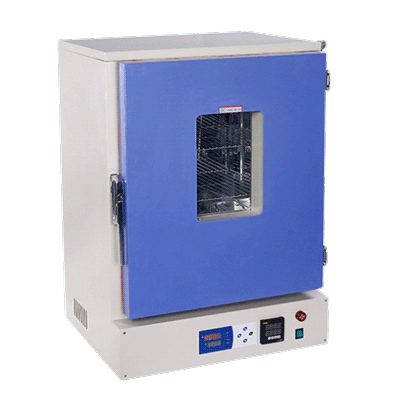
From a core perspective, a Precision Air Blower Dryer is a specialized thermal processing device widely utilized in powder engineering, materials science, and advanced laboratory research. It is designed to efficiently remove moisture or volatile solvents from solid powders, granules, or coated substrates through controlled, high-velocity hot air circulation. By maintaining strict environmental parameters, this equipment ensures consistent drying results without compromising the chemical stability or physical morphology of sensitive materials.
Core Functions & Working Principles
The fundamental operation relies on active forced convection coupled with precise thermal management. Unlike conventional gravity-convection ovens that depend on passive heat rising, this system employs a high-efficiency axial or centrifugal fan paired with a multi-zone electric heating array. Ambient air is drawn into the intake, filtered to remove particulates, and then passed over the heating elements where it reaches a target temperature. The conditioned air is subsequently forced through optimized internal ductwork and diffusers, directing a uniform stream across the material bed.
As the heated airstream contacts the sample, rapid heat transfer occurs, causing bound water or residual solvents to vaporize. The continuous airflow actively disrupts the stagnant boundary layer surrounding each particle, sweeping away humidified air and replacing it with fresh, dry medium. This dynamic exchange prevents localized hot spots and ensures homogeneous temperature distribution throughout the chamber. Critical process variables—including setpoint temperature, airflow velocity, chamber pressure, and dwell time—are meticulously regulated to dictate the final moisture content, particle size distribution, and crystalline structure of the dried product.
Key Components & Technical Architecture
Modern precision blowers are engineered with modular subsystems tailored for rigorous experimental workflows. The primary enclosure consists of a double-walled stainless steel chamber lined with high-density mineral wool or aerogel insulation to minimize thermal loss and enhance energy efficiency. Inside, a variable-frequency drive (VFD) motor controls fan speed, allowing operators to switch between laminar flow for delicate films or turbulent mixing for bulk powders. Multi-stage HEPA or activated carbon filters protect both the heating elements and the sample from cross-contamination.
At the control interface, a microprocessor-based PID controller maintains temperature stability within ±0.5°C to ±1.0°C, depending on the model. Advanced iterations feature programmable ramp-and-soak profiles, enabling users to simulate complex drying kinetics or execute multi-step curing cycles. Additional safety and utility modules include over-temperature cut-offs, door interlock switches, exhaust dampers for vapor extraction, and optional inert gas purge ports for handling oxygen- or moisture-sensitive precursors.
Key Performance Indicators & Selection Guidelines
When evaluating suppliers and configuring systems, engineers must prioritize several technical metrics. Temperature uniformity is the most critical parameter; deviations exceeding ±2°C across the working volume can induce uneven shrinkage, warping, or phase segregation in ceramic pastes and battery electrode slurries. Airflow architecture directly influences drying throughput—chamber geometry and baffle placement should align with the specific permeability and packing density of the target material.
Energy consumption and thermal recovery capabilities also warrant attention. Look for units equipped with heat exchangers or recirculation valves that capture waste heat, significantly reducing operational costs in continuous or high-volume settings. Furthermore, assess the ease of maintenance: quick-release filter cartridges, self-cleaning heating coils, and intuitive touchscreen diagnostics streamline upkeep and minimize unplanned downtime. Verify compliance with international safety standards and confirm electrical compatibility with your facility’s power infrastructure before deployment.
Application Scenarios & Procurement Advice
Precision air blower dryers serve as indispensable assets across multiple high-tech industries. They are extensively deployed in lithium-ion battery manufacturing for drying cathode/anode coatings, in pharmaceutical development for stabilizing active ingredients, and in catalyst synthesis for calcining metal oxides. For routine laboratory characterization, standard benchtop models provide reliable reproducibility, while pilot-scale operations benefit from vertical configurations with larger footprints and higher airflow capacities.
To optimize your procurement strategy, start by mapping your material’s thermal sensitivity, initial moisture content, and required throughput. If your workflow involves large batch sizes, consider pairing this unit with a circulation oven for parallel processing. For thermally labile compounds requiring low-temperature dehydration, integrating a vacuum drying oven downstream can preserve molecular integrity. Always request detailed thermal mapping reports from manufacturers and validate chamber dimensions against your existing sample holders before finalizing orders.
References
- Precision Air Blower Dryer: https://www.planetaryballmills.com/ja/products/sintering-series/precision-air-blower-dryer.html
- Circulation Oven: https://www.planetaryballmills.com/products/sintering-series/circulation-oven.html
- Vacuum Drying Oven: https://www.planetaryballmills.com/products/sintering-series/vacuum-drying-oven.html
- Desktop Air Blower Dryer: https://www.planetaryballmills.com/products/sintering-series/desktop-air-blower-dryer.html
Related Products
Get In Touch
Our professional team will reply to you within one business day. Please feel free to contact us!