
What is an Oblique Mixer? A Versatile Blending Equipment for Dry Powder and Granule Homogenization

Introduction: What is an Oblique Mixer?
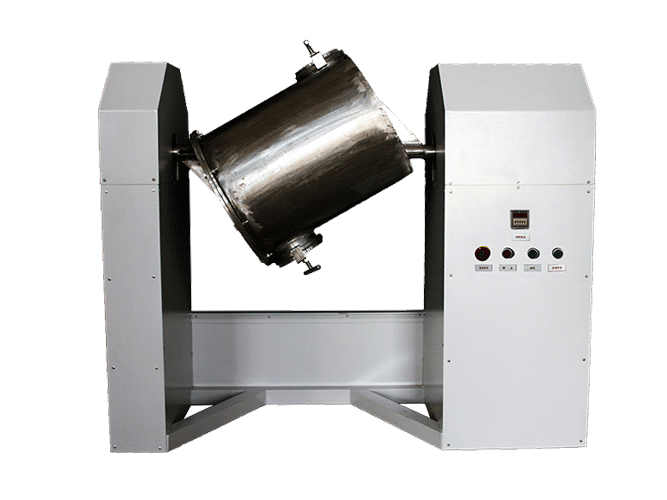
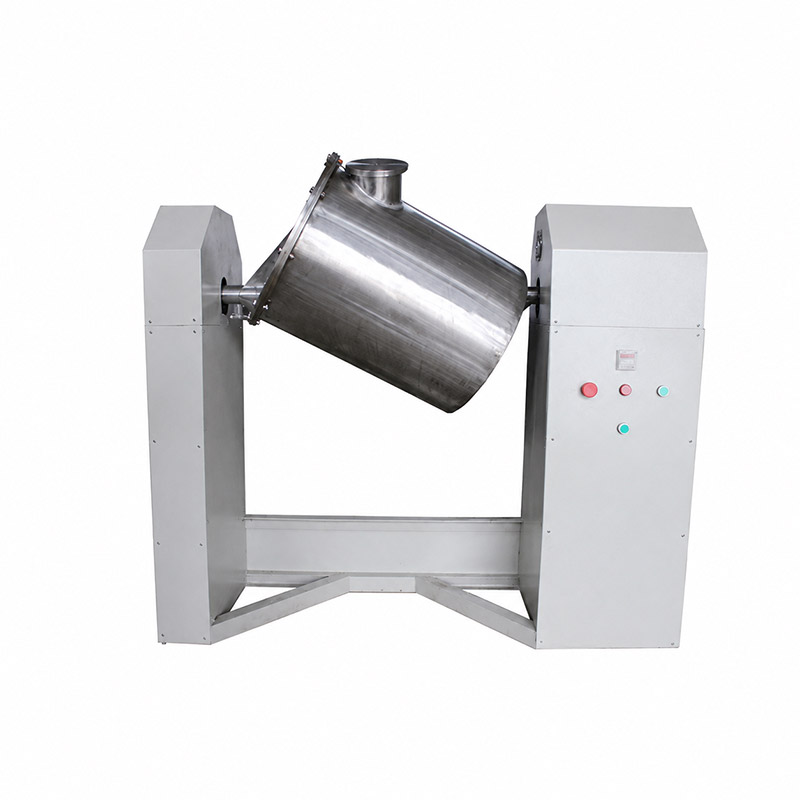
At its core, an oblique mixer is a specialized blending equipment used in laboratories and small-scale production facilities to achieve uniform mixing of dry powders, granules, and certain fragile materials. The device features a cylindrical drum mounted at an adjustable angle (typically 0° to 90°) relative to the horizontal plane. As the drum rotates, the combined action of gravity and tumbling motion ensures that materials are gently but thoroughly combined without significant attrition or degradation. This makes the oblique mixer an ideal choice for applications where preserving particle integrity is as important as achieving homogeneity.
Core Function and Working Principle
The primary function of an oblique mixer is to transform a mixture of two or more dry components from an initial segregated state into a homogeneous blend. The working principle relies on the mechanical rotation of a tilted drum. When the drum rotates, the material inside is continuously lifted and cascaded due to gravity and centrifugal forces. The oblique angle of the drum introduces an additional axial movement component, causing the material to flow from one end of the drum to the other in a spiral pattern. This multi-directional movement ensures that particles from different starting positions are repeatedly intermingled, leading to a high degree of uniformity.
Key parameters influencing the mixing quality include drum rotation speed, tilt angle, filling level, and mixing time. Typically, the drum is filled to 30%–50% of its total volume for optimal mixing performance. The rotation speed is set below the critical speed to avoid centrifuging the material against the drum wall. The tilt angle is adjustable, allowing operators to fine-tune the residence time of the material inside the drum. A steeper angle accelerates the axial flow and reduces mixing time, while a shallower angle prolongs the process for more delicate mixing.
Key Design Features and Component Considerations
Unlike some other mixers that rely on internal agitators or paddles, the oblique mixer has a simple, clean design with no internal moving parts coming into contact with the material. The drum is typically made of stainless steel or other corrosion-resistant alloys, with smooth interior surfaces to minimize material adhesion and facilitate cleaning. Many models offer interchangeable drums of different volumes, making the oblique mixer a versatile tool for batch processing from a few hundred grams to several kilograms.
An important variant is the V-type mixer, which shares a similar tumbling principle but uses a V-shaped vessel instead of a cylindrical drum. The V-type mixer provides even more vigorous axial mixing, while the oblique mixer offers gentler handling due to its simpler geometry. For users requiring three-dimensional mixing, the 3D mixer is another alternative that uses a multi-axis rotational motion to achieve high uniformity.
Key Performance Indicators and Selection Criteria
When choosing an oblique mixer, several performance indicators should be considered:
- Batch Capacity: Oblique mixers are available in capacities from 0.5 L to 50 L or more. For laboratory R&D, smaller units (1–5 L) are common; for pilot-scale production, larger models (20–50 L) are used.
- Mixing Uniformity: A well-designed oblique mixer can achieve a coefficient of variation (CV) of less than 5% for most dry powder blends, provided the particle size distribution is not too wide.
- Rotational Speed Range: Typically 10–60 rpm, with variable speed control to adapt to different material densities and flow characteristics.
- Adjustable Tilt Angle: Usually from 0° (horizontal) to 90° (vertical). A wider range offers greater flexibility in controlling the axial mixing rate.
- Material of Construction: 304 or 316L stainless steel is standard for pharmaceutical and food applications. Surface finish (e.g., mirror polish) can affect cleaning ease and product release.
- Ease of Cleaning: Quick-release drum clamps, detachable sealing rings, and smooth welds reduce downtime between batches.
Applications and Selection Recommendations
Oblique mixers are widely used in the pharmaceutical industry for blending active pharmaceutical ingredients (APIs) with excipients, in the chemical industry for mixing catalyst powders, in ceramics for homogenizing ceramic powders and binders, and in the food industry for blending spices, flavorings, and nutritional supplements. They are particularly suitable for friable or agglomerated materials that would be damaged by high-shear mixing devices.
For laboratories that need to process multiple small batches with different formulas, a compact oblique mixer with interchangeable drums is a cost-effective choice. For users who also require wet mixing or granulation, consider a trough mixer or a vacuum kneading machine. For high-throughput applications requiring consistent large-scale blending, a horizontal screw belt mixer may be more appropriate.
References
- Oblique Mixer Product Page: https://www.planetaryballmills.com/products/mixed-series/oblique-mixer.html
- V-type Mixer: https://www.planetaryballmills.com/products/mixed-series/v-type-mixer.html
- Double Cone Mixer: https://www.planetaryballmills.com/products/mixed-series/double-cone-mixer.html
- 3D Mixer: https://www.planetaryballmills.com/products/mixed-series/3d-mixer.html
Related Products
Get In Touch
Our professional team will reply to you within one business day. Please feel free to contact us!