

What Is a Nylon Roll Mill Jar? A Nonmetallic Milling Vessel for Fine Grinding
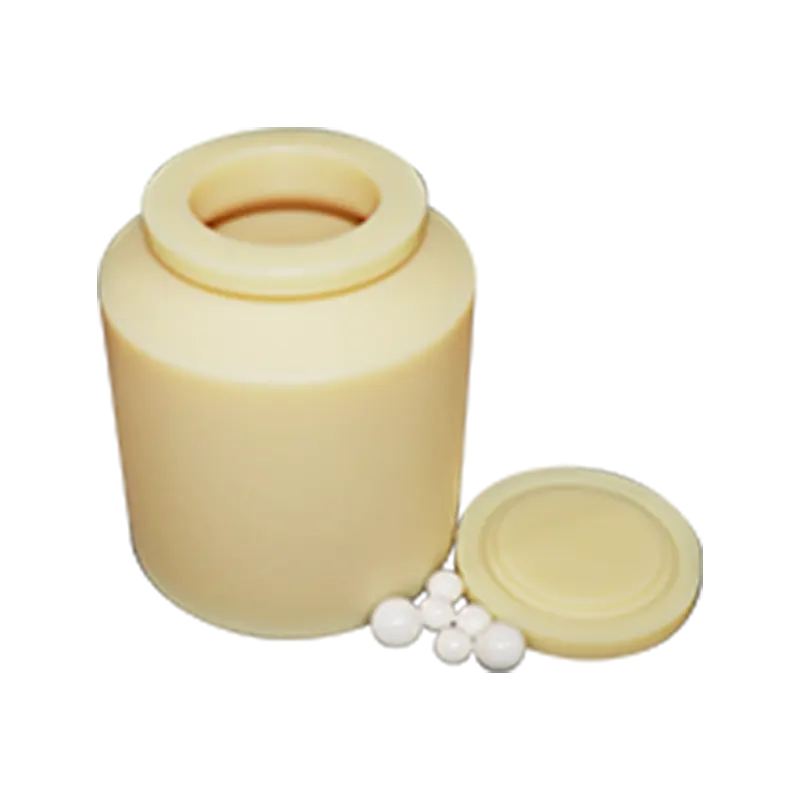
From a practical standpoint, a nylon roll mill jar is a nonmetallic grinding vessel used on a roll mill to hold a sample and grinding media during size reduction and mixing. Laboratories, pilot plants, and small production units use it when they need a closed milling container that can be handled easily and matched to a roller-type mill. The jar does not create the milling action by itself; it is the working chamber that contains the material, the media, and the atmosphere during rotation. Its material, fit, sealing, and media compatibility determine how well it supports fine grinding and how easily the process can be controlled. This article refers to the nylon roll mill jar product listing as the source for model-specific details.
What Is a Nylon Roll Mill Jar?
A nylon roll mill jar is a jar made from nylon and intended for use with a roll mill. In a roll mill, the jar is placed on rotating rollers; friction turns the jar, and the motion lifts and tumbles the grinding media inside. The sample is trapped between moving media and jar surfaces, where impact, compression, and shear reduce particle size and blend components. The jar is therefore both a container and a process component. Its internal shape, surface condition, closure, and mass influence the motion of the charge and the repeatability of the result.
The word nylon identifies the jar material, while roll mill jar identifies the machine family. This distinction matters during purchasing. A buyer who searches only for a milling jar may find planetary mill jars, ball mill jars, or jars intended for other motions. A roll mill jar must suit the way the mill supports and rotates the vessel. It must also suit the planned media, sample, and cleaning routine. The supplier's product page should be used to confirm exact model, dimensions, and mill compatibility because those details are product-specific and should not be assumed from the material name alone.
Core Function and Working Principle
From Feed Material to Milled Product
The basic function of the jar is to help convert a feed material from a coarser state into a finer, more uniform state. Feed may be a dry powder, a slurry, a paste-like mixture, or a combination of solid components. Inside the jar, grinding media provides the active surfaces and moving masses that break down particles. As the jar turns, the media charge is carried upward and then falls or rolls back. Particles caught between media, or between media and the jar wall, are subjected to repeated mechanical events. The result is a gradual reduction in particle size and, in many formulations, improved distribution and mixing.
The jar does not create milling energy on its own. Energy enters through the rotating rollers and is transferred to the jar and its contents. For this reason, the jar's mass and balance matter. A jar that is too heavy for the roller set may slip or demand more from the drive. A jar that is poorly balanced may vibrate, especially at higher operating speeds. A suitable jar should run smoothly on the intended mill, keep the lid secure, and allow the operator to reproduce the same charge and runtime from batch to batch.
The Role of the Jar in a Roll Mill
In a roll mill, the jar rests horizontally on driven rollers. The rollers rotate and turn the jar about its long axis. The internal charge is lifted on the rising side and then cascades or rolls down. This motion is gentler than high-energy ball milling in many configurations, but it can still produce fine particles when the media, load, and runtime are selected properly. The jar's inner surface must resist wear from the media and must not react with the sample. Because the jar is a closed vessel, it also limits dust and loss during operation, provided the closure is correctly fitted.
The working principle can be described in three stages. First, the jar and charge are loaded in a controlled ratio. Second, the roller mill rotates the jar so that media repeatedly contacts the sample. Third, the milled product is discharged and the jar is cleaned for the next batch. Each stage depends on good jar condition. A worn inner surface, a damaged rim, or an ineffective seal can affect contamination, loss, and the ability to reproduce results. Operators should inspect the jar before use and follow the supplier's instructions for loading, cleaning, and maximum operating conditions.
Process Variables That Matter
Several variables influence the outcome. The jar volume sets the practical batch size, but the working volume should leave enough free space for media motion. The media size, density, and fill level change the number and energy of contacts. The sample load and its initial particle size influence the time needed to reach a target fineness. The rotation speed of the rollers affects how the charge is lifted and how often media contacts the material. The milling time controls cumulative energy input. Finally, the jar material and inner surface condition affect contamination risk and cleaning effort.
No single variable should be adjusted in isolation. Adding more media can increase contacts but may also increase jar wear and reduce the free volume available for material. Extending runtime can improve fineness but may also broaden the particle distribution or introduce unwanted heat. Increasing speed may shorten the process, yet it can also cause slipping, excessive vibration, or harder-to-control media motion. A disciplined approach is to fix the jar type, media type, and loading pattern, then change one variable at a time and record the result. This makes the nylon roll mill jar part of a documented process rather than an incidental container.
Construction and Key Components
Jar Body and Inner Surface
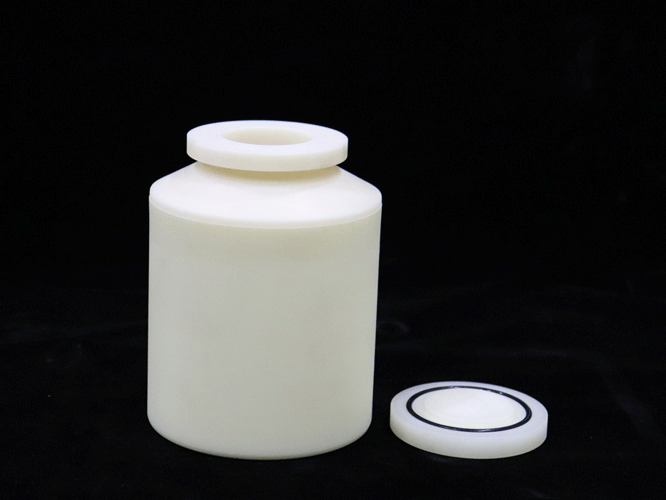
The jar body is the main chamber that holds the sample and media. With a nylon jar, the body is made from a polymer rather than a ceramic or metal. The user should check the inner surface for smoothness, cleanliness, and freedom from cracks or deep scratches. A smooth surface supports consistent media motion and easier discharge. A damaged surface can trap material and make cleaning less reliable. The jar should be checked after each run, particularly around the rim, base, and any molded features.
Lid, Closure, and Sealing
The lid and closure keep the charge inside the jar and limit dust or slurry loss. A secure closure is essential because the jar rotates during operation. The user should confirm that the lid seats correctly, that the sealing method suits the application, and that the jar is not overfilled. Overfilling reduces media motion and can put extra stress on the closure. Underfilling may reduce efficiency and increase wear from media sliding. The supplier's instructions should be followed for fill level, tightening, and any gasket or sealing component.
Grinding Media Compatibility
The jar must be matched with suitable grinding media. Media material, size, and shape should be chosen for the sample and for compatibility with nylon. Hard or abrasive media can wear the jar over time, so the user should monitor the inner surface and replace the jar when wear becomes significant. Media that is too large may not move well in a small jar; media that is too small may be difficult to separate after milling. The best choice is usually the one that gives the required fineness with acceptable wear, cleaning effort, and batch time.
Fit with the Roller Mill
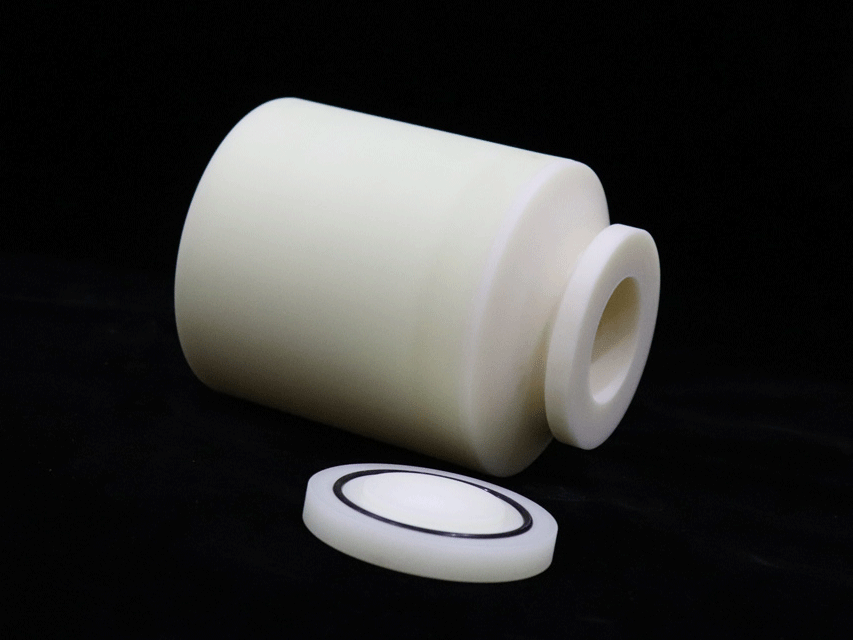
A roll mill jar must fit the roller spacing and support arrangement of the mill. The jar should rotate without excessive end play, slipping, or rubbing on fixed parts. The operator should confirm that the jar's outside diameter and length are suitable for the specific mill and that the jar can be loaded and removed safely. Because mill designs vary, compatibility should be checked against the supplier's information for the jar and the mill. A jar that is mechanically unsuitable should not be forced into service, even if its material and volume appear appropriate.
Main Types and Configuration Choices
The reference product is a nylon roll mill jar, so the main choices are not different milling mechanisms but different configurations of the same product concept. Buyers typically compare jar volume, closure style, wall construction, and compatibility with a particular roller mill. The exact available options should be confirmed on the product page, because model ranges and dimensions are supplier-specific.
Volume and Batch Scale
The first choice is the working volume. A small jar is useful for exploratory trials, expensive samples, or method development. A larger jar supports scale-up and repeatability checks, but it also requires a mill that can turn it safely and a media charge that fits the internal geometry. The working volume should be large enough for a representative sample but not so full that the media cannot move. The user should distinguish between nominal jar volume and practical working volume; the latter is always lower because space is needed for media and charge motion.
Closure and Handling Options
Different closures can affect sealing, opening, cleaning, and the risk of cross-contamination. A simple lid may be easy to handle, while a more secure closure may be preferred for fine powders or slurries. The user should consider how often the jar is opened, whether the sample is hazardous, and whether cleaning will be done manually or with a validated procedure. Handles, molded grips, or other handling features can improve safety, especially when the jar is loaded with dense media.
Material Grade and Application Fit
Nylon is a family of polymers, and the exact grade can influence stiffness, toughness, and chemical compatibility. The product page should be used to confirm the material specification and any stated restrictions. The jar should not be assumed to be suitable for every solvent, acid, base, or high-temperature process. If the application involves aggressive chemicals or elevated temperature, the user should request compatibility guidance from the supplier before use. This is especially important when the jar is part of a regulated or safety-critical process.
Key Performance Indicators and Selection Points
Milling Capacity and Working Efficiency
Capacity should be judged by useful working volume, not only by the jar's external size. A practical specification includes the amount of sample and media that can be loaded while leaving adequate free space. Efficiency depends on the match between jar size, media charge, sample load, and mill speed. A jar that is convenient to handle but too large for the available mill may run poorly. A jar that is too small may require many batches and increase variability. The right choice is the smallest jar that can deliver a representative sample at the required fineness without excessive runtime.
Contamination Control and Sample Purity
For many users, the main reason to choose a nonmetallic jar is contamination control. A nylon jar avoids the metal wear surfaces associated with some metal vessels, but it is not automatically contamination-free. Media wear, jar wear, residual cleaning agents, and airborne dust can all affect purity. The operator should use appropriate media, inspect the jar, and follow a cleaning procedure that is suitable for the sample. When trace analysis is important, a blank run or a cleaning verification step may be useful. The supplier should be consulted for material documentation if the application requires it.
Energy Use, Speed, and Repeatability
Energy use in roll milling is influenced by the mill, the jar mass, the media charge, and the runtime. A jar that is well matched to the mill can run smoothly and reduce unnecessary losses. Repeatability depends on consistent loading, consistent media, and a stable jar condition. Operators should record jar identity, media type, sample mass, rotation setting, and runtime. If a jar is replaced, the new jar should be checked against the old one for fit and working volume. Small differences in internal geometry or closure can change the result, so re-qualification may be needed after a jar change.
Cleaning, Maintenance, and Inspection
Nylon jars should be cleaned with methods that do not scratch or degrade the material. Abrasive cleaning tools should be avoided because scratches can trap particles and make the next batch harder to clean. The user should check for cracks, deformation, discoloration, and closure damage. Media should be inspected and replaced when worn or contaminated. Storage should protect the jar from impact and from contact with substances that could affect the polymer. A simple inspection log helps the laboratory detect wear before it affects a batch.
Documentation and Supplier Support
Purchasing a jar is easier when the supplier provides clear information on dimensions, material, compatible mills, and operating limits. The buyer should confirm that the jar is intended for the planned mill and that the closure is suitable for the sample. If the process must meet quality or safety requirements, the buyer should ask for available documentation rather than relying on general assumptions about nylon. The product page is the starting point; direct confirmation is appropriate for critical applications.
Applications and Selection Advice
Nylon roll mill jars are used in laboratories and small-scale processing where a closed, nonmetallic milling vessel is useful. Typical settings include mineral and ceramic sample preparation, pigment and coating development, chemical and materials research, and general powder mixing where cross-contamination must be controlled. They can also support educational demonstrations and method development because the jar is easy to handle and the roll mill motion is visible and understandable. The exact suitability for a given sample still depends on chemical compatibility, media choice, and operating conditions.
For selection, start with the application rather than the jar alone. Define the sample type, target fineness, batch size, and cleaning requirement. Then confirm that a nylon roll mill jar is chemically suitable and mechanically compatible with the available mill. Choose a working volume that allows proper media motion, select media that will not damage the jar excessively, and establish a cleaning and inspection routine. If the process is sensitive to contamination or heat, verify the material and operating limits with the supplier. Users who need a different wear resistance or chemical resistance should compare other jar materials rather than assuming that nylon is universal.
Common Questions Before Buying
Is a nylon jar suitable for every sample? No. Material compatibility and operating limits should be checked for each application, especially when solvents, acids, bases, or heat are involved.
Can the jar be used on any roll mill? It should be matched to the mill's roller spacing, support arrangement, and operating requirements. The supplier should confirm compatibility.
How full should the jar be? The jar needs free space for media motion. The exact loading practice should follow the supplier's guidance and be verified through trials.
When should the jar be replaced? Replace it when inspection shows cracks, deformation, deep scratches, or closure damage that could affect sealing, cleaning, or sample integrity.
Reference and Product Page
The product information for this article is based on the supplier's listing for the nylon roll mill jar. The same page should be used to confirm current dimensions, available configurations, and compatibility before purchase. No performance figures should be assumed without confirming them with the supplier.
Related Products
Get In Touch
Our professional team will reply to you within one business day. Please feel free to contact us!