
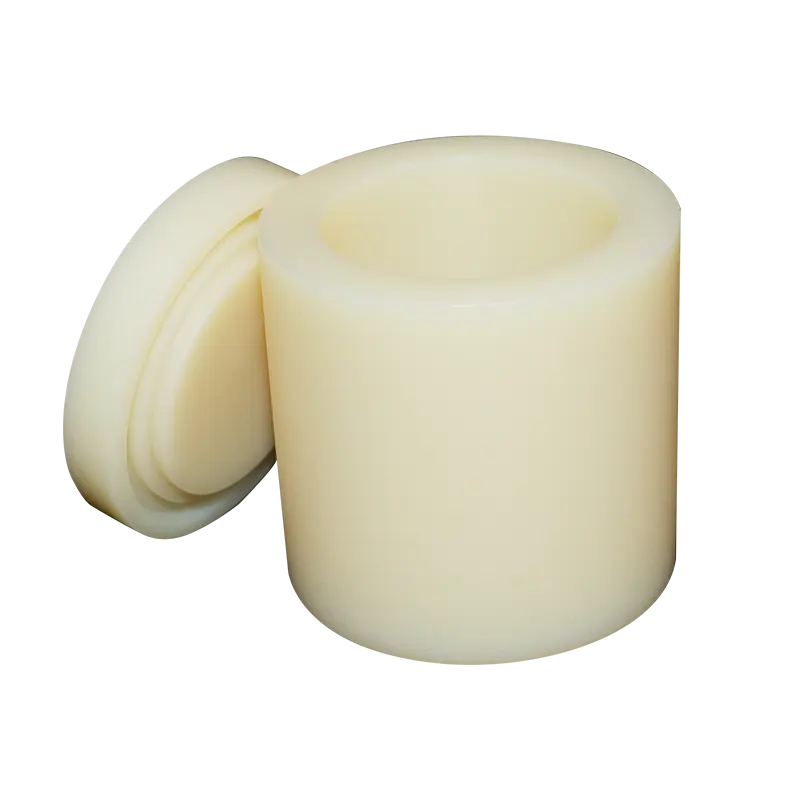
What is a Nylon Planetary Mill Jar? A Contamination-Free Grinding Container for Soft and Medium-Hard Materials

What is a Nylon Planetary Mill Jar?
At its core, a nylon planetary mill jar is a specialized grinding container crafted from high-quality engineering nylon (polyamide), designed to be used with planetary ball mills. Laboratories and research institutions use it to grind, mix, and homogenize soft to medium-hard materials, such as minerals, chemicals, plastics, and biological samples, without introducing metallic contamination. The nylon material combines excellent wear resistance, low friction, and chemical inertness, making it a preferred choice for applications where purity and sample integrity are paramount.
Core Function and Working Principle
The primary function of a nylon planetary mill jar is to serve as the grinding vessel in a planetary ball mill. The mill’s rotating plate (sun wheel) and the jars’ own rotation create a planetary motion: the jars revolve around the center while spinning on their own axes in opposite directions. This generates powerful centrifugal forces and Coriolis effects, forcing grinding balls (e.g., agate, zirconia, or steel) and the sample material to collide, shear, and friction at high speeds. The nylon jar absorbs and transfers these forces efficiently, reducing particle size down to the micron or even submicron level.
Key parameters influencing grinding efficiency include jar rotation speed, ball-to-sample weight ratio, grinding time, and the size of grinding media. For nylon jars, the relatively lightweight material helps reduce energy consumption and noise, while its slightly elastic nature can cushion the impact for softer samples, preventing overheating or degradation of heat-sensitive materials.
Types and Variants of Nylon Planetary Mill Jars
While the standard nylon planetary mill jar is widely used, several specialized variants exist to meet different requirements:
Standard Nylon Planetary Mill Jar
Made from pure polyamide, this jar offers good balance of toughness, impact resistance, and chemical resistance. It is suitable for most dry and wet grinding of non-abrasive materials like coal, limestone, herbal medicines, and polymers.
Tempered Nylon Planetary Mill Jar
Manufactured from modified MC nylon (cast nylon), the tempered nylon jar undergoes a heat treatment process that enhances its mechanical strength, hardness, and wear resistance. The bottom of the jar is designed with an R-arch for easier mounting, while the working surface features a concave-convex pattern connected by r-curved lines. This design improves ball movement and reduces noise. Compared to standard nylon, tempered nylon jars have a longer service life and lower weight, making them ideal for high-frequency or long-duration milling operations. They are commonly used as a replacement for manganese steel liners in small ball mills, offering significant cost savings and noise reduction.
Nylon Roll Mill Jar
Similar to the planetary jar but designed for roller ball mills, this variant is used on horizontal or rolling ball mills. It provides the same contamination-free grinding characteristics for soft materials in a different mill configuration.
Key Performance Indicators and Selection Criteria
When selecting a nylon planetary mill jar, consider the following factors:
- Capacity and Dimensions: Common capacities range from 50 mL to 5 L. Choose a jar size that matches your sample volume and mill type. Ensure the jar fits securely in the mill’s lock clamps.
- Maximum Speed: Nylon jars have a lower speed tolerance compared to metal or ceramic jars. Typical safe operating speeds for nylon jars on planetary mills is up to 300-400 rpm. Exceeding the limit may cause deformation or failure.
- Chemical Resistance: Nylon resists oils, alkalis, and many organic solvents, but is not suitable for strong acids or oxidizing agents. Verify compatibility with your sample’s chemical environment.
- Wear Resistance: While nylon is durable, it wears faster than materials like zirconia or agate when grinding hard or abrasive samples. Use tempered nylon for higher durability.
- Contamination Level: Nylon ensures no metal contamination, but it may introduce trace amounts of organic material (polyamide). For ultra-high purity, consider agate or zirconia jars.
- Weight and Noise: Nylon jars are significantly lighter than metal or ceramic jars, reducing the overall load on the mill and lowering noise levels during operation.
Application Areas and Selection Guidance
Nylon planetary mill jars are widely used in:
- Pharmaceutical and Biomedical Research: Grinding tablets, plant materials, animal tissues, and polymers without metal contamination.
- Chemical and Material Science: Mixing and grinding catalysts, pigments, dyes, and plastic additives.
- Geology and Mining: Preparing soft rock samples, minerals, and ores for analysis.
- Food and Cosmetics: Grinding grains, spices, and cosmetic ingredients where purity is critical.
For most soft to medium-hard materials, standard nylon jars are cost-effective. If you need higher durability and longer lifespan, or if you are milling slightly harder materials, choose tempered nylon jars. For applications requiring maximum wear resistance and zero organic contamination, consider other materials like zirconia or agate. Always match the jar material with the hardness and chemical properties of your sample.
References
Related Products
Get In Touch
Our professional team will reply to you within one business day. Please feel free to contact us!