

What is a Micro Airflow Pulverizer? An Ultrafine Grinding Equipment for Laboratory Powder Processing
Opening Definition
From a core perspective, a micro airflow pulverizer is a specialized laboratory-scale grinding device that utilizes high-velocity compressed air streams to reduce solid materials into ultrafine powders. Researchers and quality control engineers in pharmaceuticals, chemicals, ceramics, and advanced materials use it to achieve precise particle size reduction without generating excessive heat or introducing metallic contamination.
Core Functions & Working Principles
The fundamental function of this equipment is to transform coarse granules or soft-to-medium-hard materials into micron-level or sub-micron powders. Unlike traditional ball mills that rely on mechanical impact from grinding media, the micro airflow pulverizer operates on a dry, non-contact principle. Compressed air is injected through specially designed de Laval nozzles, creating supersonic jets that accelerate particles within a grinding chamber. As these high-speed particles collide with each other and the chamber walls, they fracture along natural cleavage planes, producing highly uniform, spherical-shaped fine powders.
The core working mechanism revolves around the interplay between fluid dynamics and particle mechanics. The system typically includes a cyclone separator or bag filter integrated directly into the unit to classify particles in real-time. Oversized particles are recirculated back into the grinding zone until they reach the target fineness. Key process parameters such as air pressure, feed rate, and nozzle configuration directly dictate the final particle size distribution (PSD), making the equipment highly tunable for different material characteristics.
Because the grinding energy is delivered entirely by the kinetic energy of the air stream rather than mechanical components, the process generates minimal thermal buildup. This makes it exceptionally suitable for heat-sensitive compounds, volatile substances, and materials prone to oxidation or moisture absorption during conventional milling. For broader ultrafine grinding applications, you may also explore our lab air jet mill series.
Key Components & Critical Technologies
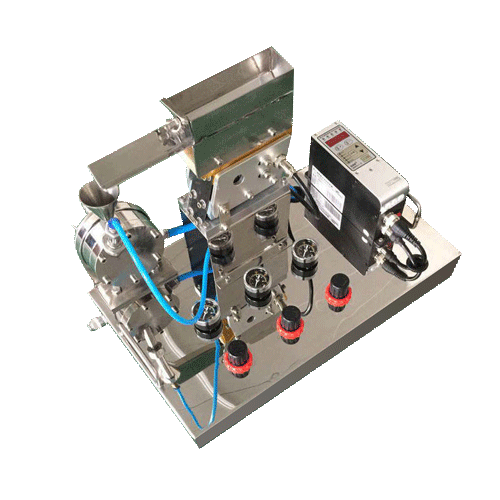
The efficiency of a micro airflow pulverizer depends on several precisely engineered components. The heart of the system is the multi-nozzle grinding head, which ensures optimal gas-solid mixing and maximizes collision frequency. High-pressure air regulation valves and precision flow meters allow operators to maintain stable operating conditions, preventing fluctuations that could affect reproducibility.
Another critical element is the integrated classification module. In laboratory models, this often takes the form of a built-in cyclone or a modular filter cartridge that separates finished powder from the exhaust stream. Modern units also feature transparent viewing windows and quick-release clamps, facilitating easy cleaning and preventing cross-contamination between experiments. Some advanced configurations include temperature monitoring sensors and vacuum-assisted feeding systems to handle hygroscopic or low-density materials effectively.
Key Performance Indicators & Selection Points
When selecting a micro airflow pulverizer for research or pilot applications, several technical metrics should be prioritized. First, consider the achievable fineness range; most laboratory-grade units can consistently produce powders between 1 and 10 microns, with some optimized models reaching below 1 micron. Second, evaluate the maximum batch capacity, which typically ranges from 50 grams to 2 kilograms per run, depending on the model.
Energy efficiency and operational noise are also important factors. Since the system relies on compressed air, matching the unit’s air consumption requirements to your facility’s compressor capacity is essential. Look for models equipped with variable frequency drives or proportional pressure controllers to optimize energy use. Additionally, assess the ease of disassembly and cleaning protocols; stainless steel or ceramic-lined chambers significantly reduce maintenance downtime and ensure compliance with GMP or ISO standards in regulated industries. For complementary size-reduction workflows, consider pairing this unit with a three roll mill for subsequent dispersion or paste processing.
Application Areas & Selection Advice
Micro airflow pulverizers are widely deployed across diverse sectors, including pharmaceutical formulation, pigment manufacturing, battery electrode material preparation, food additives, and nanomaterial synthesis. For academic researchers focusing on novel composite materials or catalysts, a compact benchtop model with adjustable air pressure and quick-change nozzles offers the flexibility needed for iterative testing. Industrial quality assurance labs, on the other hand, may benefit from units featuring automated feed control and integrated particle size analyzers for routine batch verification.
When choosing the right configuration, prioritize material compatibility first. If processing abrasive or corrosive substances, opt for ceramic or hardened alloy internal components. For thermolabile drugs or organic polymers, select models with optional cooling jackets or inert gas circulation capabilities. Always verify that the selected system aligns with your target PSD requirements and available utility infrastructure before procurement.
References
- Micro airflow pulverizer: View Product Details
- Lab air jet mill: View Related Equipment
- Three roll mill: View Related Equipment
Related Products
Get In Touch
Our professional team will reply to you within one business day. Please feel free to contact us!