

What Is a Micro Airflow Pulverizer? A Grinding Device for Ultrafine Powders
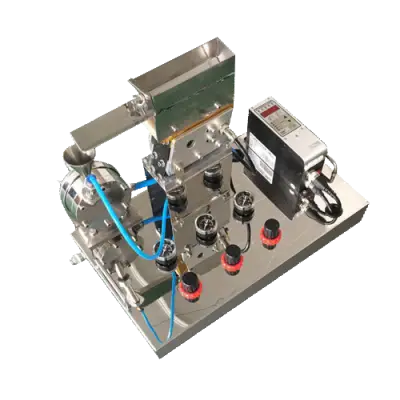
From a practical standpoint, a micro airflow pulverizer is a size-reduction device that uses a high-velocity gas stream, usually compressed air or an inert gas, to break friable solid particles into fine or ultrafine powder. It belongs to the air-jet milling family, a group of mills in which the grinding energy is carried by gas rather than by rotating media, hammers, or rollers. The feed material is accelerated inside a milling chamber, particles collide with one another and with the chamber walls, and a classifier separates sufficiently fine product from coarse material that needs more grinding. The result is a dry powder with a controlled upper particle size. In powder engineering, this type of equipment is chosen when a process needs fine comminution, low contamination from grinding media, and a repeatable particle-size distribution. The micro airflow pulverizer is therefore best understood as a precision particle-reduction system for dry materials, not simply as a fan or a blower attached to a chamber.
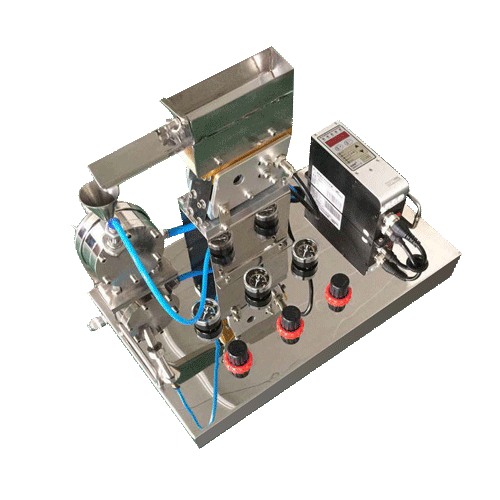
What Does a Micro Airflow Pulverizer Do?
The central job of the machine is to convert a coarse feed into a fine powder without introducing grinding balls or mechanical cutting tools into the grinding zone. A feeder delivers material at a controlled rate. Clean, dry gas enters the milling chamber through nozzles and expands to a high velocity. The gas stream entrains the particles, accelerates them, and creates repeated impacts. Breakage occurs when the kinetic energy of the particles is high enough to overcome the strength of the material. The gas then carries the smaller particles toward a classifier, while larger particles remain in the grinding zone for further reduction. Fine product leaves with the exhaust gas and is collected by a filter or cyclone system.
The word micro in the product name generally points to fine-grinding duty rather than one fixed output size. Actual performance depends on the material, the target particle size, the available gas pressure and flow, the classifier setting, and the overall configuration of the system. For this reason, a responsible selection process starts with a powder specification and a material sample, not with a single headline number. A machine that works well for a brittle mineral may behave differently with a soft chemical, a sticky organic solid, or a heat-sensitive ingredient.
How the Air-Jet Grinding Process Works
From Feed to Fine Powder
The process can be understood as a sequence of transport, acceleration, collision, classification, and collection. First, the feed system meters raw material into the milling chamber. The feed should be dry and free-flowing enough to enter the gas stream consistently. Second, nozzles convert pressure energy into gas velocity. The gas picks up particles and drives them into one another at high speed. Unlike a hammer mill, there are no fast-moving metal hammers striking the product, and unlike a ball mill, there are no grinding media wearing against the powder. The dominant breakage mechanisms are particle-to-particle impact and, in some designs, attrition near the chamber walls or nozzle jets.
Third, the mixture of gas and particles enters a classification zone. Fine particles are small enough to follow the gas flow out of the mill. Coarse particles are rejected and returned to the grinding zone. This internal recycling is important because it narrows the particle-size distribution. Fourth, the product is separated from the gas in a filter or collection system. The clean gas is then exhausted or, in an inert-gas design, returned to the process after suitable treatment. Each stage must work reliably; a weak feeder, a wet gas supply, or an overloaded filter can reduce performance even if the milling chamber itself is well designed.
The Classifier Makes the Difference
A classifier is the control point of an airflow pulverizer. It may be a rotating wheel, a dynamic separator, or another gas-driven separation element. The classifier applies a cut point: particles below a certain aerodynamic size pass, while larger particles are rejected. Rotor speed, gas flow, particle density, and particle shape all influence the actual cut. Increasing classifier speed usually pushes the cut finer, but it can also reduce capacity because more material is recycled. Reducing classifier speed may raise throughput but allow a coarser top size. The operator therefore balances fineness against production rate.
This is why two machines with similar chambers can produce different powders. The classifier, not the grinding chamber alone, determines how long coarse particles remain in the system. A well-matched classifier protects the final product from oversized particles while avoiding unnecessary overgrinding. In a quality-control context, the practical questions are not only what median size the mill can reach, but also how narrow the distribution is, how stable the top cut remains over time, and how quickly the system responds when the feed changes.
Why Gas Energy Matters
Because the grinding energy is carried by gas, the process has distinct advantages and limits. There is no grinding-media contamination, so the powder is not exposed to ceramic, steel, or zirconia balls. The gas can also help transport heat away from the grinding zone. However, it would be inaccurate to call every airflow pulverizer a completely cold process. Compression heats the gas before it enters the mill, and expansion cools it afterward. The actual temperature depends on the gas supply, insulation, feed temperature, and system design. Heat-sensitive materials should therefore be tested under realistic conditions rather than judged from a general claim.
Gas quality is equally important. Moisture can make fine particles stick to walls, filters, and classifier surfaces. Oil carryover from a compressor can contaminate the product. For oxidation-sensitive materials, an inert gas such as nitrogen may be used, but this changes the utility requirements and the safety review. The gas supply should be treated as part of the process equipment, not as an afterthought. Filters, dryers, pressure regulators, and flow meters all contribute to stable operation.
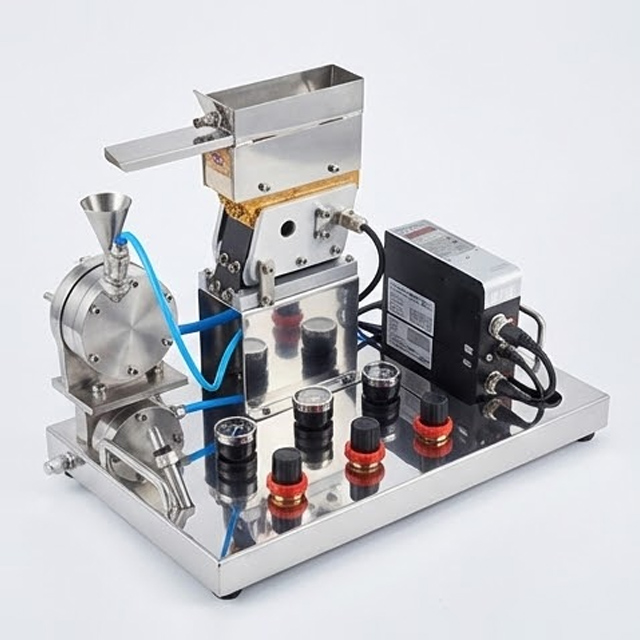
Core Components and Design Features
Feed System
A stable feed system is essential because an airflow pulverizer performs best at a steady solids load. The feed path may include a hopper, a screw feeder, a vibratory feeder, or a rotary valve, depending on the material and the scale of the equipment. The goal is to avoid flooding, surging, and inconsistent dilution of the gas stream. If the feed rate is too high, the chamber becomes crowded, particle acceleration drops, and the product becomes coarser. If the feed rate is too low, the mill consumes gas without achieving useful throughput. Good feed control also supports repeatability from batch to batch.
Milling Chamber and Nozzles
The milling chamber provides the volume in which gas and particles interact. Nozzle number, diameter, angle, and position influence the velocity field and the collision pattern. A well-designed chamber avoids dead zones where material can build up and promotes repeated particle interaction without excessive wall wear. Because the gas exits at high speed, nozzles and nearby surfaces are wear parts. Their condition should be checked during maintenance. A worn nozzle can change the gas flow pattern and shift the particle-size result even when the controller settings remain unchanged.
Classification and Collection
The classifier and the collection system work together to define product quality and recovery. The classifier sets the upper particle size, while the filter or cyclone determines how much fine product is captured. Fine powders can be difficult to collect, especially if they are cohesive or if the filter is undersized. Pulse cleaning, filter media selection, and proper housing design help maintain airflow. Product recovery is not only an economic issue; it also affects housekeeping and operator exposure. A collection system should be selected for the powder, not simply added after the mill is chosen.
Gas Supply and Controls
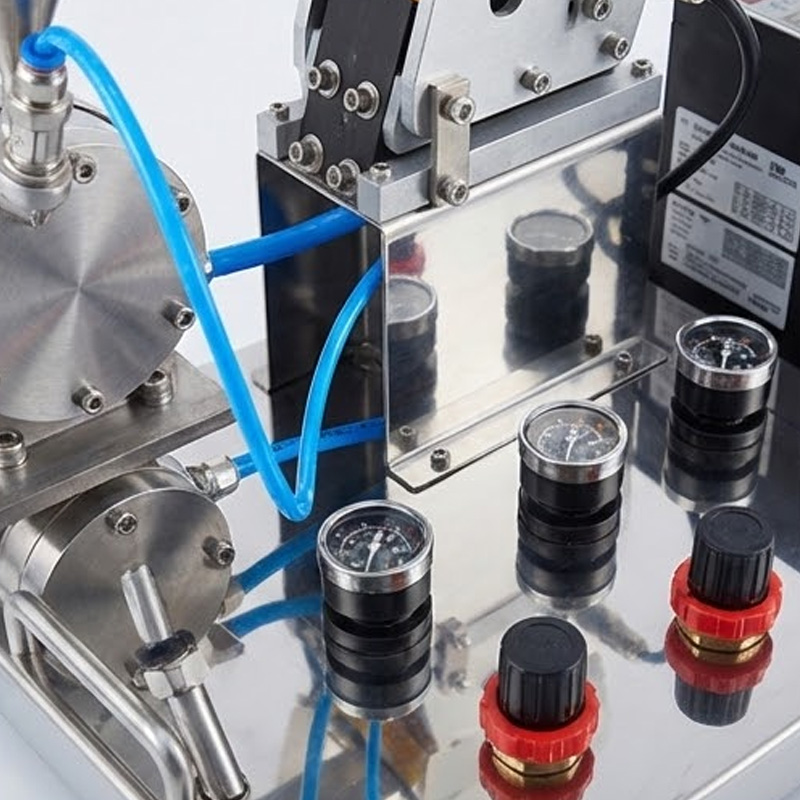
The gas supply package may include a compressor, aftercooler, dryer, filter, receiver, pressure regulator, and flow measurement. In an inert-gas system, additional monitoring and recirculation equipment may be required. Controls should make the key variables visible: feed rate, gas pressure, gas flow, classifier speed, filter differential pressure, and product discharge status. Alarms and interlocks matter because an airflow pulverizer combines pressure, fast-moving powder, and fine dust. A clear control philosophy makes the machine easier to operate and easier to troubleshoot.
Key Process Parameters That Shape the Final Powder
Gas Pressure and Gas Flow
Gas pressure and flow determine the available grinding energy. Higher pressure generally increases particle velocity and can improve breakage, but the relationship is not unlimited. Once the material reaches a certain fineness, additional energy may mostly increase gas consumption, heat, or wear. Gas flow must also match the classifier and the filter. If the flow is too low, fine product may not leave the chamber efficiently. If the flow is too high, the classification cut may shift or the filter may become overloaded. Pressure and flow should therefore be adjusted together, not treated as independent dials.
Feed Rate and Solids Loading
Feed rate controls the solids concentration in the gas stream. A low feed rate gives particles more opportunity to accelerate and collide, which can favor fine grinding, but it also raises energy consumption per kilogram of product. A high feed rate raises output but may reduce the frequency and energy of collisions. The optimum is usually found through testing. A practical operator watches for signs of overload: rising chamber pressure, coarser product, unstable classifier current, or poor filter recovery. The best feed rate is the highest rate that still holds the required particle-size specification.
Classifier Speed and Cut Point
Classifier speed is one of the most direct controls over fineness. Within the usable range, a higher speed rejects more particles and returns them to the grinding zone, producing a finer product. The cost is reduced capacity and higher specific energy. A lower speed allows more material to leave, which can increase output but widen the particle-size distribution. The correct setting depends on the target top size and the value of a narrow distribution. For some products, a slightly coarser but very stable powder is more useful than an aggressive fine cut that drifts during production.
Material Properties
Material behavior is never generic. Hardness affects wear and breakage. Toughness affects whether particles fracture or deform. Density affects how easily particles follow the gas and how they behave in the classifier. Shape affects packing, flow, and aerodynamic drag. Surface chemistry can make fine particles stick or agglomerate. Moisture can turn a free-flowing feed into a sticky mass. A material that grinds easily in a laboratory test may behave differently at production scale because the residence time and gas environment change. Testing should use a representative sample and a realistic target specification.
Moisture, Temperature, and Gas Quality
Dry gas is important for stable fine grinding. Moisture can cause caking in the feeder, blockage in the classifier, and blinding of filter media. Temperature control may be needed for heat-sensitive products, and condensation must be avoided when cold gas is used. For materials that oxidize, an inert-gas supply can reduce product degradation, but it also requires careful sealing and monitoring. Gas cleanliness protects both product purity and equipment life. A dryer and a high-quality filter are often more valuable than an oversized compressor.
Design Variations and Configuration Choices
Airflow pulverizers are built in several general arrangements, including spiral or loop designs, fluidized-bed opposed-jet designs, and other configurations that use gas jets to accelerate particles. The micro airflow pulverizer belongs to this broad family, and the exact arrangement should be confirmed from the product information for the specific model. The differences matter because each arrangement distributes gas, feeds material, and classifies powder in its own way. A laboratory or small-scale unit may emphasize flexibility, easy cleaning, and small sample consumption. A production unit may emphasize continuous operation, stable gas supply, wear protection, and integrated collection.
Configuration also affects maintenance. Units with easy access to the milling chamber, classifier, and filter are simpler to inspect. Replaceable wear liners can extend service life when abrasive minerals are processed. Quick-release clamps and smooth internal surfaces reduce cleaning time during product changes. For multi-product facilities, cleanability may be as important as grinding performance. A machine that is difficult to clean can create cross-contamination risk and long downtime. The selection process should therefore include a walkthrough of the actual equipment layout, not just a review of a capacity table.
What to Check When Selecting a Micro Airflow Pulverizer
Target Particle Size and Distribution
Begin with the powder specification. A single median size is not enough. Ask what top size is allowed, how narrow the distribution must be, and whether the specification is based on laser diffraction, sieving, or another method. Different methods can give different numbers, especially for fine or irregular particles. A supplier should be able to discuss the measurement basis as well as the target. If the product is used in a downstream process such as dispersion, compaction, or reaction, the relevant functional property may matter more than the median size alone.
Capacity and Production Rhythm
Capacity should be stated for a defined material and target fineness. A nominal throughput without those conditions is difficult to compare across suppliers. Consider whether the process is batch or continuous, how often the product changes, and how much material must be recovered at the end of a run. For small-scale work, sample loss can be significant. For production, downtime for cleaning and nozzle inspection can affect the real output. The correct question is not only how many kilograms per hour the mill can grind, but how many kilograms of conforming product it can deliver in a normal operating day.
Gas Consumption and Utilities
Airflow pulverizers require a substantial and stable gas supply. Check the required pressure, flow, dew point, and cleanliness. Confirm whether the site compressor can support the mill without affecting other equipment. If inert gas is needed, consider supply, recovery, and monitoring. Energy use is not limited to the mill motor; compressed-gas production is often the largest operating cost. A machine that appears efficient in the grinding chamber may be expensive if it demands excessive gas flow or a poorly matched pressure drop.
Material Contact and Contamination
Review the materials of construction for the feed path, chamber, classifier, filter housing, and discharge. Product purity requirements may call for stainless steel, specific liners, or non-metallic contact surfaces. Abrasive materials increase wear, so replaceable components should be accessible. Avoid assuming that a standard construction is suitable for every powder. A small amount of wear can change both the product quality and the maintenance interval. The selection discussion should include the expected service life of nozzles, liners, and filters.
Recovery, Cleaning, and Maintenance
Fine powders are difficult to handle, so recovery deserves attention. Ask how product is discharged, how filters are cleaned, and how the system is inspected. A filter with adequate area and a well-designed pulse-cleaning sequence can prevent pressure build-up and product loss. Cleaning between products should be practical, with access to surfaces that contact powder. Maintenance points should be reachable without dismantling the entire system. A simple, well-labeled layout often outperforms a more complex design that is hard to service.
Automation and Safety
Controls should support repeatable operation. Look for clear setpoints, trend data, and alarms for feed failure, low gas pressure, high filter differential pressure, and classifier faults. Safety considerations include dust exposure, pressure systems, noise, and the risk of combustible dust where applicable. Local requirements and material testing should guide the final design. Automation is not a substitute for a safe process; it should make the safe operating envelope easier to maintain.
Applications and Selection Advice
Micro airflow pulverizers are used where dry fine grinding and controlled particle size are important. Typical fields include chemical processing, pharmaceutical and nutraceutical preparation, food ingredients, mineral fillers, ceramics, battery materials, and other advanced powders. In each case, the value comes from combining fine size reduction with a dry collection route and low media contamination. The equipment is less suitable for sticky, moist, fibrous, or very ductile materials that do not fracture cleanly. It is also not a universal answer for every particle-size problem. A preliminary grinding test is usually the most reliable way to judge feasibility.
For research and development, choose a configuration that is easy to clean, uses modest sample quantities, and allows quick changes to gas pressure, feed rate, and classifier speed. For pilot or production work, prioritize stable gas supply, continuous feed, filter capacity, wear protection, and clear maintenance access. If the material is valuable, focus on recovery. If the material is abrasive, focus on liners and nozzle life. If the powder is heat-sensitive or oxygen-sensitive, focus on gas conditioning and system sealing. The micro airflow pulverizer product page is the appropriate place to confirm the available configuration and technical details for the specific unit.
Common Questions About Micro Airflow Pulverizers
Is a micro airflow pulverizer the same as a jet mill?
It belongs to the jet-milling family. The name emphasizes airflow and fine grinding, but the underlying principle is the same: gas accelerates particles, collisions cause breakage, and a classifier controls the product size. Different suppliers may use different names for similar equipment, so the technical configuration matters more than the label alone.
Can it grind any material?
No. It works best with dry, friable materials that fracture under impact. Sticky, moist, fibrous, or highly ductile materials can be difficult. Some materials can be processed with pretreatment or special operating conditions, but a feasibility test is needed before relying on the equipment for a new product.
Does the process produce heat?
The gas expands and can cool in the milling zone, but compression and system conditions can add heat elsewhere. The net effect depends on the installation. Heat-sensitive products should be tested with temperature monitoring, and the gas supply should be designed to avoid unwanted condensation or product degradation.
Why use an inert gas?
An inert gas can reduce oxidation or provide a controlled atmosphere for sensitive materials. It may also be relevant when dust safety requires oxygen limitation. The decision should follow material testing, local safety requirements, and a proper gas-system design.
How fine can it grind?
There is no single answer that applies to all materials. Fineness depends on the material, classifier, gas energy, feed rate, and target distribution. Instead of asking for a universal number, define the required top size and distribution, then confirm performance with a representative sample. A realistic test is more useful than a broad claim.
Final Selection Note
The most reliable way to select a micro airflow pulverizer is to connect the powder specification to the process variables. Define the material, the target particle size and distribution, the required throughput, the acceptable gas supply, and the cleaning and recovery needs. Then confirm the machine configuration and operating envelope with the supplier. Readers who need current product information can review the micro airflow pulverizer page and compare the available details against the application. A well-matched airflow pulverizer can deliver fine, dry powder with low media contamination, but the result depends on testing the material and designing the complete system around it.
Related Products
Get In Touch
Our professional team will reply to you within one business day. Please feel free to contact us!