

What Is a Laboratory Rod Grinder? A Lab-Scale Mill for Coarse-to-Fine Grinding
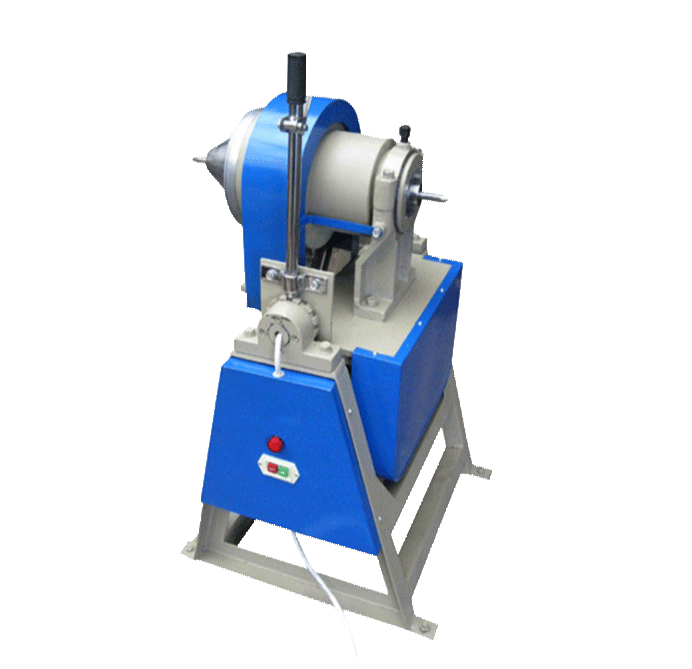
From a practical standpoint, a laboratory rod grinder is a small-scale milling machine that uses a rotating drum and a charge of grinding rods to reduce prepared samples into finer, more consistent particles. Laboratories in mineral processing, geology, metallurgy, ceramics, chemical engineering, and materials research use it to prepare samples for analysis, test grindability, compare process routes, and produce small batches of controlled feed for downstream work. Unlike a production rod mill, the laboratory version is designed around sample control, repeatability, cleaning, and operator access rather than tonnage.
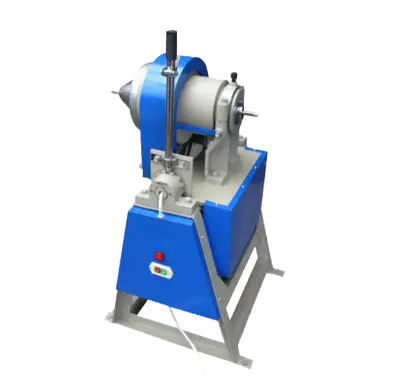
The equipment belongs to the broader family of tumbling mills, but it is not simply a ball mill with a different name. The grinding media are long rods rather than loose balls, and that geometric difference shapes the breakage mechanism, the particle-size distribution, and the kind of work for which the machine is best suited. The laboratory rod grinder product page provides a useful reference point for the machine discussed in this FAQ.
What Does a Laboratory Rod Grinder Do?
A rod grinder's central job is size reduction: it takes a feed material that may range from small chips to coarse sand and turns it into a finer product with a controlled top size. In a laboratory, that product may be needed for chemical assay, mineral liberation studies, sieve analysis, X-ray diffraction, microscopy, pellet preparation, or pilot-scale process development. The machine must therefore do more than break particles; it must do so in a way that the operator can repeat, document, and clean between samples.
This is why laboratory rod grinders are often treated as sample-preparation instruments rather than miniature production plants. A good laboratory unit lets the operator control the feed size, grinding time, rod load, and rotational speed, then recover the sample with minimal loss and minimal cross-contamination. Those requirements explain the emphasis on robust drum construction, accessible discharge arrangements, guarded drives, and controls that can be set precisely.
Core Functions and Working Principle
From Feed Material to Controlled Product
In a typical rod-grinding operation, the operator loads a measured quantity of material into a cylindrical drum together with a set of rods. The drum is closed and rotated. As it turns, friction and gravity carry the rod charge upward along the rising side of the shell. When the charge reaches a suitable angle, the rods tumble, cascade, and fall back onto the material bed. The particles trapped between rods, and between rods and the drum wall, are subjected to impact, compression, and attrition.
The result is a progressive reduction in particle size. Coarse particles are broken first because they are more likely to be caught between approaching rods or struck by a falling rod. As the sample becomes finer, the intensity of breakage decreases and the balance shifts toward surface attrition. This self-limiting behavior is one reason rod grinding can produce a relatively uniform product: the very coarse material is attacked preferentially, while already-fine particles are less likely to be over-ground.
Why Rods Behave Differently from Balls
The key difference is contact geometry. Balls meet each other and the feed at points, producing localized impact and a mixed breakage pattern. Rods meet along lines, so the force is distributed over a longer contact zone. In a tumbling rod mill, the rod charge also tends to remain parallel to the drum axis, creating a series of rolling and sliding contacts rather than a random cascade of independent grinding elements.
That line contact has practical consequences. It tends to produce a narrower particle-size distribution and fewer extreme fines, which is valuable when the downstream analysis requires representative coarse particles or when over-grinding would change the apparent mineralogy. It also makes rod grinding a useful bridge between crushing and fine milling: the machine can accept a relatively coarse feed and deliver a product that is ready for finer processing or direct testing.
Key Process Variables
Several variables determine what comes out of a laboratory rod grinder. Rotational speed controls the motion of the rod charge. Too low, and the rods may simply slide or barely lift, so grinding is slow and inefficient. Too high, and the charge may centrifuge against the shell, reducing the tumbling action that does the useful work. Between those extremes, the operator looks for a stable cascading motion that keeps the rods interacting with the material.
Rod load and rod size matter as well. A larger rod charge provides more contact points and greater grinding capacity, but it also consumes more power and leaves less room for the sample. Rod diameter affects the mass of individual rods and the size of the contact zones. Feed size should be compatible with the drum and rod spacing; a feed that is too coarse may bridge or resist engagement, while an oversized feed can slow the process and increase wear. Grinding time is the most direct control in batch work: longer time generally means a finer product, but the relationship is not linear, and excessive time can broaden the distribution or introduce contamination.
Fill volume is another practical variable. The drum needs enough material to form a bed through which the rods can act, but overfilling reduces the free path of the rods and can make the mill bog down. Discharge arrangement and drum material also matter, because they influence sample recovery, wear, and the risk of iron or other contamination. In a laboratory context, the best settings are usually established by a small designed experiment rather than by copying a production mill's operating point.
Core Components and Configuration Choices
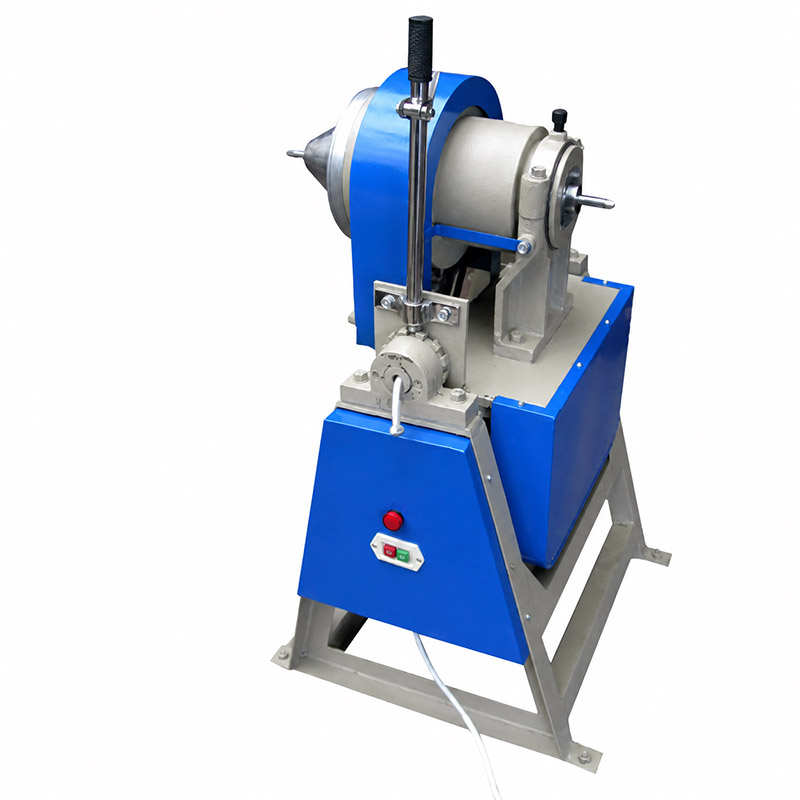
Laboratory rod grinders vary in detail, but most share a common functional architecture. The drum is the working chamber; the rod charge is the grinding medium; the drive and controls set the motion; and the frame, guards, and discharge system make the machine safe and practical to use. When comparing models, it helps to evaluate each subsystem rather than focusing only on the drum diameter or motor rating.
Drum, Liners, and Wearing Surfaces
The drum must be rigid enough to resist distortion under a moving rod load, and its inner surface must tolerate abrasion. Liners can protect the shell and, in some designs, help lift the charge. The choice of liner and drum material is a compromise between wear life, cost, cleanability, and contamination risk. A soft or coated surface may be easier to clean, but it may wear faster; a hard metal surface may last longer, but it can introduce metallic wear products into the sample.
For laboratory work, the inside geometry deserves close attention. Sharp corners, rough welds, and poorly matched joints can trap material and make representative recovery difficult. A smooth, accessible chamber with a well-designed discharge opening reduces sample hold-up and simplifies cleaning between batches. If the same mill is used for multiple materials, the ability to inspect and clean the chamber thoroughly is not a minor convenience; it is part of data quality.
Rod Charge and Media Selection
The rod charge is the heart of the machine. Rods should be straight, of consistent quality, and appropriate for the drum size. Bent or badly worn rods can jam, damage liners, or produce uneven grinding. The number and diameter of rods influence the balance between impact and attrition, the power draw, and the achievable product size. A laboratory may keep more than one rod set so that it can change the grinding intensity without changing the mill.
Media material also matters. The rods must be compatible with the sample chemistry and with the required contamination limit. For routine coarse grinding, a tough metallic rod may be acceptable. For trace analysis or chemically sensitive materials, the operator may need to consider alternative wear-resistant materials or a different mill altogether. The correct question is not simply "which rods are strongest?" but "which rods give acceptable wear life without compromising the sample?"
Drive, Controls, and Repeatability
The drive system determines whether the mill can hold a set speed under load and whether the operator can reproduce a run. Digital timers, speed displays, and guarded switches are basic expectations in a modern laboratory. More advanced controls may add programmable run profiles, but the essential requirement is stable, repeatable motion. A mill that slows noticeably as the rod charge tumbles will produce different results from one that maintains speed, even if the timer setting is identical.
Repeatability also depends on how the sample is loaded and unloaded. A written procedure should specify the feed mass, rod set, drum orientation, tightening method, and discharge technique. If those steps vary from operator to operator, the grinder's mechanical precision will not translate into comparable data. The control system should support this discipline, not replace it.
Discharge, Cleaning, and Containment
Sample recovery is a common source of error in laboratory milling. Material can remain in the drum, between rods, around the discharge throat, or on the frame. A practical rod grinder should therefore offer good access for inspection and cleaning, and it should minimize dead spaces where fines can hide. Dust containment is also important: dry grinding can generate fine airborne particles, so the working area should be designed for local exhaust ventilation or effective enclosure.
Where the product is sensitive to oxidation or moisture, the operator may need to consider how the mill is sealed and how quickly the sample can be recovered. These are not reasons to overcomplicate the machine; they are reasons to define the laboratory's requirements before purchase. A simple, well-sealed, easy-to-clean mill is often more useful than a complex unit that is difficult to validate.
Key Performance Indicators and Selection Points
Selecting a laboratory rod grinder is a process of matching the machine to the sample, the target product, and the laboratory workflow. Catalogs often emphasize one or two headline numbers, but the more useful evaluation considers several indicators together. The following points are a practical framework for comparing offers and for asking manufacturers the right questions.
Capacity, Sample Size, and Scale
The first question is whether the working chamber can hold a representative sample at the required feed size. A mill that is too small may force the laboratory to split samples excessively, increasing error. A mill that is too large may be difficult to clean and may require more material than the project can supply. The useful capacity is not just the drum volume; it is the mass of feed that can be ground effectively with the intended rod charge and still leave enough headspace for tumbling.
Laboratories should also think about scale-up. If the rod grinder is being used to develop a process, the results may later be compared with a larger mill. The laboratory procedure should record the variables that can be scaled: specific energy, feed size, product size, solids loading, and rod charge. A machine that allows those variables to be measured and controlled is more valuable than one that simply produces a fine powder.
Product Size and Particle-Size Distribution
Product size is usually reported as a top size, a median size, or a particle-size distribution. For rod grinding, the distribution is often as important as the median. A narrow distribution with limited fines may be desirable for mineral liberation studies, while a broader distribution may be acceptable for general sample preparation. The operator should ask how the product size responds to grinding time and speed, and whether the mill can achieve the required top size without excessive over-grinding.
It is also important to specify the measurement method. Sieve analysis, laser diffraction, and image analysis can give different pictures of the same powder. A responsible selection process uses the method that matches the downstream decision and asks for a demonstration or reference data where possible. A single "final fineness" claim without a method and a starting feed size is difficult to interpret.
Energy, Efficiency, and Throughput
In a laboratory, energy efficiency is often secondary to information quality, but it still matters. A mill that requires very long runs, or that draws heavily for a small product mass, slows the workflow and increases heat input. The operator should compare the specific grinding time and the power demand at a comparable product size. If the mill is used for many small batches, cycle time and cleaning time may matter more than the motor rating.
Throughput should be evaluated in the laboratory's own terms: batches per day, sample mass per batch, and turnaround between samples. A machine with a large drum but a difficult discharge may be slower in practice than a smaller, better-designed unit. The same logic applies to maintenance. Rods and liners wear, seals may need attention, and bearings and drives require service. A design that makes these tasks straightforward will reduce downtime and improve consistency.
Automation, Safety, and Maintenance
Automation can improve repeatability by controlling speed and time, but it cannot compensate for poor sample loading or a worn rod charge. The most useful automated features are the ones that remove ambiguity: a clear speed setting, a reliable timer, an emergency stop, and guards that prevent access to rotating parts. Interlocks and enclosed drives are valuable in a teaching or shared laboratory where users have different levels of experience.
Maintenance access deserves a place in the selection matrix. The operator should be able to inspect the drum, replace worn rods, check the drive, and clean the discharge area without dismantling the entire machine. Spare parts should be available, and the manufacturer should provide clear guidance on wear limits and safe operation. A laboratory rod grinder is a long-term instrument; ease of maintenance affects both safety and data quality.
| Feature | Laboratory rod grinder | Ball mill, for comparison |
|---|---|---|
| Grinding media | Long rods | Loose balls |
| Contact pattern | Line contact | Point contact |
| Typical strength | Controlled coarse-to-fine grinding | Flexible fine and ultrafine grinding |
| Size distribution | Often narrower, with fewer extreme fines | Can be broad, depending on media and time |
| Best laboratory role | Sample preparation and grindability testing | Fine milling, mixing, and mechanical activation |
Applications and Selection Advice
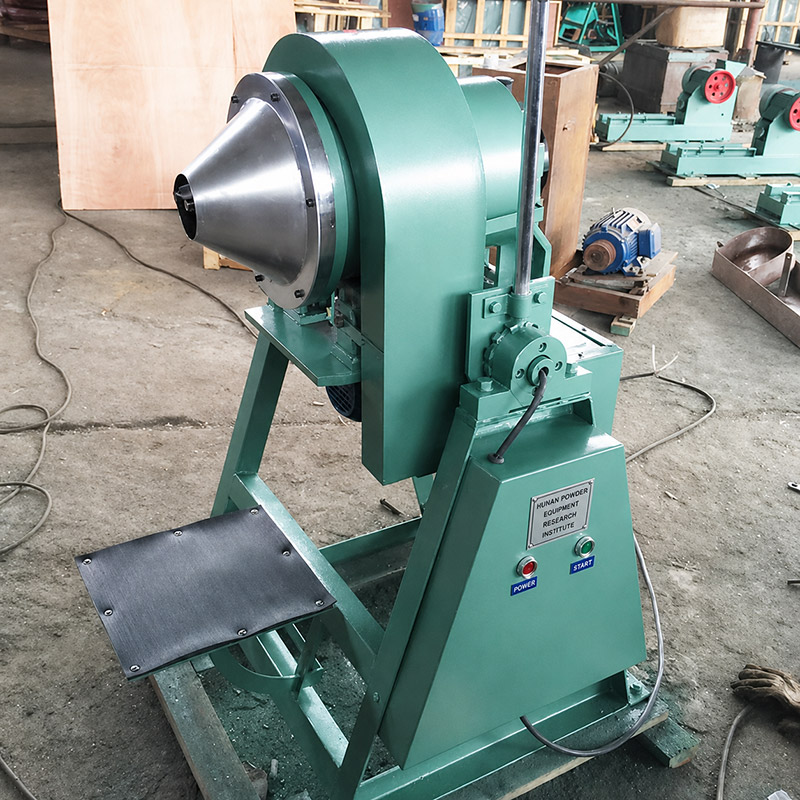
Laboratory rod grinders are used wherever a controlled, relatively uniform coarse-to-fine grind is needed. In mineral processing and geology, they prepare ore, rock, and drill-core samples for liberation analysis, assay, and grindability testing. In ceramics and glass, they can reduce clays, frits, and raw materials for formulation work. In metallurgy and materials research, they support slag, alloy, and powder studies where the starting structure must be preserved as much as possible. Environmental and agricultural laboratories may use rod grinding for soil, sediment, and aggregate preparation, provided the mill and procedure are appropriate for the required analysis.
The machine is not the best choice for every laboratory. If the target is sub-micron or very fine grinding, a planetary ball mill, stirred media mill, or jet mill may be more appropriate. If the sample is fibrous, sticky, or heat-sensitive, the grinding mechanism and residence time must be reviewed carefully. If cross-contamination is critical, the wetted materials and cleaning procedure become primary selection criteria. Rod grinding occupies a useful middle ground: it can accept a coarser feed than many fine mills and can produce a more controlled product than a simple crusher.
How to Choose the Right Configuration
For a laboratory buying its first rod grinder, the most reliable approach is to start with the sample and work backward. Define the feed size, the required product size, the mass per batch, the number of batches per week, and the acceptable contamination level. Then consider the available floor space, the power supply, the noise level, and the ventilation. These practical constraints often narrow the choice more effectively than a long list of optional features.
- Sample-driven choice: confirm that the drum and rod charge can handle the top size and mass of the actual material, not just a representative "typical" feed.
- Analytical-driven choice: match the mill to the downstream method, especially when over-grinding or metal contamination would invalidate the result.
- Workflow-driven choice: prioritize easy discharge, fast cleaning, and safe access if many small batches are planned.
- Scale-up-driven choice: record speed, time, rod load, and energy so that results can be compared with larger tests.
It is also wise to request a trial or a demonstration with the actual material. A short test can reveal whether the feed bridges, whether the product meets the target, and how long cleaning takes. If a trial is not possible, ask for the manufacturer's recommended procedure and discuss the assumptions behind it. The goal is not to find the largest or most powerful machine, but the one that produces defensible data with the least operational friction.
Finally, consider the full life of the instrument. Rods and liners are consumables; their cost and availability should be part of the budget. Training and documentation matter as well, because a shared laboratory depends on consistent operation. The laboratory rod grinder product page can serve as a starting point for confirming the available configuration, but the final choice should be based on the laboratory's own samples and requirements.
Where to Learn More
The product page linked above is the best place to confirm the current configuration, available accessories, and manufacturer guidance for a laboratory rod grinder. Before ordering, prepare a short sample brief that states the material type, feed size, target product size, batch mass, and contamination limits. That information lets the supplier recommend a suitable drum, rod charge, and operating procedure, and it gives the laboratory a clear basis for accepting the machine after installation.
Related Products
Get In Touch
Our professional team will reply to you within one business day. Please feel free to contact us!