

What is a Laboratory Cone Ball Mill? A Fine Grinding Equipment Used for Mineral Analysis and Sample Preparation
Opening Definition
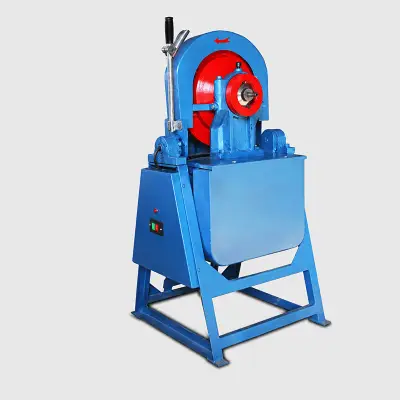
At its core, the Laboratory Cone Ball Mill is a specialized fine grinding device widely utilized in metallurgical, geological, chemical, and materials research laboratories. It is primarily engineered to crush and grind ore samples into ultra-fine powders for subsequent analytical processes, such as flotation testing, chemical composition analysis, and phase identification. Unlike conventional cylindrical ball mills, its unique conical geometry enables efficient size reduction while inherently minimizing over-grinding, making it an indispensable tool for accurate laboratory-scale sample preparation.
Core Functions & Working Principles
The fundamental function of this equipment is to transform coarse solid particles into uniformly fine powders through mechanical impact and attrition. The working mechanism relies on a rotating conical drum partially filled with grinding media, typically steel or ceramic balls. As the drum rotates, centrifugal force lifts the media to a certain height, after which they cascade down under gravity, continuously impacting and abrading the feed material. The conical shape plays a critical functional role: larger grinding media naturally settle at the wider feed end to deliver high-impact crushing, while smaller media migrate toward the narrower discharge end for finer grinding. This self-classifying effect acts like a built-in classifier, ensuring that only adequately ground particles exit the mill, thereby reducing energy waste and preventing excessive pulverization.
The grinding process can be conducted in both dry and wet modes, depending on the specific sample requirements and downstream applications. Key operational parameters include rotational speed, media-to-material ratio, and residence time. Adjusting these factors directly influences the final particle size distribution, with standard models typically achieving discharge fineness around -0.074 mm (200 mesh). The hollow shaft design at both ends facilitates flexible feeding and discharging, often integrated with tilting mechanisms for controlled material flow. Historical developments have progressively refined transmission stability and liner accessibility, resulting in modern units that offer continuous operation capabilities and significantly reduced maintenance downtime.
Key Components & Technical Features
The laboratory cone ball mill consists of several critical components that ensure precision, durability, and ease of operation. The main body features a replaceable wear-resistant liner inside the conical drum, effectively protecting the outer shell from abrasion during prolonged operation. The drive system typically comprises a high-efficiency motor, precision reducer, and large gear, engineered for stable transmission and minimal vibration. Modern intelligent variants integrate programmable control panels with LCD displays, allowing users to preset operating time, rotation speed, and tilt angles for automated feeding and discharging. Additionally, the compact, lightweight frame design eliminates the need for heavy concrete foundations, making the unit highly portable and straightforward to install in standard laboratory settings.
Key Performance Indicators & Selection Points
When evaluating and selecting a laboratory cone ball mill, buyers should focus on several core performance metrics. Processing capacity generally ranges from 200 grams to 4 kilograms per batch, aligning perfectly with small-scale experimental workflows rather than industrial production. Fineness control is a primary indicator, with optimized conical designs capable of producing consistent particle sizes down to 0.074 mm efficiently. Energy consumption is notably lower compared to traditional cylindrical mills due to the self-classifying action, which maximizes useful grinding work while minimizing redundant collisions.
Automation levels vary across models; advanced configurations offer programmable timers, variable frequency drives, and motorized tilt controls, significantly reducing manual labor and improving experimental reproducibility. Maintenance accessibility, such as quick-release liner clamps, sealed lubrication points, and modular electrical enclosures, should be prioritized to ensure long-term reliability in high-frequency lab environments. Always verify that the selected model supports your required feed size (typically ≤3 mm) and desired output characteristics. Matching the drum volume and motor power to your specific throughput needs will prevent bottlenecks and ensure optimal grinding efficiency.
Application Areas & Selection Advice
This equipment is extensively applied in mineral processing research, academic institutions, quality control laboratories, and industries dealing with ceramics, coal, refractories, and chemical materials. For researchers conducting ore beneficiation tests, pairing the mill with compatible flotation machines ensures consistent and representative sample preparation. Laboratories focusing on sensitive or high-purity materials may opt for ceramic-lined or agate-media versions to prevent metallic contamination, while those requiring higher throughput might choose larger drum capacities (e.g., XMQ-240×90 or XMQ-350×160 models). Always match the operational mode (dry/wet) and automation level with your specific research protocols. Consulting detailed technical datasheets and verifying spatial constraints will streamline the procurement process and optimize laboratory workflow efficiency.
References
- Laboratory Cone Ball Mill Product Page: https://www.planetaryballmills.com/pt/products/grinding-series/other-grinding-equipment/laboratory-cone-ball-mill.html
- Three Roll Mill Overview: https://www.planetaryballmills.com/products/grinding-series/other-grinding-equipment/three-roll-mill.html
- Micro Airflow Pulverizer Technology: https://www.planetaryballmills.com/products/grinding-series/other-grinding-equipment/micro-airflow-pulverizer.html
Related Products
Get In Touch
Our professional team will reply to you within one business day. Please feel free to contact us!