

What is a Lab Vibration Ball Mill? A Specialized Device for Ultrafine Grinding of Samples in Laboratories
What is a Lab Vibration Ball Mill?
At its core, a lab vibration ball mill is a high-efficiency grinding device designed for the preparation of small to medium quantities of powder samples in research and quality control laboratories. It uses high-frequency vibratory motion to rapidly grind, mix, and homogenize a wide range of materials, from hard minerals to soft organic substances, achieving particle sizes down to the micron or even submicron range.
Unlike traditional tumbling ball mills that rely on rotation, the vibration ball mill generates intense mechanical energy through rapid oscillation, making it ideal for fast, reproducible, and contamination-free sample preparation.
Core Function and Working Principle
The lab vibration ball mill transforms coarse or granular materials into fine powders through a combination of impact, friction, and shear forces. The core working mechanism involves a high-frequency vibrating drive that agitates one or more grinding jars along a three-dimensional path. Inside each jar, grinding balls (typically made of zirconia, agate, or stainless steel) collide vigorously with the sample, crushing and grinding it to the desired fineness.
Key process parameters include:
- Vibration frequency and amplitude: Higher frequencies increase grinding intensity, but may cause excessive heat or material sticking.
- Grinding ball size and material: Larger balls provide more impact energy for coarse grinding; smaller balls enhance shear for fine grinding.
- Grinding time: Typically 1–10 minutes for most materials, depending on hardness and target fineness.
- Ball-to-powder ratio: Usually 4:1 to 10:1 by weight, influencing grinding efficiency and final particle size.
Because the motion is three-dimensional (up-down, left-right, forward-backward), the grinding media experience chaotic, high-energy collisions, ensuring uniform particle size reduction and minimal dead zones.
Key Components and Technologies
While the lab vibration ball mill is a compact instrument, its performance depends on several critical components:
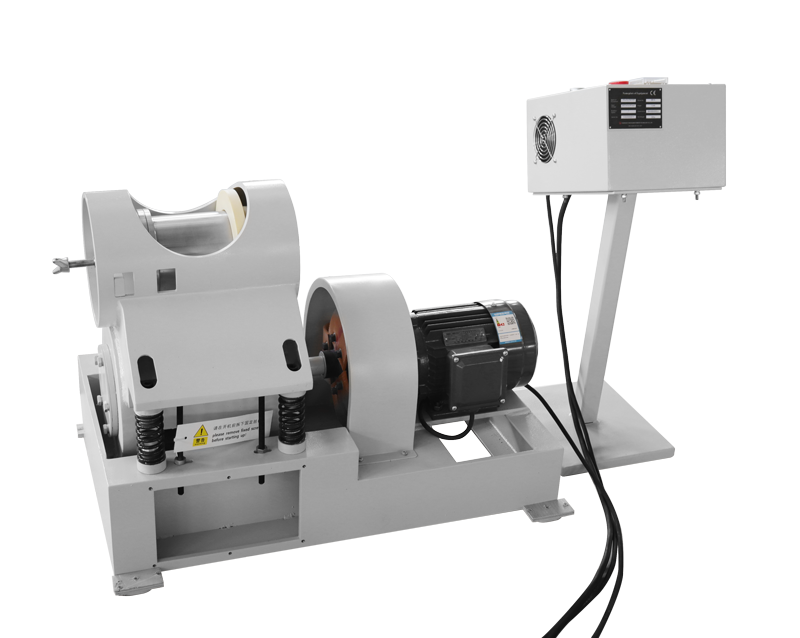
- Vibration drive system: Typically an eccentric shaft or electromagnetic vibrator that generates controlled oscillations. A well-designed drive ensures stable amplitude and frequency over long periods.
- Grinding jar and lid: Available in various materials (zirconia, tungsten carbide, stainless steel, agate) to match sample hardness and avoid contamination. Airtight sealing allows grinding in inert atmospheres or under vacuum.
- Clamping mechanism: Quick-lock systems that securely hold jars in place, preventing imbalance during high-speed vibration.
- Control unit: Digital timers, speed regulators, and programmable cycles for reproducible results. Some models offer touch-screen interfaces and data logging.
Compared to planetary ball mills, vibration ball mills offer faster grinding for small batches and are easier to clean, making them particularly suitable for routine sample preparation in spectroscopy, chromatography, and powder analysis.
Key Performance Indicators and Selection Criteria
When choosing a lab vibration ball mill, consider the following metrics:
- Processing capacity: Most lab models handle 1–10 grams per batch, with jar volumes from 5 mL to 50 mL.
- Final fineness: Typically < 5 µm, with some models achieving < 1 µm for soft materials.
- Vibration frequency: Ranges from 1200 to 1800 rpm (or 20–30 Hz). Higher frequencies enable faster grinding but may require cooling.
- Noise level: Well-designed mills operate below 70 dB, but some high-power models can be louder.
- Ease of maintenance: Look for accessible jar clamps, replaceable seals, and simple cleaning procedures.
- Automation: Programmable timers and memory functions enhance reproducibility and convenience.
For labs that process multiple samples daily, a mill with a quick-change jar system and high throughput is essential. For research requiring ultra-fine particles, a model with adjustable frequency and amplitude offers greater control.
Applications and Selection Advice
Lab vibration ball mills are widely used in:
- Materials science (ceramics, metals, polymers)
- Pharmaceuticals (active ingredients, excipients)
- Geology and mining (ore, minerals, soil)
- Food and agriculture (grains, seeds, plant tissues)
- Environmental analysis (soil, fly ash, sediment)
For routine quality control, a standard model with fixed frequency and a single jar is sufficient. For R&D labs that need to process various materials, choose a model with interchangeable jar materials and adjustable settings. If you require grinding under inert gas or vacuum, ensure the mill supports sealed jars with gas ports. Always consider the after-sales support and availability of spare parts from the manufacturer.
For more details, visit the lab vibration ball mill product page or explore the full vibration ball mill series.
Related Products
Get In Touch
Our professional team will reply to you within one business day. Please feel free to contact us!