

What is a Lab Jaw Crusher? A Primary Crushing Device for Hard and Brittle Materials in Laboratories
What is a Lab Jaw Crusher? A Primary Crushing Device for Hard and Brittle Materials in Laboratories
At its core, a lab jaw crusher is a specialized primary crushing device used in laboratories to reduce hard and brittle bulk materials into smaller, manageable particles. It is an essential tool for sample preparation in industries such as mining, metallurgy, geology, ceramics, and construction materials. By applying compressive force, the lab jaw crusher efficiently breaks down materials like ores, rocks, coal, slag, and glass into uniform fragments suitable for subsequent analysis or further grinding.
Core Function and Working Principle
The fundamental function of a lab jaw crusher is to transform coarse feed material (typically up to 60–95 mm in size) into a fine product with a final particle size down to approximately 1 mm. The working principle is based on the mechanical process of compression and shearing between two jaw plates: one fixed (stationary) and one moving (oscillating).
As the motor drives the eccentric shaft via a belt and pulley, the movable jaw moves in a complex three-dimensional motion toward the fixed jaw. This action creates a crushing chamber where materials are repeatedly squeezed, split, and bent until they are small enough to exit through the preset gap. The gap width can be adjusted to control the final particle size, typically offering 10 different settings for precise output. The entire process is enclosed, minimizing dust and noise, making it suitable for clean laboratory environments.
Key Components and Material Options
Crushing Jaws
The jaw plates are the key wear parts. They are available in various materials to match different sample hardness and contamination requirements:
- High Manganese Steel (Mn13): Excellent toughness and wear resistance, ideal for hard and abrasive ores.
- Stainless Steel: Suitable for samples requiring corrosion resistance or low metal contamination.
- Tungsten Carbide: Ultra-hard material for extremely hard samples like ferroalloys, but more brittle.
- Zirconia: Used for ceramic and high-purity materials to avoid metallic contamination.
Drive and Adjustment Mechanism
The eccentric shaft and double eccentric adjustment system allow easy zero-point calibration and gap width setting. The robust drive system (up to 2.2 kW) ensures high throughput even with tough materials. Modern designs incorporate foam-filled side walls for sound insulation, creating a comfortable working environment.
Key Performance Indicators and Selection Guide
When selecting a lab jaw crusher, consider the following parameters:
- Feed Size: Maximum input dimension (e.g., 60 mm or 95 mm). Ensure it matches your sample size.
- Throughput: Typically 140–200 kg/h for lab models. Higher throughput suits larger volume processing.
- Final Fineness: Usually adjustable from 1–15 mm gap. Some models achieve d50 < 1 mm.
- Power and Motor: 1.1–2.2 kW motors provide sufficient force for hard materials.
- Cleaning and Maintenance: Removable jaws and dust exhaust channels simplify cleaning between samples.
- Vacuum or Dust Collection: Integrated dust exhaust ports allow connection to a vacuum system for dust-free operation.
For most lab applications, a model with adjustable gap, multiple jaw materials, and easy cleaning is recommended. If you need to further reduce particle size to sub-millimeter levels, consider combining the jaw crusher with a disc mill or other fine grinding equipment.
Application Areas and Selection Advice
Lab jaw crushers are widely used in:
- Mining and Mineral Processing: Crushing ore samples for elemental analysis.
- Geology and Earth Sciences: Preparing rock and soil specimens for petrographic study.
- Metallurgy and Materials Science: Breaking scrap metal, alloys, and composites.
- Ceramics and Glass: Reducing raw materials like feldspar, quartz, and cullet.
- Coal and Chemical Industry: Sample preparation for calorific value or composition testing.
For laboratories processing a wide variety of materials, a model with interchangeable jaw plates (e.g., stainless steel, manganese steel, tungsten carbide) offers maximum flexibility. If you primarily handle soft or brittle materials, a standard manganese steel jaw set is sufficient. For high-purity applications, choose zirconia or tungsten carbide jaws to avoid contamination.
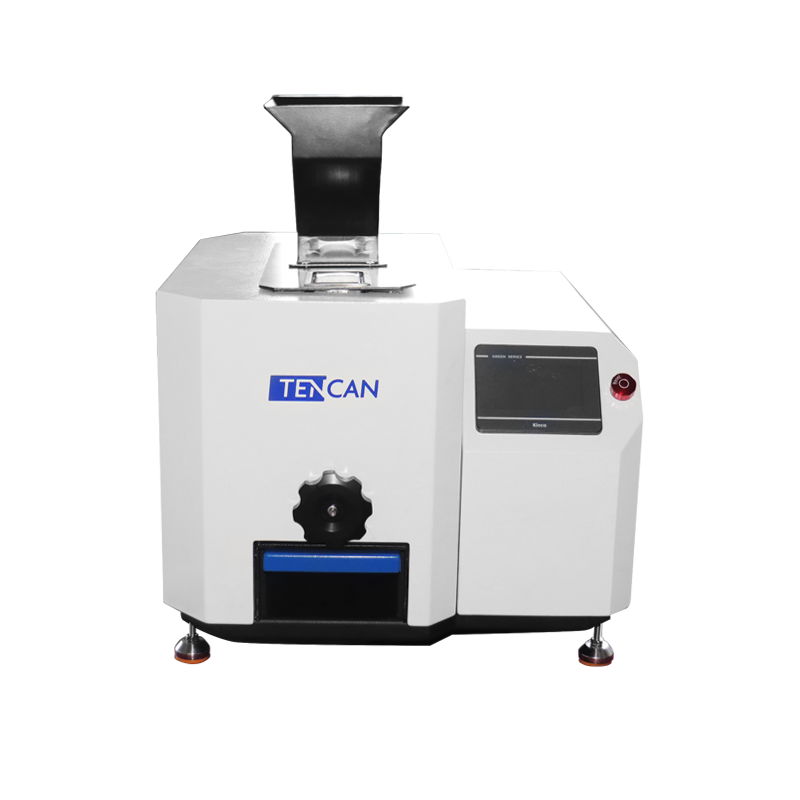
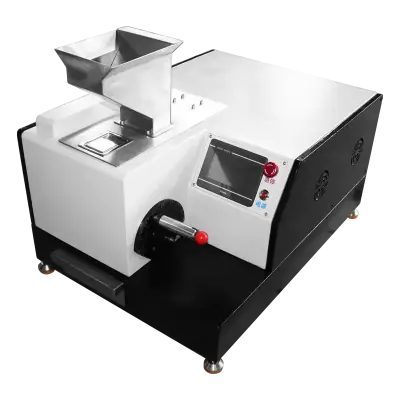
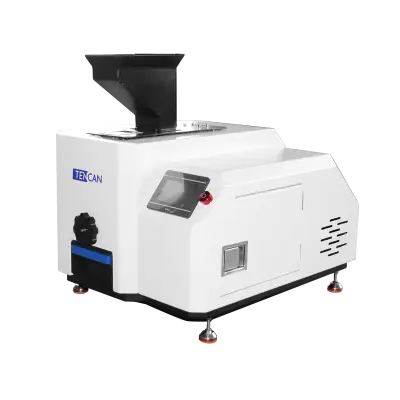
For more details on the lab jaw crusher and other crushing equipment, visit the lab jaw crusher product page. You can also explore related equipment like the Double Roll Crusher and Teeth Roll Crusher for different crushing needs.
References
Related Products
Get In Touch
Our professional team will reply to you within one business day. Please feel free to contact us!