
What is a Horizontal Screw Belt Mixer? An Efficient Mixing Equipment for Powder and Granule Blending

What is a Horizontal Screw Belt Mixer?
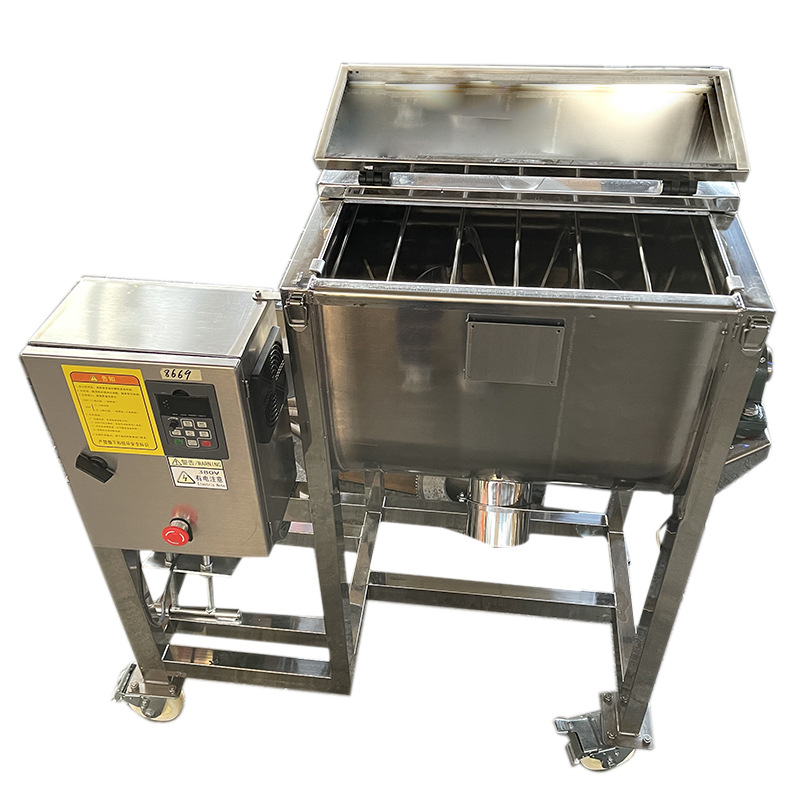
At its core, a Horizontal Screw Belt Mixer is a specialized blending machine that industries such as chemical processing, food manufacturing, pharmaceuticals, and building materials use to achieve uniform mixing of dry powders, granules, and occasionally small amounts of liquid additives. The equipment features a horizontal trough or U-shaped container with a rotating ribbon-shaped agitator that moves material both axially and radially, ensuring thorough homogenization in a relatively short time.
Core Function and Working Principle
The primary function of the Horizontal Screw Belt Mixer is to transform loose, bulk materials into a consistent, homogeneous mixture. The core working principle relies on the synchronized rotation of the spiral ribbon blades. The outer ribbon pushes material from one end of the trough to the other, while the inner ribbon moves material in the opposite direction. This counter-flow motion creates intense shear and convection, effectively breaking up agglomerates and distributing particles evenly.
Key operating parameters that influence the final product quality include the rotational speed of the agitator, the filling volume (typically 40%–70% of the total capacity), the mixing time, and the design of the ribbon (pitch, width, and clearance from the trough wall). For applications requiring the addition of liquids, spray nozzles can be installed to ensure uniform coating or wetting of the powder.
Core Components and Key Technologies
Although the Horizontal Screw Belt Mixer is a single-type design, it consists of several critical components:
- Mixing Trough: Usually made of stainless steel or carbon steel, with a U-shaped or circular cross-section to minimize dead zones.
- Ribbon Agitator: The helical ribbon blades are welded to a central shaft. The outer ribbon and inner ribbon have opposite spiral directions to create the axial back-and-forth movement.
- Drive System: An electric motor connected to a gearbox or directly to the shaft via a coupling, often with variable speed control for adjusting the mixing intensity.
- Discharge Valve: Typically located at the bottom center of the trough, can be manual, pneumatic, or hydraulic for quick and clean emptying.
- Sealing Mechanism: End seals and lid seals prevent dust leakage and contamination, especially important for fine powders or hazardous materials.
Key Performance Indicators and Selection Guide
When selecting a Horizontal Screw Belt Mixer, consider the following performance metrics:
- Working Capacity: Ranges from small laboratory units (e.g., 10 liters) to large industrial models (e.g., 10,000 liters). Choose based on your batch size and production throughput.
- Mixing Uniformity: Typically measured by the coefficient of variation (CV%), with high-quality mixers achieving CV below 5% for most free-flowing powders.
- Energy Efficiency: The power consumption depends on the bulk density of the material, the agitator speed, and the fill level. Variable frequency drives can optimize energy use.
- Material of Construction: Stainless steel (304 or 316) is recommended for food, pharmaceutical, and corrosive applications; carbon steel is suitable for general industrial use.
- Automation Level: Options include manual controls, PLC-based timers, and fully integrated systems with data logging for batch consistency.
- Maintenance Convenience: Look for features like hinged covers, easy-access discharge valves, and CIP (clean-in-place) nozzles for quick cleaning between batches.
Application Fields and Selection Advice
Horizontal Screw Belt Mixers are widely used in:
- Chemical Industry: Blending of fertilizers, pigments, detergents, and plastic compounds.
- Food & Beverage: Mixing of flour, spices, seasoning blends, powdered milk, and instant drink mixes.
- Pharmaceuticals: Homogenizing active pharmaceutical ingredients (APIs) with excipients, granulation before tableting.
- Building Materials: Production of dry mortar, gypsum, putty powders, and refractory materials.
- Animal Feed & Pet Food: Uniform distribution of vitamins, minerals, and additives in feed premixes.
For small-scale R&D or pilot batches, a compact laboratory model is recommended. For continuous large-scale production, consider a high-capacity industrial mixer with automated discharge and cleaning systems. If your materials are sticky or tend to agglomerate, choose a mixer with a tighter ribbon clearance and optional liquid spray system.
References
For more details, please visit the official product page: Horizontal screw belt mixer. Related mixing equipment: V-type mixer, Double cone mixer, 3D mixer, Trough mixer.
Related Products
Get In Touch
Our professional team will reply to you within one business day. Please feel free to contact us!