

What is a Horizontal Screw Belt Mixer? A Professional Mixing Equipment for Homogeneous Blending of Powders and Granules
What is a Horizontal Screw Belt Mixer?
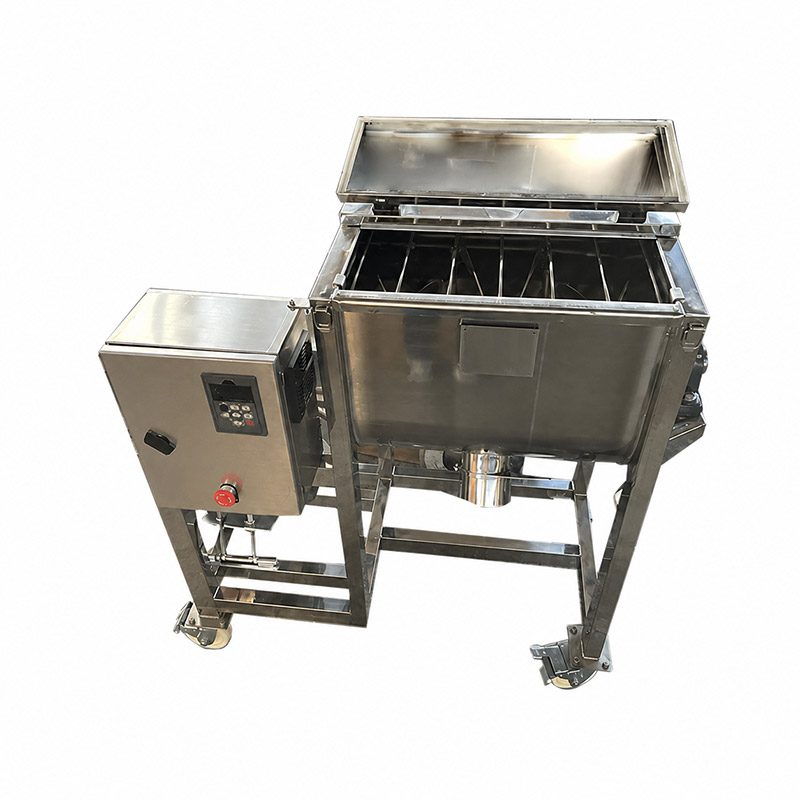
At its core, a horizontal screw belt mixer (also known as a ribbon mixer) is a specialized blending equipment designed for the efficient and homogeneous mixing of dry powders, granules, and slightly cohesive materials. Industries such as chemical processing, pharmaceuticals, food production, ceramics, and powder metallurgy rely on it to achieve consistent batch-to-batch uniformity. The device employs a horizontal U-shaped trough and a rotating helical ribbon assembly to gently yet thoroughly combine multiple components, eliminating segregation and ensuring each particle is evenly distributed.
Core Function and Working Principle
The fundamental function of a horizontal screw belt mixer is to transform separate feed materials into a fully blended, uniform mixture. The machine consists of a horizontal trough, a central shaft, and a pair of helical ribbons (inner and outer) that rotate in opposite directions. When the shaft rotates, the outer ribbon moves material along the trough wall in one direction, while the inner ribbon pushes material in the opposite direction. This counter-current motion creates a continuous convection and shear flow, forcing the particles to interact and disperse evenly. The mixing action is gentle yet effective, preventing particle degradation while ensuring complete homogeneity.
Key process parameters include mixing speed (typically 10–30 RPM for most powders), mixing time (usually 5–20 minutes depending on batch size and material characteristics), and fill level (optimal at 30–60% of total trough volume). Overfilling can reduce mixing efficiency, while underfilling may cause excessive wear. The design also allows for the addition of liquid binders or coatings through spray nozzles, enabling wet granulation or coating applications.
Core Components and Key Technologies
Although the horizontal screw belt mixer is a single type of machine, its performance depends on several critical components:
1. Trough and Cover
The U-shaped trough is typically made of stainless steel (304 or 316L) for corrosion resistance and easy cleaning. A hinged or clamped cover prevents dust emission and allows for inspection. Many models include a discharge valve at the bottom center for quick emptying.
2. Helical Ribbon Assembly
Two ribbons (inner and outer) are mounted on a central shaft. The outer ribbon has a larger diameter and spiral pitch, moving material axially, while the inner ribbon has a smaller diameter and opposite pitch, creating a counter-flow. This design ensures that material is constantly folded and turned, achieving high homogeneity in a short time.
3. Drive System
A geared motor with variable frequency drive (VFD) allows precise speed control. The drive is typically located at one end of the trough, with a shaft seal to prevent leakage.
4. Optional Features
Some models include a heating/cooling jacket for temperature-sensitive materials, a spray system for liquid addition, or a vacuum design for deaeration. The TENCAN horizontal screw belt mixer can be customized with these features to meet specific process requirements.
Key Performance Indicators and Selection Criteria
When selecting a horizontal screw belt mixer, consider the following metrics:
- Batch Capacity: Typically ranges from 5 liters (lab scale) to 500 liters (pilot/production). Choose a size that matches your daily throughput without overloading.
- Mixing Uniformity: The coefficient of variation (CV) should be below 5% for most applications. Higher homogeneity can be achieved with longer mixing times or higher speeds.
- Material Compatibility: Ensure the trough and ribbon materials are compatible with your product (e.g., acid-resistant for corrosive chemicals, food-grade for consumables).
- Cleanability: Look for designs with smooth surfaces, rounded corners, and easy-access doors. CIP (clean-in-place) options are available for hygienic applications.
- Automation: PLC-controlled models with touch screen interfaces allow programmable mixing cycles, recipe storage, and data logging, improving reproducibility.
- Energy Efficiency: The motor power should be adequate for the maximum load; typical specific energy consumption is 0.5–1.5 kWh per ton of material.
Maintenance is straightforward: regular lubrication of bearings, inspection of ribbon wear, and cleaning after each batch. The robust design of TENCAN mixers minimizes downtime.
Application Areas and Selection Advice
Horizontal screw belt mixers are widely used in:
- Chemical Industry: Blending pigments, catalysts, fertilizers, and plastic additives.
- Pharmaceutical & Nutraceutical: Mixing active ingredients with excipients, preparing tablet blends.
- Food Processing: Combining flour, spices, seasoning powders, and protein powders.
- Ceramics & Powder Metallurgy: Homogenizing ceramic powders, metal powders, and binders.
- Construction Materials: Mixing dry mortar, cement, and additives.
For lab-scale R&D, a compact model with a 5–20 L capacity is ideal. For small-batch production, consider 50–200 L units. If you need to handle sticky or cohesive powders, a model with a larger clearance and a more aggressive ribbon pitch is recommended. The TENCAN horizontal screw belt mixer offers a range of configurations to suit diverse needs.
References
Product page: https://www.planetaryballmills.com/products/mixed-series/horizontal-screw-belt-mixer.html
Related Products
Get In Touch
Our professional team will reply to you within one business day. Please feel free to contact us!