

What is a Heavy Duty Vibrating Ball Mill? A High-Energy Grinding Equipment for Efficient Sample Preparation and Mechanical Alloying
What is a Heavy Duty Vibrating Ball Mill?
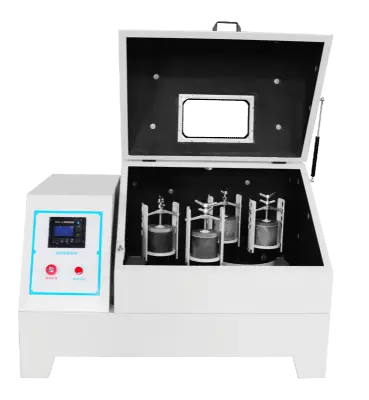
From the core, a heavy duty vibrating ball mill is a specialized high-energy grinding device that uses intense three-dimensional vibration to crush, grind, and mix materials down to micron or even nanometer scale. It is a key piece of equipment for laboratories, pilot plants, and small-scale production lines in materials science, mining, metallurgy, ceramics, chemistry, and powder metallurgy. Unlike conventional tumbling ball mills that rely on rotation, the vibrating ball mill generates high-frequency oscillatory motion, delivering much higher impact energy per unit time, which significantly accelerates the grinding process and enables the processing of hard, brittle, and tough materials.
Core Working Principle and Key Features
The heavy duty vibrating ball mill operates on a simple yet powerful principle: the grinding chamber (usually a cylindrical or pot-shaped container) is filled with grinding media (such as steel, ceramic, or tungsten carbide balls) and the material to be ground. The chamber is mounted on a vibrating mechanism that produces rapid, multi-directional oscillations (typically in x, y, and z axes). The vibration frequency and amplitude are adjustable, allowing the user to control the energy input. The grinding media collide with each other and with the chamber walls at high speeds, creating strong impact, shear, and friction forces that break down the material particles.
Key features of a heavy duty vibrating ball mill include:
- High Energy Density: The vibration frequency can reach up to 1500-3000 rpm, generating accelerations of 10-50 g, far exceeding planetary ball mills. This allows for rapid grinding of hard materials like tungsten carbide, silicon carbide, and quartz.
- Adjustable Parameters: Users can control vibration amplitude, frequency, grinding time, and ball-to-material ratio to achieve the desired particle size distribution. Many models offer programmable cycles and pause intervals for cooling.
- Versatile Grinding Modes: Suitable for both dry and wet grinding, as well as mechanical alloying and mechanochemical synthesis. The sealed grinding chamber can also be used for atmosphere-controlled milling (e.g., inert gas or vacuum) with optional accessories.
- Compact and Robust Design: Heavy duty models are built with reinforced structures, high-quality motors, and durable bearings to withstand continuous operation and high impact loads. They often feature safety interlocks and noise-reduction enclosures.
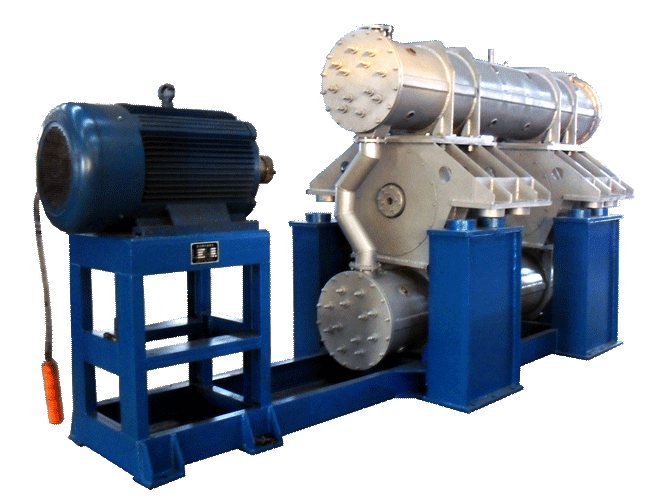
Main Types of Vibrating Ball Mills
Vibrating ball mills are generally classified by their capacity, vibration mechanism, and application intensity. The heavy duty vibrating ball mill is the most robust variant, designed for high-throughput and demanding materials. Other common types include:
1. Lightweight Vibrating Ball Mill
Designed for small batches (a few grams to tens of grams) and less abrasive materials. It is ideal for laboratories where quick sample preparation is needed, such as in pharmaceutical and biological research. The lightweight vibrating ball mill is portable and easy to clean.
2. Lab Vibration Ball Mill
This intermediate model bridges the gap between lightweight and heavy duty. It can handle sample sizes up to a few hundred grams and is suitable for routine quality control and materials development. The lab vibration ball mill often offers multiple grinding chambers for simultaneous processing.
3. Heavy Duty Vibrating Ball Mill
As the name implies, this type is built for heavy workloads and continuous operation. It can process kilograms of material per batch, using large grinding chambers (up to 10 liters or more) and powerful motors (e.g., 2.2 kW to 7.5 kW). The heavy duty vibrating ball mill is the preferred choice for mechanical alloying, metal powder processing, and grinding of super-hard materials.
Key Performance Indicators and Selection Criteria
When selecting a heavy duty vibrating ball mill, consider the following factors:
- Capacity and Throughput: Determine the batch size you need. Heavy duty models typically offer working capacities from 0.5 L to 10 L per chamber. Some models allow multiple chambers to increase throughput.
- Particle Size Range: The final fineness can be as low as 0.1 micron (sub-micron) for soft materials, and around 1-10 microns for hard materials. Check the manufacturer's specifications for specific materials.
- Vibration Frequency and Amplitude: Higher frequency and larger amplitude produce higher energy but may generate more heat. Adjustable settings give you flexibility for different materials.
- Grinding Media Options: The mill must be compatible with various media materials (stainless steel, zirconia, tungsten carbide, agate, etc.) to avoid contamination. Heavy duty mills often use robust media like steel or tungsten carbide.
- Cooling System: For long grinding cycles or heat-sensitive materials, look for models with forced air cooling or water-cooled jackets. The heavy duty vibrating ball mill from TENCAN features a dual-fan ventilation system for efficient heat dissipation.
- Automation and Safety: Modern units include touch-screen control, programmable timing, safety interlocks, and overload protection. These features enhance reproducibility and operator safety.
- Maintenance: Check for easy access to grinding chambers, removable liners, and availability of spare parts. Heavy duty mills are designed for low maintenance, but regular inspection of springs and bearings is recommended.
Application Areas and Selection Advice
Heavy duty vibrating ball mills are widely used in:
- Materials Science & Engineering: Mechanical alloying for producing advanced alloys, nanocomposites, and amorphous materials.
- Mining & Metallurgy: Grinding of ores, coal, limestone, and slags for mineral processing and analysis.
- Ceramics & Glass: Fine grinding of alumina, zirconia, silicon carbide, feldspar, and quartz.
- Chemical Industry: Mechanochemical synthesis, catalyst preparation, and pigment dispersion.
- Pharmaceutical & Food: Particle size reduction of active ingredients, herbs, and spices (with appropriate media to avoid contamination).
Selection advice: If you need to process large volumes (e.g., more than 1 kg per batch) or extremely hard materials (e.g., tungsten carbide, boron carbide), choose a heavy duty vibrating ball mill. For small R&D samples or occasional use, a lightweight or lab vibration mill may be more cost-effective. Always consider the material's hardness, abrasiveness, and sensitivity to contamination when selecting the grinding media and chamber material.
References
Product page: Heavy Duty Vibrating Ball Mill
Related Products
Get In Touch
Our professional team will reply to you within one business day. Please feel free to contact us!