

What Is a Heavy-duty Full-directional Planetary Ball Mill? A Fine Grinding Mill
What Is a Heavy-duty Full-directional Planetary Ball Mill?
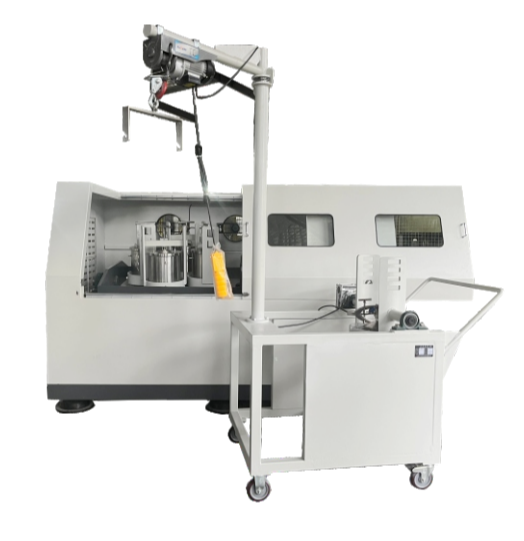
From its core, a heavy-duty full-directional planetary ball mill is a robust grinding system for laboratories and pilot plants that need dependable size reduction, mixing, and mechanochemical processing under sustained load. It uses rotating jars filled with grinding media to convert coarse particles into fine powders, while its full-directional motion pattern promotes active sample movement and helps reduce dead zones inside the jar. The Heavy-duty Full-directional Planetary Ball Mill is aimed at users who need greater mechanical stability and longer operating cycles than a light-duty planetary mill usually offers. It is not just a larger jar mill; jar motion, media choice, speed control, and sample loading all interact to determine the final result.
What Does the Machine Do?
In practical terms, the machine answers two basic questions: what is it, and what is it for? It is a laboratory-to-pilot-scale mill that takes a feed material—often a powder, a slurry, or small solid fragments—and reduces it to a finer powder while blending components. Many users also employ it for mixing dry powders, dispersing additives, or supporting mechanochemical reactions in which mechanical energy changes the surface or reactivity of a material. The “heavy-duty” part of the name signals a frame, drive, and clamping system intended for tougher materials, longer runs, and more frequent use. The “full-directional” part describes a motion concept rather than a single fixed jar position: the grinding charge is kept moving through a changing direction pattern, which can improve uniformity when samples tend to settle, cake, or form a static layer.
This matters because fine grinding is not only about breaking particles. A good result also requires the entire sample to pass through the high-energy zone repeatedly. If part of the powder sits in a corner of the jar, the final product can be uneven: some particles become very fine while others remain coarse. A full-directional planetary mill addresses this by changing the force direction during operation, helping the media and powder exchange positions. For a laboratory, that can mean shorter development cycles and better agreement between batches. For a pilot or quality-control group, it can mean more consistent scale-up data and fewer rejected runs.
How the Milling Action Works
From Coarse Feed to Fine Powder
Grinding begins when the operator loads a sealed jar with sample and grinding media. The jar is clamped into the mill, and the drive system sets the carrier and jars in motion. As the jar rotates, the media are lifted against gravity and then fall, slide, or roll back into the sample. Large particles are broken by impact, while smaller particles are reduced by friction and shear between balls, jar walls, and neighboring particles. The result is a powder with a larger surface area and, usually, a narrower particle-size distribution than the feed. The process can be performed dry or wet, provided the jar, media, and seals are compatible with the sample and liquid.
The transformation is gradual. In the first stage, coarse particles are fractured at weak points. As grinding continues, the remaining particles become stronger and smaller, so the rate of size reduction slows. At the same time, fresh surfaces can be exposed, and particles may re-agglomerate if the energy input is too high or if the material is soft and sticky. Operators therefore balance energy input against product quality. Over-grinding wastes time and energy and may cause contamination, heat damage, or unwanted changes in crystal structure. Under-grinding leaves coarse tails that can affect later processing, compaction, sintering, or analysis.
Revolution, Rotation, and Directional Motion
A planetary mill gets its name from the way the jars move. The jars sit on a rotating carrier, much like planets around a sun, and each jar also turns around its own axis. Because these two motions are combined, the grinding media experience strong centrifugal and Coriolis forces that are not present in a simple horizontal drum. The media are pressed against the jar wall, lifted, and then released or redirected, creating repeated impact and friction. In a full-directional design, the motion pattern is arranged so the force vector changes over time rather than remaining fixed. This helps prevent the charge from packing into a stable position and supports more uniform mixing.
The heavy-duty aspect is closely related to this motion. Continuous high-energy movement places load on bearings, clamps, jar lids, and the frame. A robust unit is designed to keep alignment and control vibration during long cycles. That does not mean the operator can ignore limits. Every mill has a maximum jar load, speed range, and duty cycle. Running outside those limits can reduce jar life, generate excessive heat, or damage the drive. The practical goal is to use enough energy to reach the target fineness without turning the mill into a source of wear or inconsistency.
Process Parameters That Shape the Result
Several parameters have a direct effect on the final powder. Rotational speed controls the energy of impacts and the amount of friction. Higher speed generally increases size reduction, but it also raises heat, wear, and the risk of jar movement if clamping is poor. Milling time determines how far the reaction proceeds; long runs improve fineness up to a point, after which agglomeration or contamination may dominate. The ball-to-powder ratio, total fill level, ball size, and media density influence how often the sample is struck. A jar that is underfilled may have poor contact, while an overfilled jar can restrict media movement. Finally, the jar material must be compatible with the sample so that wear does not introduce unwanted elements.
Reproducibility depends on recording these settings, not just remembering them. A useful batch record includes the jar type and volume, media material and size, sample mass, liquid addition if any, speed, time, direction pattern, and any pauses used to limit heating. When a promising result is found, the operator should repeat it at least once before scaling it up. Small changes in loading or ball charge can shift the particle-size curve. For demanding projects, a design-of-experiments approach can identify which parameters matter most and which can be fixed safely.
Core Components and Design Features
Grinding Jars and Media
The jar is the working chamber, and its material is a major selection decision. Stainless steel jars are tough and suitable for many hard samples, but they can introduce iron or chromium contamination. Agate jars are useful when low contamination is important, though they are less suited to very abrasive or high-impact work. Zirconia, corundum, and tungsten carbide jars offer high wear resistance and density for difficult materials. Polymer jars, such as nylon, PTFE, or PU, can be useful for softer samples or when metal contact must be avoided. The grinding media should be chosen with the same logic: density, hardness, size, and chemical compatibility all matter.
Media size affects the balance between impact and friction. Larger balls provide more impact energy and are useful for breaking coarse particles, while smaller balls create more contact points and can improve fine grinding. A mixture of sizes is sometimes used, but it makes results harder to reproduce. The operator should also inspect jars and balls for wear. Chipped jar lips, worn seals, or flattened balls can cause leakage, contamination, or inconsistent milling. Because heavy-duty mills may run for long periods, spare jars and a simple wear log are practical investments.
Drive, Clamping, and Control
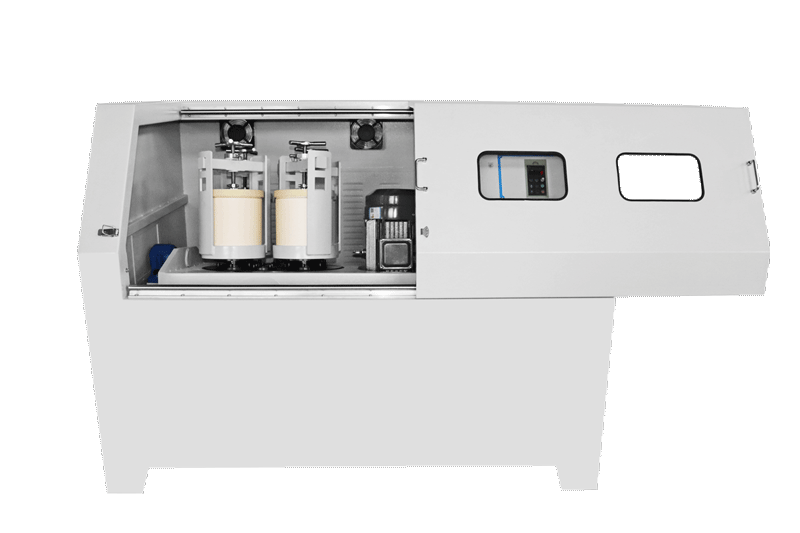
The drive system must deliver stable torque while the jars move through a complex path. In a heavy-duty mill, the frame and transmission are designed to handle continuous load with minimal vibration. Clamping is equally important. If a jar is not held firmly, it can shift, rub, or create noise and heat. Good clamping also helps maintain the intended motion and protects the jar lid. Operators should check that the jar seats correctly, that the lid is clean, and that the clamp is tightened according to the manual. A quick visual check before each run prevents many problems.
Controls range from simple speed and time settings to programmable cycles that change direction, pause for cooling, or repeat a sequence. Programmability is valuable when a lab needs to compare batches or transfer a method to another operator. Clear displays, error messages, and lockouts are not luxuries; they reduce mistakes. Safety features should include an enclosure or guard, an emergency stop, and interlocks that prevent access while the mill is moving. For full-directional operation, the control system must coordinate motion changes smoothly so that the drive is not subjected to unnecessary shock.
Stability, Safety, and Heat Management
High-energy milling produces vibration, noise, and heat. A heavy-duty frame reduces vibration, but the unit still needs a level, stable surface with enough clearance for ventilation. The surrounding area should be kept clean because fine powders can be difficult to see and easy to spread. If flammable, toxic, or reactive materials are processed, the jar system and enclosure must be appropriate for that work, and local safety procedures must be followed. Heat management is also important. Long runs can warm the jar, which may affect soft materials, polymers, or temperature-sensitive compounds. Pausing the cycle or using a suitable cooling strategy can protect the sample and the equipment.
Key Performance Indicators and Selection Points
Capacity and Throughput
Capacity should be judged by usable jar volume and realistic batch size, not by the mill’s footprint alone. A heavy-duty planetary mill may accept larger jars or multiple jars, but actual throughput depends on the material, target fineness, and cycle time. A hard ceramic may require a long run to reach a fine powder, while a soft organic material may grind quickly but need gentler conditions to avoid heat damage. Buyers should compare the number of jars, the maximum jar volume allowed, and the time needed for a typical batch. For pilot work, flexibility may matter more than maximum capacity. For routine quality control, repeatability and quick changeover may be more valuable.
Particle Size and Reproducibility
Final particle size is not a single fixed number for a mill model. It depends on the feed, media, energy input, time, and jar material. A planetary mill can reach fine sizes because it delivers concentrated energy into a small jar, but it is a batch tool rather than a continuous single-pass grinder. Reproducibility comes from controlled speed, time, ball charge, and loading. Ask for test data on a material similar to yours, or run a small trial before committing to a production plan. Be cautious of claims that one setting fits every sample. A good supplier will discuss trade-offs between fineness, contamination, and cycle time.
Energy, Automation, and Maintenance
Energy use is tied to motor size, load, and run time. Heavy-duty operation can generate more heat, so ventilation and duty cycle deserve attention. Automation can reduce operator variation by storing speed, direction, and time programs. It also makes it easier to pause for cooling or to repeat a multi-stage cycle. Maintenance focuses on jar seals, clamps, bearings, belts, and the condition of the milling chamber. Easy access and clear service points improve uptime. A well-designed mill should be serviceable, not sealed against maintenance. Keep a log of running hours and replace worn parts before they affect results.
Another selection point is the match between jar size and drive capability. A mill that can turn a large jar may not be equally efficient with a very small jar, and a small jar may not use the full capacity of a heavy-duty drive. Users should think about their typical batch size and their largest expected batch. If most work is small, a smaller mill may be more convenient; if the lab expects to scale up, a heavy-duty unit can avoid a second purchase. The best choice is the smallest system that comfortably covers the required batch range without running at its limits every day.
Noise and vibration are also practical indicators. Some vibration is normal in high-energy milling, but excessive movement, rattling, or a jar that will not stay clamped should be investigated immediately. A stable machine is easier to place in a shared laboratory and less likely to disturb nearby work. The enclosure should allow good visibility and safe access without encouraging operators to bypass guards. Ask how the mill behaves during a long run and how the manufacturer supports installation and training.
Applications and Selection Advice
Typical Industries and Laboratory Uses
Heavy-duty full-directional planetary ball mills are used in materials science, ceramics, chemistry, geology, metallurgy, battery research, environmental analysis, and pharmaceutical development. Typical tasks include preparing oxide powders, ceramic precursors, mineral samples, catalysts, pigments, activated carbon, and small batches of advanced materials. They are also used for mixing components before pressing or sintering, dispersing additives, and studying mechanochemical reactions. In geology and environmental work, the mill can prepare rock, soil, or sediment samples for analysis, provided the jar and media do not introduce elements that interfere with the measurement. In battery and ceramic research, uniform mixing and controlled particle size can influence the next processing step.
Heavy-duty construction is most useful when the workload is frequent, the material is abrasive, or the required run time is long. A light-duty mill may be adequate for occasional teaching samples or soft powders. Full-directional motion is most valuable when the sample tends to settle, when several components must be blended evenly, or when the jar geometry would otherwise leave dead zones. The technology does not replace good method development: the user still needs to choose the right jar, media, load, and speed. It does, however, give the operator more control over how the powder moves during the cycle.
How to Match a Mill to Your Workflow
Start with the material and the target fineness. Then define the batch size, the acceptable contamination level, and the number of samples processed per day. If the lab handles hard or abrasive materials, prioritize robust clamping, wear-resistant jars, and a drive that can handle repeated heavy loads. If the work is temperature-sensitive, plan for cooling pauses and choose a jar material that conducts heat appropriately. If several operators share the equipment, programmable settings and clear documentation reduce variation. Space, power, and ventilation should be checked before purchase. It is also wise to confirm that consumables and spare jars are available in the materials you need.
For users comparing options, the Heavy-duty Full-directional Planetary Ball Mill is a useful reference point because it combines a heavy-duty platform with a motion pattern intended for uniform, high-energy milling. A trial with the actual sample is the best way to confirm whether the mill meets the target. If a trial is not possible, ask for advice on jar material, media size, loading, and expected cycle time. A supplier who understands powder processing will ask about the feed material and the purpose of grinding, not just the required jar volume. That conversation usually reveals whether a heavy-duty full-directional mill is necessary or whether a simpler model would be sufficient.
Frequently Asked Questions
Is It the Same as a Conventional Ball Mill?
No. A conventional ball mill usually uses a horizontal rotating drum. A planetary mill uses jars that revolve around a central axis while also rotating on their own axes, creating a more concentrated energy input. The heavy-duty full-directional version adds a stronger mechanical platform and a changing motion pattern. These differences affect energy, wear, heat, and the way the powder mixes.
Can It Grind Both Dry and Wet Samples?
Many planetary mills can handle dry, wet, and inert-atmosphere milling when the jars and seals are suitable. Wet grinding can improve dispersion and reduce dust, but the liquid must be compatible with the jar, media, and sample. Dry grinding is simpler but may create more dust and static. Always confirm the configuration with the manufacturer before running flammable, toxic, or reactive materials.
How Do I Choose Jar and Ball Material?
Choose based on contamination risk and wear. Stainless steel is tough but can introduce iron; agate is low-contamination but less impact-resistant; zirconia and corundum are hard and wear-resistant; tungsten carbide is dense and durable; polymer jars suit softer or metal-sensitive samples. The best choice balances cleanliness, durability, and cost. When in doubt, run a small test and analyze the product for contamination.
Why Does Powder Stick to the Jar?
Sticking can come from moisture, static, soft material, excessive heat, or insufficient media movement. Drying the sample, adjusting the ball charge, changing speed, or using a different jar material may help. Full-directional motion can reduce static pockets, but it cannot correct poor loading practice. If sticking persists, reduce the batch size and inspect the jar for wear.
What Maintenance Matters Most?
Check jar seals, clamps, belts or drive components, and ventilation. Keep the milling chamber clean. Replace worn jars and media before they affect results. Record running hours and follow the service schedule. Because heavy-duty mills operate under load, small alignment or clamping issues should be corrected early. A spare jar set can prevent downtime during method development.
Final Selection Checklist
- Define the feed material, target fineness, and acceptable contamination.
- Estimate realistic batch size and number of jars per run.
- Confirm jar and media compatibility with the sample.
- Check whether programmable speed, time, and direction are needed.
- Plan for cooling, ventilation, and safe handling of fine powders.
- Ask for a trial or reference test on a similar material.
The right mill is the one that matches the material, batch size, and operating rhythm of the laboratory. A heavy-duty full-directional planetary ball mill offers a practical balance of energy, stability, and mixing control when the work demands more than occasional light grinding. Confirm the details with the supplier, test the actual sample when possible, and keep records so that a successful result can be repeated.
Related Products
Get In Touch
Our professional team will reply to you within one business day. Please feel free to contact us!