

What Is an Agate Planetary Mill Jar? A Lab Grinding Jar for Pure Clean Milling
What Is an Agate Planetary Mill Jar?
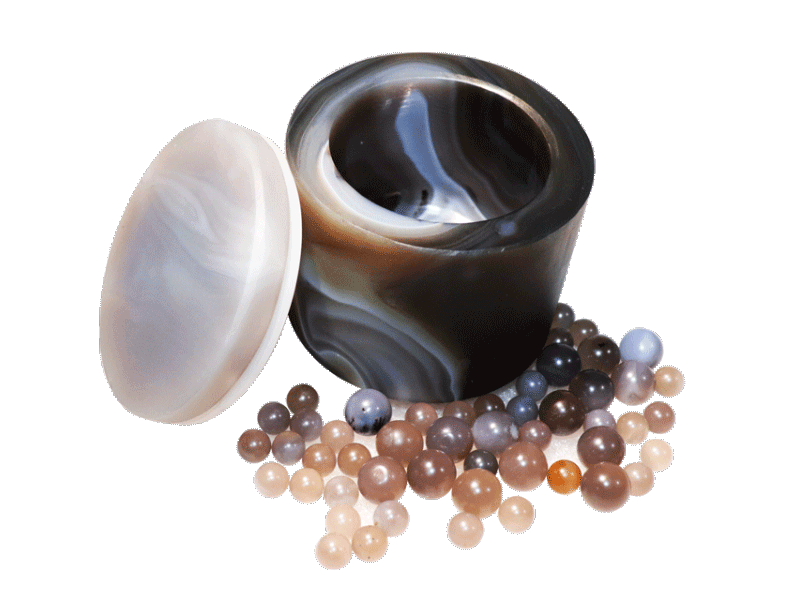
From its core, an agate planetary mill jar is a specialized grinding container made from natural agate, designed to fit into a planetary ball mill. Laboratories use it to reduce small samples of rocks, minerals, ceramics, glass, and powders into fine or ultrafine particles while keeping contamination low. Unlike a general-purpose metal or ceramic jar, an agate jar is chosen when sample purity matters as much as final particle size. The jar holds the sample and grinding balls. When the mill rotates, the jar moves in a complex motion that creates impact and friction, breaking the sample down.
The term planetary mill jar describes the jar’s role in the machine. A planetary ball mill usually holds several jars on a rotating disk. As the disk turns, each jar also spins around its own axis. This dual motion gives the grinding balls inside the jar a high-energy tumbling and impacting action. The agate jar contains both the sample and the media. Because agate is a natural, hard, and relatively inert mineral, it can reduce wear-related contamination compared with some metal jars. That makes it useful for analytical laboratories, geological surveys, materials research, and quality control teams that need reliable pulverization without changing the sample’s chemistry.
Core Function and Working Principle
How the Planetary Mill Turns Rotation into Grinding Energy
A planetary ball mill combines two rotations. The main disk, or sun wheel, rotates in one direction. Each jar sits in a holder on this disk and rotates around its own center, usually in the opposite direction. The result is a complex trajectory for the grinding balls. The balls are lifted along the jar wall, then fall or roll back across the sample. The sample is caught between moving balls, between balls and the jar wall, and between balls themselves. Impact breaks larger particles, while friction and shear refine the powder and help mix it. The agate jar is the wear-resistant chamber that defines this grinding environment.
From Coarse Sample to Fine Powder
The basic function of an agate planetary mill jar is to help transform a coarse or granular sample into a fine, homogeneous powder. At the start, the sample may be small rock chips, dried soil aggregates, ceramic fragments, glass pieces, or crystalline granules. The grinding balls are much harder than the sample. As the jar moves, the balls strike the sample and press it against the jar wall. Over many rotations, particles fracture along weak planes. The process continues until the particle size is small enough or until the operator stops the mill. Because the jar is sealed, fine dust stays inside. That is important for sample recovery and laboratory hygiene. The final powder can then be used for X-ray diffraction, X-ray fluorescence, spectroscopy, particle size analysis, or chemical digestion.
Key Process Parameters That Shape the Result
Final particle size and grinding speed depend on several parameters. Rotation speed influences the energy of each impact. A higher speed generally increases grinding energy, but it also raises the temperature inside the jar and increases wear. Grinding time is another major factor. Longer milling usually produces finer powder, but very long runs can lead to agglomeration or contamination. The size, number, and density of the grinding balls also matter. Larger, heavier balls deliver stronger impacts, while smaller balls create more contact points and can improve fine grinding. The ratio of sample to grinding media affects how freely the balls move. If the jar is overfilled, the balls cannot travel properly. If it is underfilled, grinding efficiency drops. Finally, the jar and ball material must be compatible with the sample. For trace analysis, using an agate jar with agate balls keeps the grinding environment consistent and reduces the risk of unwanted metal contamination.
Core Components and Key Technologies of an Agate Planetary Mill Jar
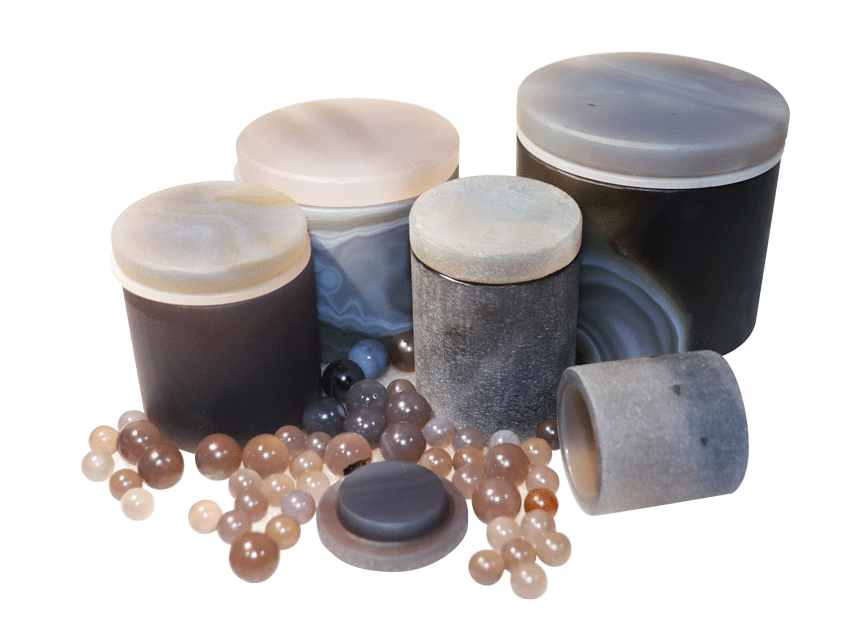
Although an agate jar appears simple, it is a precision laboratory accessory. Its performance depends on the quality of the agate, the accuracy of the machining, and the design of the sealing system.
Jar Body
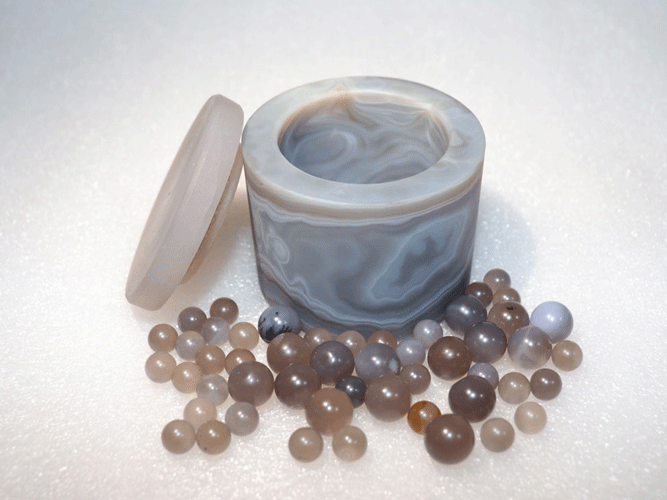
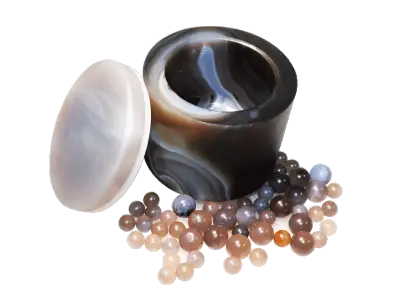
The jar body is the main grinding chamber. It is usually machined from natural agate into a cylindrical or slightly tapered shape. The inner surface must be smooth enough for easy cleaning and to avoid trapping sample particles, but it also needs enough texture to help the grinding media grip and tumble. Natural agate can vary in color and pattern, so each jar may look slightly different. These visual differences are normal and do not necessarily affect performance. A well-made agate jar should be free from cracks, large inclusions, or internal defects that could cause failure under repeated high-energy milling.
Lid and Sealing System
The lid closes the grinding chamber and prevents sample loss. Many agate planetary mill jars use a lid made from the same agate material or from a compatible material, together with a sealing gasket. The seal is critical because fine powders can escape through very small gaps. A good sealing system keeps the sample inside, limits contact with air, and reduces cross-contamination between runs. The lid must also be easy to open and close. If the lid is difficult to handle, operators may not tighten it properly, which can lead to leakage or sample loss.
Grinding Media
The grinding media are the balls inside the jar. For an agate jar, the most natural choice is agate grinding balls. Using the same material for the jar and the balls helps maintain a consistent wear environment and reduces the introduction of foreign elements. The balls must be hard, dense, and chemically stable. Their diameter affects the grinding result. A mixture of ball sizes can be useful because larger balls provide impact energy while smaller balls fill gaps and promote fine grinding. The number of balls and total media weight should match the jar size and the mill’s capacity. The media should be inspected regularly for cracks, chips, or excessive wear.
Adapters and Clamping
Planetary ball mills use holders or adapters to secure jars in place. The adapter must fit the jar securely so that it does not move or vibrate during operation. Poor clamping can cause uneven grinding, noise, and mechanical stress. When selecting an agate jar, users should confirm that it is compatible with the mill’s jar holders. Adapters may also allow a single mill to accept different jar sizes. This flexibility is useful in laboratories that process a variety of sample types. The jar, lid, gasket, and adapter should all be checked before each run to ensure that they are clean, undamaged, and correctly installed.
Key Performance Indicators and Selection Points
When choosing an agate planetary mill jar, buyers and laboratory managers should look beyond the initial price. The jar is part of the analytical workflow, and its quality can affect data quality, operating costs, and safety.
Contamination Control and Material Compatibility
Contamination control is often the main reason to choose agate. Metal jars can introduce iron, chromium, nickel, or other elements into the sample. Ceramic jars may introduce aluminum, zirconium, or yttrium. For trace-element analysis, even small amounts of contamination can change the result. Agate is a natural mineral and is generally considered a low-contamination option for many geological, environmental, and materials samples. However, no material is perfectly inert. Agate can still wear over time, especially when grinding very hard or abrasive samples. Users should consider sample hardness, required detection limits, and the analytical method. A pre-grinding blank or a test run with pure quartz can help evaluate whether contamination is acceptable.
Grinding Efficiency and Particle Size Control
Grinding efficiency describes how quickly the jar and mill reduce the sample to the target particle size. It depends on mill speed, jar volume, media load, and sample properties. A cylindrical jar with rounded corners allows balls to move freely. A jar with sharp internal corners may trap material and reduce efficiency. Particle size control is not only about reaching a fine powder; it is also about achieving a narrow distribution. Overgrinding can create extremely fine particles that reagglomerate or become difficult to handle. The operator should optimize milling time and energy rather than simply running the mill longer. A well-chosen agate jar supports repeatable results when the same sample type is processed under the same conditions.
Sealing, Temperature, and Sample Loss
Sealing performance affects sample recovery and operator safety. A jar that leaks fine powder will lose sample mass and may contaminate the mill chamber. It can also release dust into the laboratory, which is a health and safety concern. The gasket material should be compatible with the sample and the milling conditions. During high-energy milling, the jar and its contents heat up. This temperature rise can affect heat-sensitive samples, such as polymers, biological materials, or certain minerals. If temperature is a concern, operators can use shorter milling intervals, lower speeds, or pause periods to let the jar cool. The agate jar itself has thermal properties that influence how quickly heat moves through the wall.
Cleaning, Maintenance, and Operational Safety
Cleaning is a daily task in most laboratories. An agate jar should be easy to empty, wash, and dry. Residual powder can contaminate the next sample, so the jar should be cleaned thoroughly between different materials. Mild detergents, water, and soft brushes are usually sufficient. Strong acids or abrasive cleaners may damage the agate surface and should be avoided unless the manufacturer specifically approves them. After cleaning, the jar should be completely dry before use. Maintenance includes checking the lid, gasket, and media for wear. Cracked agate can fail suddenly under high energy, so any damaged jar should be removed from service. Safety also depends on correct operation. The mill should be balanced, the jar should be securely clamped, and the operator should follow the mill manufacturer’s instructions. Programmable speed and time cycles on modern mills also improve reproducibility when the same jar and media are used.
Applications and Selection Advice
Typical Application Fields
Agate planetary mill jars are used in many fields where small samples must be ground without significant contamination. In geology and mineralogy, they help prepare rock, mineral, and sediment samples for chemical and crystallographic analysis. In environmental science, they are used for soil, fly ash, sludge, and dust samples before elemental testing. In the ceramics and glass industry, they support research on raw materials, frits, and glazes. In materials science, they are used for powders, oxides, and composite precursors. In pharmaceutical and biological research, agate jars can be used for dry grinding of some materials, although temperature and contamination requirements must be evaluated carefully. In archaeology, they help prepare small fragments for compositional analysis. In quality control laboratories, they provide a repeatable way to reduce samples to a consistent powder.
How to Choose the Right Jar for Your Work
The first step is to define the sample. Hard, brittle materials such as quartz, feldspar, and ceramics require enough impact energy. Soft or fibrous materials may need more shear and a different milling strategy. The second step is to define the analytical requirement. If trace contamination is critical, agate is often a strong candidate. If the sample is extremely hard or the required particle size is very fine, other jar materials may be considered, but they may introduce different contamination risks. The third step is to check compatibility with the planetary ball mill. The jar must fit the holder, and the mill must be able to operate safely with the jar’s weight and volume. The fourth step is to plan the grinding media. Agate balls are a natural match for an agate jar, but the ball size and number should be chosen for the sample and target particle size. Finally, users should consider workflow. If many samples are processed each day, extra jars and gaskets can reduce downtime.
For a product overview, the agate planetary mill jar page provides a starting point for matching the jar to a planetary ball mill. Buyers should confirm dimensions, adapter requirements, and available accessories with the supplier before ordering. It is also wise to request information about the agate grade and the sealing gasket material. These details affect performance and lifetime.
Practical FAQ: Common Questions About Agate Planetary Mill Jars
Is an agate jar suitable for every sample?
No. Agate is a good choice for many brittle laboratory samples, especially when low contamination is important. However, it is not ideal for every material. Very hard, abrasive, or highly reactive samples can cause rapid wear or damage. Users should evaluate the sample’s hardness, chemistry, and required analytical sensitivity before choosing agate.
How do I clean an agate jar?
Empty the jar, then rinse it with water and a mild detergent. Use a soft brush or cloth. Avoid harsh acids, strong alkalis, and abrasive pads that can scratch the agate. Rinse thoroughly and allow the jar to dry completely before the next use. If cross-contamination is a concern, a solvent rinse followed by a clean water rinse may be appropriate, depending on the sample.
Conclusion
An agate planetary mill jar is a focused laboratory tool for clean, controlled size reduction. It combines the natural hardness and low contamination of agate with the high-energy motion of a planetary ball mill. The jar itself does not grind the sample; rather, it creates the chamber in which grinding media and rotational energy do the work. By understanding the working principle, key components, and selection criteria, users can choose a jar that fits their mill, protects sample integrity, and supports reproducible analysis. For laboratories that need fine powders from small samples, an agate planetary mill jar is a practical and widely used option.
To explore a specific product, visit the agate planetary mill jar page and review the available images and details. Matching the jar to the application is the first step toward reliable grinding results.
Related Products
Get In Touch
Our professional team will reply to you within one business day. Please feel free to contact us!