
What is an Agate Grinder with Three Working Stations? A Precision Grinding Equipment for Laboratory Sample Preparation

What is an Agate Grinder with Three Working Stations? A Precision Grinding Equipment for Laboratory Sample Preparation
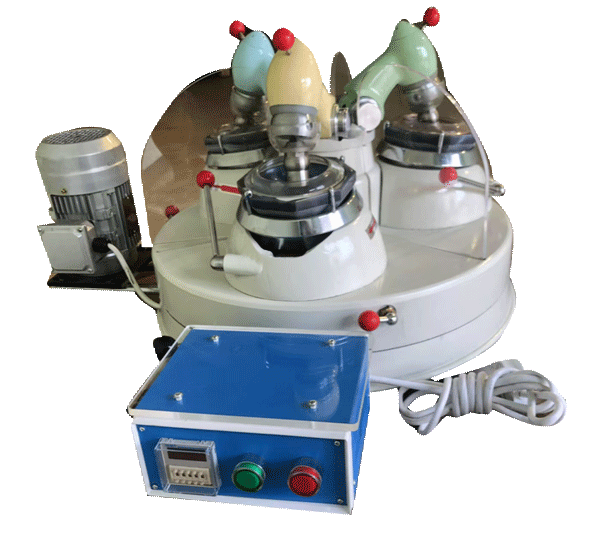
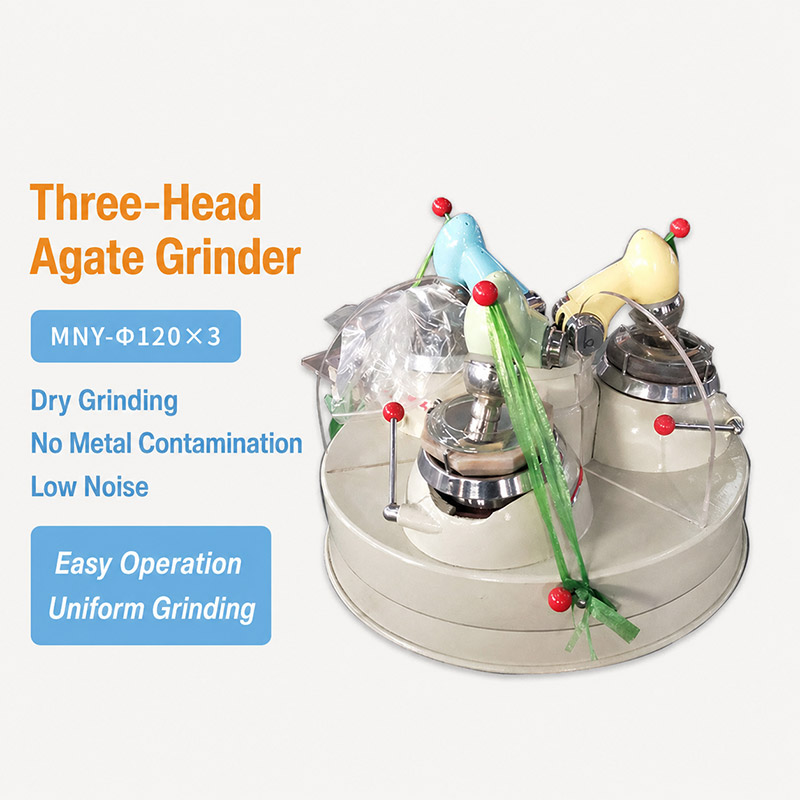
At its core, an agate grinder with three working stations is a specialized laboratory instrument designed to grind and homogenize small samples of solid materials into fine, uniform powders. It uses the high hardness and chemical inertness of natural agate (a form of chalcedony quartz) to achieve contamination-free grinding, making it ideal for samples intended for sensitive analytical techniques like X-ray fluorescence (XRF), X-ray diffraction (XRD), infrared spectroscopy, and other elemental or mineralogical analysis. The three working stations allow simultaneous processing of up to three independent samples, significantly improving throughput in busy laboratories.
Core Function and Working Principle
An agate grinder with three working stations transforms coarse solid materials—such as rocks, minerals, ceramics, glass, or chemicals—into a fine powder with a particle size typically below 75 microns (200 mesh). The core working principle involves a motor-driven mechanism that oscillates or rotates an agate mortar and pestle set. The sample is placed in the agate mortar, and the pestle, also made of high-purity agate, applies a combination of frictional and impact forces to break down the material. The grinding action is gentle yet effective, minimizing heat generation and preserving the sample's chemical and structural integrity.
Each working station is independent, meaning the operator can load different samples in each of the three agate mortar sets and run them simultaneously under identical or different grinding parameters. The machine typically features adjustable grinding time and speed, allowing the user to tailor the process to the hardness and brittleness of each material. The result is a homogeneous powder with a controlled particle size distribution, ready for further analysis or processing.
Key Components and Technology
Since the agate grinder with three working stations is a relatively specialized single-product category, we focus on its core components rather than multiple types. The key components include:
- Agate Mortar and Pestle Sets: Each set is precision-machined from natural agate stone. Agate has a Mohs hardness of about 7, which is harder than most common minerals, ensuring that the grinding tools do not wear down and contaminate the sample. The smooth, non-porous surface is easy to clean and chemically inert.
- Motor and Drive System: A robust electric motor provides the rotational or oscillatory motion. The drive system is designed to balance the load across the three stations, maintaining consistent grinding energy.
- Control Panel: Modern models include a digital control interface that allows the user to set grinding time, rotation speed, and sometimes pause/resume functions. Some advanced versions offer programmable profiles for different materials.
- Safety Housing: The grinding head is enclosed in a transparent or metal cover to contain dust and prevent accidental contact during operation.
The three working stations are arranged in a compact layout, often on a single base plate, with each station independently hinged or clamped for easy loading and unloading of the mortar sets.
Key Performance Indicators and Selection Criteria
When selecting an agate grinder with three working stations, consider the following metrics:
- Number of Working Stations: Three is the standard for this model, but some manufacturers offer two or four stations. The three-station version balances throughput and footprint.
- Grinding Capacity: Each station typically handles a sample volume from 10 mL to 50 mL (depending on mortar size). For large batches, you may need larger mortars or multiple runs.
- Particle Size Achievable: Most units can grind to below 75 microns (200 mesh), with some capable of reaching 5–10 microns with extended grinding time.
- Speed Control: Adjustable speed (e.g., 100–500 RPM) gives flexibility for different material hardness. Softer materials require slower speeds to avoid smearing; harder materials need higher speeds for efficient grinding.
- Material Compatibility: Agate is ideal for silica-free samples, but for very hard materials (like carbides), you may need a tungsten carbide mill. Confirm that the agate mortar is suitable for your sample's hardness.
- Ease of Cleaning: Agate mortars are easy to clean with water or solvents, but avoid harsh acids that can etch the surface.
- Automation: Some models include programmable timers, automatic reverse rotation, and safety interlocks. Touch-screen panels are available in premium versions.
Applications and Selection Advice
The agate grinder with three working stations is widely used in geological laboratories, environmental testing centers, materials science research institutes, and quality control departments in the cement, ceramic, and pharmaceutical industries. It is particularly suited for preparing samples for XRF, XRD, TG-DTA, and ICP-OES, where contamination from iron or other metals must be avoided.
For laboratories with high sample throughput (e.g., processing dozens of samples daily), the three-station model significantly reduces operator time compared to single-station grinders. If your samples are extremely hard (e.g., quartzite, corundum), consider a heavy-duty version with a stronger motor. For routine soil or rock powders, the standard agate grinder is sufficient. Always request a sample test to verify the achievable particle size for your specific material.
References
- Agate Grinder with Three Working Stations - Product Page
- Agate Grinder (Single Station) - Product Page
Related Products
Get In Touch
Our professional team will reply to you within one business day. Please feel free to contact us!