
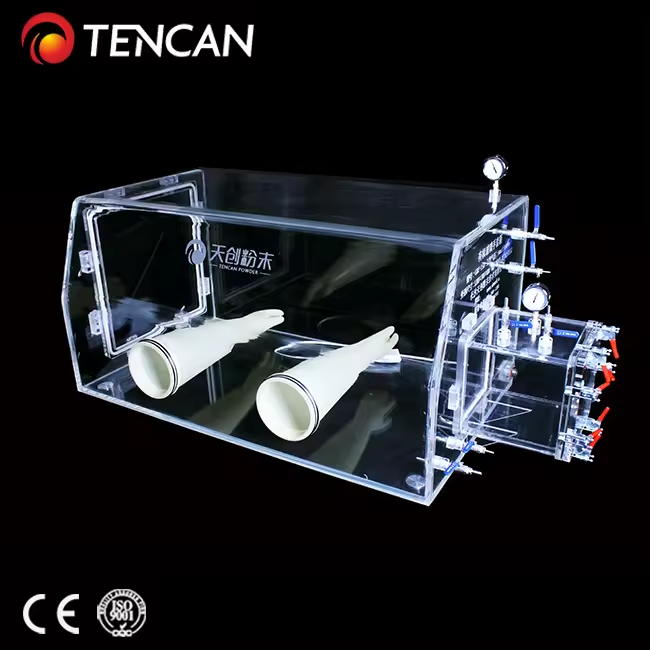
What is an Acrylic Glove Box? A Transparent Enclosure for Controlled Atmosphere Laboratory Operations

What is an Acrylic Glove Box?
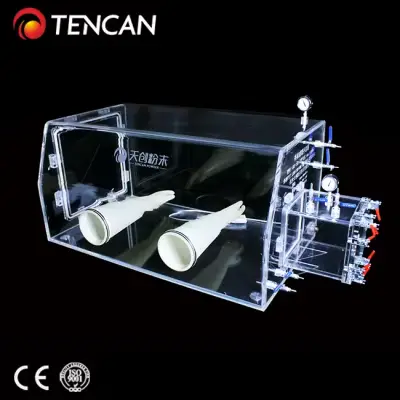
At its core, an acrylic glove box is a specialized sealed enclosure used in laboratories and industries to create a controlled, isolated atmosphere for handling moisture-sensitive, oxygen-sensitive, or hazardous materials. Made from high-transparency polymethyl methacrylate (PMMA), it allows operators to view and manipulate samples inside through built-in gloves, while maintaining a stable internal environment. It is an essential tool for applications requiring inert gas protection, such as lithium battery research, organometallic chemistry, pharmaceutical synthesis, and semiconductor processing.
Core Function and Working Principle
The basic function of an acrylic glove box is to isolate the internal workspace from the ambient environment. The operator inserts hands into the attached gloves to perform tasks inside the box, while the sealed chamber prevents contamination from outside air. The internal atmosphere can be purged with inert gases like argon or nitrogen, and if equipped with a purification system, the levels of oxygen and water vapor can be reduced to below 0.1 ppm.
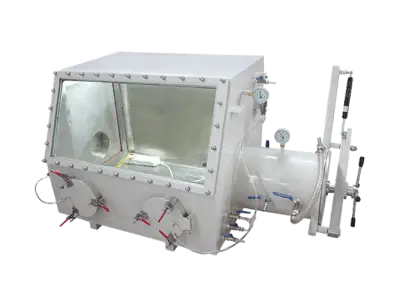
The working principle relies on the airtightness of the acrylic panels and the sealing gaskets. A typical acrylic glove box consists of a main chamber, a transfer chamber (antechamber), and glove ports. The transfer chamber allows materials to be moved in and out without breaking the main chamber's atmosphere. The system is often paired with a vacuum pump and gas control valves to achieve and maintain the desired environment.
Main Types of Acrylic Glove Boxes
Acrylic glove boxes are available in several configurations to meet different experimental needs:
Standard Acrylic Glove Box (without airlock)
This is the simplest design, featuring a single chamber with glove ports. It is suitable for short-term operations where a moderate level of isolation is sufficient. The operator can quickly purge the box with inert gas, but the atmosphere is not strictly maintained when transferring items in and out.
Acrylic Glove Box with Transfer Chamber
Most modern acrylic glove boxes include a built-in antechamber (transfer chamber). This allows materials to be introduced or removed while the main chamber remains sealed, significantly reducing contamination. The antechamber can be evacuated and refilled with inert gas before each operation.
Vacuum Acrylic Glove Box
Some acrylic glove boxes are designed to withstand a vacuum in the main chamber. These are used when the box itself needs to be evacuated to remove air quickly before introducing inert gas. The box must be reinforced with thicker acrylic walls and special sealing structures.
Acrylic Glove Box with Purification System
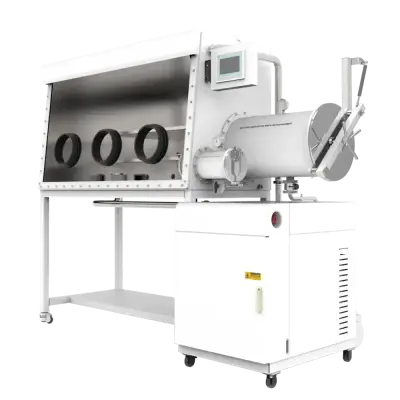
For the most demanding applications, an acrylic glove box is integrated with a gas purification system that continuously removes oxygen and moisture. The purification system uses molecular sieves and copper catalysts to regenerate automatically, maintaining purity levels below 1 ppm (sometimes down to 0.1 ppm). This type is common in advanced research labs.
Key Performance Indicators and Selection Criteria
When selecting an acrylic glove box, consider the following parameters:
- Size and Chamber Volume: Standard sizes range from 650 mm to 1500 mm in length. Choose a size that accommodates your equipment and sample sizes.
- Atmosphere Purity: Determine the required O₂ and H₂O levels. Basic models achieve <10 ppm, while purified systems reach <0.1 ppm.
- Leak Rate: A low leak rate (<0.01% vol/h) is crucial for maintaining long-term purity. High-quality acrylic boxes feature precision-machined sealing surfaces.
- Transfer Chamber Dimensions: The antechamber should be large enough for your typical materials. Common diameters are 240 mm or 380 mm.
- Material and Construction: Acrylic (PMMA) offers excellent transparency, chemical resistance, and impact strength. Ensure the acrylic thickness is appropriate for the box size (typically 8–12 mm).
- Automation and Control: Advanced models include touchscreen PLC controllers, automatic purge cycles, and oxygen/water analyzers for real-time monitoring.
- Ease of Maintenance: Look for modular designs that allow easy replacement of gloves, gaskets, and purification columns.
Application Areas and Selection Advice
Acrylic glove boxes are used across a wide range of fields:
- Lithium Battery Research: Assembly and testing of coin cells, pouch cells, and electrode materials under inert atmosphere.
- Organometallic Chemistry & Organic Synthesis: Handling air-sensitive catalysts, reagents, and intermediates.
- Pharmaceutical & Medical: Preparation of sterile compounds, drug formulation, and medical device assembly.
- Electronics & Semiconductor: Soldering, bonding, and encapsulation in oxygen-free environments.
- Material Science: Processing of nanomaterials, quantum dots, and perovskite materials that degrade in air.
- Solar Cell Fabrication: Assembly of perovskite solar cells and organic photovoltaics in controlled atmospheres.
For most routine laboratory work, a standard acrylic glove box with a transfer chamber is sufficient. If you require ultra-low O₂/H₂O levels, invest in a model with a purification system. For frequent vacuum operations, choose a vacuum-rated acrylic box. Always confirm the compatibility of the acrylic material with the chemicals you plan to use, as some solvents may cause crazing or degradation.
References
Related Products
Get In Touch
Our professional team will reply to you within one business day. Please feel free to contact us!