

What Is an Acrylic Glove Box? A Transparent Isolation Device for Safe Handling
What Is an Acrylic Glove Box?
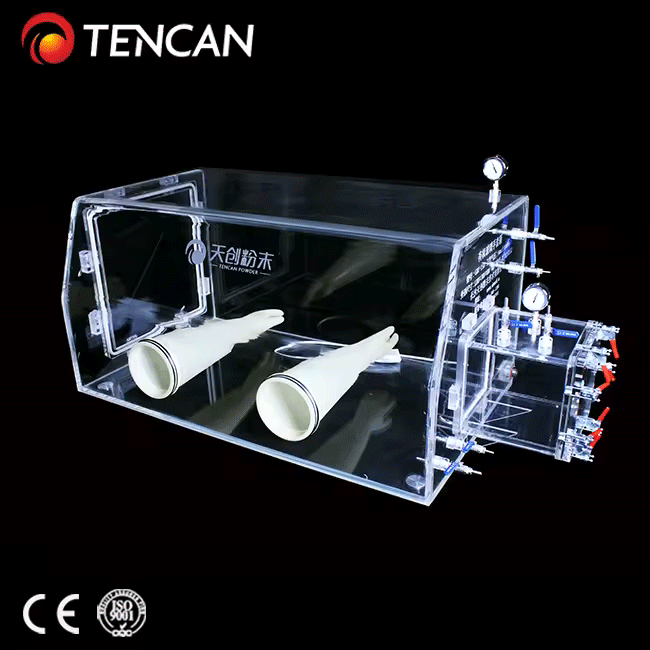
From its core, an acrylic glove box is a transparent containment device that creates a sealed working chamber for handling materials that must be isolated from the operator, the surrounding lab air, or both. Laboratories, universities, battery research groups, pharmaceutical development teams, and powder-processing facilities use it to weigh, mix, sieve, transfer, and inspect small samples without exposing the workspace to dust, moisture, or airborne contamination. Unlike a fume hood, which relies mainly on inward airflow, an acrylic glove box uses a physical barrier and a pair of integrated gloves to let the user manipulate objects inside a closed environment. The clear acrylic walls provide a wide field of view, so operators can perform delicate tasks with both hands while keeping the sample inside a defined atmosphere.
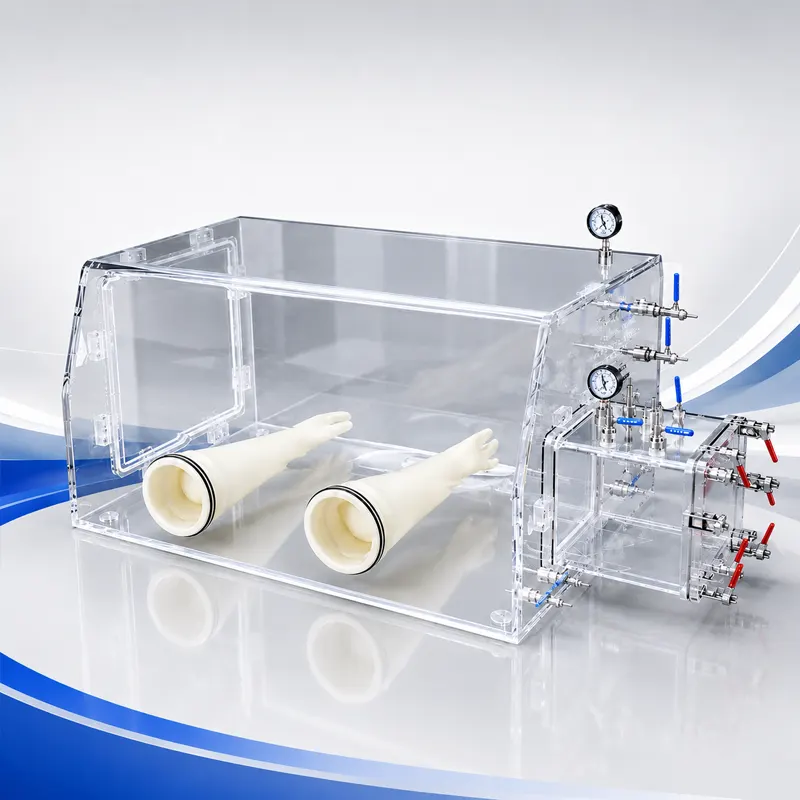
The term acrylic describes the main construction material. Acrylic is a rigid, transparent thermoplastic known for good optical clarity, moderate chemical resistance, and lower weight than glass or stainless steel. That combination makes it popular for benchtop enclosures where visibility and cost matter more than high-temperature resistance or solvent compatibility. A glove box may also include a transfer chamber, gas ports, vacuum valves, pressure gauges, and sealed glove ports. These features turn a simple transparent box into a controlled micro-environment for powders, electronic components, oxygen-sensitive chemicals, or moisture-sensitive materials.
Core Function and Working Principle
An acrylic glove box does not change the material itself. Its job is to control the space around the material. The device separates the user from the sample with a solid, transparent barrier while still allowing direct manual work through gloves. In a typical workflow, the operator places tools and sample containers into the box through a transfer chamber or main door, seals the chamber, and then adjusts the internal atmosphere. Depending on the model, this may mean simply closing the door to create a dust barrier, purging with an inert gas such as nitrogen or argon, applying a mild vacuum, or connecting a humidity-control unit. Once the internal conditions are stable, the operator uses the gloves to open containers, weigh powders, blend small batches, load milling jars, or assemble sensitive devices.
From Open Bench to Isolated Workspace
The transformation is environmental rather than mechanical: material moves from an uncontrolled open bench into a contained, monitored workspace. In powder handling, the main goal is often dust containment. Fine particles can become airborne during pouring, scooping, or sieving, and some powders are irritants, sensitizers, or simply difficult to clean. A sealed acrylic chamber keeps those particles inside a limited volume. In moisture-sensitive work, the goal shifts to atmosphere control. The chamber is purged or dried so that hygroscopic powders do not absorb water during weighing or mixing. In oxygen-sensitive work, the box can be filled with inert gas to reduce oxygen exposure. The same enclosure can therefore serve several purposes, depending on how it is configured.
Containment Mechanisms
The working principle combines three mechanisms. First, physical containment: the acrylic shell, sealed door, and glove ports form a barrier that blocks direct contact and limits air exchange. Second, controlled exchange: inlet and outlet ports allow the user to purge the chamber, introduce gas, or connect a vacuum line. Third, manual dexterity: the gloves are sealed to the front panel, so the operator can reach inside without breaking containment. The quality of these three elements determines how well the box performs. A well-sealed door and intact gloves matter more than a thick wall. A well-designed port layout matters more than a large internal volume. Even a simple acrylic box can provide useful protection when the seals, gloves, and purge strategy are appropriate for the task.
Key Process Parameters
Several parameters influence the final working condition. Internal volume determines how much equipment and material can be handled at once, but a larger volume also takes longer to purge. Glove port diameter and glove thickness affect reach, comfort, and tactility; thicker gloves protect better but reduce the feeling of small tools. Leak rate affects how long a controlled atmosphere can be maintained. Purge flow rate and purge time determine how quickly oxygen or moisture levels fall. Static charge can attract fine powders to acrylic surfaces, so antistatic measures may be needed for very light or insulating powders. Temperature and chemical exposure also matter: acrylic has limits, and aggressive solvents or high heat can cloud, crack, or weaken the panel. For these reasons, the box should be selected as part of a complete workflow, not as an isolated container.
Main Types and Configurations
Acrylic glove boxes are not all the same. Manufacturers and laboratory suppliers offer several configurations, and the right choice depends on the material, the required atmosphere, and the frequency of use. Although the basic form is a transparent chamber with gloves, the details vary widely.
Standard Benchtop Acrylic Glove Box
The standard benchtop model is the simplest and most common. It usually has a rigid acrylic body, a front panel with one or two glove ports, and a hinged or removable door for loading samples. It is designed for general powder containment, small-part assembly, and sample inspection. The main advantage is visibility and quick access. The operator can see the entire workspace and reach it without moving around a large cabinet. This type is suitable for non-hazardous or mildly hazardous powders, education demonstrations, and routine laboratory tasks where a full stainless steel isolator would be overkill. It is also useful for protecting a sample from ambient dust while weighing or packaging.
Vacuum-Ready and Gas-Purge Acrylic Glove Box
A vacuum-ready or gas-purge configuration adds reinforced panels, sealed valves, and pressure-resistant ports. The user can evacuate the chamber and refill it with inert gas, repeating the cycle to reduce oxygen and moisture. This type is often chosen for lithium battery research, metal powder handling, catalyst preparation, and oxygen-sensitive chemical operations. The acrylic body must be thick enough and supported well enough to resist pressure differences; otherwise, repeated evacuation can stress the seals or panels. Gas-purge models may be simpler, using a continuous flow of nitrogen or argon to maintain a slightly positive pressure. Both approaches aim to create a stable internal atmosphere, but vacuum cycling generally reaches lower oxygen and moisture levels faster, while continuous purging is easier to operate for long, low-demand tasks.
Humidity-Controlled Acrylic Glove Box
In humidity-controlled versions, the box is connected to a desiccant system, dry-gas supply, or humidity sensor. The goal is to keep hygroscopic materials from absorbing water during weighing, milling, or storage. This configuration is common in pharmaceutical pre-formulation, food powder testing, and inorganic materials research. A humidity-controlled acrylic glove box may include a small internal hygrometer, a sealed feedthrough for sensors, and a desiccant port. The acrylic walls themselves do not block moisture vapor completely, so the quality of the door gasket, glove seals, and purge strategy is critical. For very low humidity targets, a stainless steel glove box with welded construction and a purification system is usually more appropriate, but an acrylic box can still provide useful short-term protection for many laboratory tasks.
Portable and Modular Acrylic Glove Boxes
Some acrylic glove boxes are designed as portable or modular units. They may have a smaller footprint, fold-down shelves, or removable panels that allow the user to change the internal layout. Modular designs can be expanded with extra glove ports, transfer chambers, or instrument feedthroughs. Portable units are useful for field sampling, teaching laboratories, and shared equipment rooms where bench space is limited. The trade-off is usually internal volume and sealing robustness. A smaller box is easier to purge and move, but it may not accommodate a balance, a hot plate, and a set of sample jars at the same time. Modularity also introduces more seals, so the user must check every joint for leaks before relying on the atmosphere control.
Key Performance Indicators and Selection Points
Choosing an acrylic glove box requires matching the enclosure to the material, the task, and the required level of protection. It is helpful to evaluate performance indicators in a structured way: containment, atmosphere control, ergonomics, chemical compatibility, and maintenance.
Containment and Leak Integrity
Containment begins with the seals. The door gasket, glove port rings, valve fittings, and any cable feedthroughs must close tightly. A simple visual inspection is not enough; a leak test with pressure decay, soap solution, or a tracer gas can reveal small gaps. For powder work, even a small leak can release fine dust over time. For inert-gas work, a leak increases gas consumption and makes it difficult to hold low oxygen levels. The box should also be evaluated for how easily it can be cleaned. Smooth internal surfaces, rounded corners, and removable shelves reduce powder accumulation. If the box will be used with toxic or highly active powders, an acrylic design may not be the best choice because acrylic can scratch and absorb some chemicals; a stainless steel glove box with HEPA filtration is often more suitable.
Internal Volume and Ergonomics
Internal volume should be large enough for the intended work but not larger than necessary. A box that is too small forces the operator to crowd tools and samples, increasing the chance of spills. A box that is too large takes longer to purge and may require the operator to overreach. Glove port position is equally important. Ports placed too high or too low can cause fatigue during long sessions. The gloves should allow the fingers to reach the work surface comfortably. Arm length, shoulder position, and viewing angle all affect usability. For routine weighing, a sloped front panel and a clear line of sight to the balance display are especially useful. For assembly work, a flat, stable floor and adjustable shelving may be more important than extra volume.
Atmosphere Control and Monitoring
If the process requires low oxygen or low humidity, the box needs more than a sealed door. It needs gas inlet and outlet ports, a vacuum valve if evacuation is planned, and a way to monitor the internal atmosphere. Oxygen meters, humidity sensors, and pressure gauges can be installed inside or connected through feedthroughs. The purge method matters: a single fill-and-vent cycle may be enough for short tasks, while continuous flow is better for long operations. For moisture-sensitive powders, a desiccant chamber or dry-gas supply can help. For oxygen-sensitive materials, repeated vacuum and refill cycles with high-purity inert gas are usually more effective. The user should define the target atmosphere before selecting the box, because the required gas purity, purge time, and seal quality follow from that target.
Material Compatibility and Visibility
Acrylic offers excellent clarity, which is one of its main advantages. It allows the operator to see small particles, read labels, and monitor color changes without opening the chamber. However, acrylic is not compatible with all chemicals. Alcohols and mild aqueous solutions are generally manageable, but strong solvents, bases, and acids can etch, craze, or crack the surface. Heat is another limitation; acrylic softens at relatively low temperatures compared with glass or stainless steel. If the process involves heating, solvent evaporation, or aggressive cleaning agents, the user should check compatibility or consider a different enclosure material. Visibility should also be considered under lighting. Reflections on glossy acrylic panels can make it difficult to see fine powders, so adjustable lighting and a matte work surface can improve the working experience.
Maintenance and Serviceability
Maintenance is often overlooked during selection but has a major impact on long-term performance. Gloves are consumables; they should be easy to replace without damaging the port ring. Door gaskets should be replaceable and available as spare parts. Valves and gauges should be accessible for leak testing. The interior should be easy to wipe down, and shelves should be removable for cleaning. If the box is used with powders, a small vacuum connection or a dedicated cleaning port can help remove dust without opening the main chamber. The user should also plan for spare gloves, gaskets, and desiccant. A well-maintained acrylic glove box can provide years of service, but a neglected one can lose its atmosphere control quickly.
| Selection Factor | What to Check | Why It Matters |
|---|---|---|
| Containment | Door gasket, glove seals, valve fittings | Prevents dust release and gas leakage |
| Atmosphere | Purge ports, vacuum rating, sensor feedthroughs | Controls oxygen and moisture levels |
| Ergonomics | Glove port position, internal height, viewing angle | Reduces operator fatigue and improves accuracy |
| Compatibility | Chemical resistance, temperature limits, cleaning method | Protects the acrylic panels and the sample |
Applications and Selection Advice
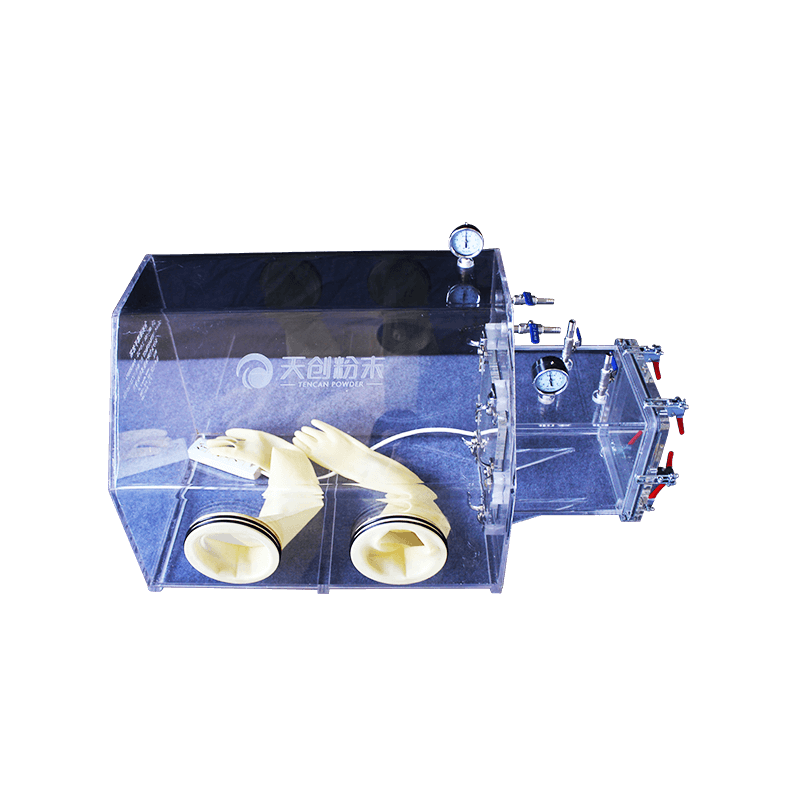
Acrylic glove boxes are used in many laboratory and small-production settings. They are common in powder metallurgy, battery materials research, ceramics, pharmaceuticals, and analytical chemistry. In powder metallurgy, they help weigh and blend metal powders before pressing or milling. In battery research, they provide a low-oxygen environment for handling lithium metal, electrolytes, and electrode powders. In pharmaceuticals, they reduce operator exposure during weighing and sample preparation. In materials science, they protect moisture-sensitive compounds during milling, sieving, and packaging. They are also used in electronics for assembling or inspecting small components that are sensitive to dust or humidity. The common thread is a need for a clear, contained workspace that can be set up quickly and used with both hands.
How to Choose the Right Configuration
For general powder containment with no strict atmosphere requirement, a standard benchtop acrylic glove box is often sufficient. Look for a well-sealed door, comfortable glove ports, and a smooth interior that is easy to clean. If the material is oxygen-sensitive, choose a vacuum-ready or gas-purge model with reinforced panels and reliable valves. If the material is moisture-sensitive, add a desiccant system or dry-gas purge and include a humidity sensor. If the work involves aggressive solvents or high temperatures, an acrylic box may not be suitable; consider a stainless steel glove box instead. If the process is part of a larger powder-processing line, the glove box should be sized to match the balance, mill jars, sieve, and storage containers used in the workflow. The Acrylic glove box product page provides a useful reference for the basic configuration, images, and available options.
Frequently Asked Questions
Is an acrylic glove box the same as a fume hood?
No. A fume hood uses airflow to draw vapors and particles away from the operator, but it does not provide a sealed atmosphere. An acrylic glove box is a closed chamber with gloves, so it can contain powders and maintain a modified atmosphere. The two devices serve different purposes. A fume hood is better for solvent vapors and high-airflow ventilation, while a glove box is better for protecting a sample from the room and protecting the operator from direct contact.
Can an acrylic glove box be used with solvents?
It depends on the solvent and the exposure time. Acrylic is sensitive to many organic solvents and can become cloudy or crack under prolonged contact. Alcohols may be acceptable for short cleaning steps, but acetone, chlorinated solvents, and strong aromatic solvents are generally not recommended. If solvent work is required, a polycarbonate, glass, or stainless steel enclosure may be safer. Always check chemical compatibility before use and avoid direct contact between solvent vapors and acrylic panels.
How do you maintain an acrylic glove box?
Maintenance includes checking gloves for pinholes, inspecting door gaskets, cleaning interior surfaces with a compatible mild cleaner, and replacing desiccant or filters as needed. Gloves should be replaced when they become sticky, cracked, or discolored. Valves and fittings should be leak-tested periodically. If the box is used with fine powders, clean the interior after each session to prevent dust buildup. Store the box with the door slightly open or with a desiccant pack if humidity is a concern, but follow the manufacturer guidance for sealing and storage.
Can it be used with a ball mill or powder mill?
Yes, many laboratories use an acrylic glove box to load and unload milling jars, especially when the powder is air-sensitive or hazardous. The box keeps the powder contained during jar opening, sample transfer, and cleaning. However, the mill itself is usually placed outside the box because of its size, vibration, and heat. The operator loads the jar inside the glove box, seals it, and then moves it to the mill. After milling, the jar is returned to the glove box for sample recovery. This workflow reduces dust exposure and helps preserve the sample atmosphere.
Can an acrylic glove box be used for biological samples?
It can provide basic dust and aerosol containment for some non-hazardous biological samples, but it is not a substitute for a certified biosafety cabinet. Biological work often requires HEPA-filtered airflow, directional air movement, and validated decontamination procedures. Acrylic is also difficult to sterilize with aggressive agents and can be scratched, which may harbor contaminants. If biological agents are involved, use equipment designed and certified for the required biosafety level.
What are the limitations of acrylic glove boxes?
Acrylic glove boxes offer clarity, light weight, and lower cost, but they have limits. They are not ideal for high heat, aggressive chemicals, or applications requiring very low oxygen and moisture levels over long periods. They can scratch, and scratches may harbor particles. Their seals and gloves require regular maintenance. For highly toxic or radioactive materials, a stainless steel glove box with HEPA filtration, negative pressure, and rigorous monitoring is usually required. Acrylic boxes are best understood as practical, transparent containment tools for moderate-risk laboratory work.
Summary
An acrylic glove box is a transparent containment device that combines physical isolation with manual dexterity. It allows scientists and technicians to weigh, mix, sieve, inspect, and transfer powders and sensitive materials inside a sealed workspace. Its core function is to control the local environment, not to process the material. By selecting the right configuration, checking seals and gloves, and matching the atmosphere control to the material, users can reduce dust exposure, protect samples from moisture or oxygen, and maintain a cleaner laboratory workflow. For moderate-risk powder handling and small-scale research, a well-maintained acrylic glove box can be a practical and highly visible solution. For applications involving aggressive chemicals, high temperatures, or strict containment, a more robust enclosure material should be considered.
Related Products
Get In Touch
Our professional team will reply to you within one business day. Please feel free to contact us!