
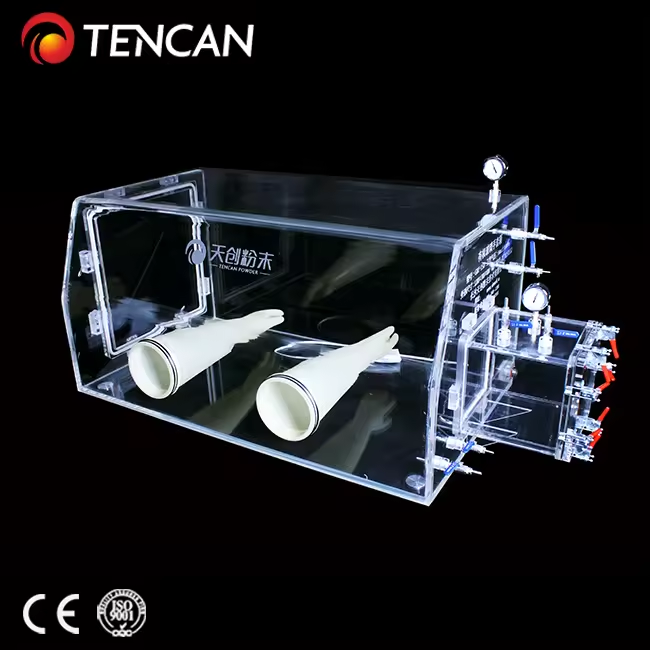
What is an Acrylic Glove Box? A Transparent Enclosure for Creating an Inert Gas Environment

What is an Acrylic Glove Box? A Transparent Enclosure for Creating an Inert Gas Environment
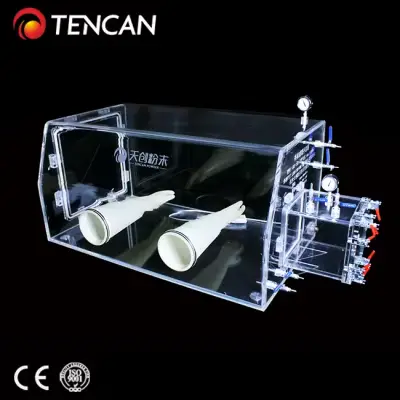
At its core, an acrylic glove box is a specialized sealed enclosure that provides a controlled atmosphere for handling materials sensitive to oxygen, moisture, or contaminants. Researchers and industrial operators use it to perform experiments, weigh samples, or assemble components in an inert gas environment (such as argon or nitrogen) without exposing the contents to the ambient air. The transparent acrylic body allows full visibility of the work inside, while built-in gloves give the operator dexterous access.
Core Functionality and Working Principle
The primary function of an acrylic glove box is to transform the environment inside the chamber from ambient air (containing oxygen and moisture) to a purified inert gas atmosphere. This is achieved through a combination of vacuum purging and gas replacement. The operator places the sample or equipment into the main chamber or an attached transfer chamber (antechamber). The transfer chamber is first evacuated to remove air, then refilled with inert gas before the inner door is opened, preventing contamination of the main workspace.
Key parameters that influence the quality of the environment include the vacuum level achieved (typically up to 1330 Pa for the main chamber and 133 Pa for the transfer chamber), the efficiency of gas purging cycles, and the sealing integrity of the O-rings and gaskets. The acrylic material itself is highly transparent, chemically resistant to many solvents, and lightweight, making it suitable for bench-top use. Some models integrate valves and vacuum gauges to monitor and control the internal pressure.
Main Types / Classifications
Acrylic glove boxes are available in several configurations to meet different application needs:
Basic Acrylic Glove Box (Gas Purge Type)
This is the simplest and most economical design. It consists of a transparent acrylic chamber with built-in gloves, gas inlet/outlet valves, and an internal pressure relief valve (safety valve). The operator manually cycles the gas to displace air. It is suitable for applications where only a moderate level of inert atmosphere (e.g., oxygen concentration below 1%) is required.
Vacuum Acrylic Glove Box
This type adds a vacuum pump and a more robust sealing system. The entire chamber or the transfer box can be evacuated to a high vacuum (down to ~133 Pa) before introducing inert gas, enabling much faster and more thorough gas replacement. The acrylic vacuum glove box is ideal for highly air-sensitive materials, such as certain organometallic compounds, lithium battery components, or reactive catalysts.
Acrylic Glove Box with Oxygen Monitor
Some models integrate an oxygen sensor (e.g., 0-25.0% range) to continuously monitor the oxygen level inside the chamber. This is critical for quality control in research and production. The monitor can be mounted on an adjustable bracket for easy viewing. These units are often equipped with additional valves and a more sophisticated gas management system.
Key Performance Indicators and Selection Criteria
When selecting an acrylic glove box, consider the following parameters:
- Chamber Size and Volume: Available in various internal dimensions, from compact 200×200×280 mm up to 1094×640×645 mm or larger. Choose a size that accommodates your equipment and sample volume.
- Vacuum Level: The ability to achieve and maintain a low vacuum (e.g., 1330 Pa for the main chamber, 133 Pa for the transfer chamber) determines how quickly the atmosphere can be purified.
- Gas Purity: The final oxygen and moisture levels inside the chamber depend on the purge efficiency. Some advanced systems can achieve O2 and H2O below 1 ppm (with purification system), but a standard acrylic glove box typically reaches 1-10% range after multiple purges.
- Material and Construction: High-quality PMMA (acrylic) panels provide excellent clarity and chemical resistance. Check thickness (usually 10-15 mm) for durability under vacuum. The sealing gaskets, valves, and glove ports must be leak-tight.
- Accessories and Ports: The number and size of gas ports, vacuum ports, electrical feedthroughs, and glove ports affect flexibility. Models with a transfer chamber (antechamber) allow introduction of samples without disturbing the main atmosphere.
- Automation and Monitoring: Digital pressure gauges, oxygen monitors, and programmable controllers simplify operation and improve reproducibility.
Application Areas and Selection Suggestions
Acrylic glove boxes are widely used in:
- Organic and Organometallic Chemistry: Handling air-sensitive reagents, catalysts, and intermediates under inert gas.
- Materials Science: Preparation of lithium battery electrolytes, solar cell materials, nanoparticles, and polymers that degrade in air.
- Pharmaceutical and Biomedical Research: Working with oxygen-sensitive drugs, proteins, or cell cultures that require a controlled atmosphere.
- Electronics and Semiconductor: Assembly of components that must be protected from oxidation or moisture.
- Environmental and Energy Research: Catalyst testing, fuel cell component assembly, and gas sensor calibration.
For labs on a budget or those dealing with moderately sensitive materials, a basic gas purge acrylic glove box is a cost-effective solution. For critical applications requiring rapid and thorough atmosphere control, a vacuum model with an oxygen monitor is recommended. If you need extremely low oxygen and moisture levels (below 1 ppm), consider upgrading to a glove box with a purification system, which circulates the gas through a chemical purifier.
References
Related Products
Get In Touch
Our professional team will reply to you within one business day. Please feel free to contact us!