
What is a Vacuum Freeze-Drying Oven? A High-Performance Lyophilizer for Gentle Dehydration of Heat-Sensitive Materials

What is a Vacuum Freeze-Drying Oven?
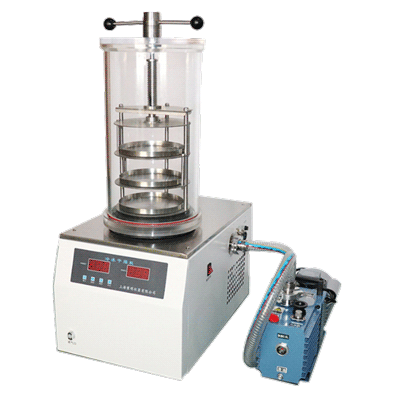
At its core, a vacuum freeze-drying oven is a specialized type of lyophilizer used by pharmaceutical, biotechnology, food, and materials science industries to gently remove moisture from heat-sensitive substances. It relies on the principle of sublimation: under low temperature and high vacuum, water in the frozen material transitions directly from solid ice to vapor without passing through a liquid phase. This process preserves the original biological activity, chemical composition, and physical structure of the product, yielding a dry, porous cake that can be easily rehydrated and stored for long periods.
Core Function and Working Principle
A vacuum freeze-drying oven transforms a wet or liquid sample into a stable dry powder or cake while maintaining its integrity. The process consists of three main stages: freezing, primary drying (sublimation), and secondary drying (desorption).
Freezing
The material is first cooled to a temperature well below its eutectic point or glass transition temperature, typically between -40°C and -80°C. This step ensures that all free water forms fine ice crystals, which will later sublime without damaging the cellular or molecular structure.
Primary Drying (Sublimation)
After freezing, the chamber is evacuated to a high vacuum level (typically below 100 Pa). The ice crystals directly sublime into water vapor. The sublimation front moves from the surface to the interior of the material. The chamber pressure and shelf temperature are precisely controlled to provide the necessary latent heat for sublimation without causing melting or collapse. The water vapor is captured on a cold condenser (or cryo-trap) operated at temperatures between -50°C and -80°C.
Secondary Drying (Desorption)
Once all free ice is removed, the product still contains bound water molecules. The shelf temperature is gradually raised (often to 20-40°C) under continued vacuum to desorb these residual molecules. The final moisture content can be reduced to less than 1-2%, ensuring long-term stability.
Key parameters affecting the freeze-drying process include the freezing rate, chamber pressure, shelf temperature ramp, and product thickness. These parameters must be optimized for each specific formulation to avoid defects such as collapse, cracking, or meltback.
Core Components and Key Technologies
A vacuum freeze-drying oven is a complex system composed of several critical subsystems:
- Drying Chamber and Shelves: The chamber is a vacuum-tight vessel with temperature-controlled shelves where product vials or trays are placed. Shelves can be cooled to -55°C and heated to +80°C, providing precise thermal control.
- Refrigeration System: Often called the "heart" of the lyophilizer, it includes a compressor, condenser, expansion valve, and evaporator. It cools both the shelves and the condenser to required low temperatures.
- Vacuum System: A vacuum pump (often a rotary vane or dry pump) combined with valves and piping creates the low-pressure environment needed for sublimation. The system must maintain a leak-tight seal to achieve ultimate vacuum levels below 10 Pa.
- Heat Transfer System: A circulating fluid (e.g., silicone oil) transfers heat from the refrigeration/heating unit to the shelves, ensuring uniform temperature distribution across all product positions.
- Control System: Modern freeze-drying ovens feature microprocessor-based controllers with programmable logic. They allow users to define drying recipes (temperature, pressure, ramp rates) and log process data for validation and GMP compliance.
- Condenser: A cold surface (often a coil or plate) located inside the chamber or in a separate vessel that captures water vapor by freezing it onto the surface. The condenser must be defrosted periodically.
For a detailed illustration of the system architecture, see the schematic diagram of a typical vacuum freeze-drying oven.
Key Performance Indicators and Selection Criteria
When selecting a vacuum freeze-drying oven, several critical specifications should be evaluated:
- Processing Capacity: Measured by the number of vials, trays, or liters of product that can be processed per batch. This determines the size of the chamber and shelf area.
- Cold Trap Temperature: A lower condenser temperature (e.g., -60°C vs. -50°C) improves water vapor capture efficiency and reduces drying time. For high-moisture products, a powerful refrigeration system is essential.
- Ultimate Vacuum Level: Typically expressed in Pa or mbar. A deeper vacuum (e.g., 1-10 Pa) accelerates sublimation but requires a robust vacuum pump and leak-tight sealing.
- Temperature Uniformity: The variation of shelf temperature across different positions should be within ±1°C to ensure consistent product quality, especially for large batches.
- Programmability and Data Logging: Advanced controllers allow multi-step recipes with ramping, holds, and alarms. Connectivity to external data systems (e.g., SCADA) is important for regulated industries.
- Cleaning and Sterilization: For pharmaceutical and food applications, the oven should be designed for easy cleaning (CIP/SIP) and be compatible with steam sterilization or chemical sanitization.
- Energy Efficiency: The combination of refrigeration and vacuum pumps can consume significant energy. Look for units with efficient compressors, heat recovery options, and low-bleed valves.
Application Areas and Selection Advice
Vacuum freeze-drying ovens are used across a wide range of industries:
- Pharmaceuticals: Lyophilization of injectable drugs, vaccines, antibodies, and diagnostics. The ability to maintain sterility and stability is paramount.
- Biotechnology: Preservation of enzymes, proteins, nucleic acids, and cell cultures. Freeze-drying retains biological activity for years.
- Food Industry: Production of instant coffee, fruits, herbs, and freeze-dried meals. The porous structure enhances rehydration and flavor retention.
- Materials Science: Drying of advanced materials like aerogels, ceramics, and nanocomposites. The gentle process prevents agglomeration and structural collapse.
- Laboratory Research: Small-scale freeze-drying for sample preparation, concentration, or long-term storage of research samples.
For laboratory-scale needs, a compact benchtop unit with a small condenser capacity (e.g., 2-4 kg ice per batch) is sufficient. For pilot or production scale, consider a floor-standing unit with large shelf area, automated loading/unloading, and GMP-compliant validation documentation. Always consult the manufacturer's vacuum freeze-drying oven product page for detailed specifications and customization options.
References
- Product page: Vacuum freeze-drying oven
- Related drying equipment: Vacuum drying oven, Microwave vacuum drying oven
Related Products
Get In Touch
Our professional team will reply to you within one business day. Please feel free to contact us!