
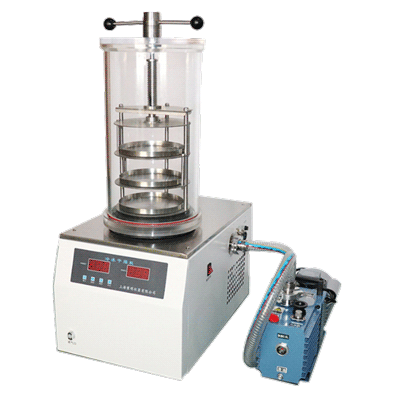
What is a Vacuum Freeze-drying Oven? A Gentle Drying Equipment for Heat-Sensitive Materials Using Sublimation Technology

What is a Vacuum Freeze-drying Oven?
At its core, a vacuum freeze-drying oven (also known as a lyophilizer or freeze dryer) is a professional drying apparatus that laboratories, pharmaceutical companies, and food industries use to gently remove water from delicate materials while preserving their original structure, biological activity, and chemical composition. Unlike conventional hot-air drying, this technology operates at sub-zero temperatures and under reduced pressure, allowing frozen water to sublimate directly from solid ice to vapor, bypassing the liquid phase entirely.
Core Function and Working Principle
The fundamental function of a vacuum freeze-drying oven is to convert moisture-rich materials from a frozen state into a dry, stable product without damaging heat-sensitive components. The process relies on the physical phenomenon of sublimation: the direct transition of water from solid (ice) to gaseous (vapor) under vacuum conditions.
The workflow typically involves three stages:
- Freezing: The material is first frozen at atmospheric pressure, usually at temperatures between -30°C to -50°C, to solidify all free water.
- Primary Drying (Sublimation): The chamber is evacuated to a vacuum (typically 0.1–1.0 mbar), and controlled heat is applied to the frozen material. The ice crystals sublimate, and the vapor is collected on a cold condenser (or cold trap) that re-freezes the water.
- Secondary Drying (Desorption): After the free ice is removed, the temperature is gradually raised under high vacuum to desorb bound water molecules, reducing the residual moisture content to below 1–2%.
Key parameters that influence final product quality include shelf temperature (typically -10°C to +40°C), chamber pressure, and freezing rate. Proper control ensures that the dried product retains its porous sponge-like structure, excellent rehydration capability, and full preservation of active ingredients.
Core Components and Key Technologies
Although the vacuum freeze-drying oven is a single product category, its internal architecture can be broken down into several critical subsystems, each affecting performance and reliability:
- Vacuum System: A high-performance vacuum pump (e.g., rotary vane or oil-free scroll pump) creates and maintains the low-pressure environment essential for sublimation. The ultimate vacuum level (e.g., < 10 Pa) directly determines drying efficiency.
- Refrigeration System: A compressor-based cooling circuit chills both the shelves and the cold trap. The cold trap temperature typically reaches -40°C to -80°C to efficiently capture water vapor.
- Heating System: Shelves are heated by electrical resistance or circulated thermal fluid, allowing precise temperature ramping during the drying cycle.
- Control System: Modern units feature programmable logic controllers (PLC) or touch-screen interfaces, enabling users to set multi-step recipes with real-time monitoring of temperature, pressure, and vacuum integrity.
For example, the vacuum freeze-drying oven offered by TENCAN integrates these components into a compact bench-top or floor-standing design, suitable for laboratory R&D and small-scale production.
Key Performance Indicators and Selection Criteria
When selecting a vacuum freeze-drying oven, users should evaluate the following critical specifications:
- Processing Capacity: Measured by the shelf area (e.g., 0.1 m² to 1.5 m²) and the maximum ice capacity (e.g., 3 kg to 20 kg). This determines the batch size per run.
- Temperature Range: The lowest achievable shelf temperature (e.g., -50°C to -80°C) and the heating range (up to +60°C or higher) affect the suitability for different materials (e.g., biological samples vs. food products).
- Vacuum Level: A lower ultimate pressure (e.g., 1 Pa) enables faster sublimation and lower residual moisture, crucial for pharmaceutical lyophilization.
- Uniformity: Temperature uniformity across shelves (typically ±1°C) ensures consistent drying of multiple vials or trays.
- Automation and Programmability: Advanced controllers with recipe storage, data logging, and alarm functions simplify operation and improve reproducibility.
- Maintenance: Easy access to the cold trap, vacuum pump, and condenser for cleaning and defrosting reduces downtime.
For laboratory use, a compact model with a 0.1–0.2 m² shelf area and a single-stage refrigeration system is often sufficient. For pilot or production scale, larger shelf areas, dual-stage refrigeration, and SIP (steam-in-place) capabilities may be required.
Application Fields and Selection Advice
Vacuum freeze-drying ovens are widely used in:
- Pharmaceuticals: Lyophilization of vaccines, antibodies, antibiotics, and injectable powders to maintain stability and prolong shelf life.
- Food Industry: Production of instant coffee, freeze-dried fruits, vegetables, and spices, preserving flavor, color, and nutrients.
- Biotechnology: Preservation of enzymes, bacteria, yeast, and cell cultures for research and diagnostics.
- Chemical Materials: Drying of heat-sensitive nanomaterials, catalysts, and polymers without agglomeration or degradation.
For researchers focusing on high-value biological samples, a model with a deep cold trap (-80°C) and a precise vacuum control system is recommended. For food processing, larger capacity units with robust construction and easy-to-clean stainless steel chambers are preferred. Always consult the manufacturer’s specifications and conduct trial runs with your specific material before finalizing the purchase.
References
- Vacuum Freeze-drying Oven - TENCAN
- Vacuum Drying Oven (for comparison with conventional vacuum drying)
- Microwave Vacuum Drying Oven (alternative microwave-assisted technique)
Related Products
Get In Touch
Our professional team will reply to you within one business day. Please feel free to contact us!