
What is a Vacuum Freeze-Drying Oven? A Low-Temperature Dehydration Equipment for Preserving Bioactive Materials

What is a Vacuum Freeze-Drying Oven?
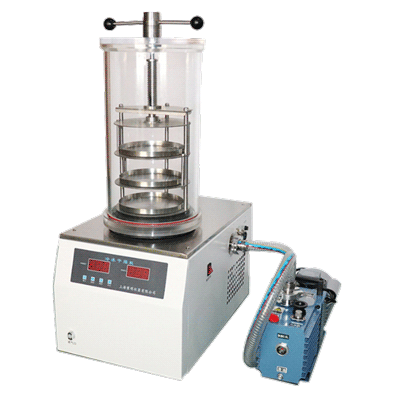
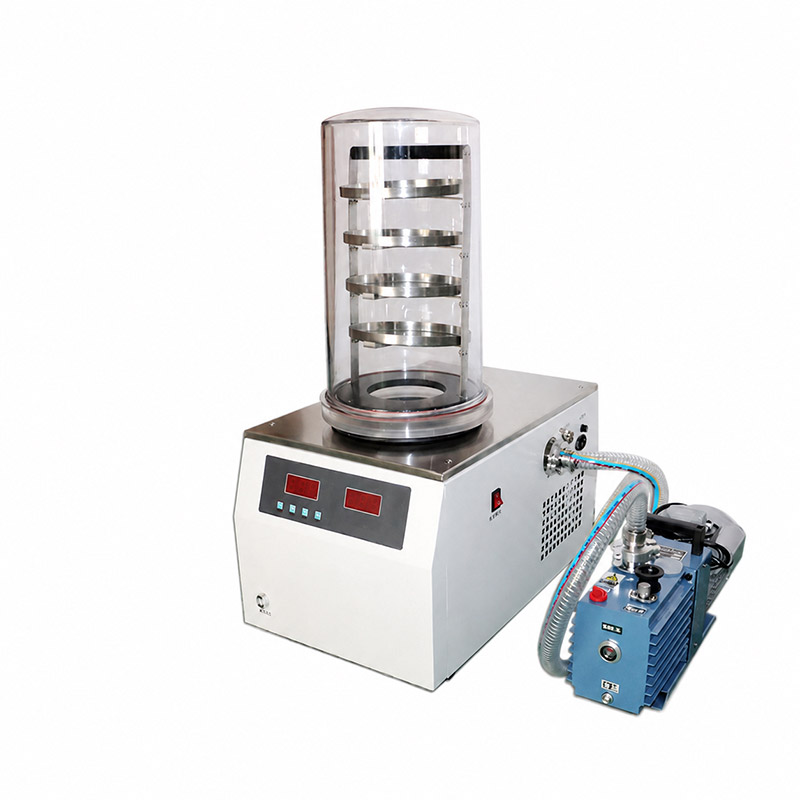
At its core, a vacuum freeze-drying oven (also known as a lyophilizer) is a specialized dehydration equipment that uses the principle of sublimation to remove moisture from materials under low temperature and high vacuum conditions. The pharmaceutical, biotech, food, and research industries rely on it to preserve the original structure, biological activity, and nutrient content of heat-sensitive products. Unlike conventional drying methods that rely on heat, freeze drying avoids thermal degradation, making it the preferred technique for vaccines, injectable drugs, enzymes, probiotics, and freeze-dried food.
Core Function and Working Principle
The vacuum freeze-drying oven transforms a liquid or wet solid material directly into a dry, stable product without passing through the liquid phase. The process consists of three main stages:
1. Freezing
The material is rapidly frozen below its eutectic point (typically -10°C to -50°C), converting all water content into solid ice. The freezing rate and final temperature significantly affect the crystal size and subsequent drying efficiency.
2. Primary Drying (Sublimation)
Under a high vacuum (usually 1.3 to 13 Pa), the frozen ice sublimes directly into water vapor without melting. The vapor is captured by a cold trap (condenser) maintained at -50°C to -80°C, preventing recontamination of the product. About 95% of the water is removed during this stage.
3. Secondary Drying (Desorption)
Gentle heating (up to 30-40°C) is applied to remove bound water molecules that did not freeze. The final moisture content can be as low as 1-3%, ensuring long-term stability and shelf life.
Key process parameters include freezing rate, shelf temperature, vacuum level, and drying time. Precise control of these parameters is essential to maintain product quality, especially for biopharmaceuticals where activity must be preserved. Modern vacuum freeze-drying ovens are equipped with programmable logic controllers (PLC) and SCADA systems to automate and record the entire cycle.
Main Types and Classification
Vacuum freeze-drying ovens are commonly categorized by scale and application:
Laboratory (Bench-top) Freeze Dryers
Compact and cost-effective, these units are designed for small batches (typically 0.5 to 12 L capacity). They are ideal for R&D, process development, sample preparation, and small-scale production. Features often include touch-screen interfaces, data logging, and optional stainless steel cabinets for sterile environments.
Pilot-scale Freeze Dryers
With capacities ranging from 12 to 50 L, pilot-scale units bridge the gap between lab and production. They replicate production-scale conditions, allowing researchers to optimize lyophilization cycles for scale-up. They often include more advanced control systems and larger condensers.
Production-scale Freeze Dryers
Designed for industrial manufacturing, these large-capacity units (50 L and above) feature automatic loading/unloading, CIP (Clean-in-Place) and SIP (Steam-in-Place) sterilization, and full validation packages. They are built to meet GMP (Good Manufacturing Practice) standards for pharmaceutical production.
Key Performance Indicators and Selection Criteria
When selecting a vacuum freeze-drying oven, consider the following technical specifications:
- Condenser Capacity (Ice Capacity): Determines the amount of water that can be removed per batch. For lab units, typical values range from 4 to 12 kg.
- Lowest Attainable Temperature: Usually -50°C to -80°C. Lower temperatures allow faster sublimation and better retention of volatile compounds.
- Vacuum Level: A high vacuum (e.g., <10 Pa) is essential for efficient sublimation. The vacuum pump type and performance are critical.
- Shelf Area and Temperature Uniformity: Even heating across shelves (±1°C) ensures consistent product quality across the batch.
- Control System: PLC-based systems with touchscreen HMI enable precise recipe management, real-time monitoring, and data export. SCADA integration is available for production lines.
- Maintenance and Cleaning: Features like automatic defrosting, easy-access vacuum pump, and cleanable chambers reduce downtime and improve hygiene.
Application Fields and Selection Recommendations
Vacuum freeze-drying ovens are used across diverse industries:
- Pharmaceuticals: Lyophilization of vaccines, injectable drugs, antibodies, and biologics to enhance stability and shelf life without refrigeration.
- Food Industry: Production of instant coffee, freeze-dried fruits, vegetables, and ready-to-eat meals that retain flavor and nutrients.
- Biotechnology: Preservation of enzymes, probiotics, and cell cultures where activity is paramount.
- Material Science: Drying of advanced materials like graphene, aerogels, and nanoparticles that require gentle processing.
For R&D labs or small-scale production, a compact laboratory freeze dryer with a condenser capacity of 4-6 kg and a minimum temperature of -55°C is usually sufficient. For larger manufacturing needs, consider production-scale models with CIP/SIP capabilities and validated automation. Always match the unit's specifications to the specific product's thermal sensitivity, batch size, and regulatory requirements.
References
Related Products
Get In Touch
Our professional team will reply to you within one business day. Please feel free to contact us!